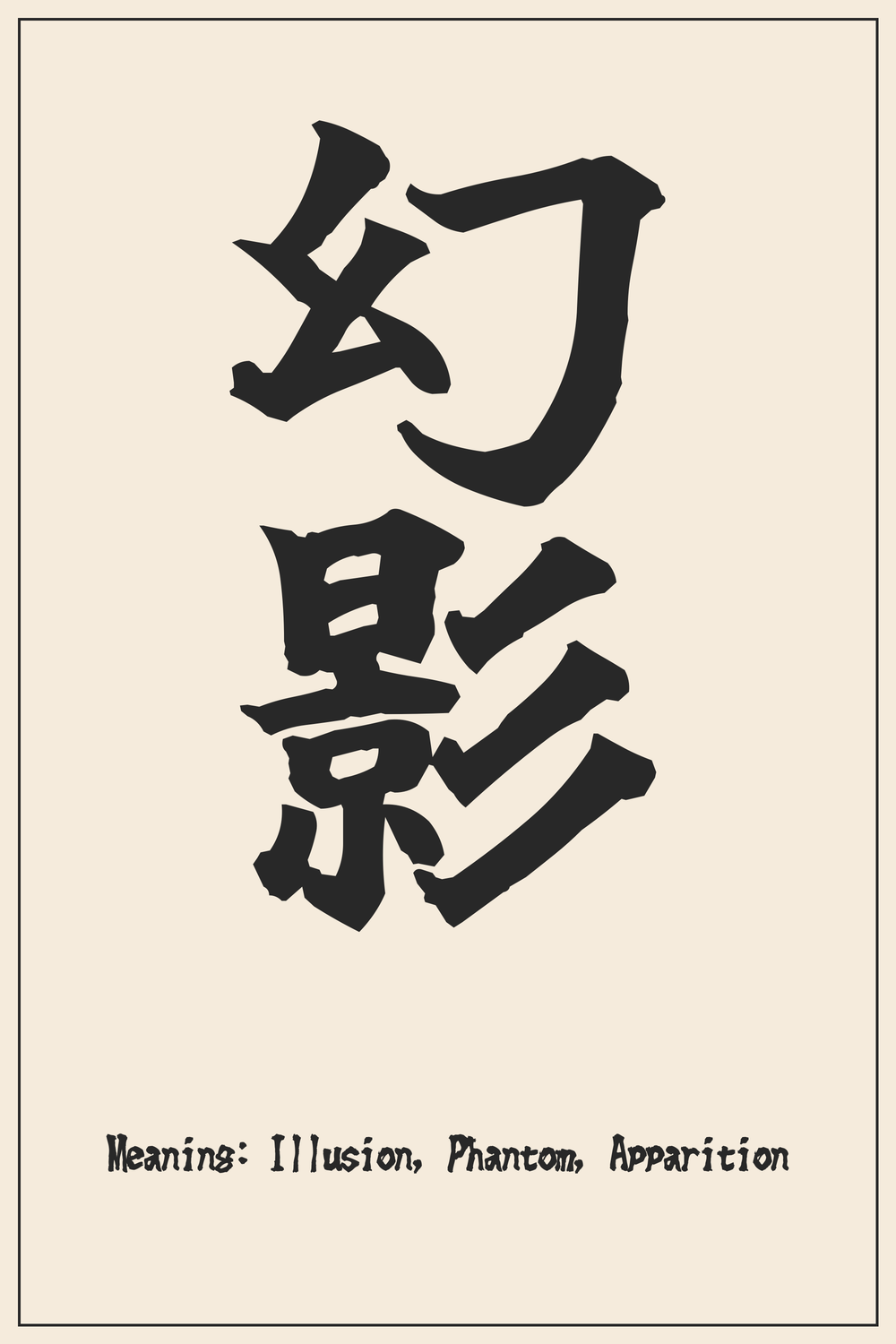
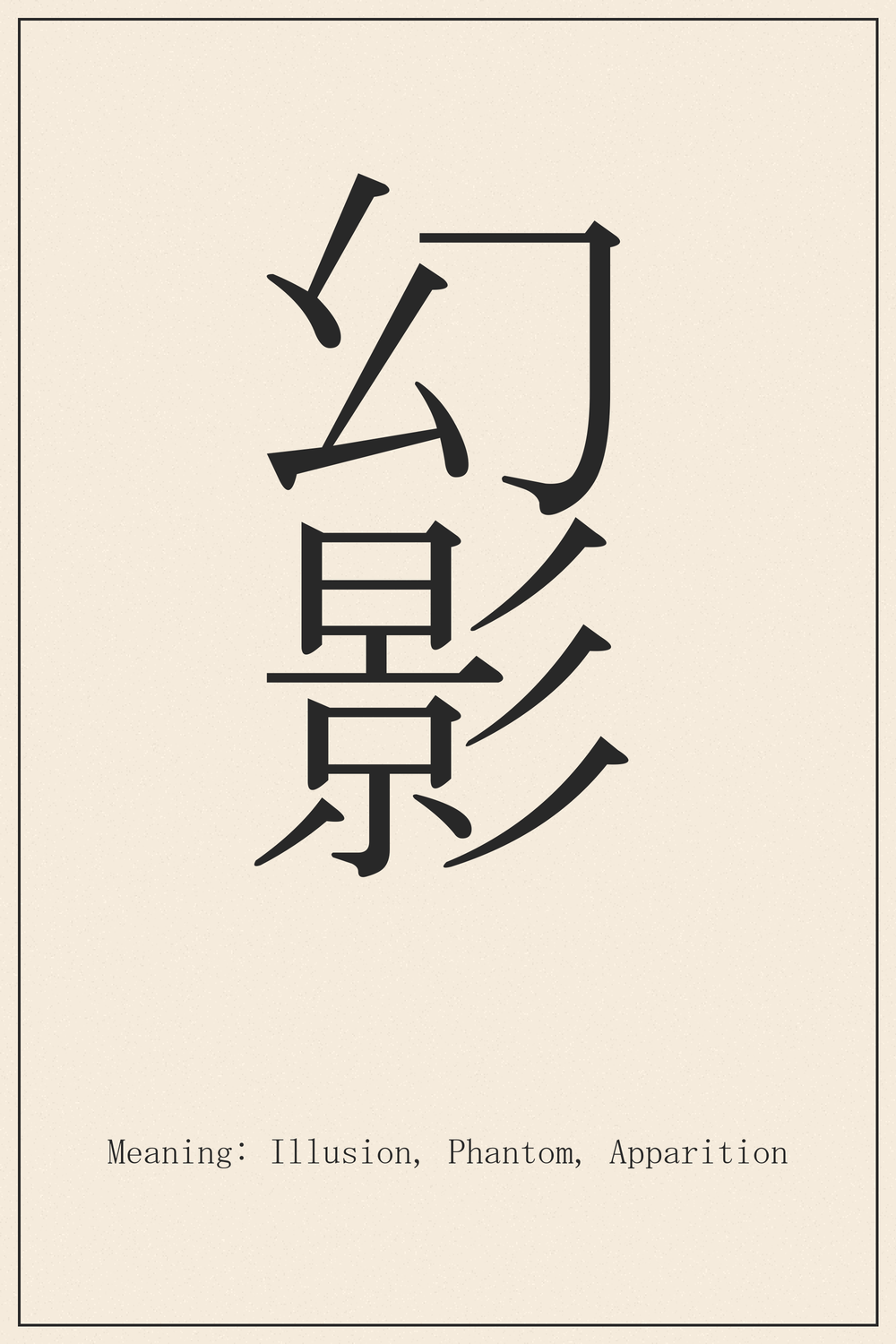
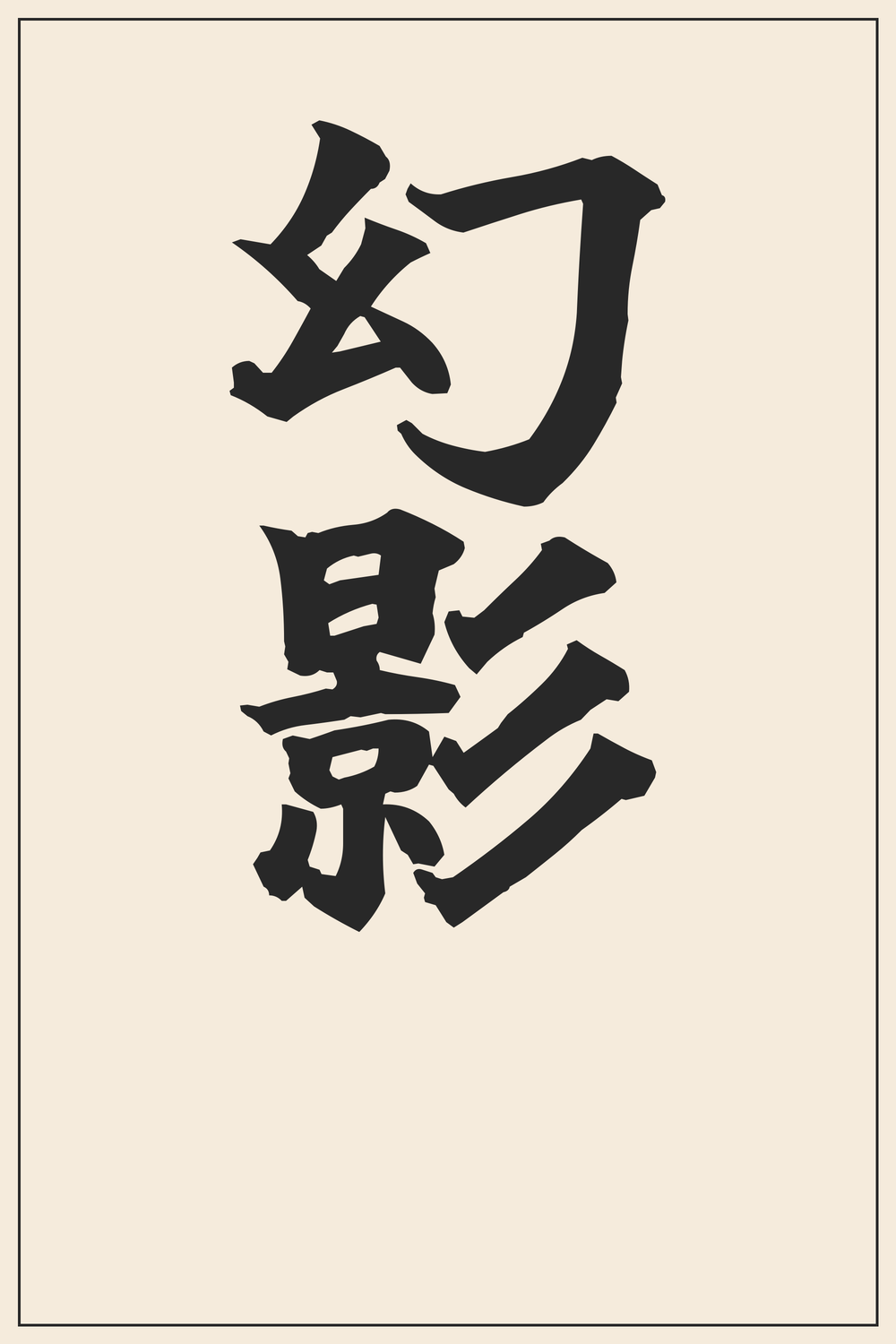
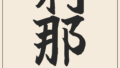
Delve into the enigmatic realm where reality blurs with perception. The Kanji for ‘幻影’ captures the profound essence of what is seen but not truly present, beckoning a deeper look into the nature of existence.
The atmosphere of a Kanji character changes dramatically depending on the font style. A character that looks elegant in a brush style might look bold and modern in a different font.
Recommendation:
Since a tattoo is permanent, we strongly recommend comparing various font styles beyond what is shown here. Use our designs as a trusted reference for the correct structure, but feel free to explore different artistic variations to find the perfect match for your vision.
The Deep Meaning Behind 幻影
The compound ‘幻影’ (Gen’ei) profoundly captures the essence of illusion and phantoms. It combines two characters that individually speak to the concept of unreality and unsubstantiality, creating a powerful term that reflects on the nature of what we perceive versus what truly exists.
In Japanese culture and philosophy, ‘幻影’ often appears in literature, poetry, and Buddhist teachings to denote the fleeting nature of the material world and the illusions of attachment. It encourages a contemplation of impermanence and the gap between appearance and reality.
Kanji Breakdown
Each character in ‘幻影’ contributes significantly to its overarching meaning of illusion and phantom.
Meaning: Illusion, fantasy, vision.
Explanation: This character originally depicted a magician or shaman performing transformations, hence conveying the idea of something conjured, unreal, or deceptive. It signifies a fleeting, dream-like quality.
Meaning: Shadow, reflection, image.
Explanation: Composed of 景 (scene, light) and 彡 (streaks, hair), it fundamentally represents something cast by light but lacking physical substance. It implies a visible form that is merely an outline or a faint impression, a mirror of reality rather than reality itself.
Conclusion
The Kanji ‘幻影’ (Gen’ei) is a captivating symbol for those who ponder the boundary between what is real and what is imagined. It encapsulates the ephemeral beauty of life’s illusions, reflecting profound philosophical depths.
Choosing ‘幻影’ for a tattoo is a powerful statement about embracing the subtle complexities of perception. It serves as a beautiful and thought-provoking reminder that not everything that appears is truly present, making it an excellent choice for a design that embodies introspection and ethereal beauty.
Comments