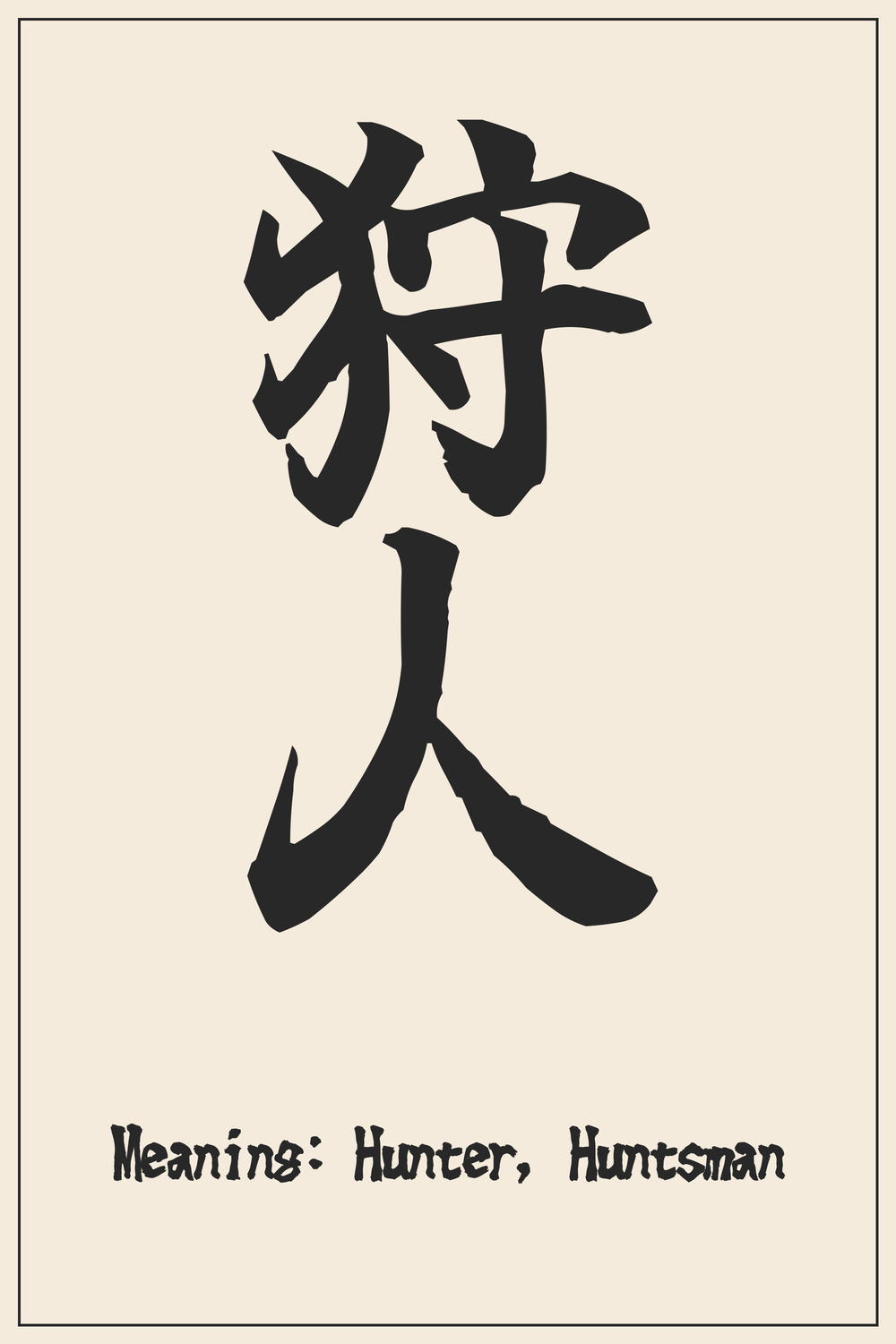
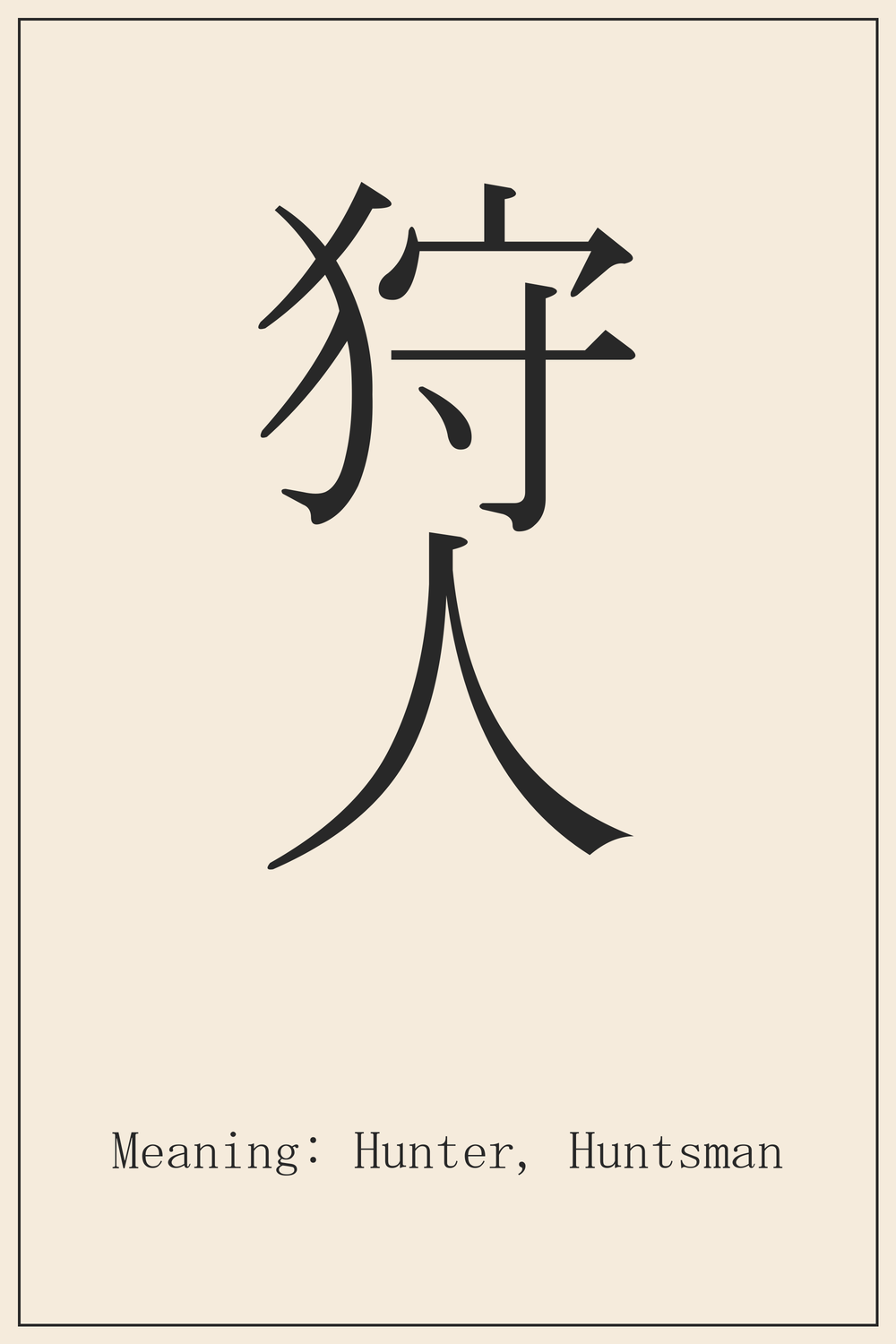
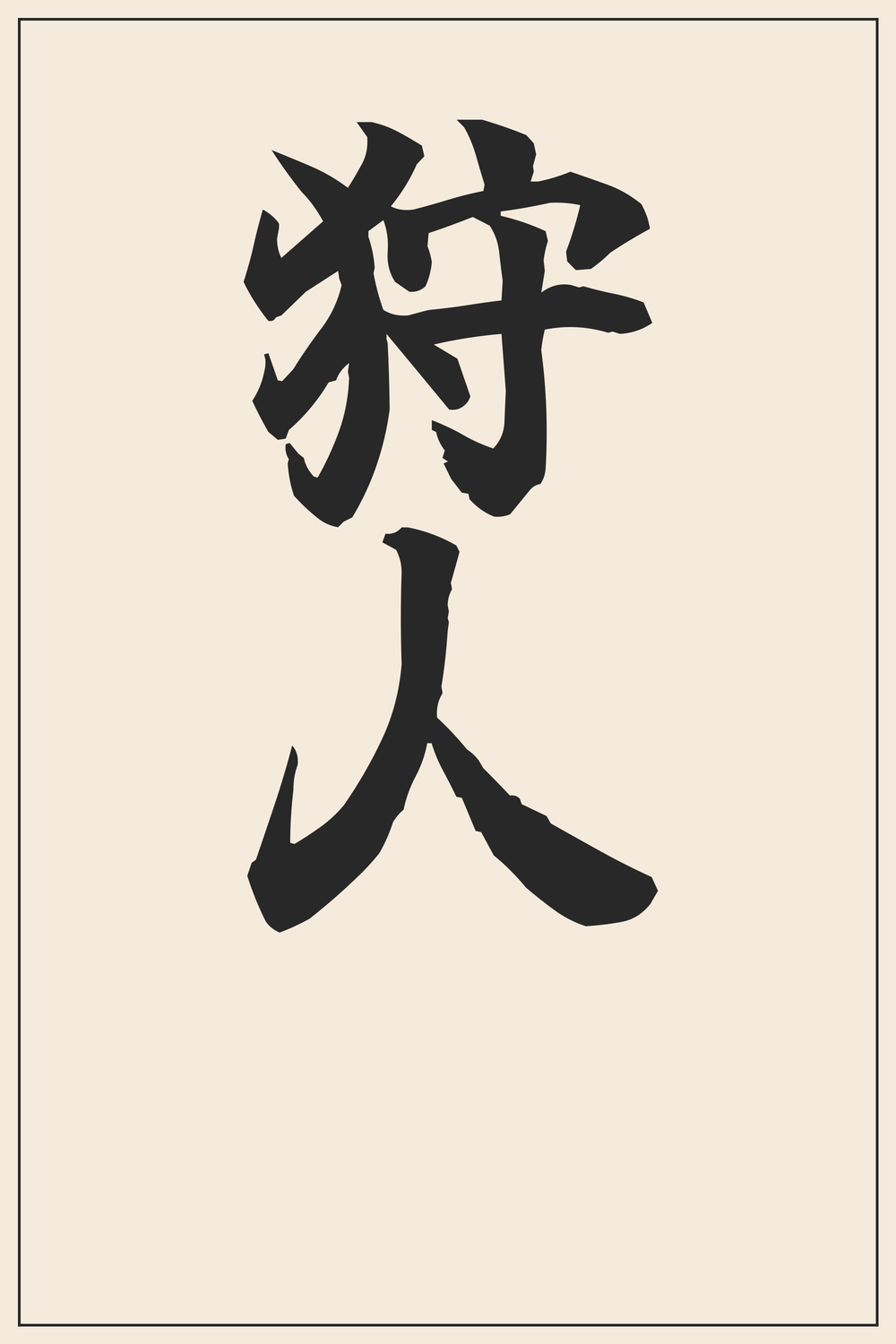
The Kanji compound 狩人 evokes an image of ancient skill, perseverance, and a deep connection to the wild. It symbolizes the primal pursuit of sustenance and the mastery over nature’s challenges.
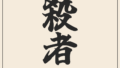
The atmosphere of a Kanji character changes dramatically depending on the font style. A character that looks elegant in a brush style might look bold and modern in a different font.
Recommendation:
Since a tattoo is permanent, we strongly recommend comparing various font styles beyond what is shown here. Use our designs as a trusted reference for the correct structure, but feel free to explore different artistic variations to find the perfect match for your vision.
The Deep Meaning Behind 狩人
The term 狩人 (Kariudo) encapsulates the essence of a hunter, a figure vital to human survival and culture throughout history. This compound word elegantly combines the action of hunting with the identity of a person, symbolizing a life lived in harmony with, and mastery over, the natural world.
In Japanese culture, while often associated with sustenance, the hunter also embodies virtues like patience, acute observation, and disciplined action. These qualities resonate deeply within the martial and philosophical traditions of Japan, highlighting not just a profession, but a way of life that demands respect for nature and formidable personal skill.
Kanji Breakdown
The compound 狩人 is formed from two distinct Kanji, each contributing to its comprehensive meaning.
Meaning: To hunt, hunting. This character is composed of the radical 豸 (けものへん, kemonohen), meaning ‘beast’ or ‘mammal,’ and 守 (しゅ, shu), meaning ‘to guard’ or ‘protect.’ In this context, 守 often functions phonetically or implies the act of tracking and watching prey, leading to the meaning of ‘hunting animals.’
Meaning: Person, human. This is one of the most fundamental Kanji, visually representing a human figure. It clearly identifies the subject of the compound as a human being.
Conclusion
The Kanji 狩人 is more than just a label for a profession; it is a symbol of primal human capability, resourcefulness, and a profound respect for the circle of life. It speaks to the ancient human spirit of survival and the continuous quest for self-sufficiency.
Choosing 狩人 for a tattoo signifies an appreciation for these timeless qualities. It’s an emblem for those who embrace challenges, possess keen instincts, and forge their own path with determination and skill, connecting them to a long lineage of individuals who thrived by their wits and strength.
Comments