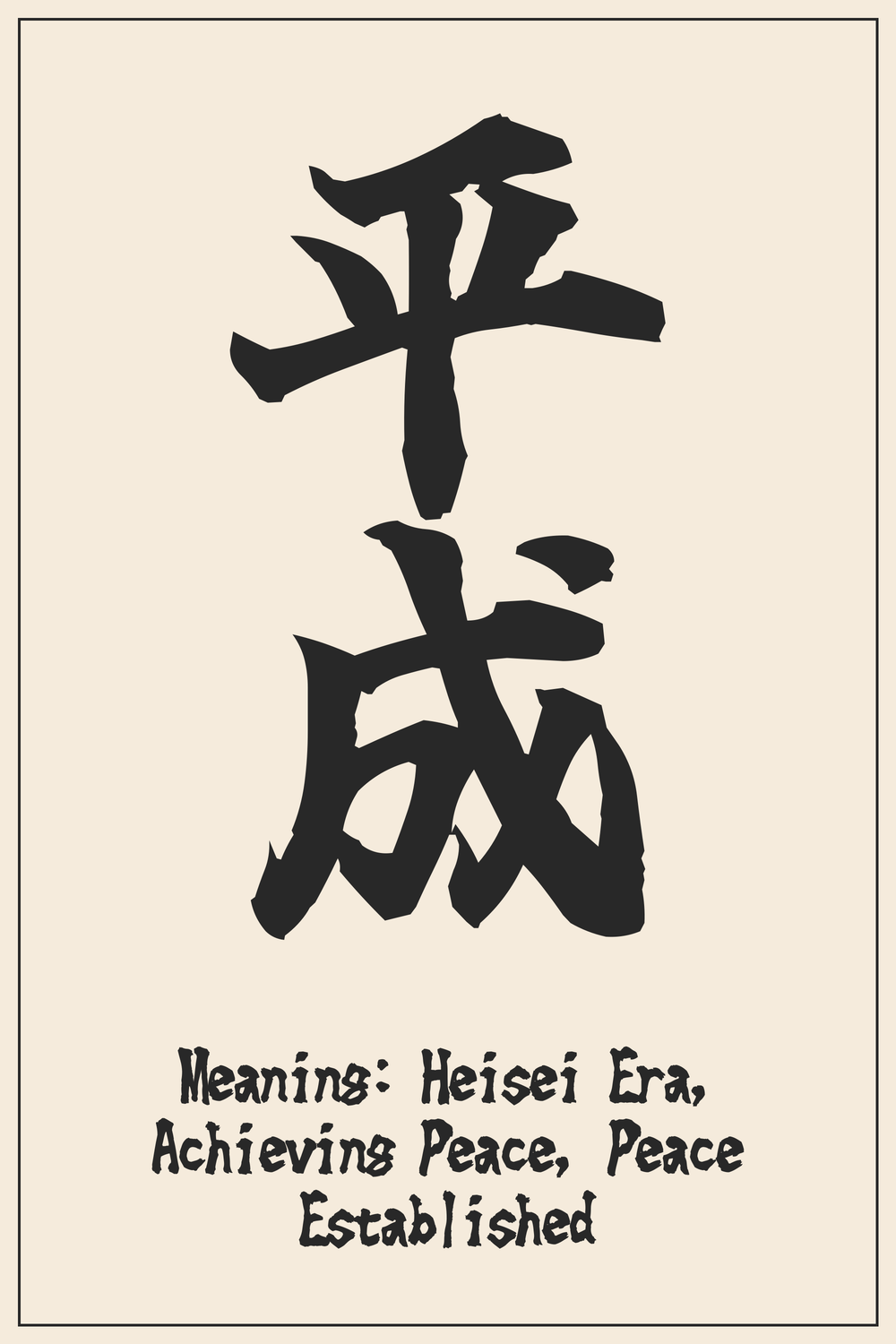
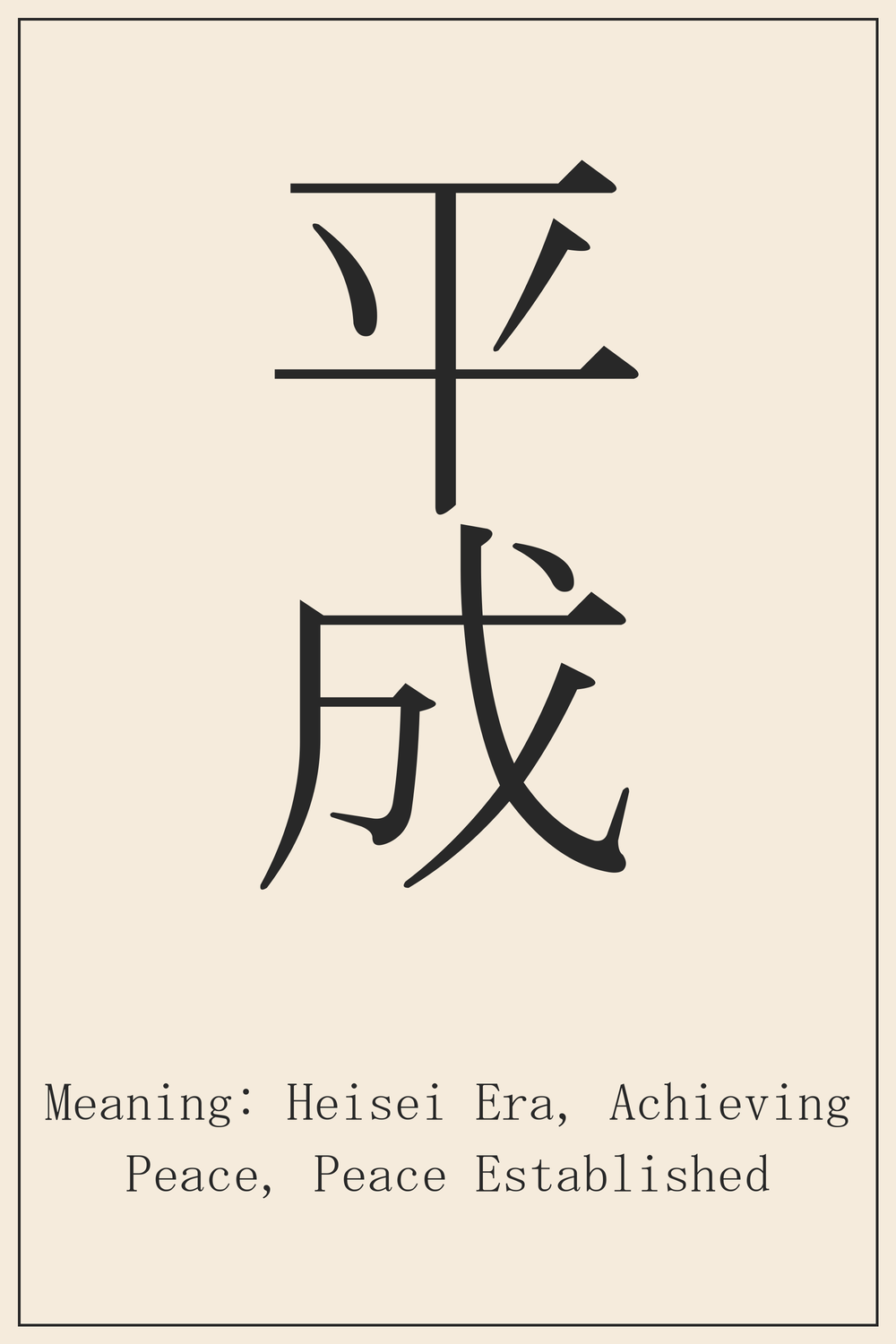
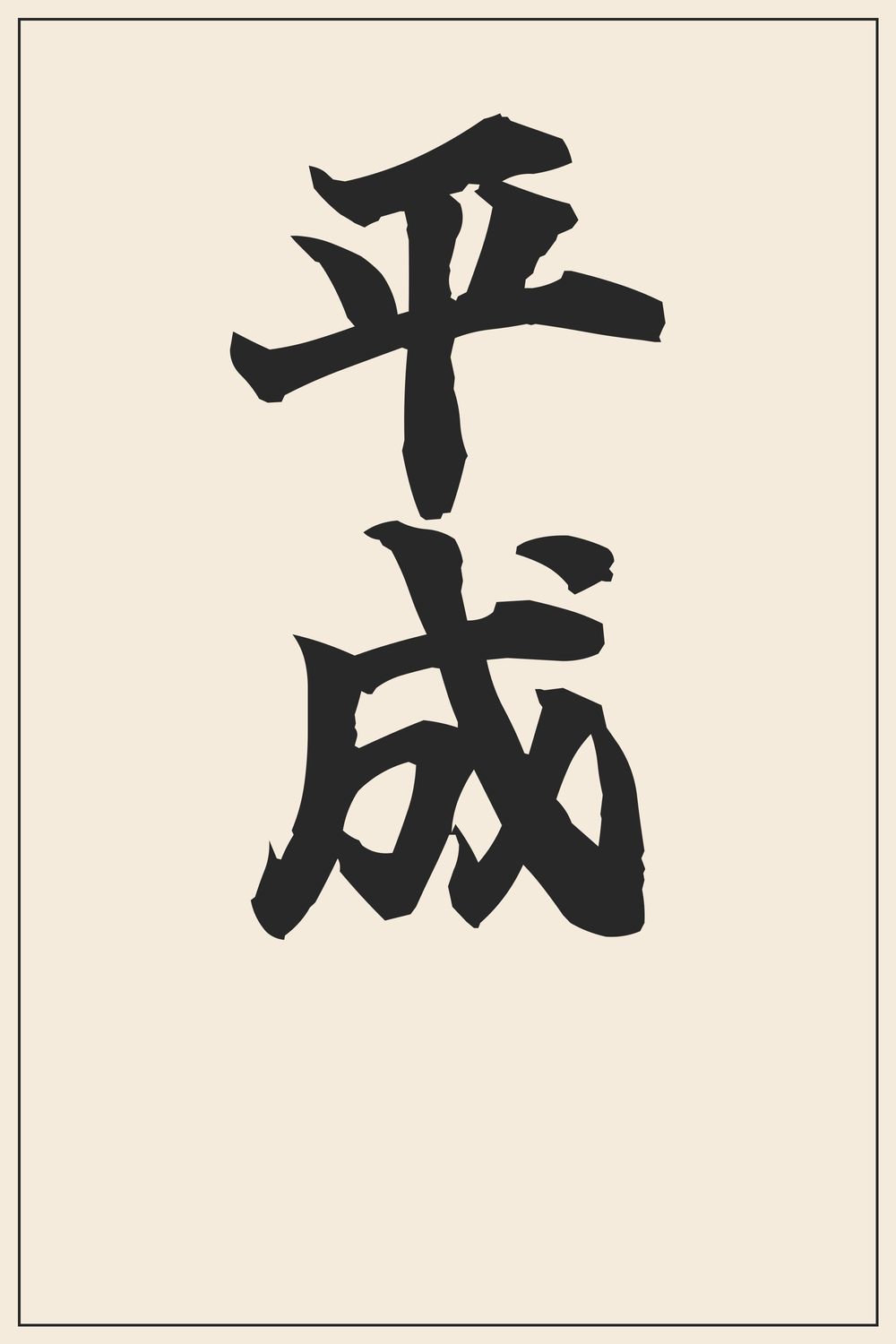
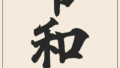
The Kanji compound 平成 (Heisei) encapsulates a significant period in Japanese history, embodying a profound wish for tranquility and development. It represents not just an era, but a collective aspiration for societal harmony.
The atmosphere of a Kanji character changes dramatically depending on the font style. A character that looks elegant in a brush style might look bold and modern in a different font.
Recommendation:
Since a tattoo is permanent, we strongly recommend comparing various font styles beyond what is shown here. Use our designs as a trusted reference for the correct structure, but feel free to explore different artistic variations to find the perfect match for your vision.
The Deep Meaning Behind 平成
The name 平成 (Heisei) was chosen from two Chinese classics: ‘Records of the Grand Historian’ (史記) and ‘Book of Documents’ (書経). From the ‘Records of the Grand Historian’, the phrase ‘内平かに外成る’ (uchi taira ka ni soto naru), meaning ‘peace within, prosperity without’, provided the characters. This selection reflected a profound desire for both domestic and international harmony.
The Heisei era (1989-2019) followed the Showa era and preceded the Reiwa era. While often associated with the ‘lost decades’ economically, the name itself was a continuous prayer for global peace and a stable, prosperous society. It embodies an optimistic spirit despite the challenges faced during this period.
Kanji Breakdown
The compound 平成 is composed of two distinct characters, each contributing to its overarching meaning of achieved peace and stability.
Peace, Flat, Even: This character depicts a balance or levelness. Its original form suggested an even field or a balanced scale, leading to meanings of peace, calmness, and fairness.
Achieve, Become, Complete: This character originally depicted a person completing a task or an object being formed. It signifies the successful accomplishment, formation, or realization of something.
Conclusion
The Kanji 平成 is a powerful symbol of an era defined by a deep-seated aspiration for peace and stability. It conveys the idea of peace being established and maintained, both internally within a nation and externally in the world.
For those seeking a tattoo that represents a significant period of modern Japanese history, imbued with a timeless desire for global harmony and personal tranquility, 平成 offers a meaningful and elegant choice. It serves as a reminder of the continuous effort required to achieve and preserve peace.
Comments