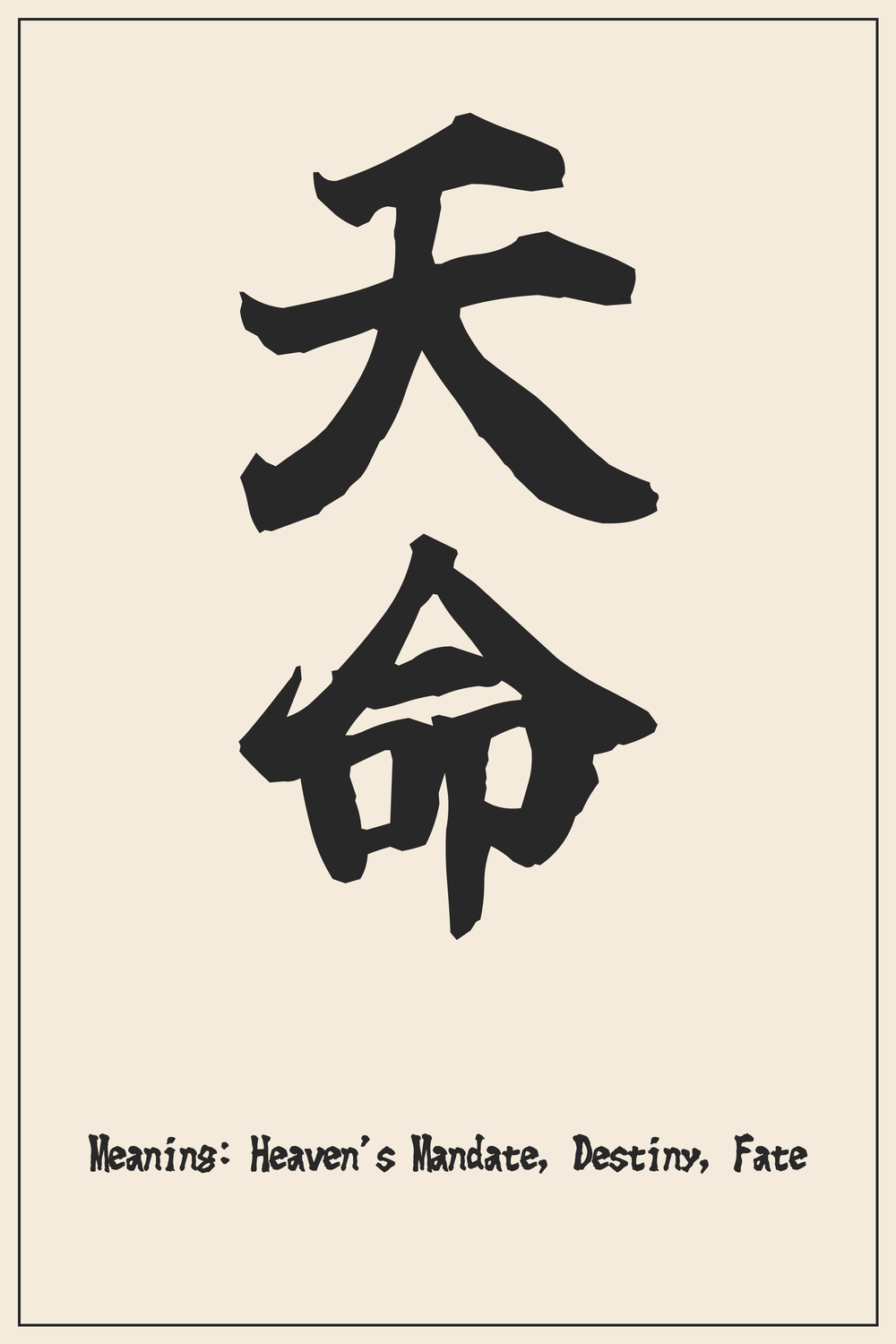
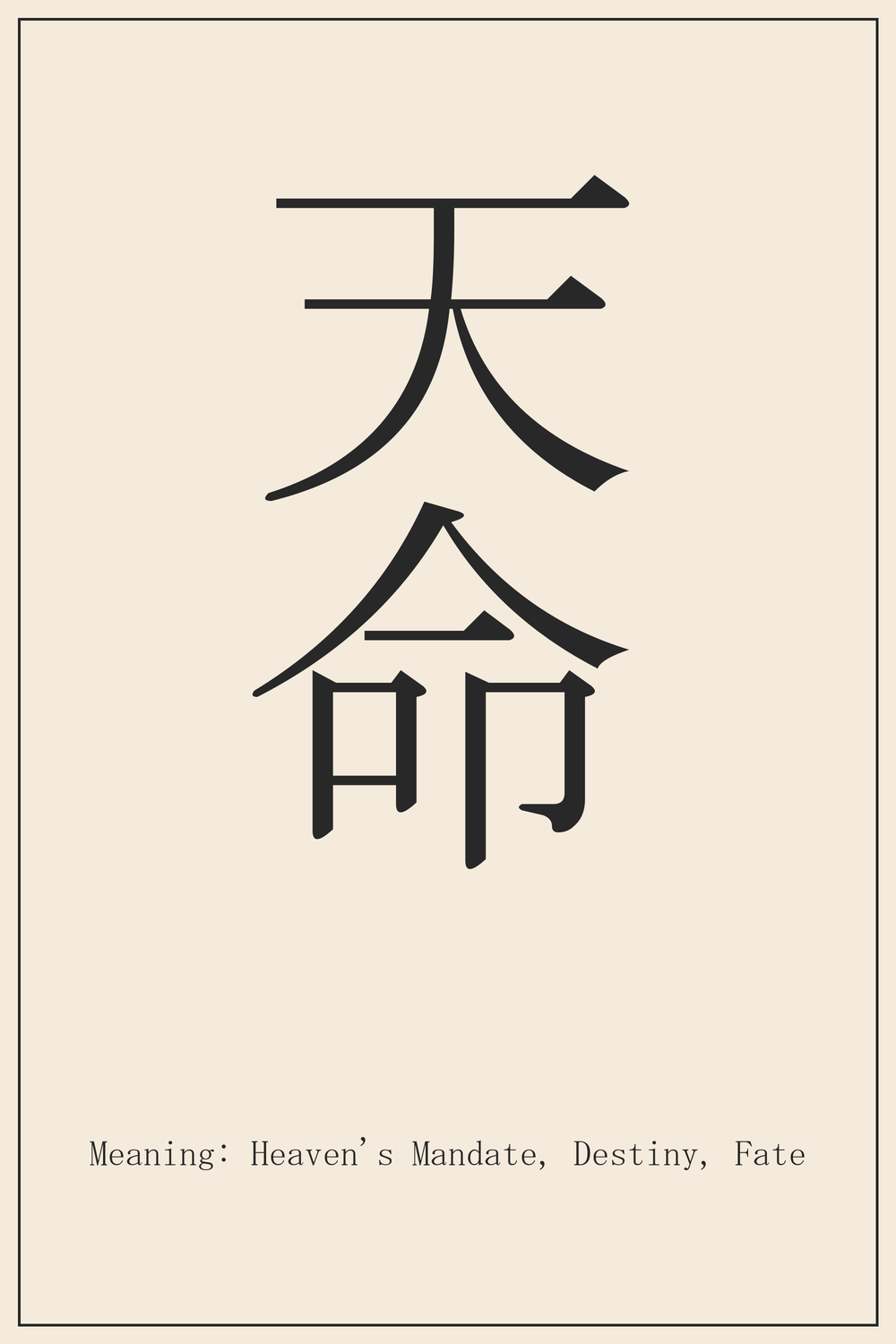
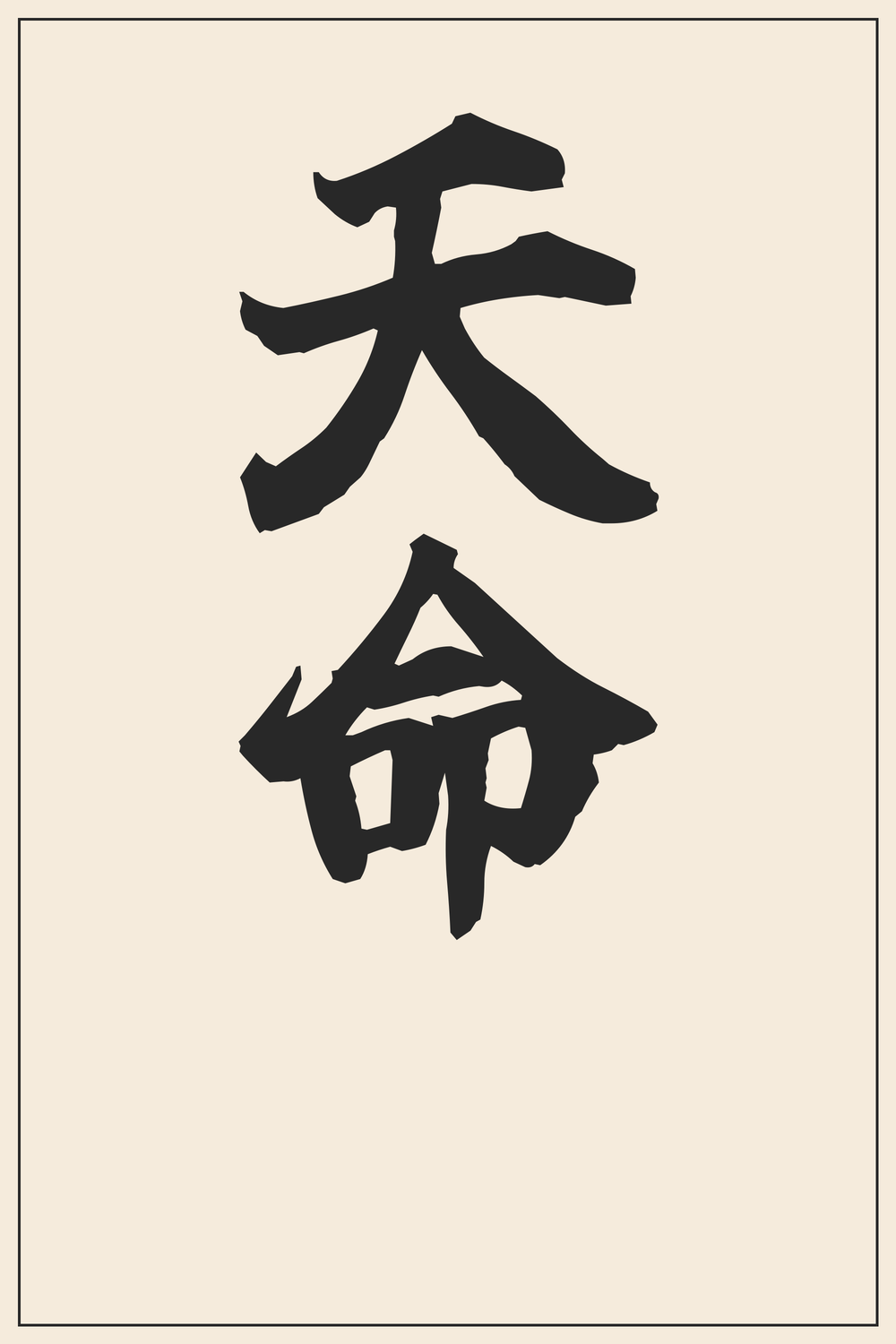
The Kanji ‘天命’ embodies the profound concept of destiny, a path ordained by a higher power. It encourages a deep reflection on one’s purpose and an acceptance of life’s ultimate design.
The atmosphere of a Kanji character changes dramatically depending on the font style. A character that looks elegant in a brush style might look bold and modern in a different font.
Recommendation:
Since a tattoo is permanent, we strongly recommend comparing various font styles beyond what is shown here. Use our designs as a trusted reference for the correct structure, but feel free to explore different artistic variations to find the perfect match for your vision.
The Deep Meaning Behind 天命
The compound ‘天命’ (Tenmei) is a profound concept rooted in the combination of ‘天’ (ten), meaning ‘heaven’ or ‘sky,’ and ‘命’ (mei), meaning ‘command,’ ‘life,’ or ‘destiny.’ Together, they signify a decree or an inherent purpose bestowed by a higher, divine authority.
Historically, ‘天命’ was central to ancient East Asian philosophy, particularly in the concept of the ‘Mandate of Heaven’ which justified the rule of emperors. In Japanese culture, it evolved to represent a personal destiny, an unchangeable fate, or a significant calling in one’s life, often implying a noble purpose or an unavoidable challenge.
Kanji Breakdown
Each character within ‘天命’ contributes to its deep meaning, painting a picture of divine will and individual purpose.
Meaning: Heaven, Sky
Explanation: Originally a pictograph depicting a large human figure with a line above its head, representing what is above humanity—the sky or heaven. It conveys a sense of ultimate authority, the cosmos, or the natural order of the universe.
Meaning: Command, Life, Destiny
Explanation: Composed of 令 (rei – command) and 口 (kuchi – mouth), its ancient form depicted a person kneeling before an oracle or a command. It signifies a decree, a given existence (life), or an unchangeable, divinely ordained fate.
Conclusion
‘天命’ encapsulates the profound idea of a destiny or purpose ordained by a higher power. It speaks to an individual’s unique path, challenges, and ultimate role in life, imbued with a sense of divine will and a predetermined course.
Choosing ‘天命’ as a tattoo serves as a powerful reminder of one’s inherent purpose and the acceptance of life’s grand design. It signifies courage in facing one’s fate and the determination to fulfill one’s true calling, making it a deeply personal and inspiring symbol that resonates with universal truths about existence.
Comments