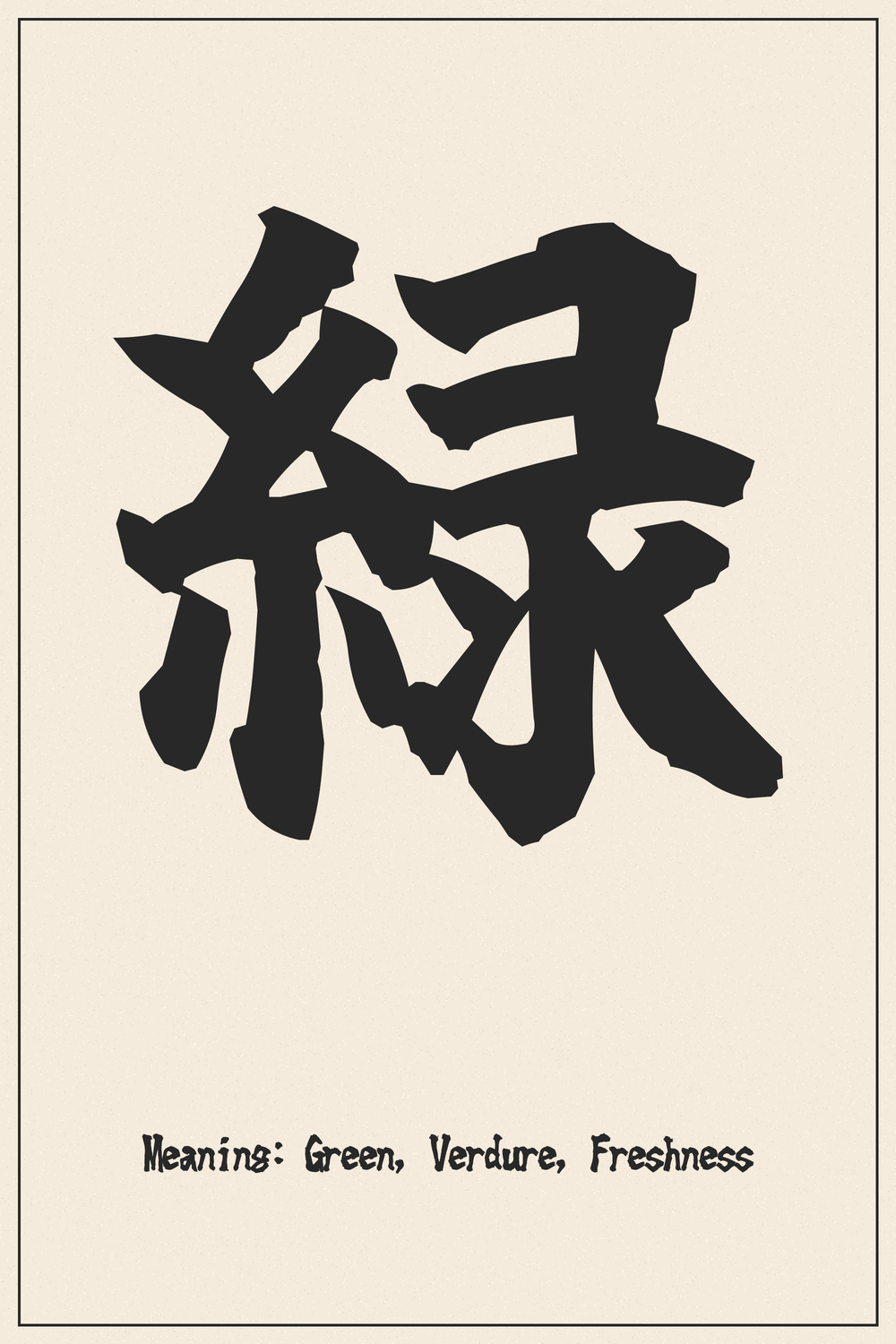
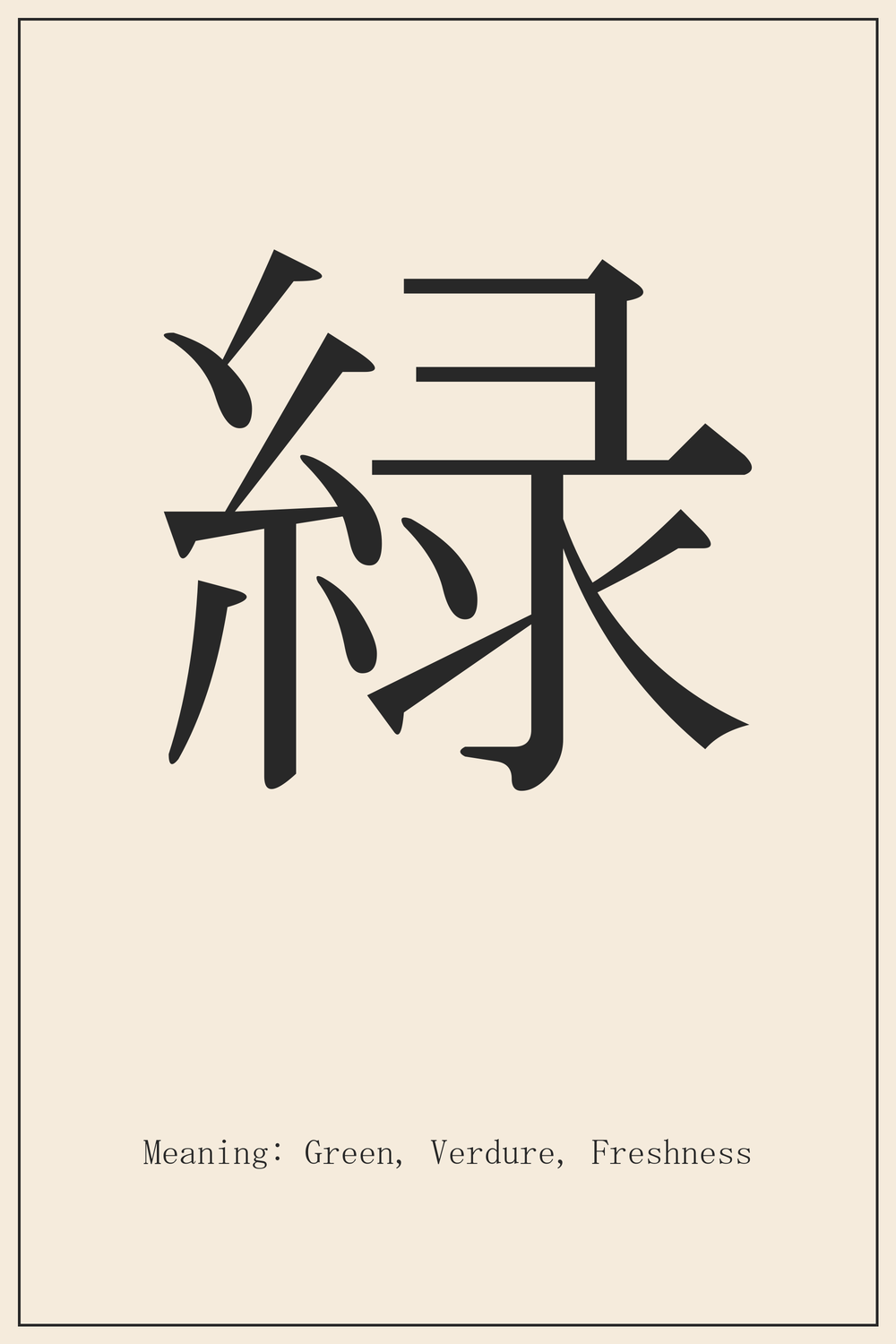
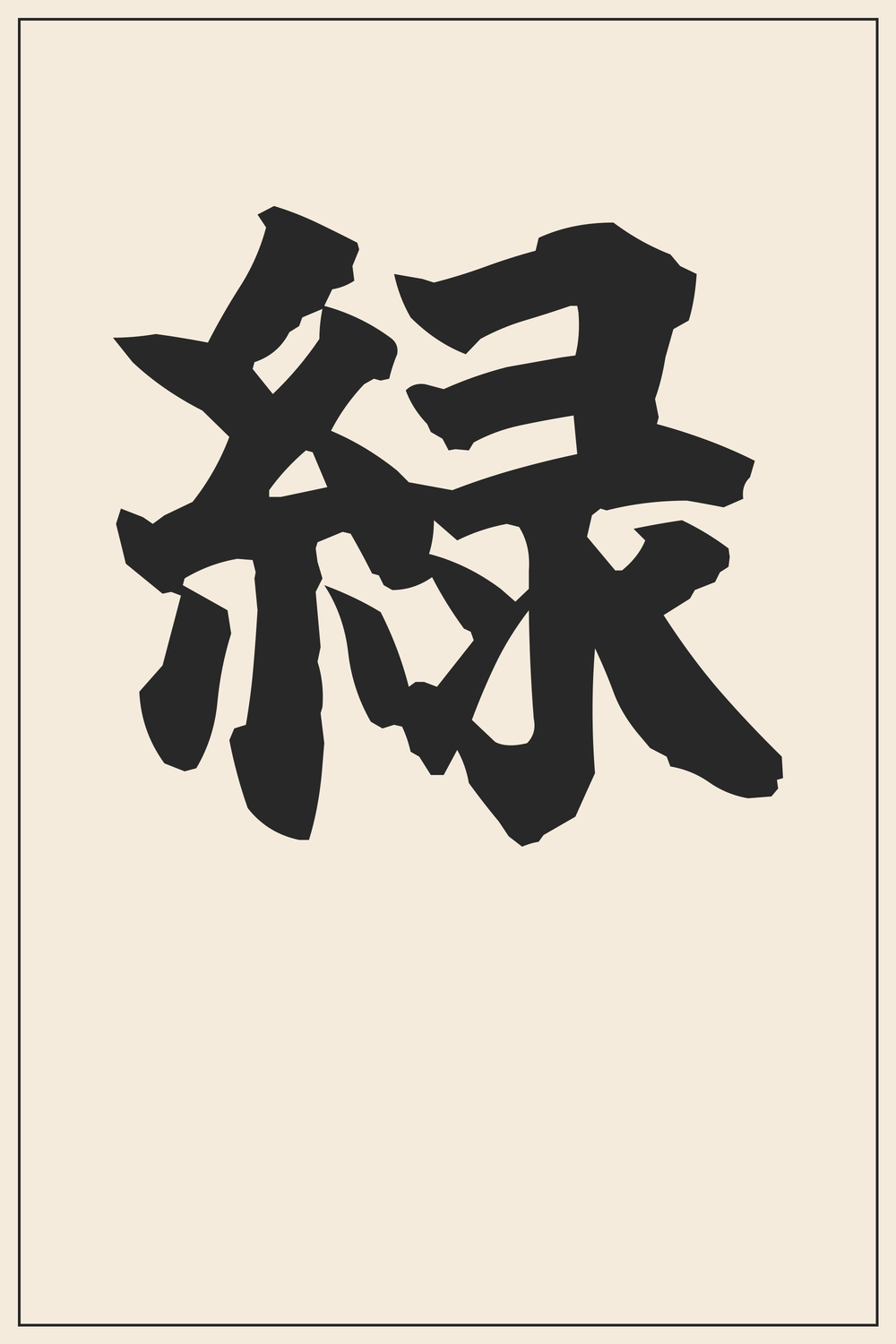
Embrace the serene power of nature with the Kanji for ‘Green’, a symbol that vibrantly captures life’s essence. The character 緑 is more than just a color; it’s a profound representation of growth, renewal, and the tranquil beauty of the natural world.
The atmosphere of a Kanji character changes dramatically depending on the font style. A character that looks elegant in a brush style might look bold and modern in a different font.
Recommendation:
Since a tattoo is permanent, we strongly recommend comparing various font styles beyond what is shown here. Use our designs as a trusted reference for the correct structure, but feel free to explore different artistic variations to find the perfect match for your vision.
The Deep Meaning Behind 緑
The Kanji 緑 (midori) is an intricate character whose origins point to the dyeing of threads. It is composed of two main elements: 糸 (ito), meaning ‘thread’ or ‘silk,’ and 彔 (rokuji), which acts as a phonetic component but also carries ancient associations with ‘water flowing downward’ or ‘engraving.’ This combination symbolically represents the process of coloring threads green, or the lush verdure of nature as if ‘dyed’ by life itself.
In Japanese culture, 緑 is deeply revered, symbolizing not only the vibrant landscapes but also tranquility, harmony, and environmental consciousness. It is a color of peace and health, frequently seen in traditional gardens, art, and everyday life, reflecting a profound respect for nature. The concept of ‘green’ extends to freshness and youth, representing new beginnings and enduring vitality.
Kanji Breakdown
The character 緑 (midori) is composed of two significant elements, each contributing to its meaning of ‘green’ and its association with nature and color.
Meaning: This radical represents ‘thread’ or ‘silk.’ It is commonly found in characters related to textiles, weaving, and colors, as threads were historically dyed to achieve various hues.
Meaning: While primarily acting as a phonetic component that gives 緑 its ‘ryoku’ sound (from which ‘midori’ also derives), this element also carries ancient visual associations. It has been interpreted as depicting ‘water flowing downward’ or ‘carving/engraving,’ which can symbolically tie into the lushness of verdure or the shaping of natural forms.
Conclusion
Choosing 緑 for a tattoo signifies a deep connection to nature, an appreciation for growth, and a celebration of life’s perpetual renewal. It embodies a serene strength and a vibrant spirit, echoing the lush beauty of the natural world.
This Kanji is a powerful statement of vitality and harmony. A tattoo of 緑 would serve as a constant reminder of nature’s calming presence and the endless cycle of life, offering a personal emblem of peace and resilience.
Comments