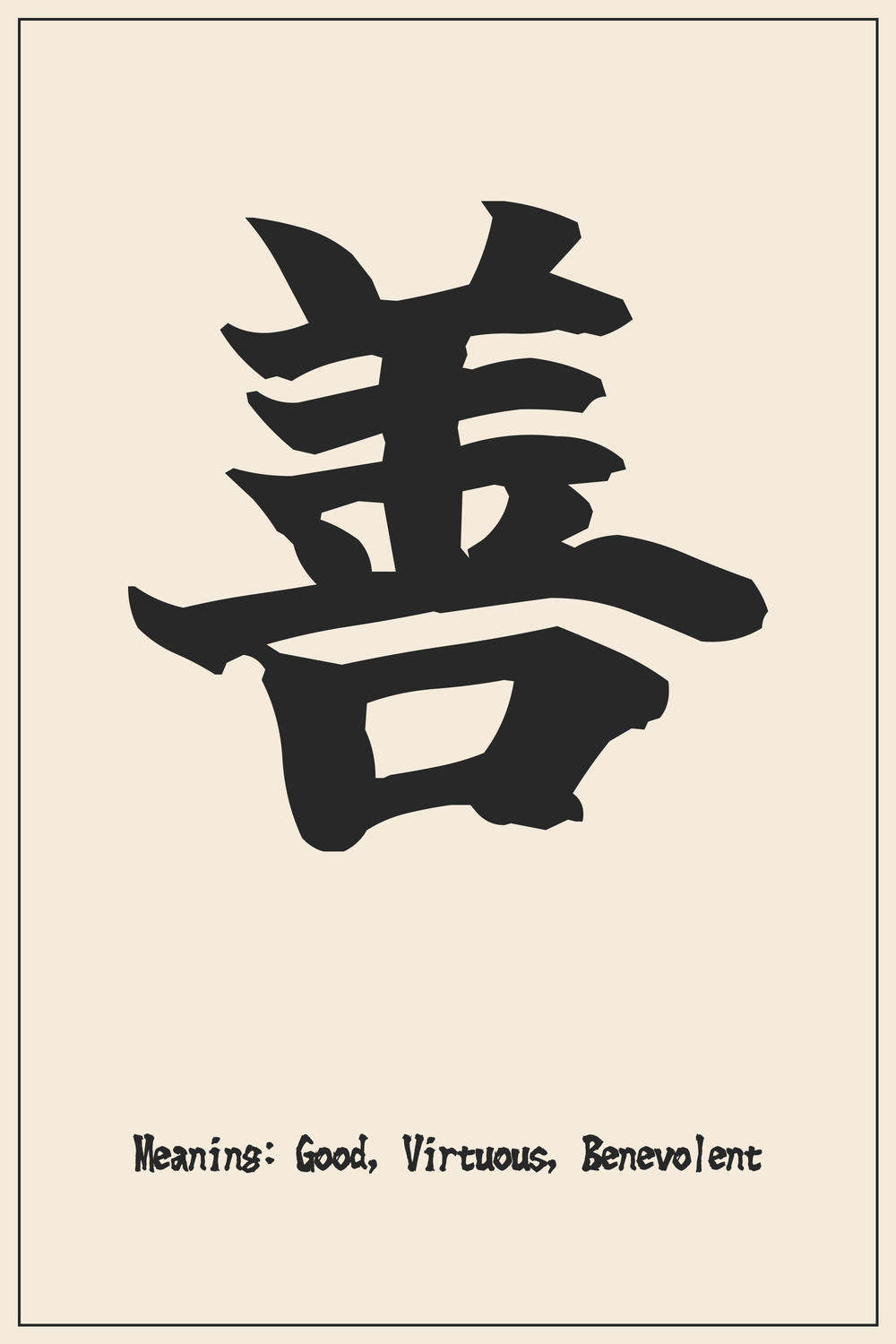
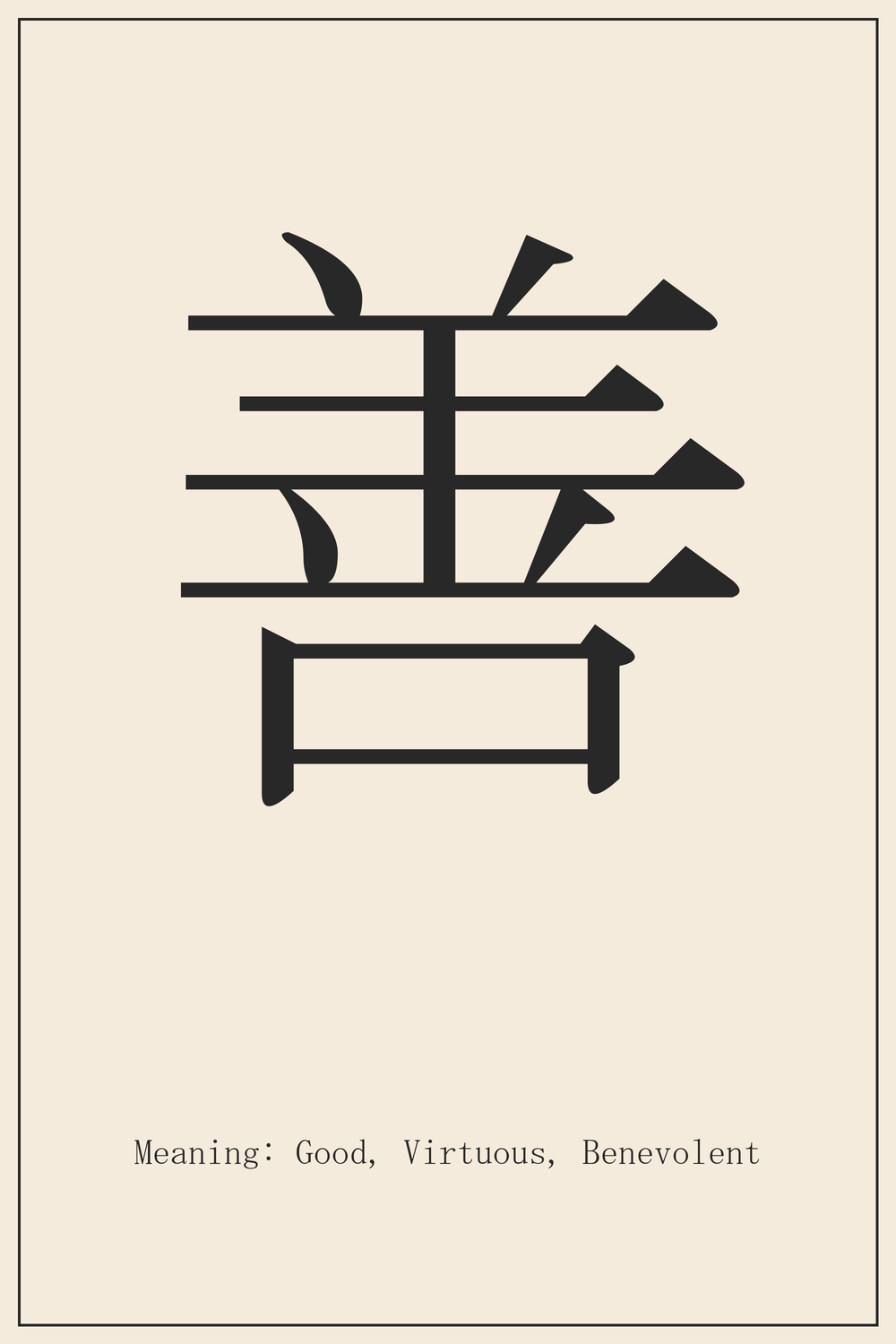
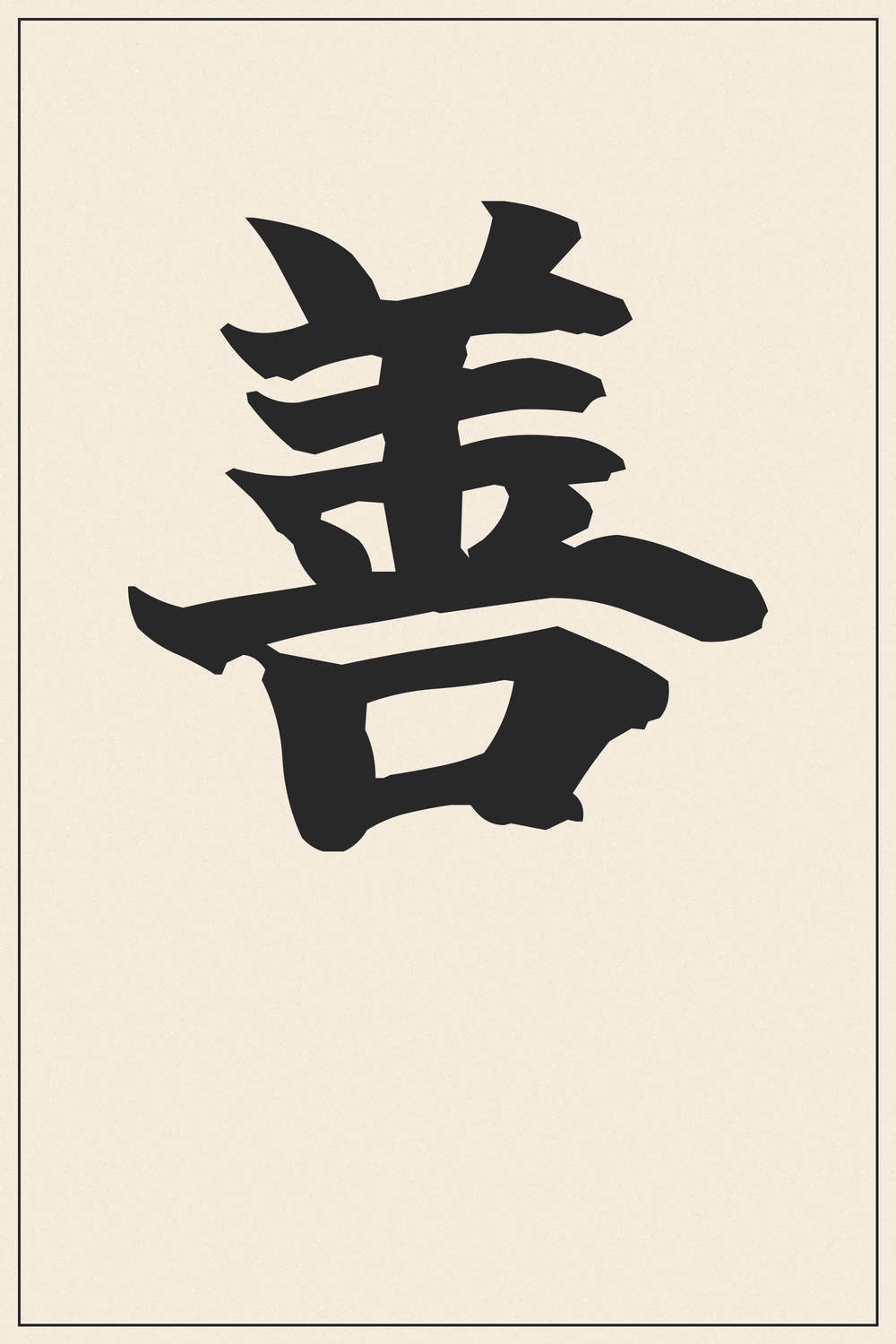
The Kanji ‘善’ encapsulates profound ideals of goodness and benevolence. It represents the moral compass guiding actions and intentions in Japanese culture.
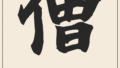
The atmosphere of a Kanji character changes dramatically depending on the font style. A character that looks elegant in a brush style might look bold and modern in a different font.
Recommendation:
Since a tattoo is permanent, we strongly recommend comparing various font styles beyond what is shown here. Use our designs as a trusted reference for the correct structure, but feel free to explore different artistic variations to find the perfect match for your vision.
The Deep Meaning Behind 善
The character 善 (zen) is an ideogram that originally depicted a goat (羊, hitsuji, a symbol of auspiciousness) being judged by two sets of eyes or speech (言, gen/kotoba, containing 口). This suggests an ancient concept of evaluating what is ‘good’ or ‘right’ through observation and consensus, often linked to ritual purity and positive omens.
In Japanese culture, 善 embodies fundamental ethical principles. It extends beyond mere absence of evil to encompass active benevolence, moral uprightness, and the pursuit of harmony. Concepts like 善行 (zenkō – good deed) and 改善 (kaizen – improvement) highlight its pervasive influence in personal conduct and societal progress.
Kanji Breakdown
The Kanji 善 (zen) is a singular character whose components reveal its historical origins and layers of meaning.
Meaning: Good, Virtuous
The character 善 (zen) is thought to be a pictographic and ideographic combination. Its ancient form depicted a goat (羊, yō/hitsuji, symbolizing auspiciousness and beauty) placed above a combination of two sets of ‘eyes’ or ‘speech’ (言, gen/kotoba, which itself combines 言 (words) and a mouth 口). This suggests a concept of ‘goodness’ being something pleasant or auspicious, often associated with words, judgment, or consensus, much like a beautiful or sacrificial animal.
Conclusion
The Kanji 善 is a timeless symbol of virtue, embodying the ideals of goodness, benevolence, and moral integrity. Its meaning transcends simple definition, representing a profound commitment to ethical living and positive action.
For those seeking a tattoo that reflects core values and a guiding philosophy, 善 is an exceptional choice. It serves as a constant reminder to strive for the highest moral standards and to contribute positively to the world.
Comments