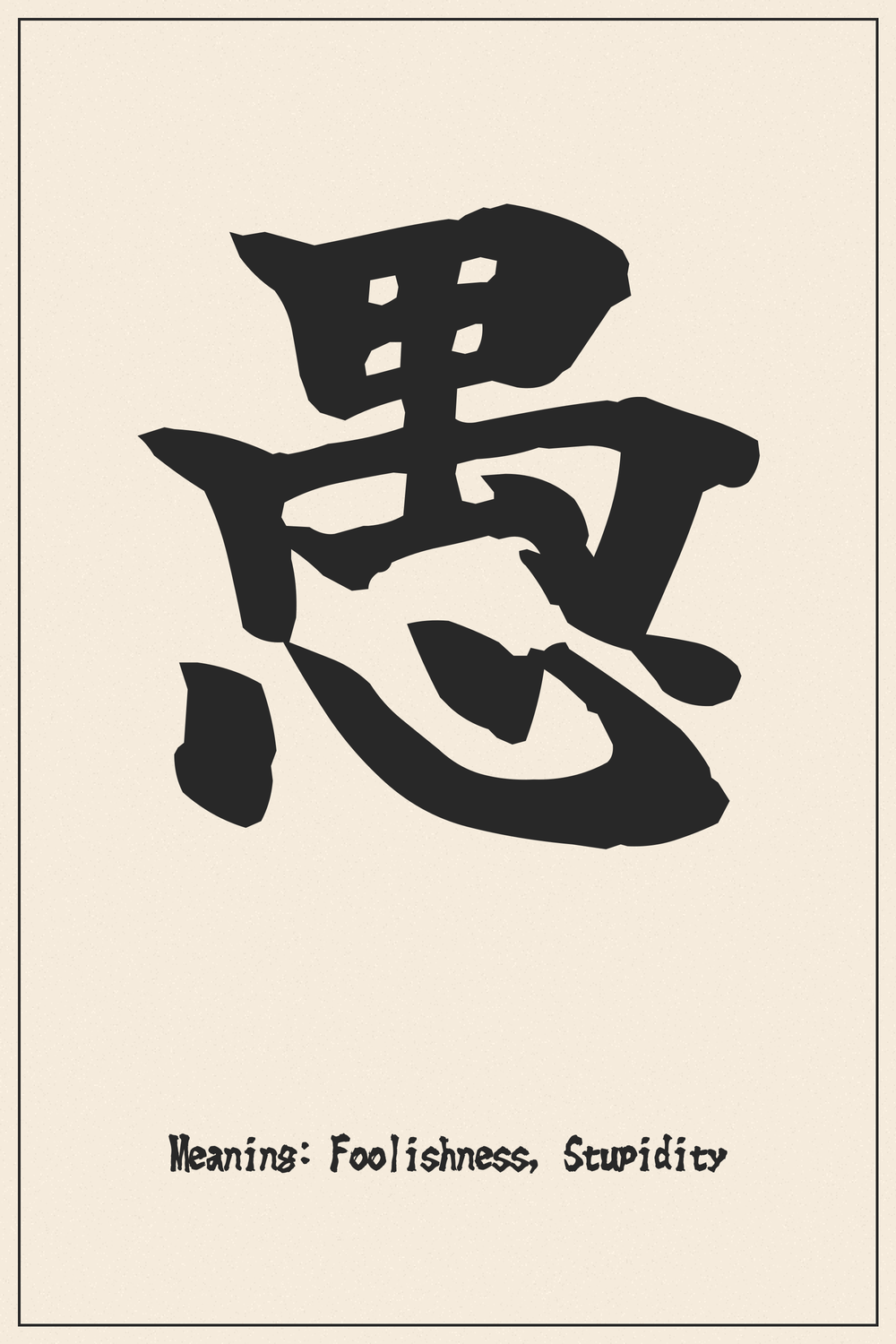
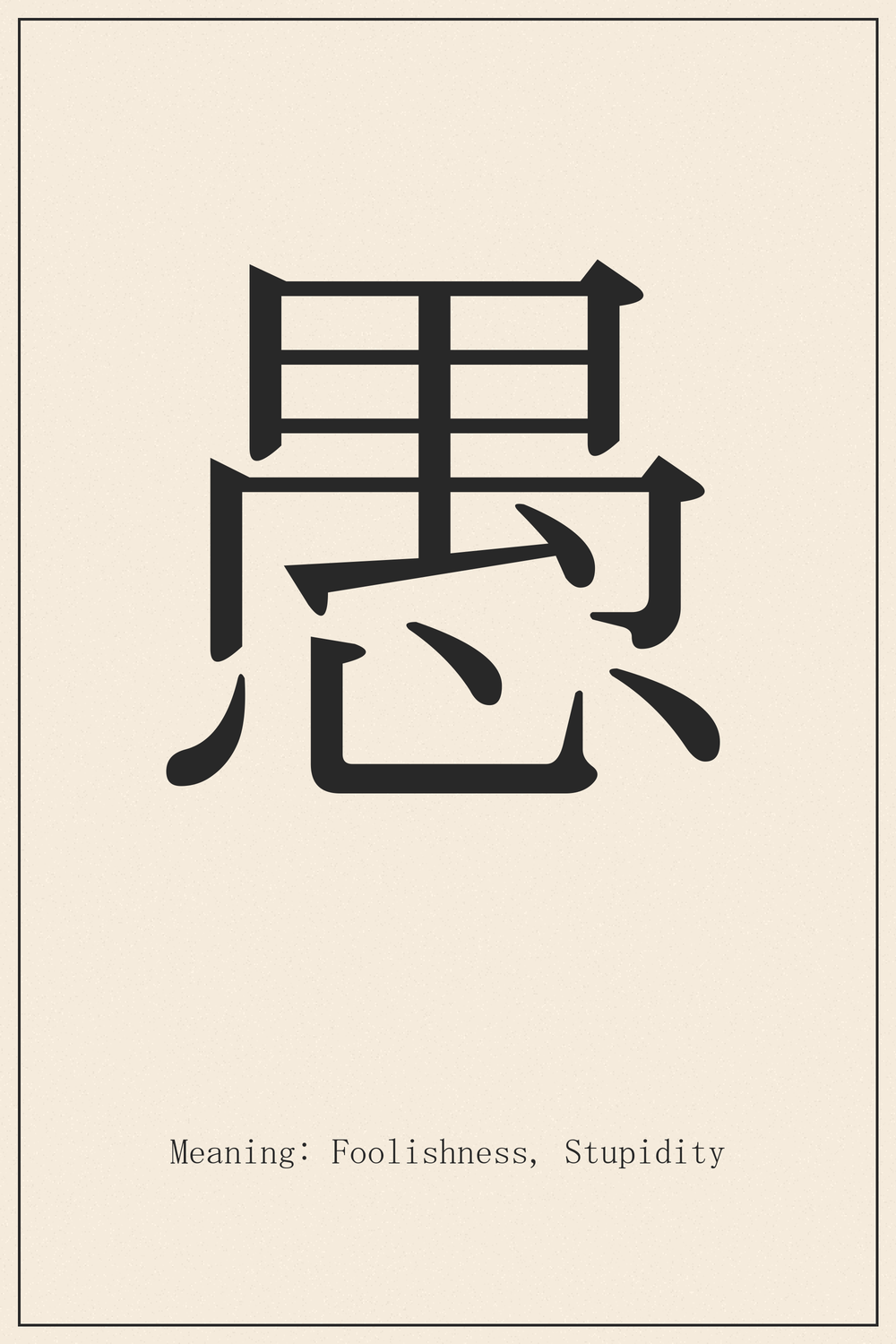
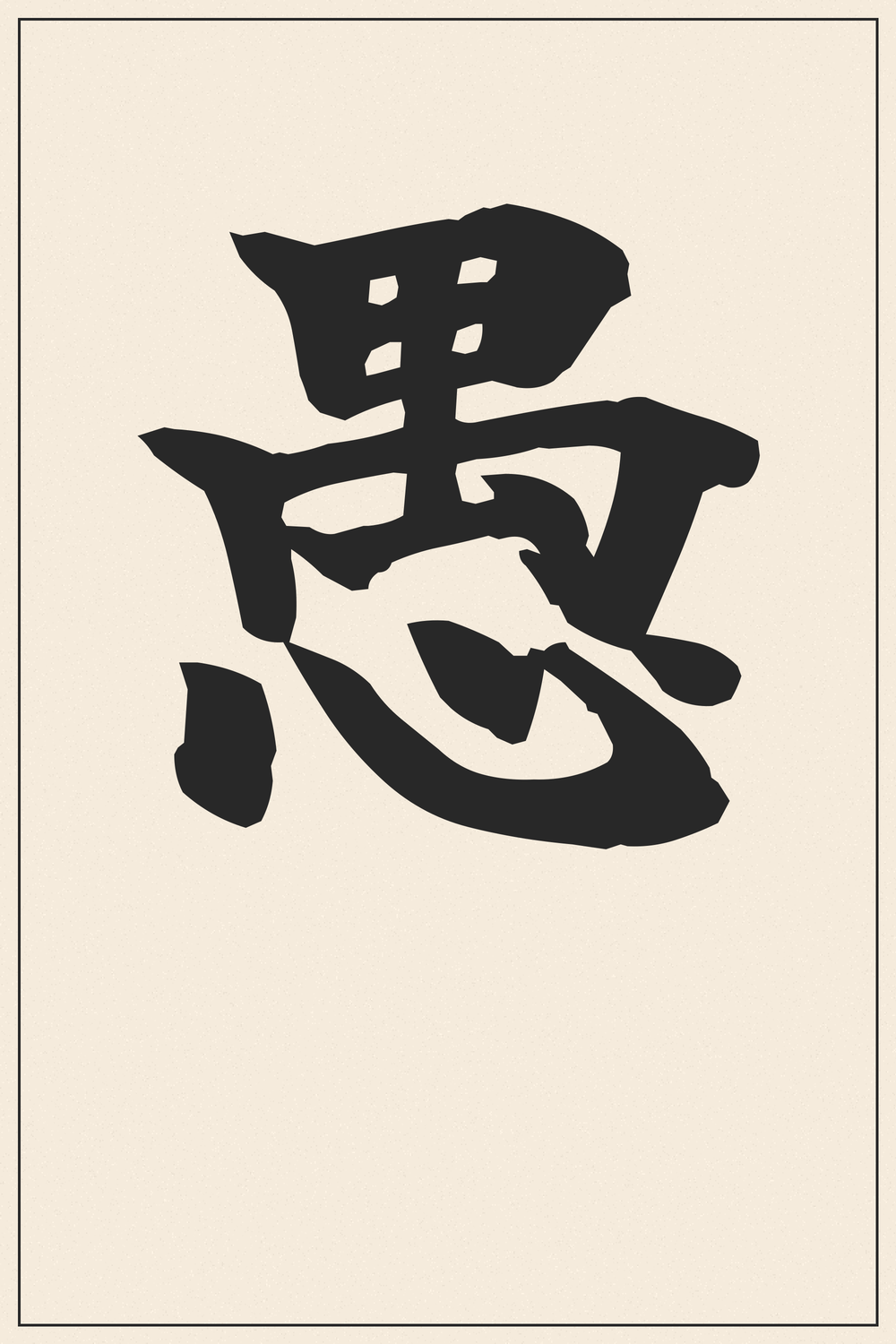
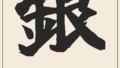
The Kanji 愚, representing foolishness, offers a stark reminder of human fallibility. While seemingly negative, its profound meaning encourages introspection and the pursuit of wisdom.
The atmosphere of a Kanji character changes dramatically depending on the font style. A character that looks elegant in a brush style might look bold and modern in a different font.
Recommendation:
Since a tattoo is permanent, we strongly recommend comparing various font styles beyond what is shown here. Use our designs as a trusted reference for the correct structure, but feel free to explore different artistic variations to find the perfect match for your vision.
The Deep Meaning Behind 愚
The Kanji 愚 (GU) encapsulates the concept of foolishness or stupidity. Its etymological roots trace back to depictions of a monkey, often associated with erratic or thoughtless behavior, combined with the radical for ‘heart’ or ‘mind’. This ancient pictographic combination suggests a mind that acts impulsively or without proper consideration, akin to the actions of a monkey.
In Japanese culture and philosophy, ‘foolishness’ is often contrasted with ‘wisdom’ (知恵, Chie) and ‘enlightenment’. While generally seen as a negative trait, acknowledging one’s own ‘foolishness’ (愚かさ, orokasa) can be a starting point for growth and self-improvement, a path towards deeper understanding and humility. It can also appear in self-deprecating humor or expressions of humility.
Kanji Breakdown
The character 愚 is a fascinating example of how semantic and phonetic components combine to create a nuanced meaning.
Meaning: A monkey or ape. This component serves primarily as a phonetic indicator (gu) but also lends its semantic association with a creature often perceived as capricious or lacking profound intellect in ancient Chinese thought.
Meaning: Heart, mind, spirit. This radical grounds the meaning in the internal state or mental capacity of a person. When combined with 禺, it implies a ‘heart’ or ‘mind’ that is like that of a monkey, thus ‘foolish’.
Conclusion
The Kanji 愚, meaning foolishness or stupidity, serves as a powerful symbol. While its direct interpretation is negative, it can paradoxically encourage a journey towards wisdom by acknowledging the absence of it. It represents an introspective concept rather much than a celebratory one.
For those considering a tattoo, careful thought should be given to the profound and sometimes challenging implications of 愚. Its cultural depth lies in its role as a cautionary or reflective concept, prompting self-awareness. Ensure this Kanji aligns with your personal message before committing to its permanent mark.
Comments