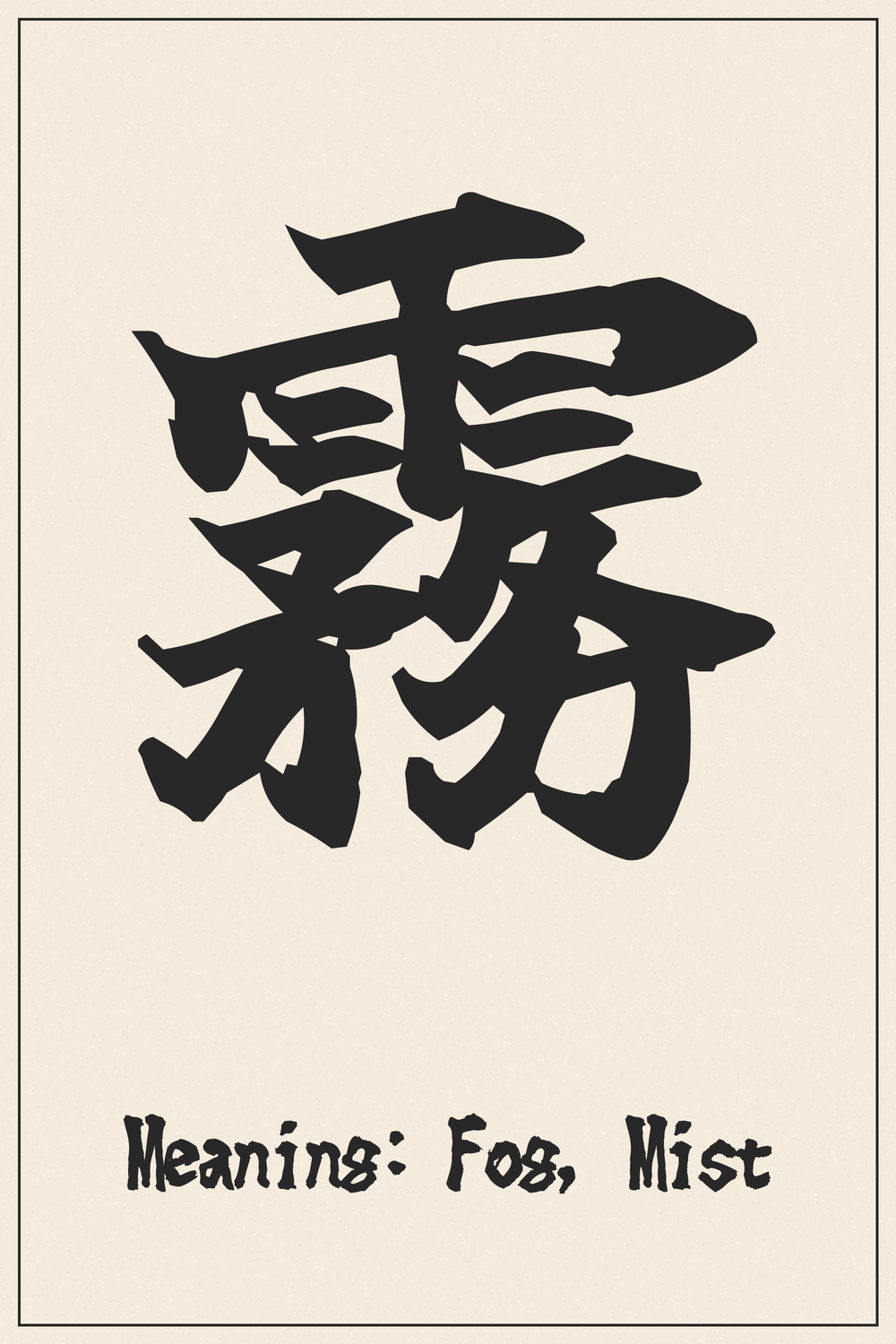
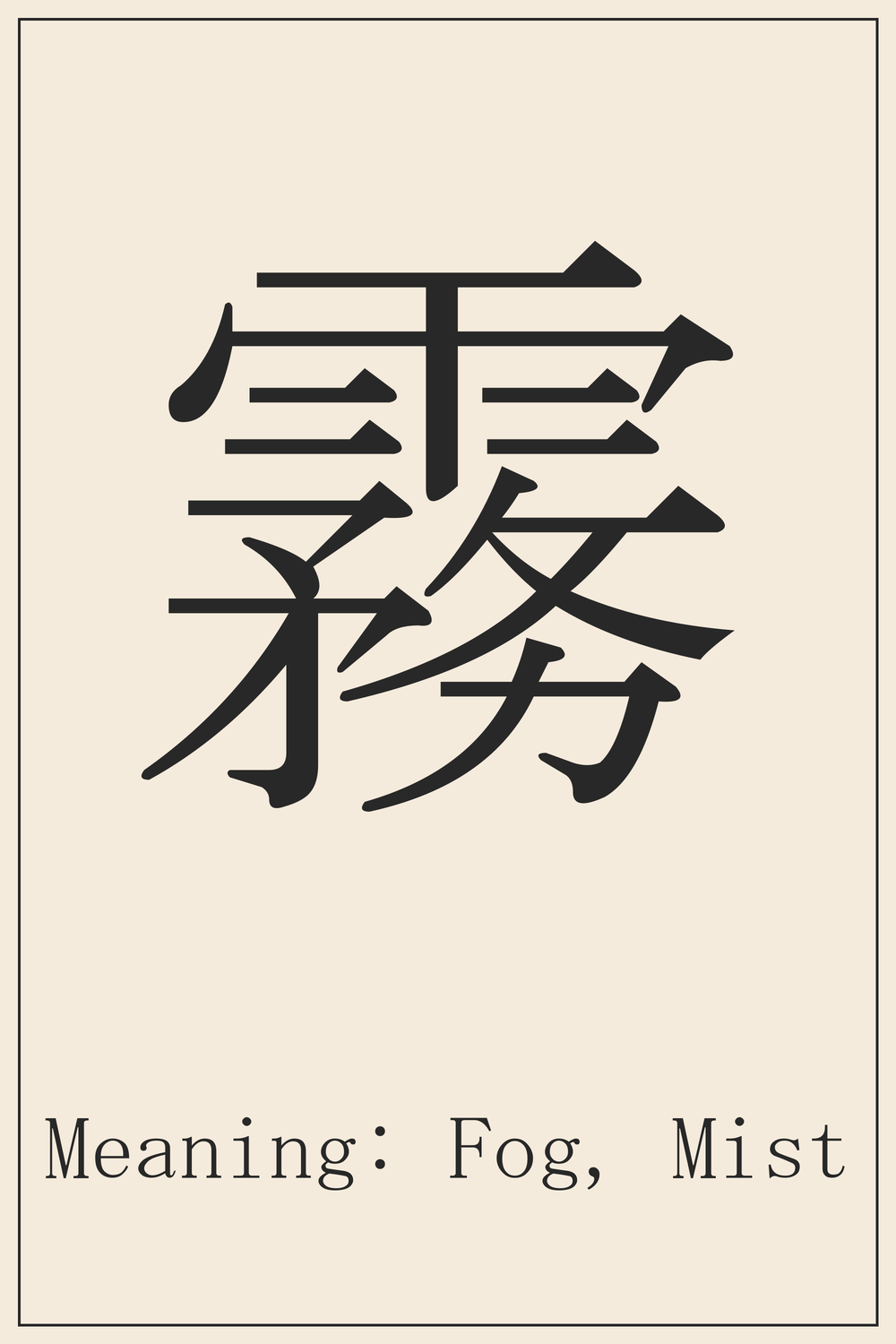
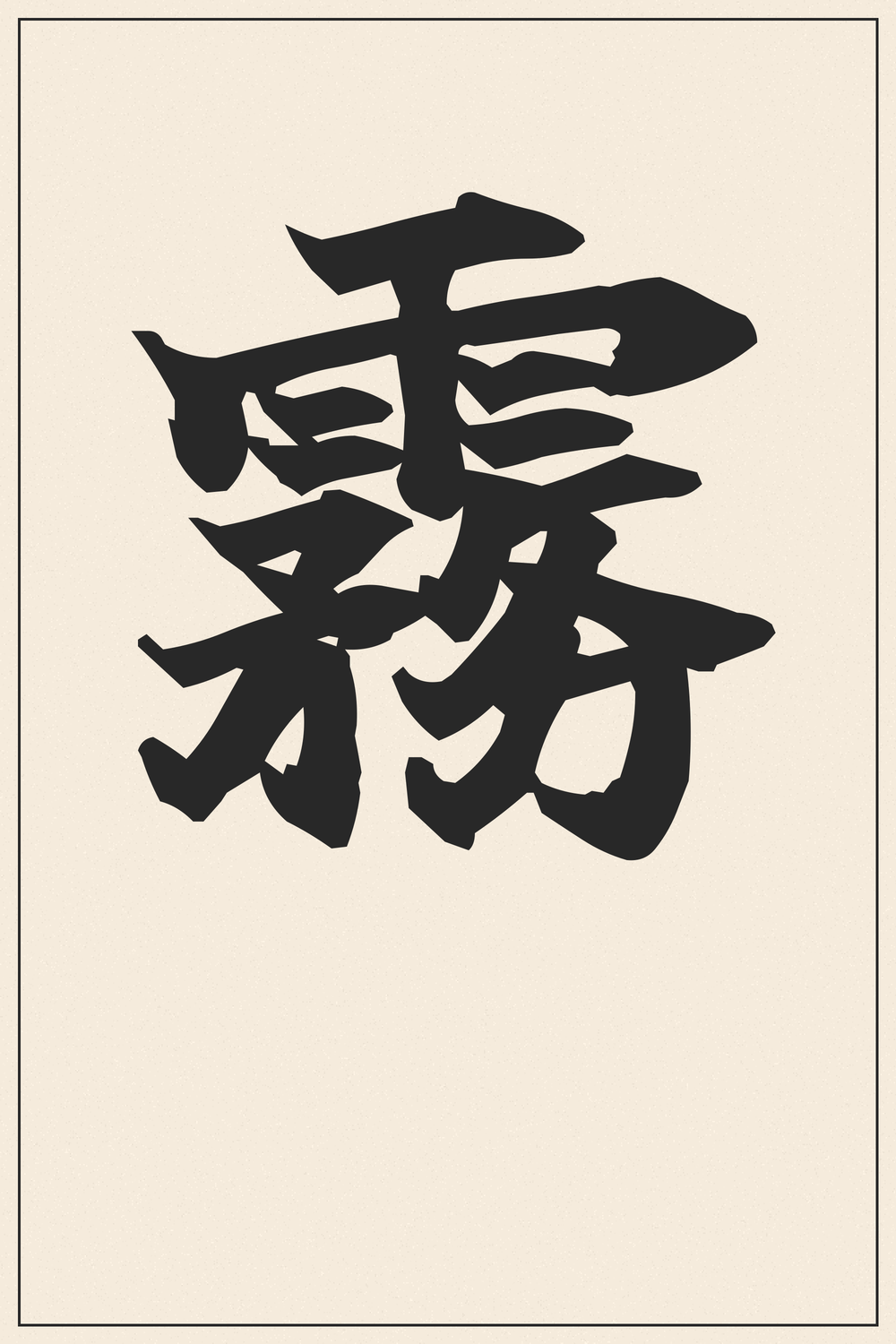
The Kanji 霧 encapsulates the elusive beauty and profound mystery of mist and fog. It evokes a sense of transient presence, often seen as a veil between worlds or a symbol of contemplation.
The atmosphere of a Kanji character changes dramatically depending on the font style. A character that looks elegant in a brush style might look bold and modern in a different font.
Recommendation:
Since a tattoo is permanent, we strongly recommend comparing various font styles beyond what is shown here. Use our designs as a trusted reference for the correct structure, but feel free to explore different artistic variations to find the perfect match for your vision.
The Deep Meaning Behind 霧
The Kanji 霧 (kiri) is composed of two primary elements. The radical 雨 (ame), meaning ‘rain’, clearly sets the context for atmospheric phenomena. This element signifies the watery origin of mist and fog, linking it directly to weather and the natural environment.
The component 務 (mu), while meaning ‘duty’ or ‘affairs’ in isolation, here primarily acts as a phonetic indicator and lends a nuance of ‘denseness’ or ‘obscurity’. Combined with ‘rain’, it conceptually forms the image of a thick, opaque atmospheric condition, reflecting the very essence of fog or mist.
Kanji Breakdown
The intricate beauty of 霧 is best understood by examining its constituent parts:
Rain: This radical signifies precipitation, setting the atmospheric context for mist and fog. It grounds the Kanji in natural weather phenomena.
Affairs/Dense: Serving as both a phonetic component and a contributor to meaning, 務 evokes the idea of something thick or concentrated. Its complexity helps convey the visual density of fog.
Conclusion
The Kanji 霧 is a profound representation of nature’s ephemeral beauty and the mysteries it holds. It symbolizes the transient, the veiled, and the subtly powerful elements of our world, often appearing in Japanese art and poetry to evoke a sense of quiet contemplation or hidden depths.
Choosing 霧 for a tattoo signifies an appreciation for natural elegance and a connection to the unseen. Its aesthetic complexity and deep cultural resonance make it a compelling and distinctive choice for those who value subtlety and poetic nuance in their personal symbolism.
Comments