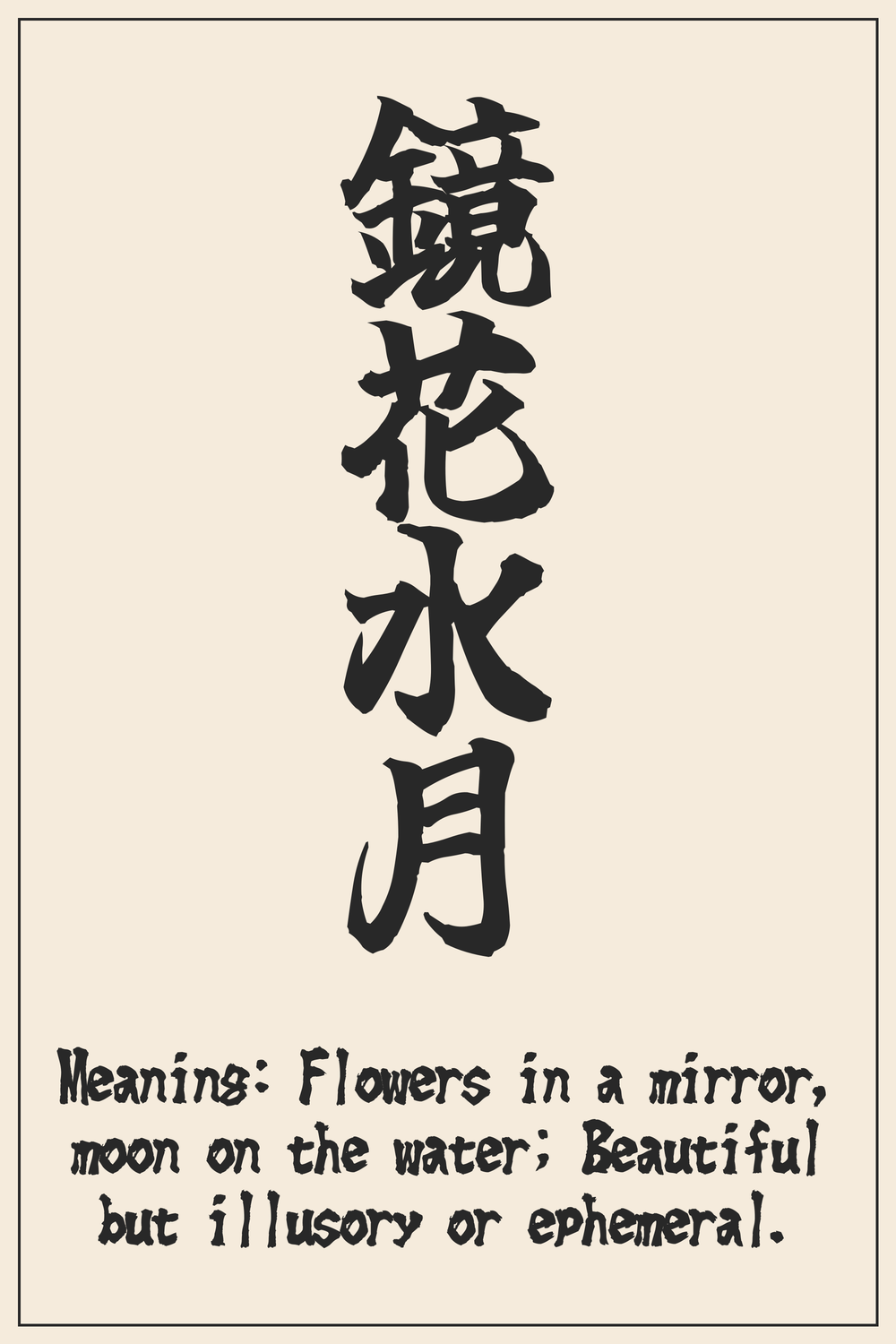
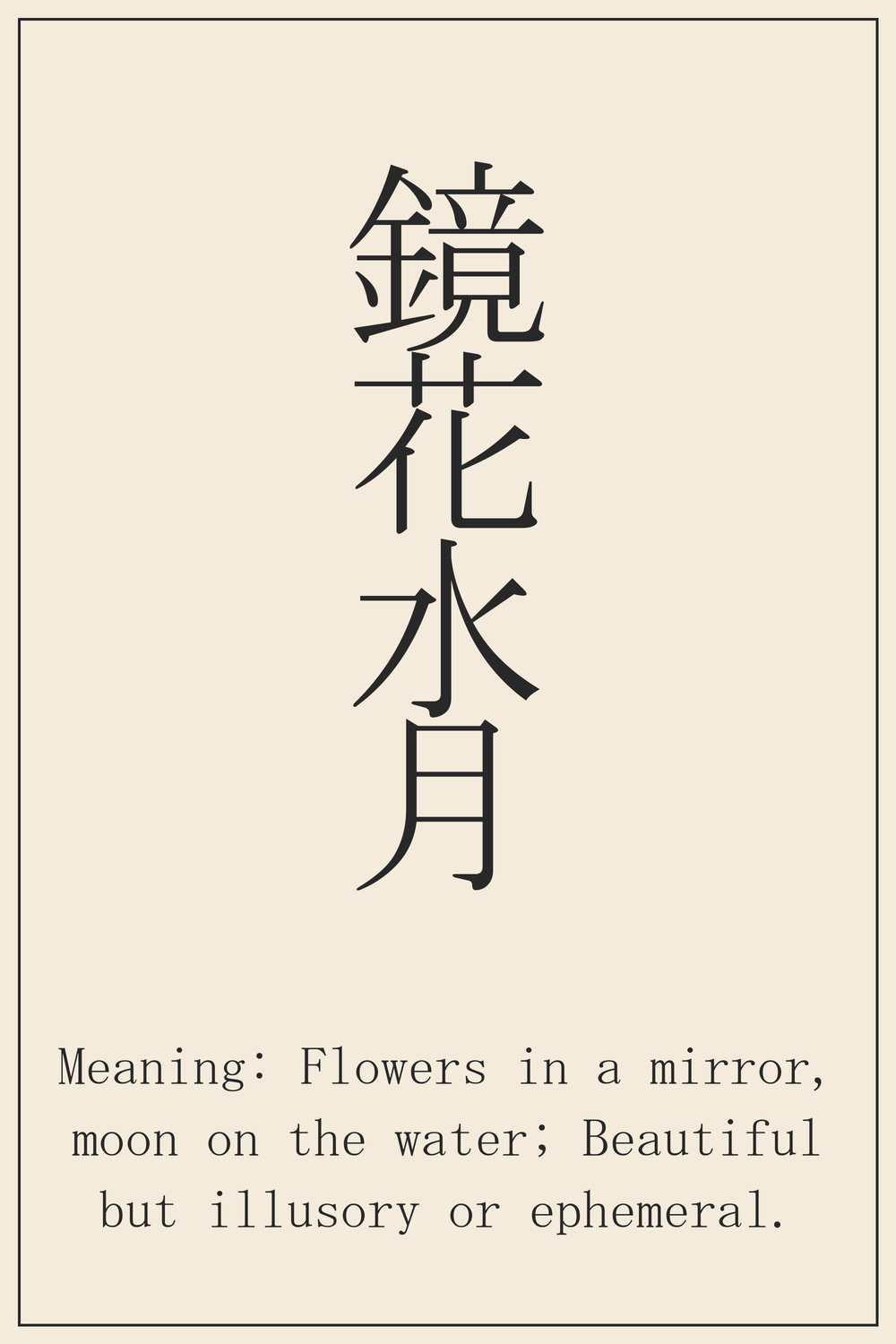
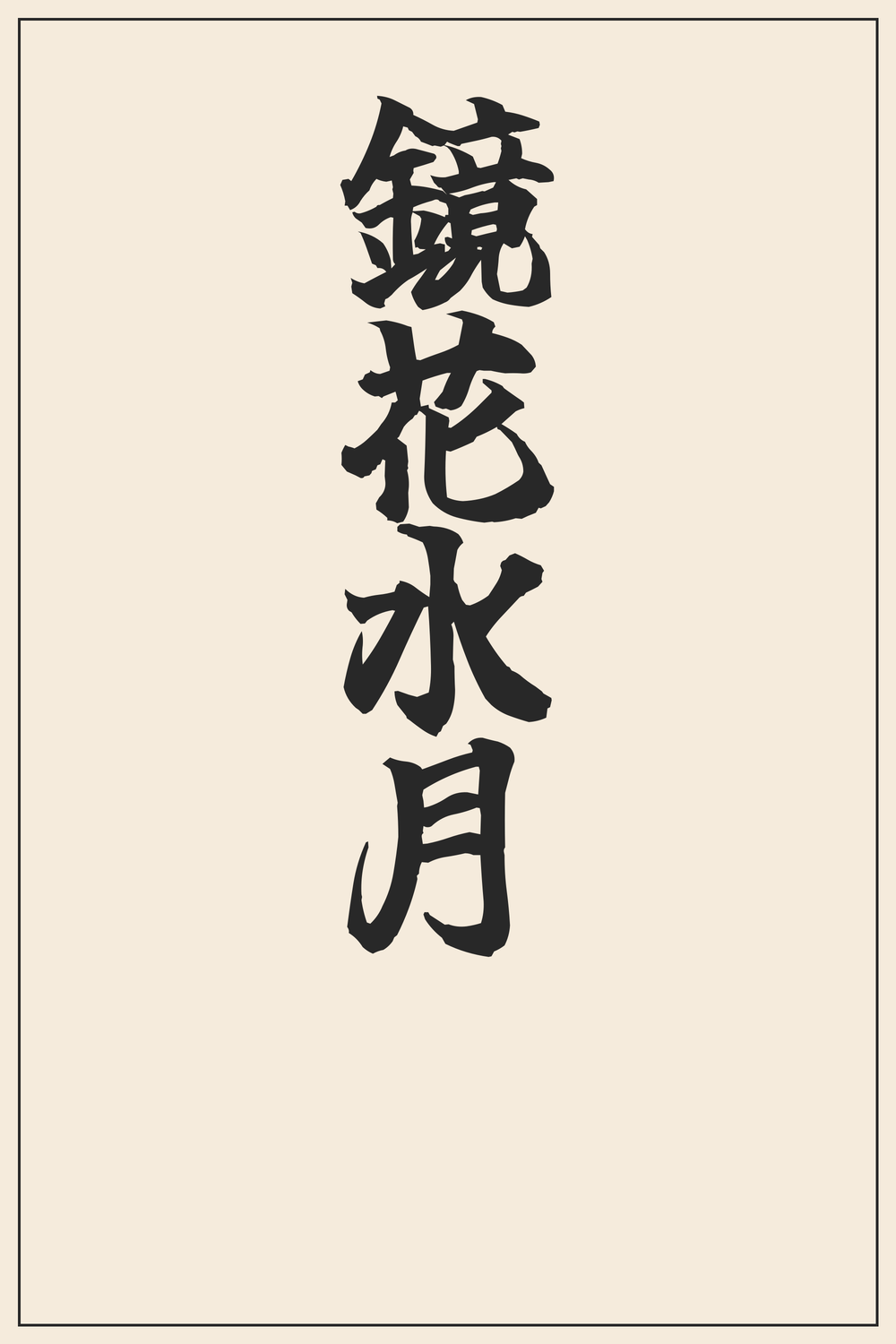
Immerse yourself in the profound aesthetic of 鏡花水月, a phrase that speaks to the heart of Japanese artistic philosophy. It encapsulates a beauty so exquisite it transcends the tangible, inviting contemplation on the nature of reality and illusion.
The atmosphere of a Kanji character changes dramatically depending on the font style. A character that looks elegant in a brush style might look bold and modern in a different font.
Recommendation:
Since a tattoo is permanent, we strongly recommend comparing various font styles beyond what is shown here. Use our designs as a trusted reference for the correct structure, but feel free to explore different artistic variations to find the perfect match for your vision.
The Deep Meaning Behind 鏡花水月
This Yojijukugo, originating from classical Chinese poetry and later embraced in Japan, describes an ethereal beauty that is seen but cannot be grasped. It evokes images of delicate flowers reflected in a mirror and the moon shimmering on water – sights of sublime beauty, yet entirely intangible.
In Japanese aesthetics, 鏡花水月 often refers to a profound, subtle, and elusive beauty, especially in arts like Noh theatre and poetry. It encourages an appreciation for the transient nature of existence and the depth found in the unspoken or unseen, a hallmark of refined artistic expression.
Kanji Breakdown
Each character within 鏡花水月 contributes to its multifaceted meaning, painting a picture of ethereal beauty.
Meaning: Mirror. Originally depicted an ancient bronze mirror, symbolizing reflection, illusion, and the boundary between reality and perception.
Meaning: Flower. Represents beauty, fleetingness, and the vibrant yet transient aspects of life, often associated with cherry blossoms.
Meaning: Water. Symbolizes purity, fluidity, and the ever-changing nature of existence. It reflects the moon, highlighting its role in creating illusions.
Meaning: Moon. Embodies serenity, mystery, and a distant, unattainable beauty, its reflection on water serving as a classic metaphor for illusion.
Conclusion
鏡花水月 encapsulates a profound philosophical concept of beauty that is both captivating and unattainable, much like a dream. It challenges us to find depth in the ephemeral and meaning in the intangible.
Choosing 鏡花水月 for a tattoo is a testament to an appreciation for deep aesthetic principles and the subtle dance between reality and illusion. It’s a powerful symbol for those who cherish profound beauty that transcends the ordinary.
Comments