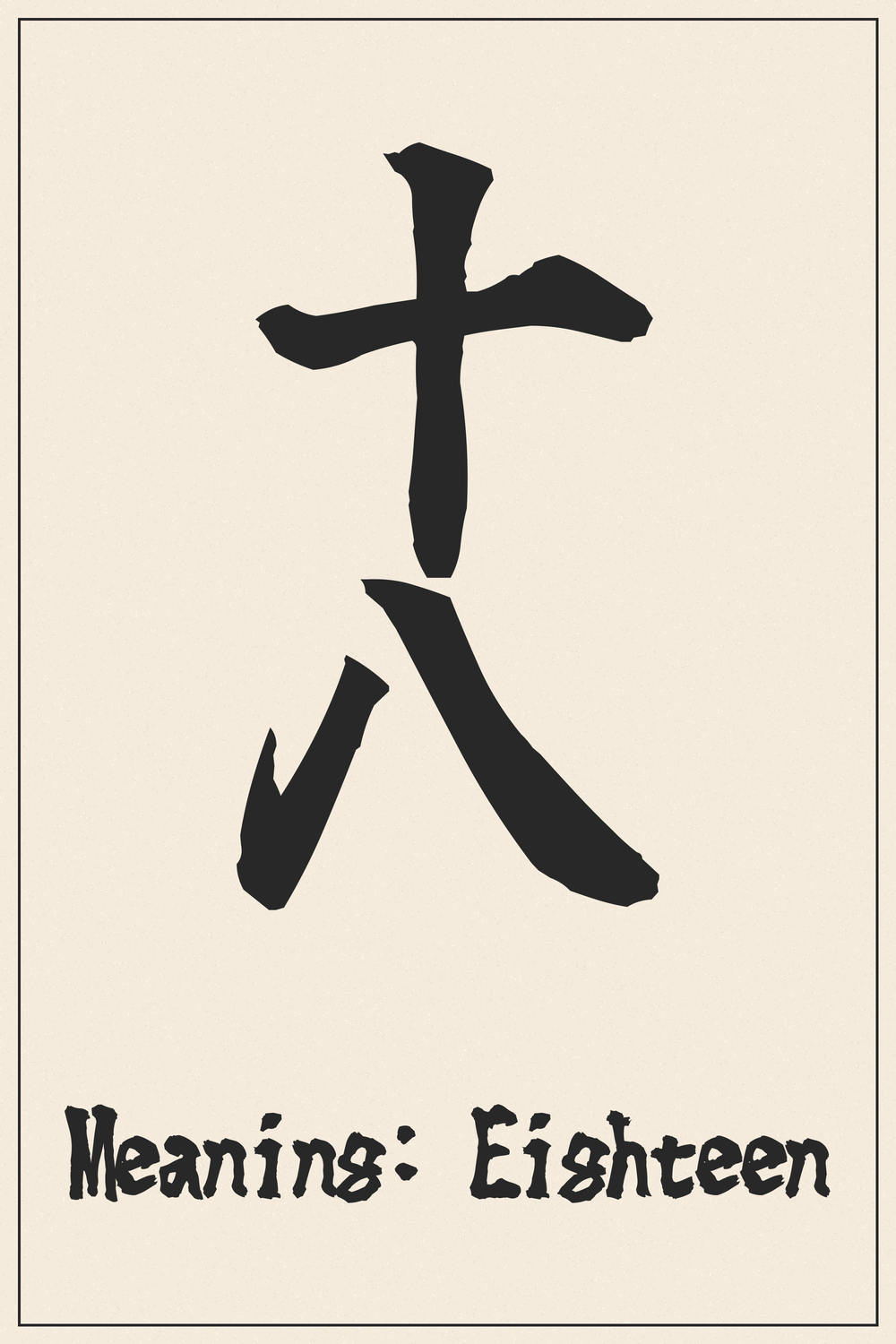
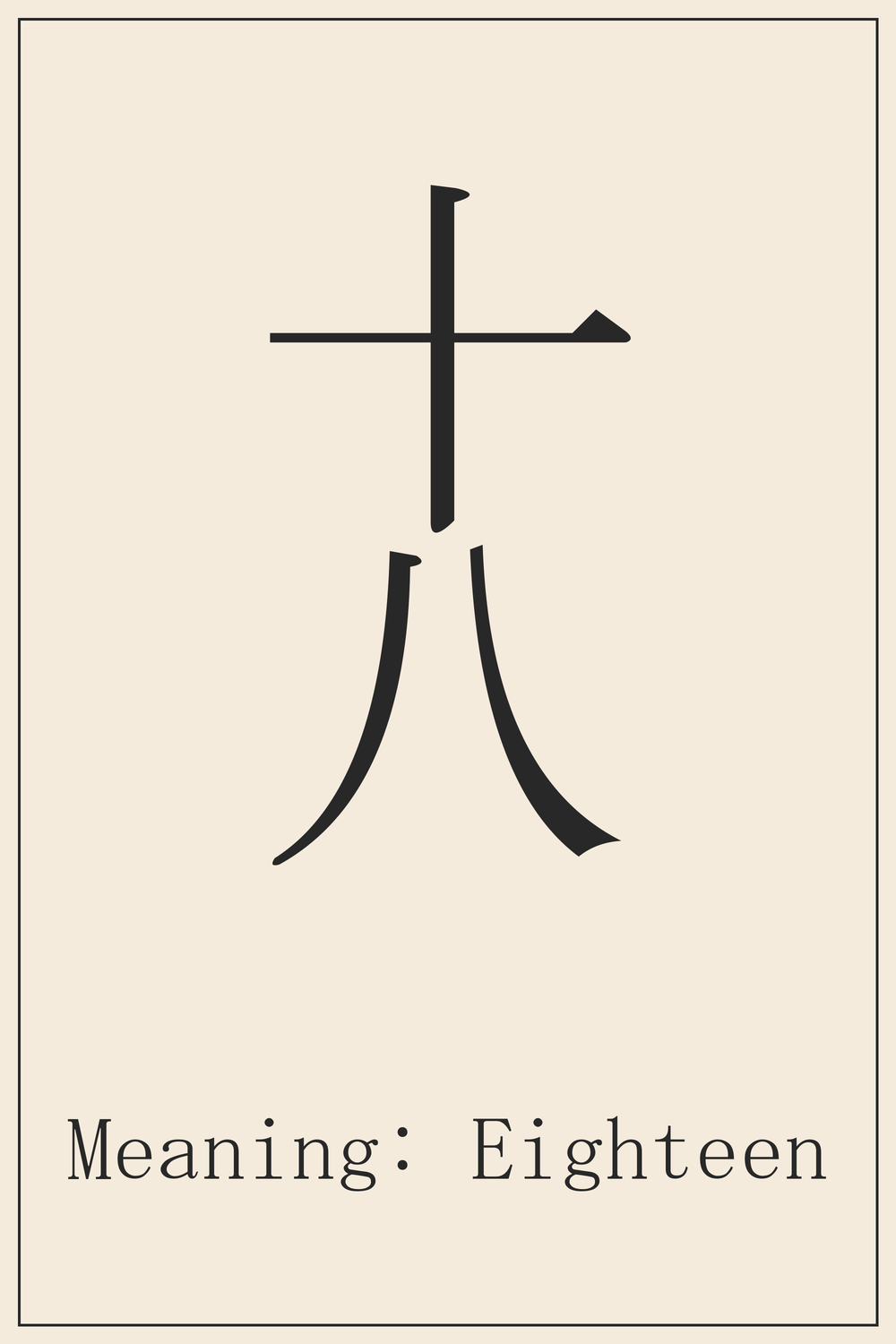
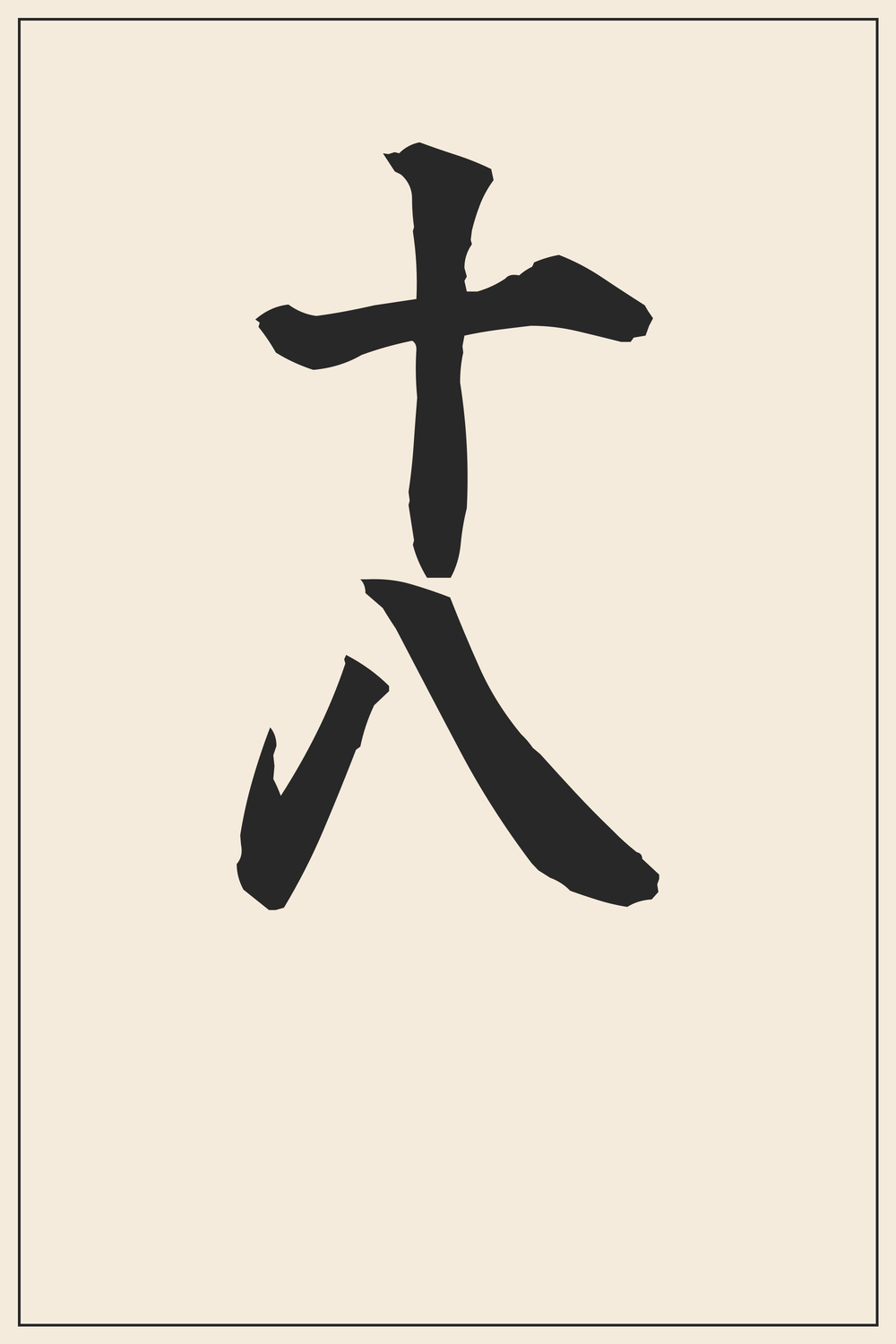
The Kanji compound 十八, signifying ‘eighteen’, holds a straightforward yet powerful meaning in Japanese culture. It often represents a significant milestone, marking a transition point in life and embodying themes of maturity and new beginnings.
The atmosphere of a Kanji character changes dramatically depending on the font style. A character that looks elegant in a brush style might look bold and modern in a different font.
Recommendation:
Since a tattoo is permanent, we strongly recommend comparing various font styles beyond what is shown here. Use our designs as a trusted reference for the correct structure, but feel free to explore different artistic variations to find the perfect match for your vision.
The Deep Meaning Behind 十八
“十八” is a compound of two basic kanji: “十” (jū), meaning “ten”, and “八” (hachi), meaning “eight”. Together, they numerically combine to form “eighteen”. This direct composition highlights its fundamental role as a numerical value in Japanese.
In Japan, eighteen (jūhachi) is a significant age, often associated with reaching adulthood and greater independence. It embodies a threshold of maturity and responsibility, marking a key transition point in life and culture.
Kanji Breakdown
The composition of ‘十八’ is straightforward, combining two elemental characters:
Ten: Represents the number ten, depicted as a cross symbolizing completion or a full cycle.
Eight: Represents the number eight, visually suggesting division or spreading out, though in this context, it simply denotes the numerical value.
Conclusion
The Kanji ‘十八’ clearly signifies ‘eighteen’, embodying not just a numerical value but also a powerful symbol of coming of age, independence, and the commencement of a new chapter in life. It’s a straightforward yet profound representation of growth and transition.
For those who wish to mark a significant age, anniversary, or a personal milestone, ‘十八’ is an excellent choice for a tattoo. Its simple, elegant strokes make for a timeless and meaningful design, reflecting personal growth and the journey ahead.
Comments