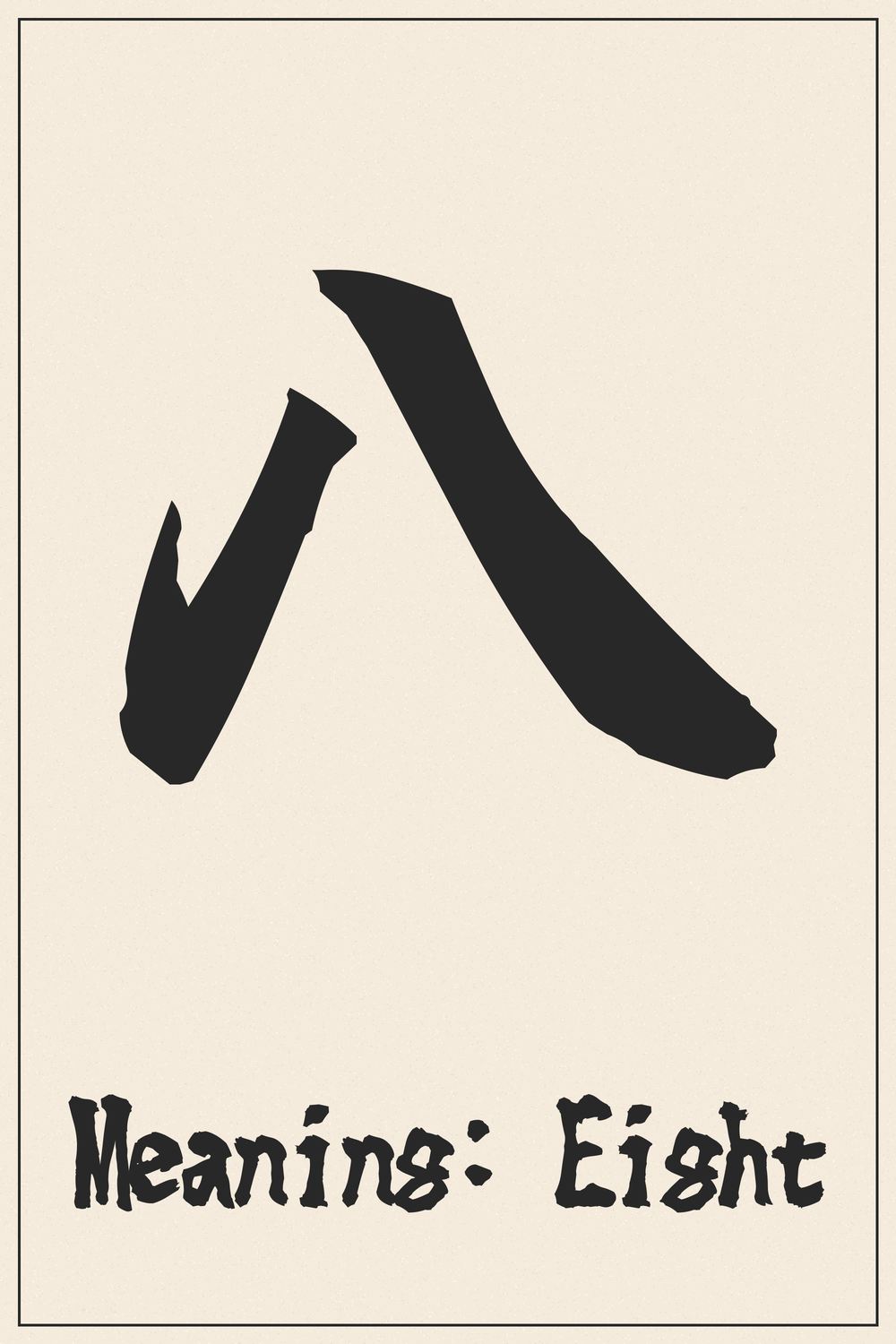
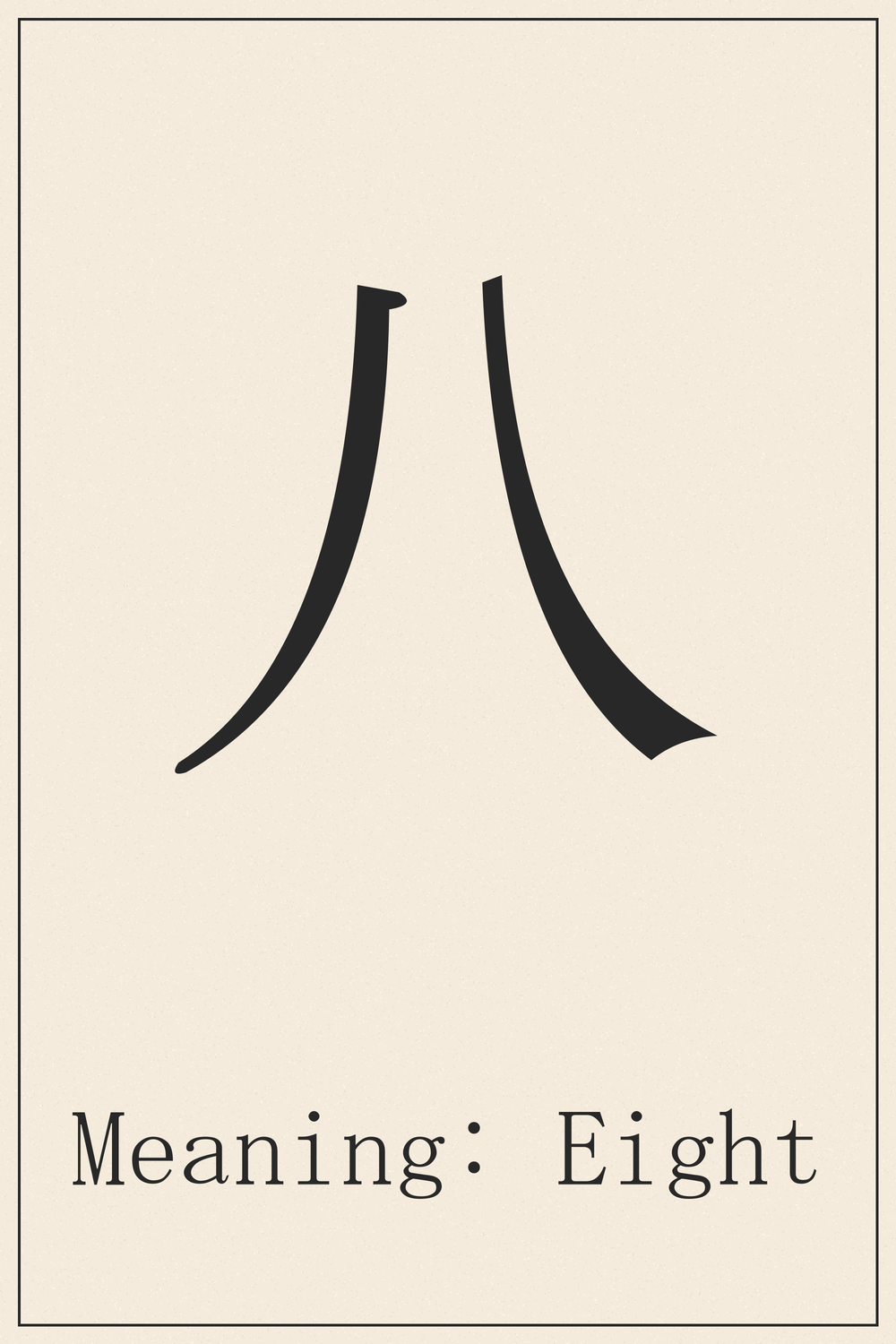
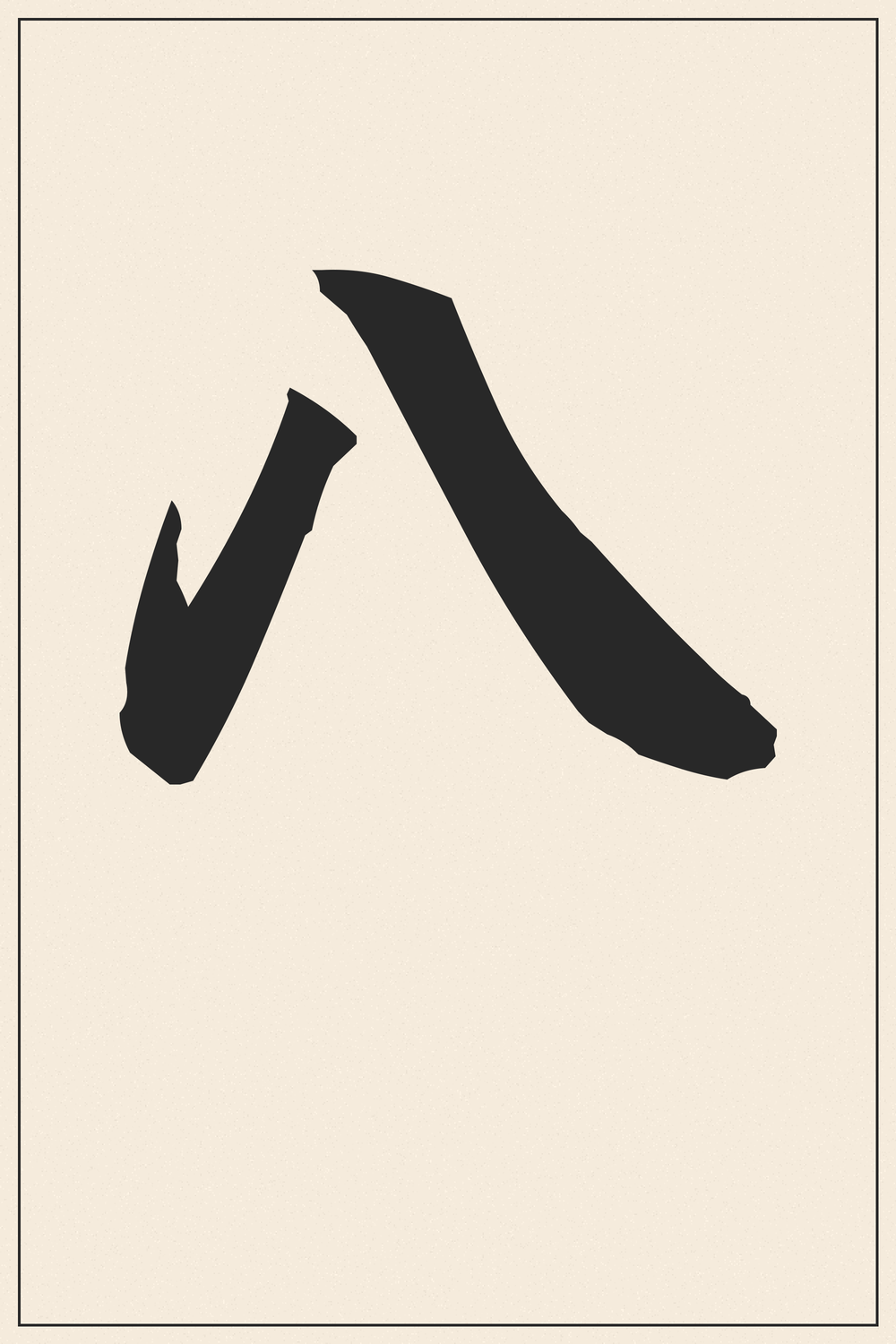
The Kanji 八 (hachi) embodies the number eight, a figure often overlooked yet rich with cultural significance in Japan. Far more than a mere numeral, it symbolizes expansion and good fortune, making it a profound emblem for personal growth.
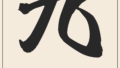
The atmosphere of a Kanji character changes dramatically depending on the font style. A character that looks elegant in a brush style might look bold and modern in a different font.
Recommendation:
Since a tattoo is permanent, we strongly recommend comparing various font styles beyond what is shown here. Use our designs as a trusted reference for the correct structure, but feel free to explore different artistic variations to find the perfect match for your vision.
The Deep Meaning Behind 八
The Kanji 八 is a pictograph depicting division or separation, conceptually illustrating two lines spreading apart. This visual representation inherently carries the nuance of things “opening up” or “spreading out” from a central point.
In Japanese culture, 八 is deeply auspicious, often associated with the concept of 末広がり (suehirogari), meaning “spreading out widely like a fan.” This symbolizes increasing prosperity, growth, and good fortune, making it a highly cherished number that influences one’s life and destiny.
Kanji Breakdown
The Kanji 八 is a standalone character, whose form directly conveys its meaning without requiring decomposition into radicals.
Meaning: Represents the number eight. Its two diverging strokes graphically illustrate the idea of things branching out or increasing, embodying the concept of expansion and separation.
Conclusion
The Kanji 八, while numerically representing “eight,” carries a profound cultural weight as a symbol of prosperity and expansion. Its simple, symmetrical form belies a powerful message of ever-increasing good fortune and a positive outlook on one’s life path.
Choosing 八 for a tattoo signifies an embrace of growth and good luck, aligning one’s destiny with positive outcomes. Its minimalist design makes it aesthetically versatile, while its deep-rooted cultural symbolism offers a quiet yet potent affirmation of a prosperous future.
Comments