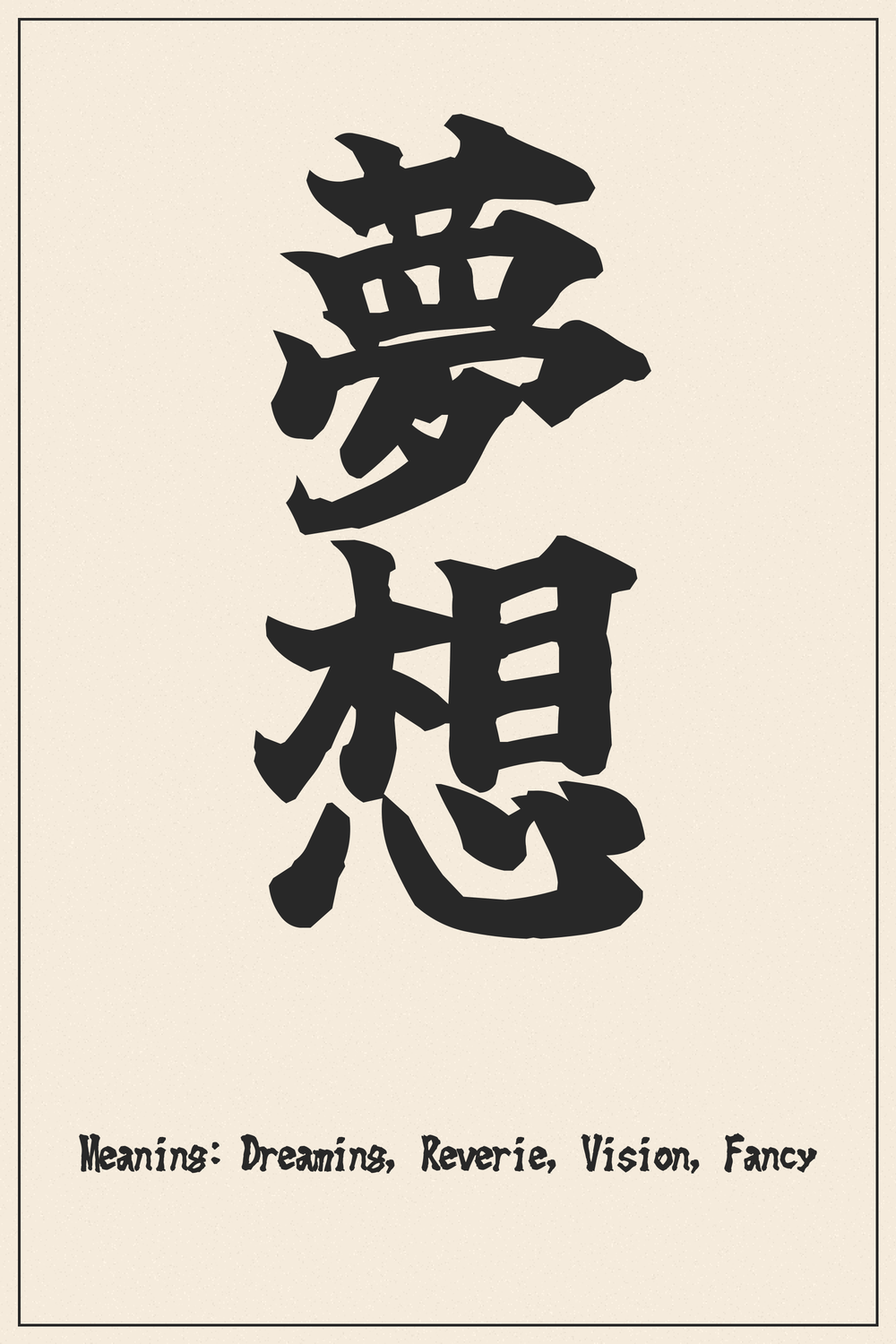
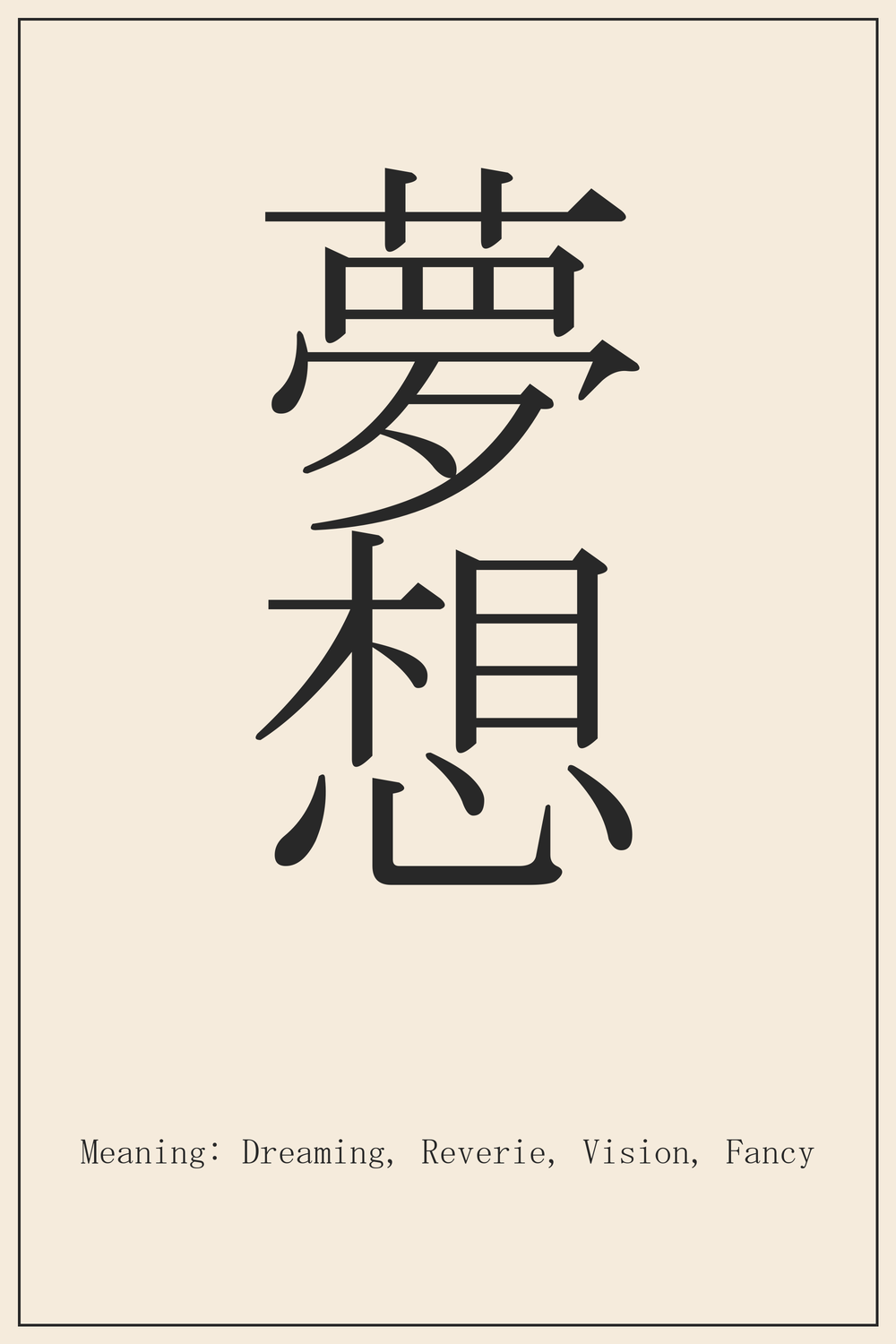
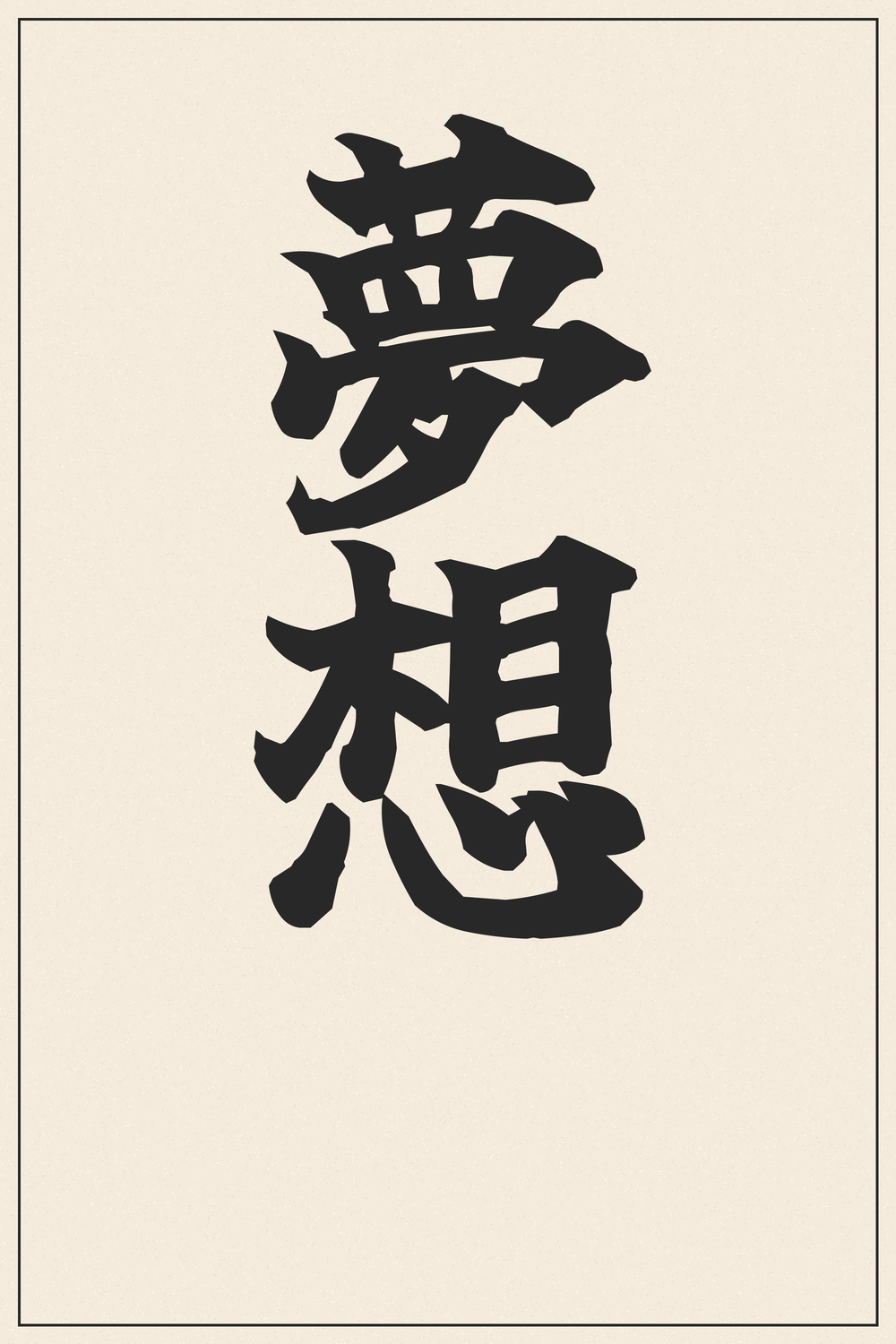
The Kanji compound 夢想 (Musō) captures the profound essence of envisioning and imagining. It is a powerful symbol for those who live in their dreams, striving for a future shaped by their inner vision.
The atmosphere of a Kanji character changes dramatically depending on the font style. A character that looks elegant in a brush style might look bold and modern in a different font.
Recommendation:
Since a tattoo is permanent, we strongly recommend comparing various font styles beyond what is shown here. Use our designs as a trusted reference for the correct structure, but feel free to explore different artistic variations to find the perfect match for your vision.
The Deep Meaning Behind 夢想
The Kanji compound 夢想 (Musō) is a blend of two potent characters. 夢 (yume) fundamentally means ‘dream,’ often stemming from the ancient pictograph of a person sleeping, with an eye and sounds symbolizing the visions of sleep. 想 (sō/omou) conveys ‘thought,’ ‘idea,’ or ‘imagine,’ composed of 相 (so, appearance, mutual) and 心 (kokoro, heart/mind), illustrating the formation of thoughts or imagination within one’s inner being.
Together, 夢想 transcends a simple ‘dream’ to denote a state of deep reverie, vision, or fancy – actively imagining, contemplating an ideal, or indulging in a fantasy. It speaks to the human capacity for creative thought, aspiration, and the mental construction of worlds beyond immediate reality, reflecting a profound engagement with one’s inner world.
Kanji Breakdown
To fully appreciate 夢想, let’s dissect its individual components:
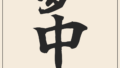
Meaning: Dream. This character is often associated with the visions experienced during sleep, but also extends to aspirations and hopes. Its ancient form hinted at a complex scene above a sleeping person.
Meaning: Thought, idea, imagine. This character combines 相 (interact, mutual) and 心 (heart, mind), denoting the mental process of pondering, imagining, or longing deeply within one’s heart.
Conclusion
夢想 is a profound expression for those who engage with their inner world, pursuing aspirations, and shaping their reality through imaginative thought. It captures the essence of a visionary spirit, constantly dreaming and contemplating new possibilities.
For a tattoo, 夢想 serves as a beautiful and meaningful emblem of your imaginative power and your commitment to your personal vision. It’s a statement of creative spirit and unwavering hope, making it an excellent choice for a permanent mark that inspires and reflects your deepest self.
Comments