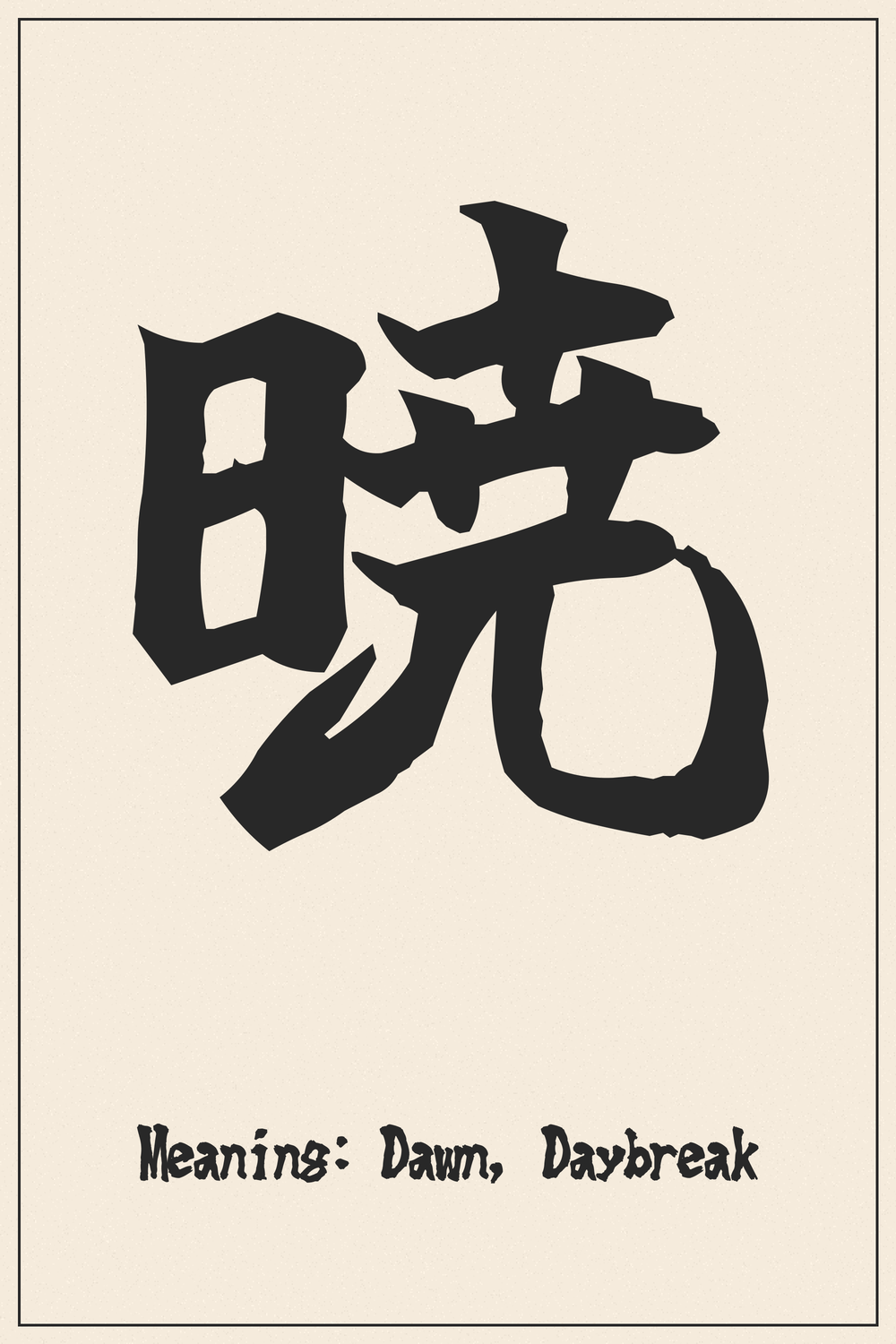
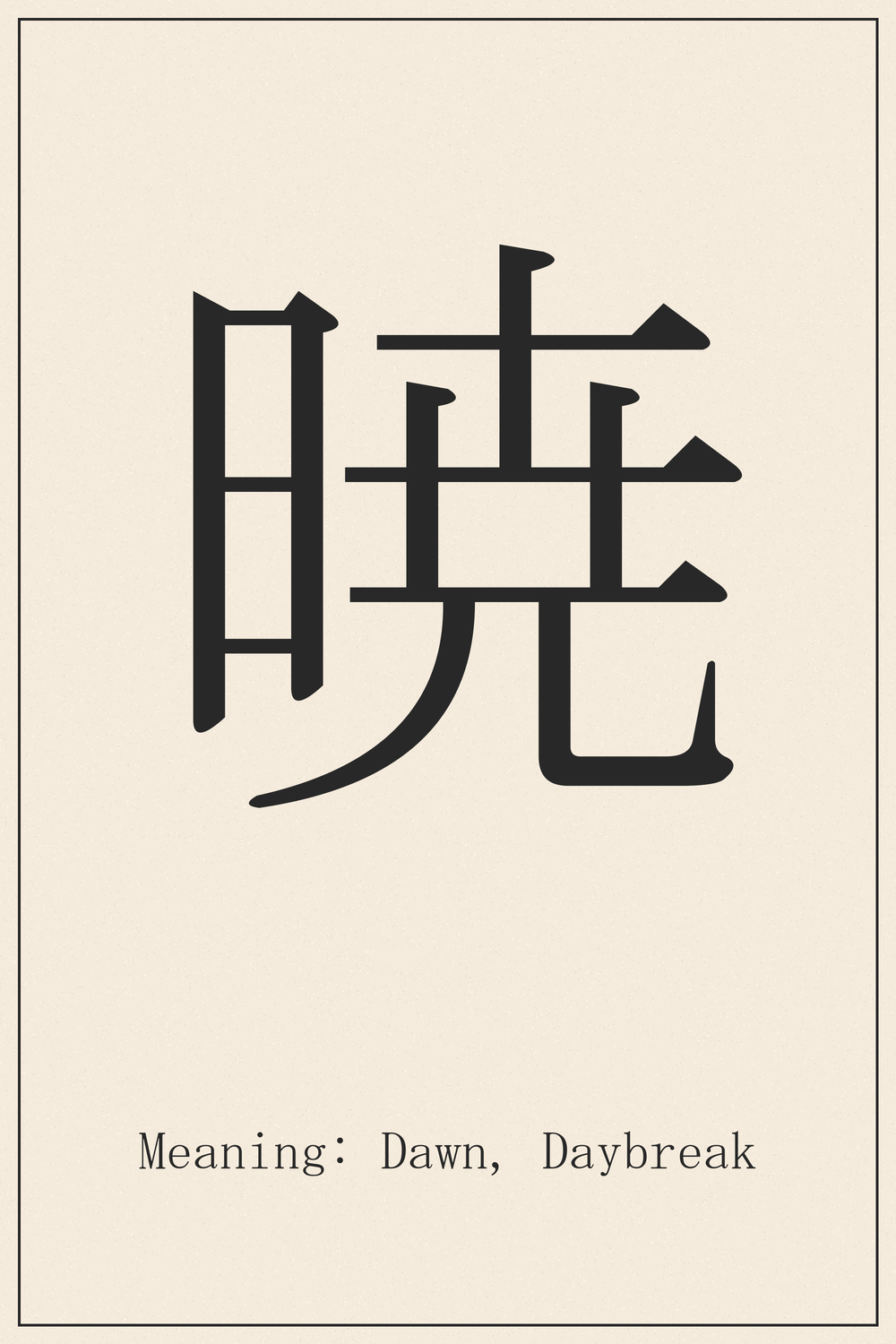
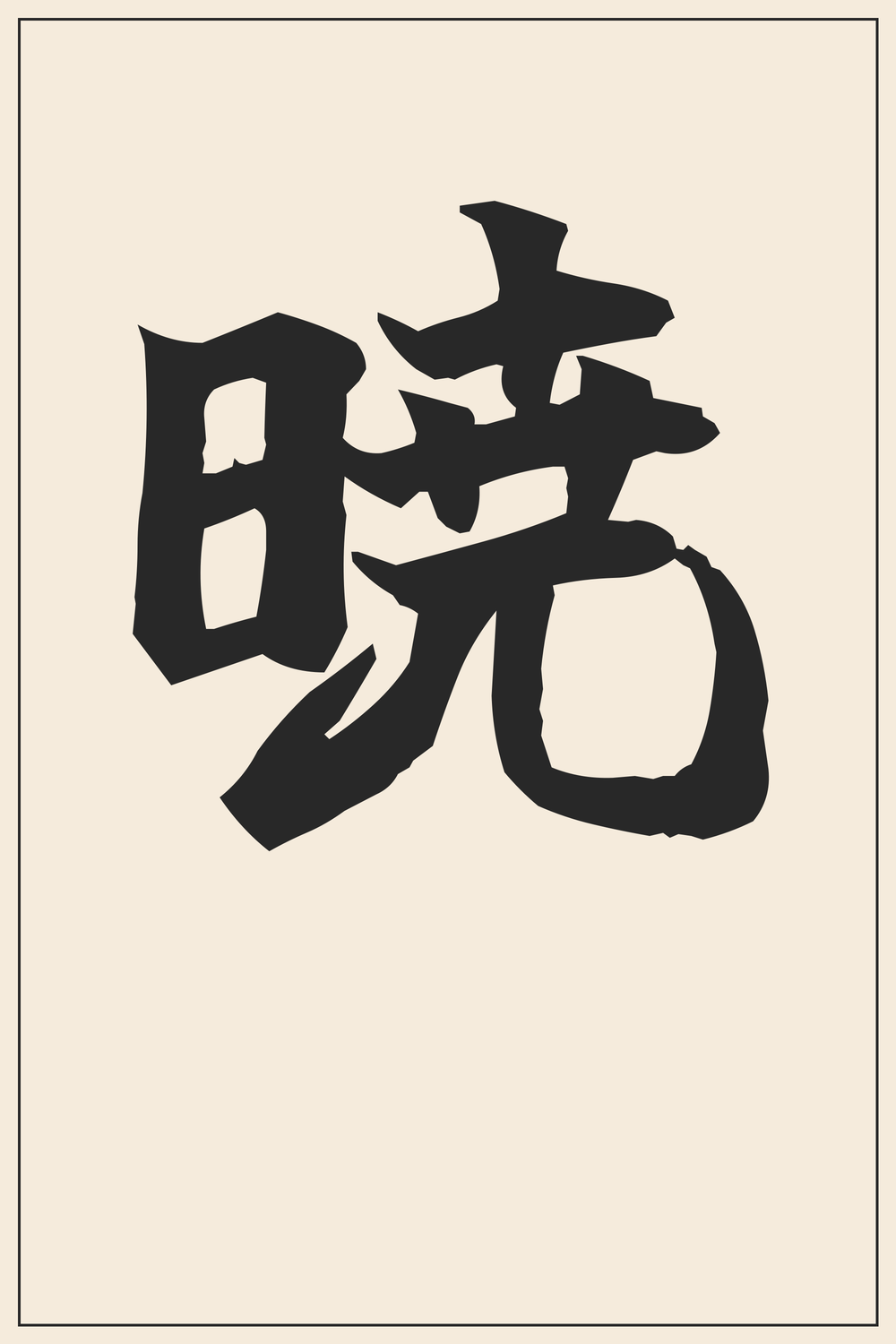
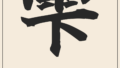
The kanji 暁 beautifully encapsulates the profound moment of dawn, symbolizing new beginnings and the triumph of light. It carries a potent message of hope and renewal, reflecting nature’s constant cycle.
The atmosphere of a Kanji character changes dramatically depending on the font style. A character that looks elegant in a brush style might look bold and modern in a different font.
Recommendation:
Since a tattoo is permanent, we strongly recommend comparing various font styles beyond what is shown here. Use our designs as a trusted reference for the correct structure, but feel free to explore different artistic variations to find the perfect match for your vision.
The Deep Meaning Behind 暁
The character 暁 is a phono-semantic compound. It combines 日 (nichi), meaning ‘sun’ or ‘day,’ with 堯 (gyō), a phonetic component that also implies ‘high’ or ‘lofty,’ representing the sun ascending.
In Japanese culture, dawn is a powerful metaphor for hope, the clearing of darkness, and the start of a fresh chapter. It frequently appears in literature and poetry to signify perseverance and the promise of a new day.
Kanji Breakdown
The kanji 暁 is composed of two primary elements that combine to convey its meaning of dawn.
Meaning: Sun, Day.
Meaning: Lofty, High.
Conclusion
The kanji 暁 embodies the powerful imagery of dawn, a moment of profound significance symbolizing renewal, hope, and the overcoming of darkness. It speaks to the human spirit’s capacity for new beginnings and perseverance.
Choosing 暁 for a tattoo is a declaration of optimism and resilience. It serves as a constant reminder that even after the darkest night, a new day always dawns, bringing with it fresh opportunities and the promise of light.
Comments