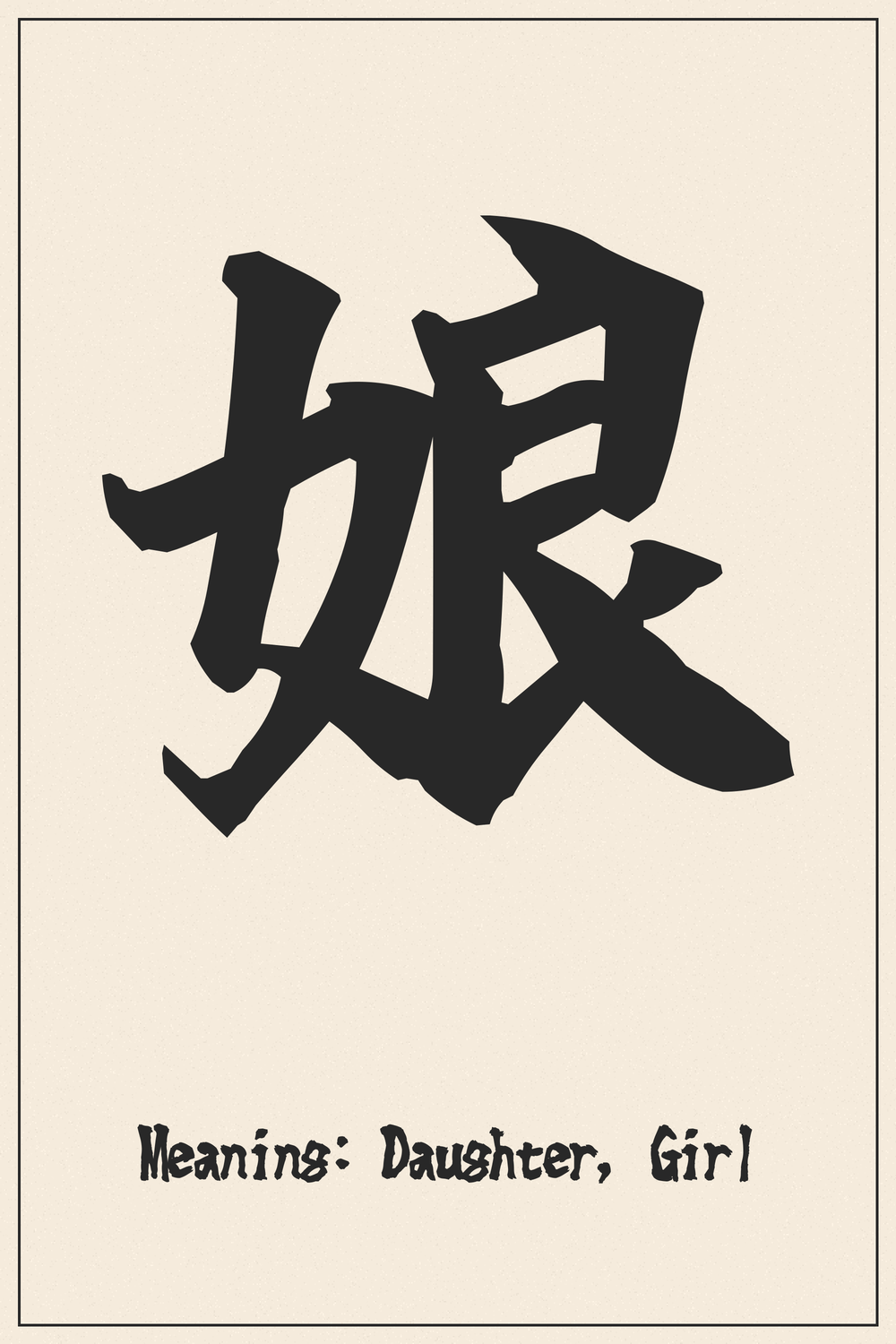
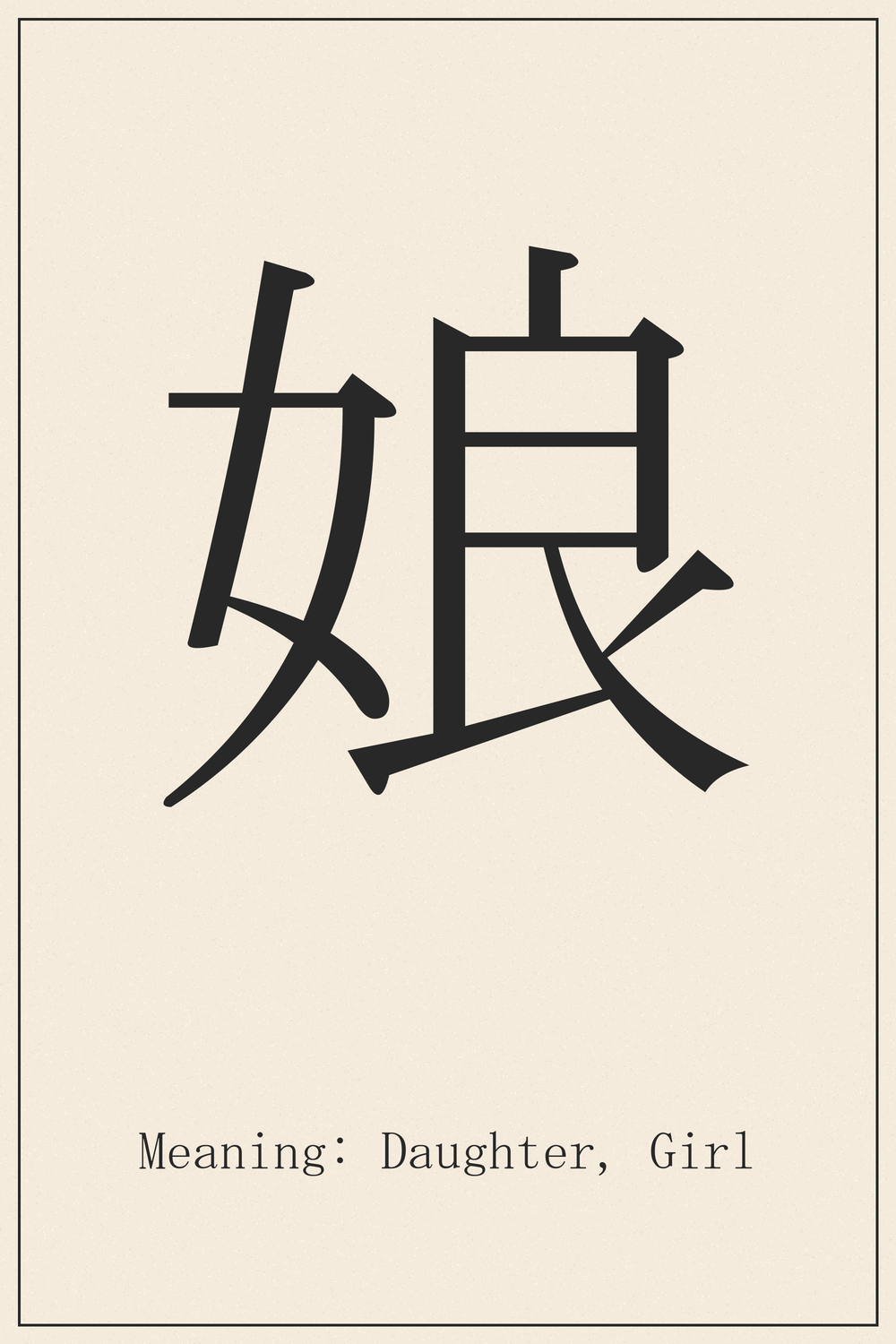
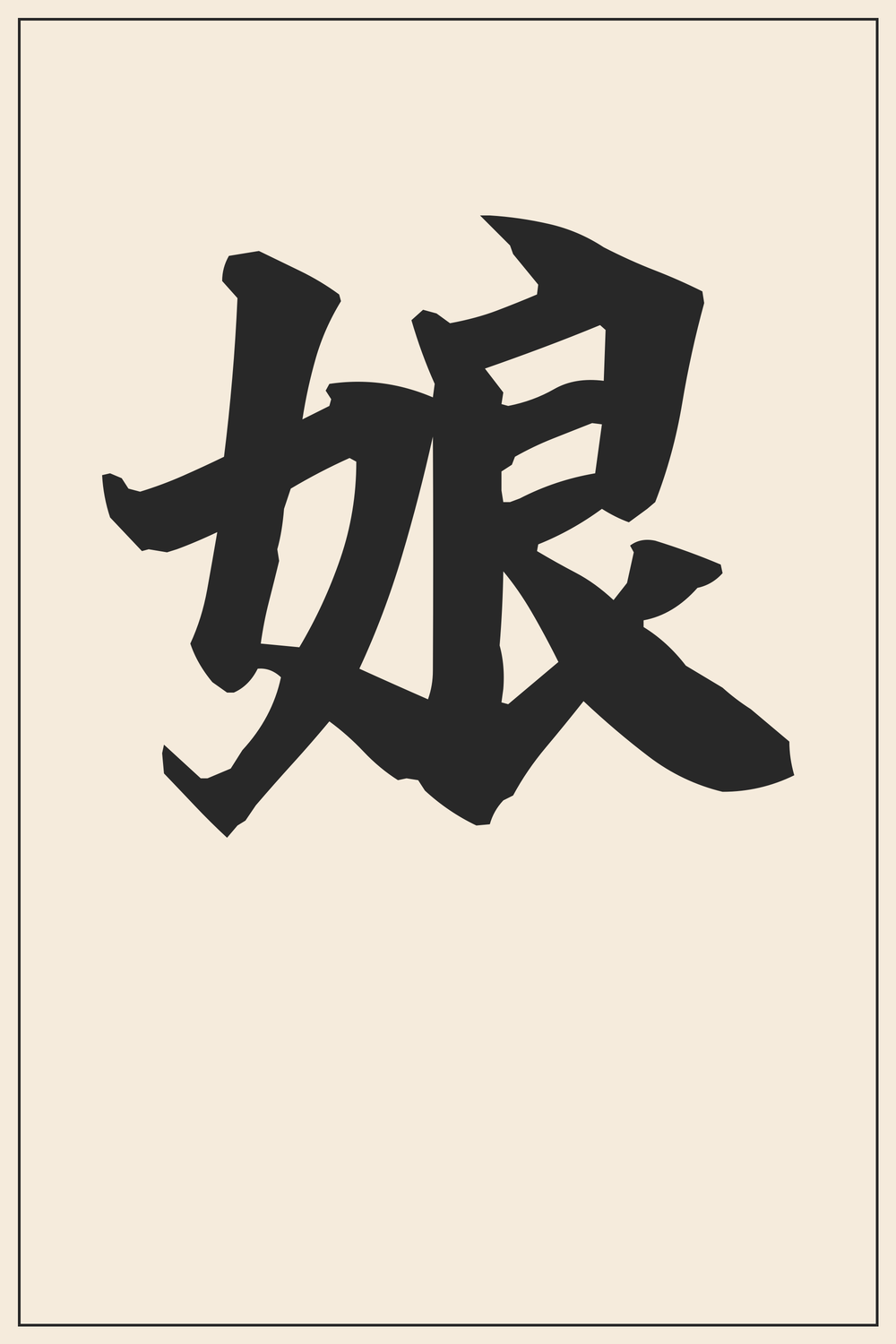
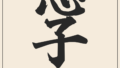
The Kanji 娘 (Musume) beautifully encapsulates the essence of a daughter, representing familial love and the bloom of youth. It is a symbol that resonates deeply with personal connections and the cherished bond between parent and child.
The atmosphere of a Kanji character changes dramatically depending on the font style. A character that looks elegant in a brush style might look bold and modern in a different font.
Recommendation:
Since a tattoo is permanent, we strongly recommend comparing various font styles beyond what is shown here. Use our designs as a trusted reference for the correct structure, but feel free to explore different artistic variations to find the perfect match for your vision.
The Deep Meaning Behind 娘
The Kanji 娘 is a fascinating example of how character components combine to create a nuanced meaning. Its origin stems from the combination of 女 (woman) and 良 (good, pleasing). This suggests a ‘good woman’ or ‘good female’, particularly in the context of an unmarried young woman or a daughter within a family.
Culturally, 娘 emphasizes the cherished place of a daughter within the Japanese household. While traditionally associated with youth and an unmarried status, its core meaning has evolved to broadly represent a daughter, embodying familial pride, affection, and the hope placed in the younger generation. It signifies a profound, enduring bond.
Kanji Breakdown
The character 娘 is composed of two primary elements, each contributing to its overall meaning:
Woman/Female: This radical is a common component in Kanji related to women, gender, and feminine qualities. It directly signifies the female aspect of a daughter.
Good/Pleasing: This component adds a layer of positive connotation, implying something valuable, pure, or desirable. When combined with 女, it contributes to the idea of a ‘good daughter’ or a ‘pleasing female child’.
Conclusion
The Kanji 娘 is more than just a word for ‘daughter’; it is a symbol rich with cultural warmth and personal significance. It represents the cherished bond within a family, the beauty of youth, and the hope embodied by the next generation.
For those seeking a tattoo that honors a daughter or celebrates familial love, 娘 offers a meaningful and elegant choice. Its deep cultural resonance and personal connection make it a powerful symbol to carry, reflecting enduring affection and pride.
Comments