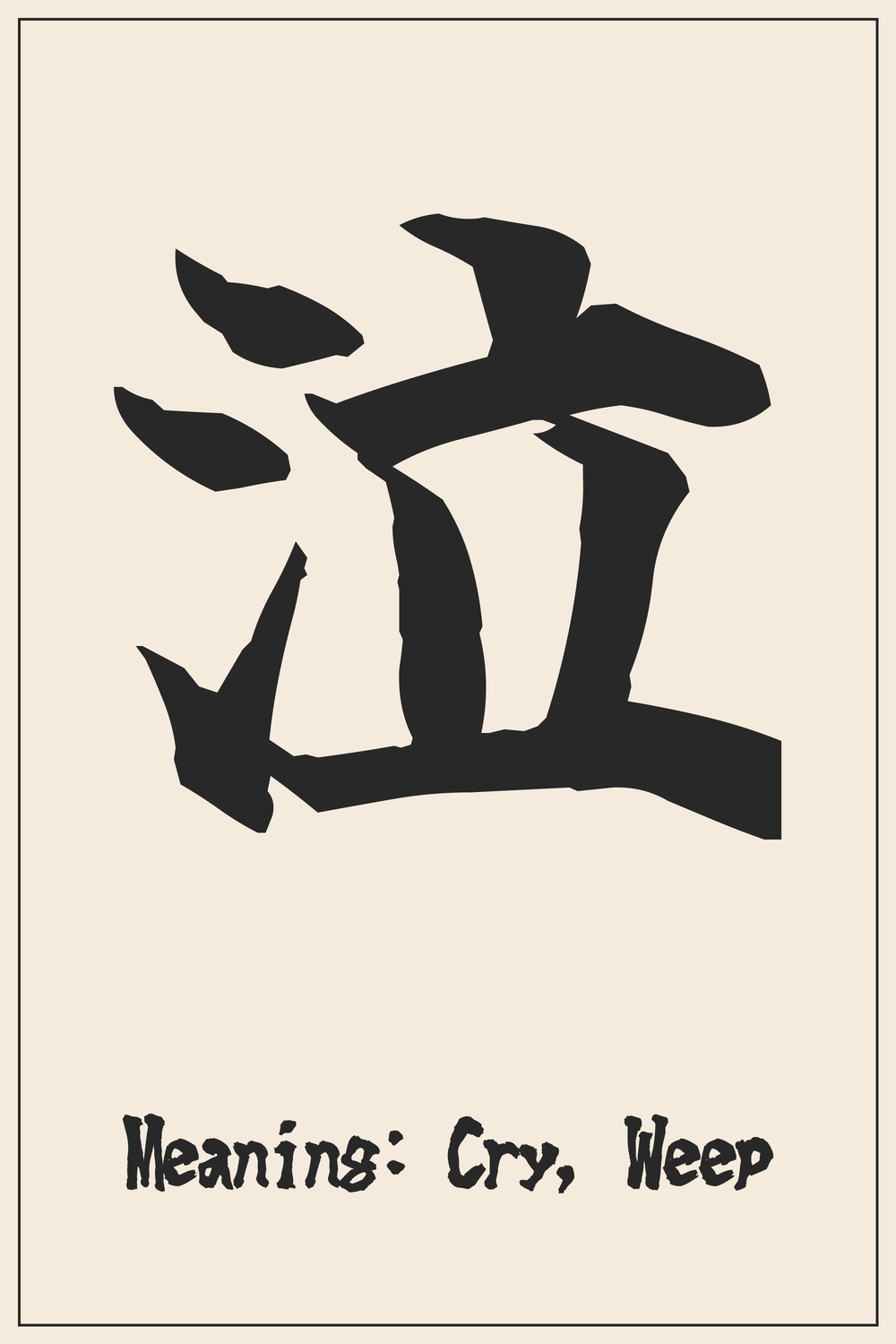
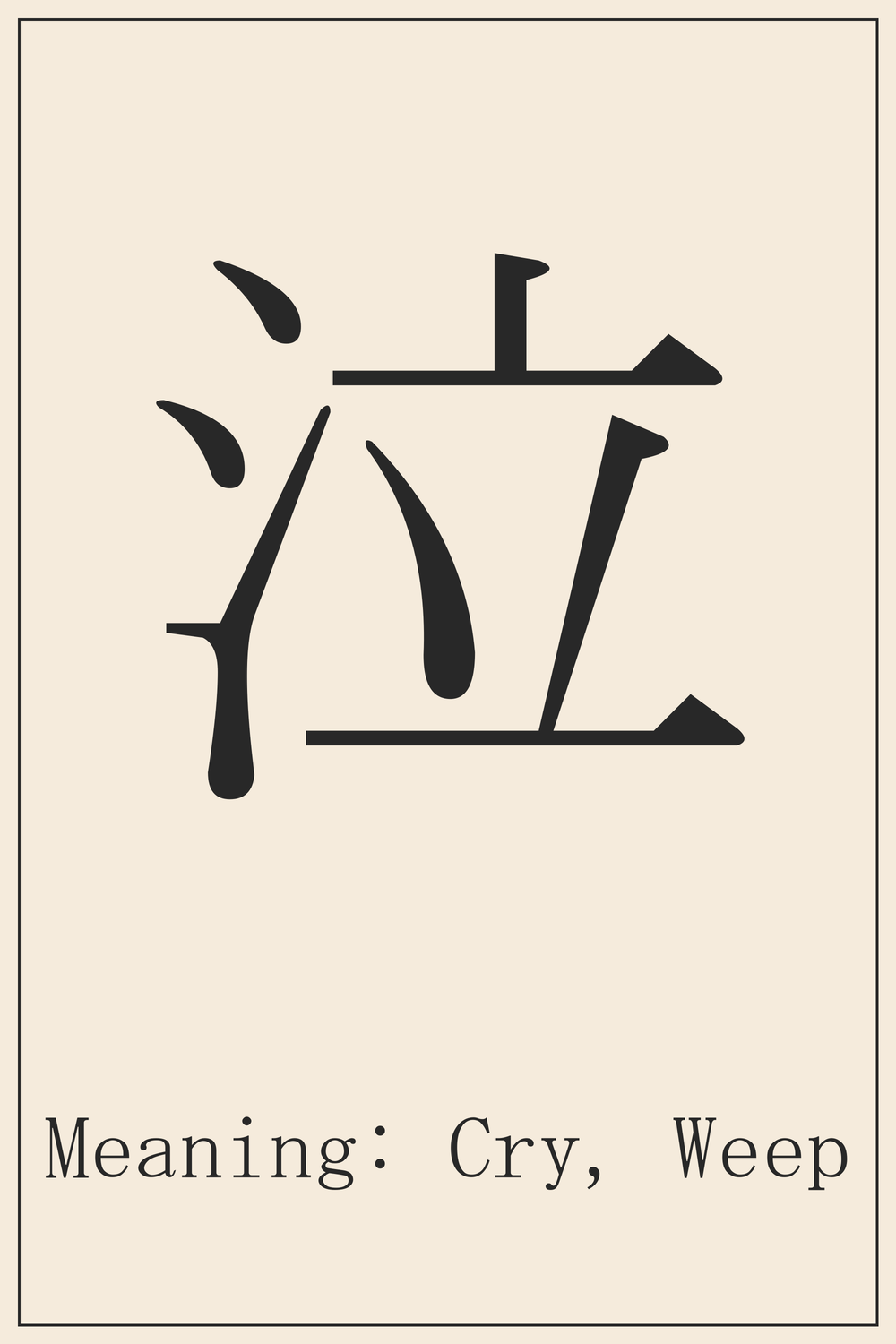
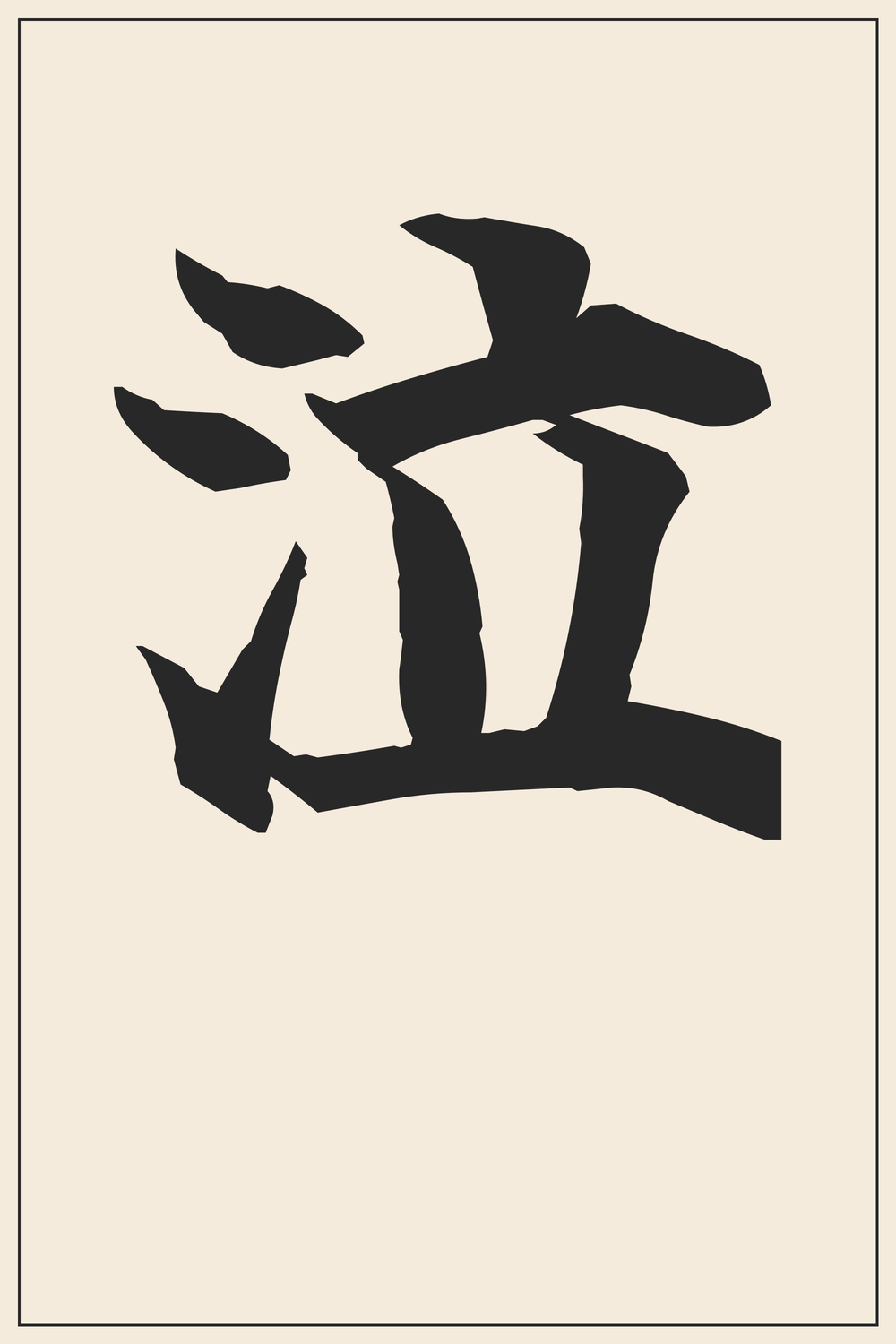
The Kanji 泣 embodies the raw, universal human experience of shedding tears. It’s a powerful symbol of deep emotion, whether sorrow, joy, or relief.
The atmosphere of a Kanji character changes dramatically depending on the font style. A character that looks elegant in a brush style might look bold and modern in a different font.
Recommendation: Since a tattoo is permanent, we strongly recommend comparing various font styles beyond what is shown here. Use our designs as a trusted reference for the correct structure, but feel free to explore different artistic variations to find the perfect match for your vision.
The Deep Meaning Behind 泣
The Kanji 泣 graphically represents the act of crying through a combination of its components. It is a fundamental character in Japanese, conveying a deep spectrum of human emotion, from sorrow and grief to overwhelming joy and relief. Its straightforward visual composition makes its meaning immediately clear.
In Japanese culture, crying is recognized as a natural and often necessary expression of the spirit. It is not solely a sign of weakness but can also signify strength, resilience, or a moment of profound catharsis. This Kanji encapsulates the universally understood act of shedding tears, tying directly into the human condition and emotional intelligence.
Kanji Breakdown
The character 泣 (naku) is composed of two significant elements that visually and phonetically contribute to its meaning.
Meaning: This is the ‘water’ radical (水), which appears in its three-stroke form. It directly represents tears, the liquid element associated with crying.
Meaning: This component means ‘stand’ or ‘erect.’ While primarily functioning as a phonetic component here (providing the ‘ryu’ or ‘ritsu’ sound often associated with ‘naku’), its visual form can subtly imply tears ‘standing’ in the eyes or ‘falling’ down the face.
Conclusion
While the Kanji 泣 accurately represents the act of crying, it is important to note that it can feel slightly unnatural to a Japanese audience when used as a standalone tattoo.
In Japanese, this character is typically used as a verb within a sentence (e.g., “I am crying”). Seeing it isolated on the skin can look incomplete—like a sentence fragment—or imply that the wearer is in a permanent state of weeping. Unlike characters like “Love” (愛) or “Dream” (夢) which stand strong as symbols, 泣 might lack the poetic weight you are looking for and could be seen as oddly literal by native speakers.
Comments