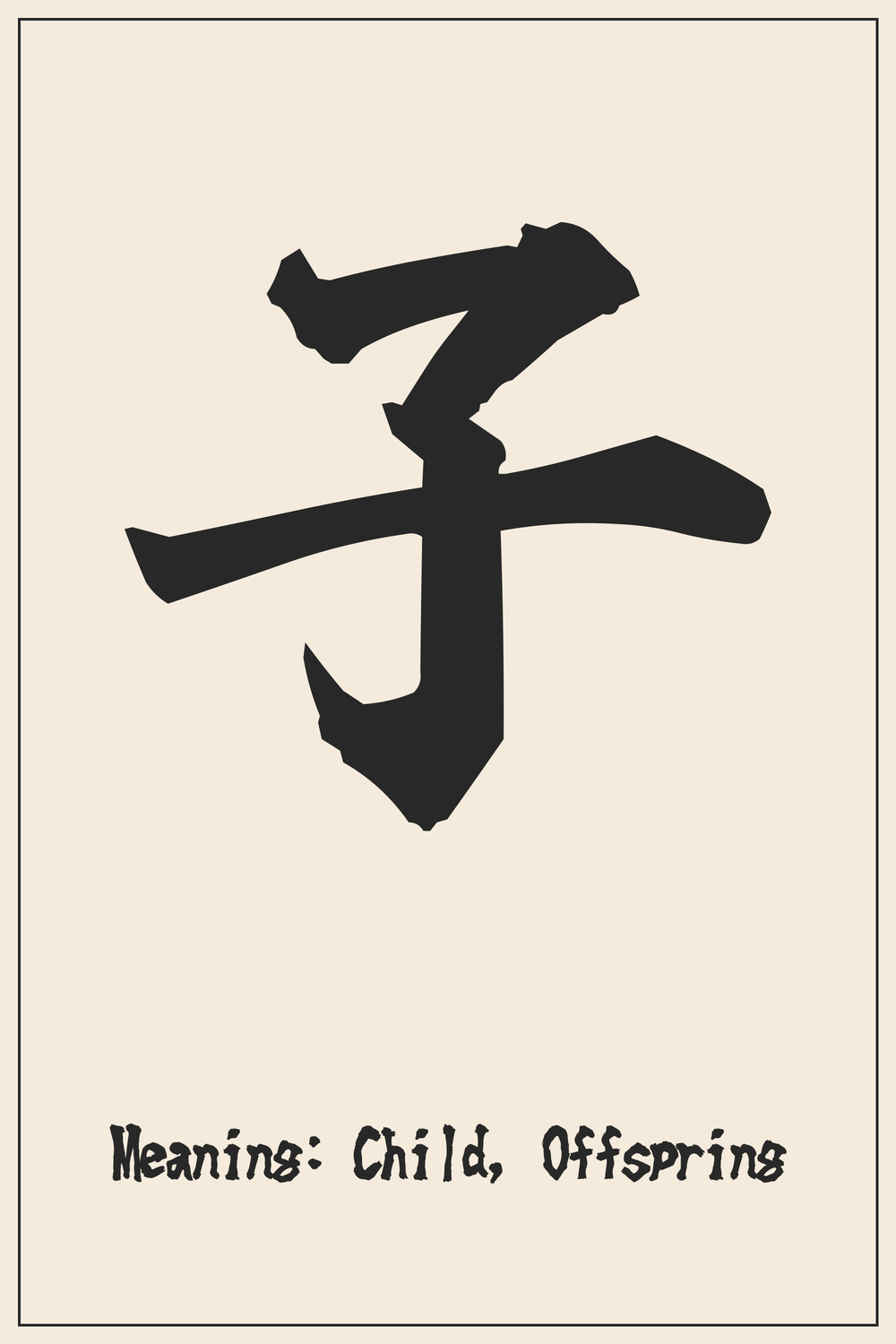
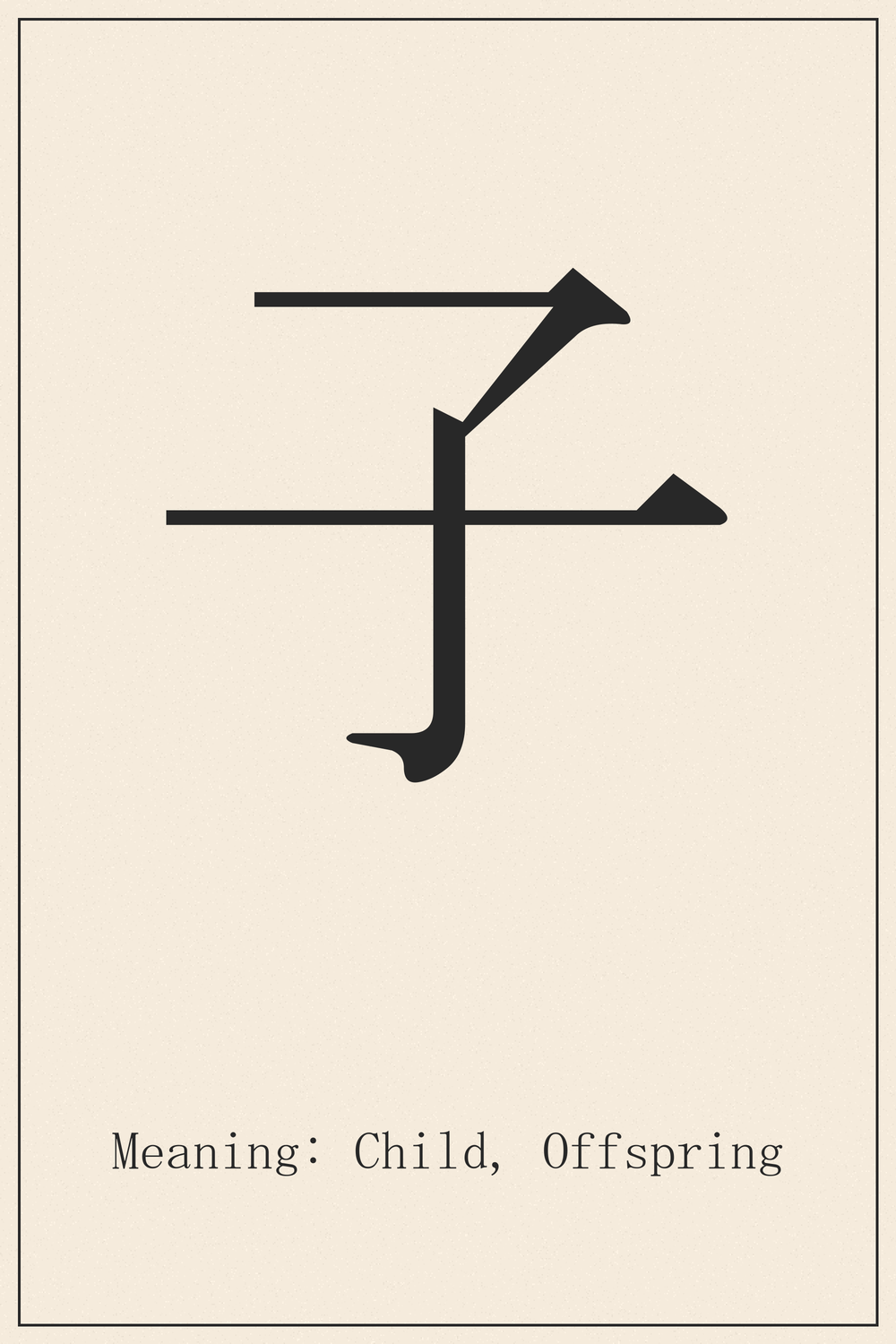
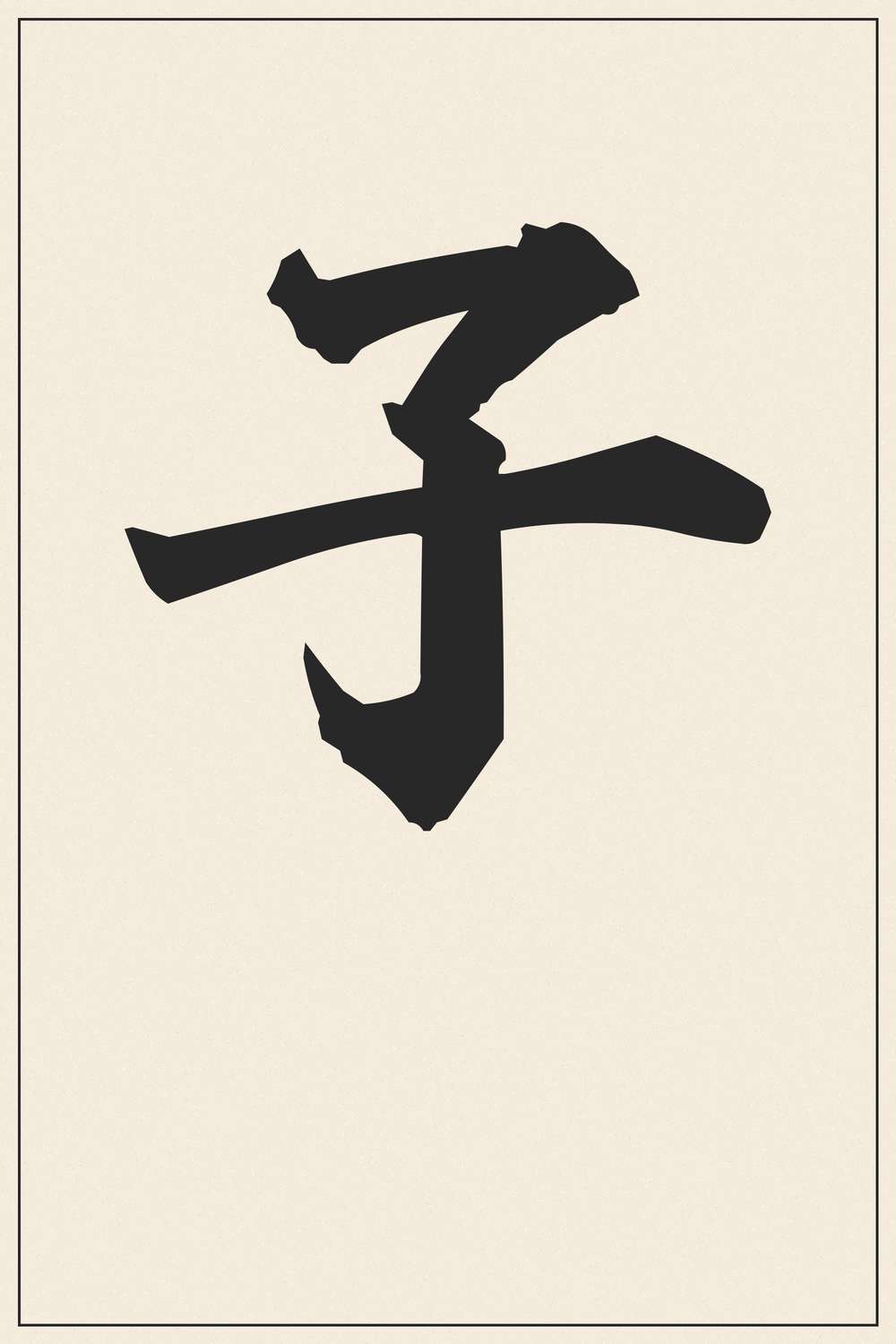
The Kanji 子 (Ko) might appear simple, but it carries profound weight, embodying the essence of new life, lineage, and connection. It speaks to the fundamental human experience of parenthood and the continuation of generations.
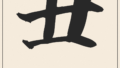
The atmosphere of a Kanji character changes dramatically depending on the font style. A character that looks elegant in a brush style might look bold and modern in a different font.
Recommendation:
Since a tattoo is permanent, we strongly recommend comparing various font styles beyond what is shown here. Use our designs as a trusted reference for the correct structure, but feel free to explore different artistic variations to find the perfect match for your vision.
The Deep Meaning Behind 子
The character 子 (Ko) is a pictograph originating from ancient Chinese script. It vividly depicts a baby with a large head, outstretched arms, and tiny feet, signifying its earliest meaning as ‘child’ or ‘newborn’.
Beyond its literal meaning, 子 holds extensive cultural significance in Japan. It is famously used as a suffix in many traditional female names (e.g., Keiko, Akiko) and also represents the first of the twelve earthly branches in the Chinese Zodiac, associated with the Rat. This rich usage underscores its fundamental role in defining identity, family lineage, and the cycles of life.
Kanji Breakdown
The Kanji 子 is a single, integral character that conveys its meaning through its ancient pictorial form.
Child/Offspring: The character itself represents a baby, symbolizing new life, innocence, and potential.
Conclusion
Choosing 子 (Ko) for a tattoo is a powerful statement about life, family, and continuation. It represents the precious bond with offspring, the hope embodied in new generations, or even the inner child within oneself.
Its clean lines and timeless meaning ensure a tattoo that is both aesthetically pleasing and profoundly personal, serving as a constant reminder of the enduring cycles of life and the deep connections that define us.
Comments