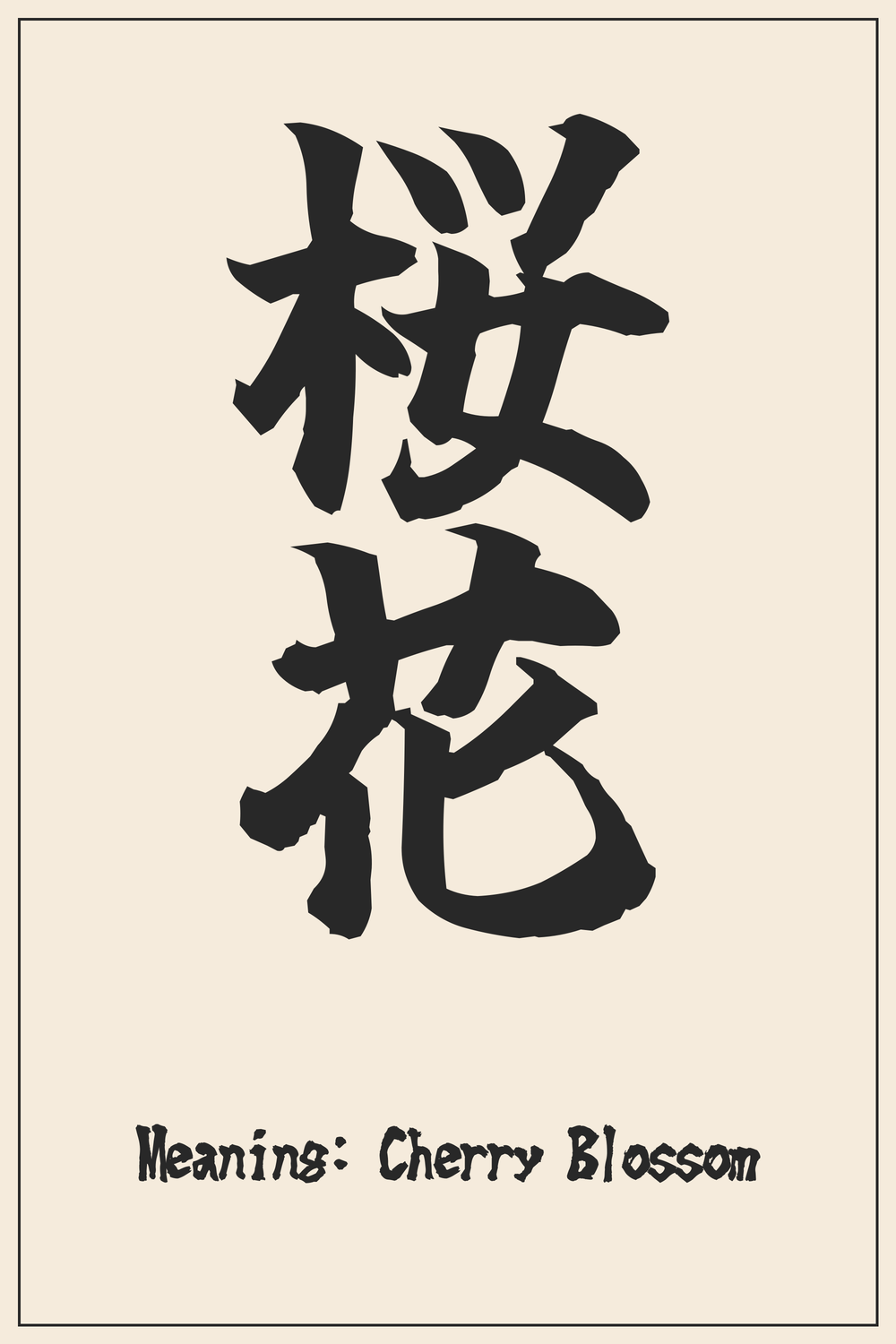
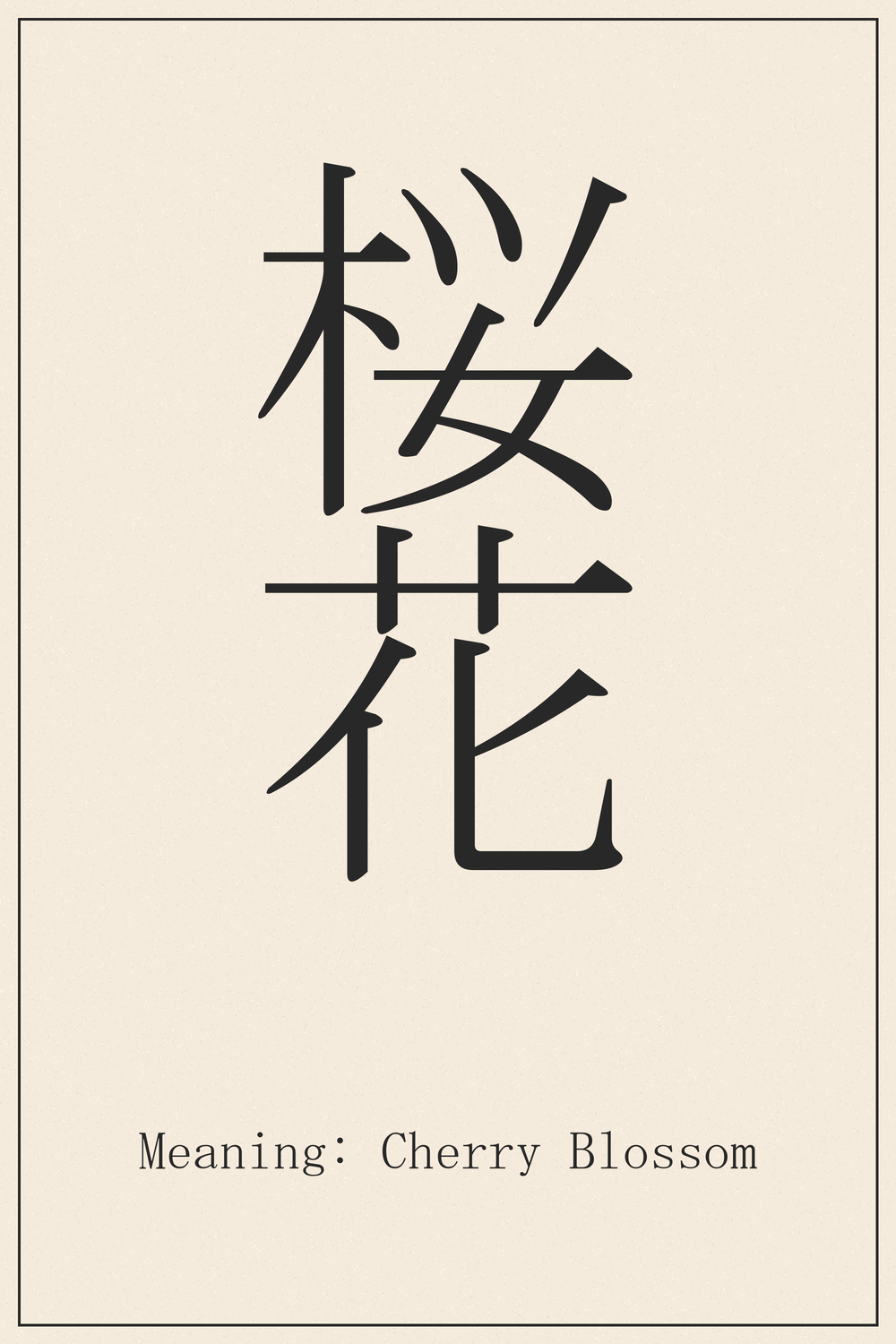
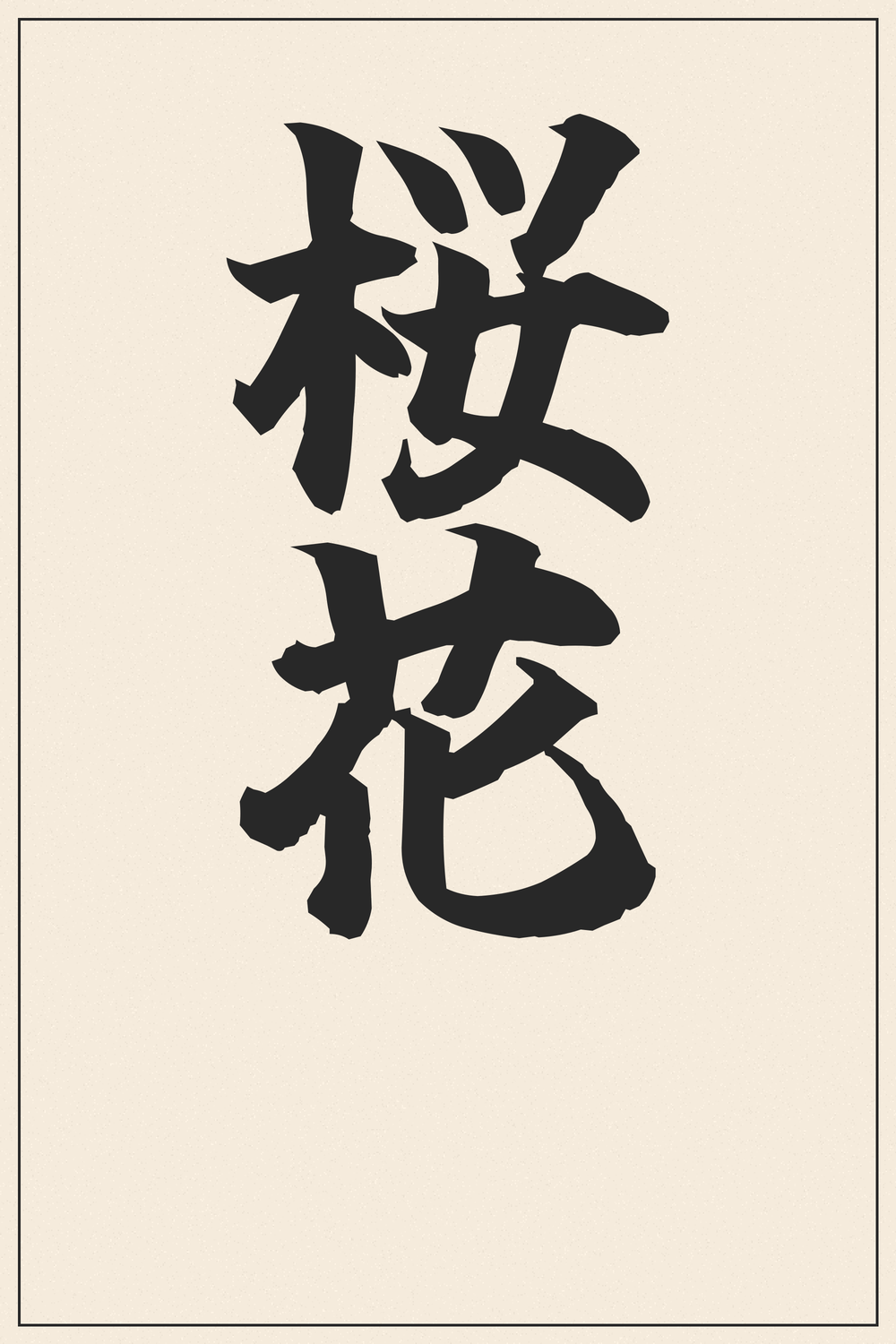
桜花 (Ouka) embodies the breathtaking beauty and profound transience central to Japanese aesthetics. This powerful Kanji symbol captures the fleeting splendor of the cherry blossom season, a poignant reminder of life’s delicate nature.
The atmosphere of a Kanji character changes dramatically depending on the font style. A character that looks elegant in a brush style might look bold and modern in a different font.
Recommendation:
Since a tattoo is permanent, we strongly recommend comparing various font styles beyond what is shown here. Use our designs as a trusted reference for the correct structure, but feel free to explore different artistic variations to find the perfect match for your vision.
The Deep Meaning Behind 桜花
The term 桜花 (Ouka) combines 桜 (Sakura), meaning ‘cherry tree’ or ‘cherry blossom,’ and 花 (Hana/Ka), meaning ‘flower.’ Together, they specifically refer to the blossoms of the cherry tree, distinguishing them from other flowers. The character 桜 itself traces its origins to ancient forms depicting a tree with flowering branches, emphasizing its natural beauty.
In Japanese culture, 桜花 holds immense symbolic weight, representing not only beauty but also the concept of ‘mono no aware’ – the pathos of things, or a deep appreciation for the transient nature of life. Its ephemeral bloom, lasting only a short period each spring, serves as a powerful metaphor for life’s fleeting moments and the cyclical nature of existence. This symbolism has inspired countless poems, songs, and artworks throughout history, solidifying its place as a national emblem.
Kanji Breakdown
Let’s delve into the individual components that form the elegant Kanji compound 桜花.
Meaning: Cherry Tree / Cherry Blossom
The left radical, 木 (ki), signifies ‘tree’. The right component, 嬰 (ei), originally depicted a necklace of jewels, but here it contributes phonetically and perhaps suggests adornment or beauty. Together, it denotes the specific flowering tree.
Meaning: Flower / Blossom
The top radical, 艹 (kusa kanmuri), is a common component for plants or grass. The bottom component, 化 (ka), meaning ‘change’ or ‘transform,’ phonetically contributes and historically might have alluded to the changing nature of flowers through bloom and decay.
Conclusion
Choosing 桜花 (Ouka) as a Kanji tattoo signifies a connection to profound Japanese aesthetics and an appreciation for life’s transient yet exquisite beauty. It embodies the spirit of renewal that accompanies spring and the profound philosophical depth of ‘mono no aware’.
This Kanji is more than just a depiction of a flower; it is a timeless emblem that encourages reflection on the beauty of fleeting moments and the importance of living fully. A tattoo of 桜花 serves as a beautiful, powerful, and deeply cultural statement, celebrating the delicate balance of life and death, beauty and impermanence.
Comments