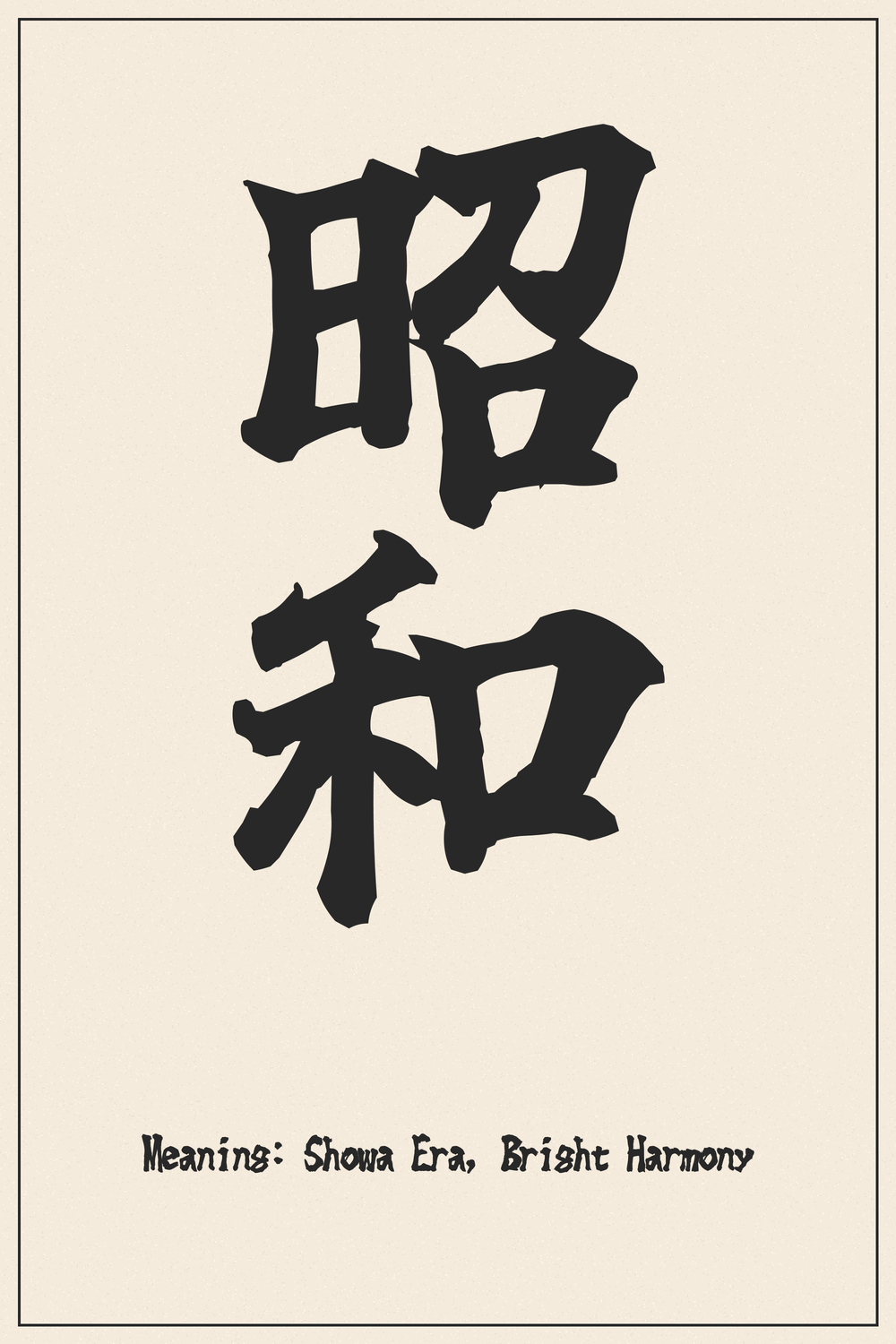
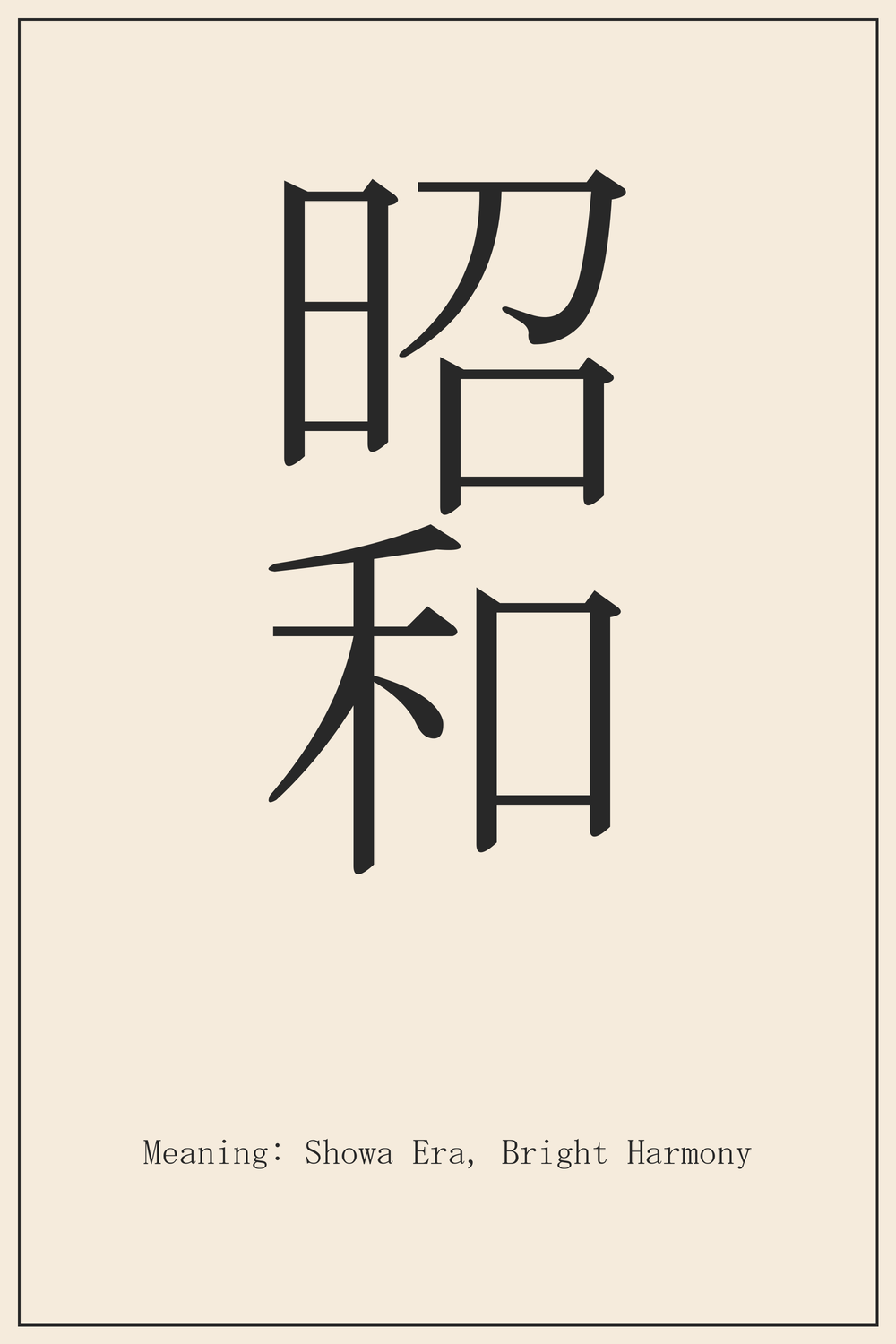
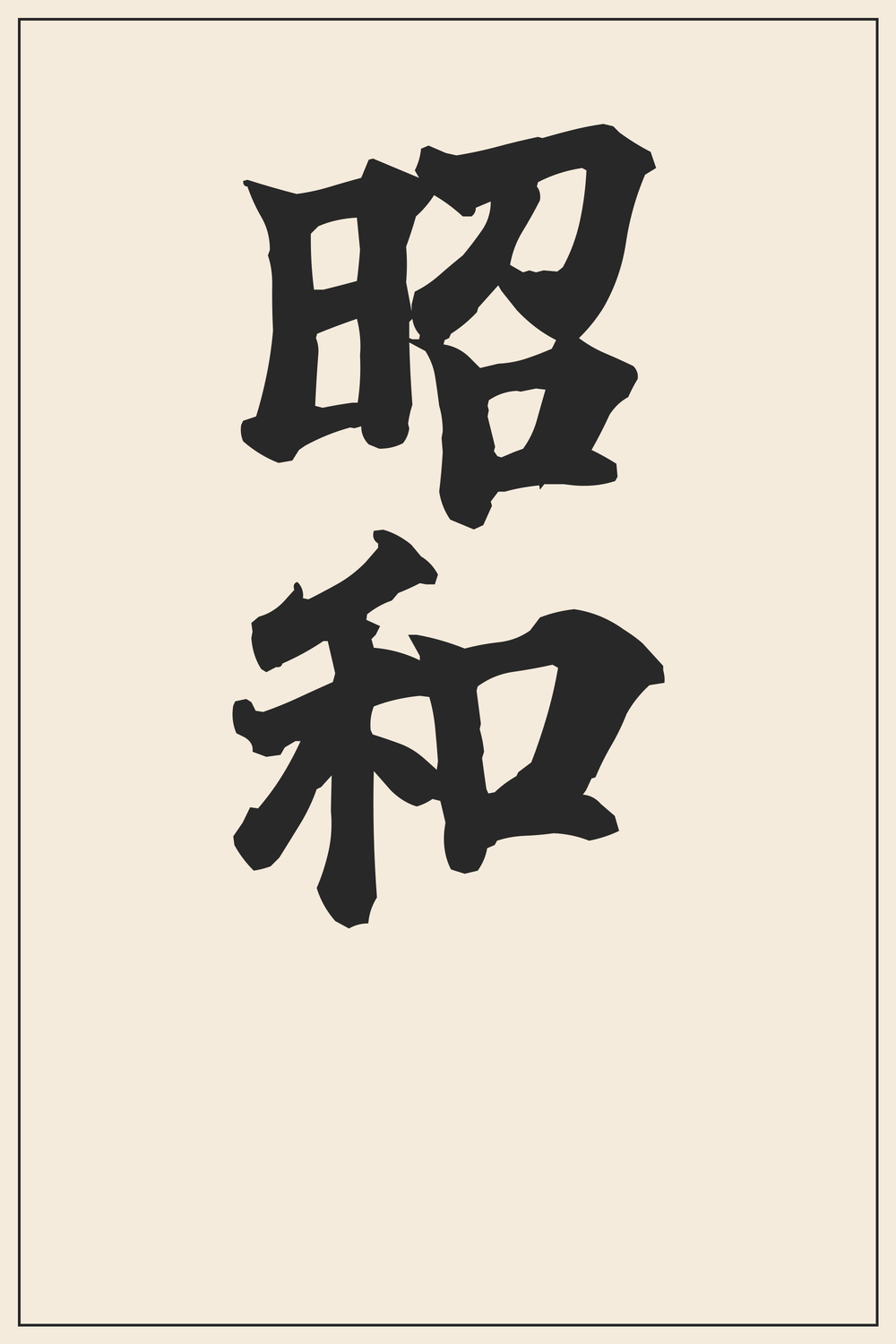
The Kanji 昭和 (Showa) encapsulates a significant period in Japanese history, resonating with ideals of enlightenment and peace. It represents not just an era, but a profound cultural aspiration for harmony.
The atmosphere of a Kanji character changes dramatically depending on the font style. A character that looks elegant in a brush style might look bold and modern in a different font.
Recommendation:
Since a tattoo is permanent, we strongly recommend comparing various font styles beyond what is shown here. Use our designs as a trusted reference for the correct structure, but feel free to explore different artistic variations to find the perfect match for your vision.
The Deep Meaning Behind Showa
The term 昭和 (Showa) represents one of the longest and most pivotal eras in Japanese history, spanning from 1926 to 1989. Its name, derived from classical Chinese texts, literally translates to ‘Bright Harmony’ or ‘Enlightened Peace,’ reflecting the aspirations for the reign of Emperor Hirohito.
This era witnessed significant transformations, including rapid modernization, the devastations of World War II, and subsequent remarkable economic recovery and growth. The name encapsulates a period of both profound challenges and immense societal rebuilding, resilience, and eventual prosperity.
Kanji Breakdown
The compound Kanji 昭和 is formed by two distinct characters, each carrying its own rich meaning that contributes to the overall significance of the era name.
Meaning: Bright, clear, illustrious. This character combines 日 (sun) and 召 (call forth), metaphorically meaning to ‘call forth the sun’ or ‘illuminate,’ symbolizing enlightenment and brilliance.
Meaning: Harmony, peace, Japan. Composed of 禾 (grain) and 口 (mouth), it originally signified agreement or harmony in agricultural communities, evolving to represent peace and often referring specifically to Japan itself.
Conclusion
The Kanji 昭和 is more than just a historical marker; it embodies a deeply aspirational vision of a society achieving ‘Bright Harmony’ through times of great change and challenge. It reflects a nation’s journey and its enduring spirit.
For a tattoo, 昭和 offers a connection to a pivotal epoch, representing themes of resilience, peace, and cultural identity. It’s an ideal choice for those who appreciate historical depth and the pursuit of harmonious ideals, making a powerful statement of Japanese heritage.
Comments