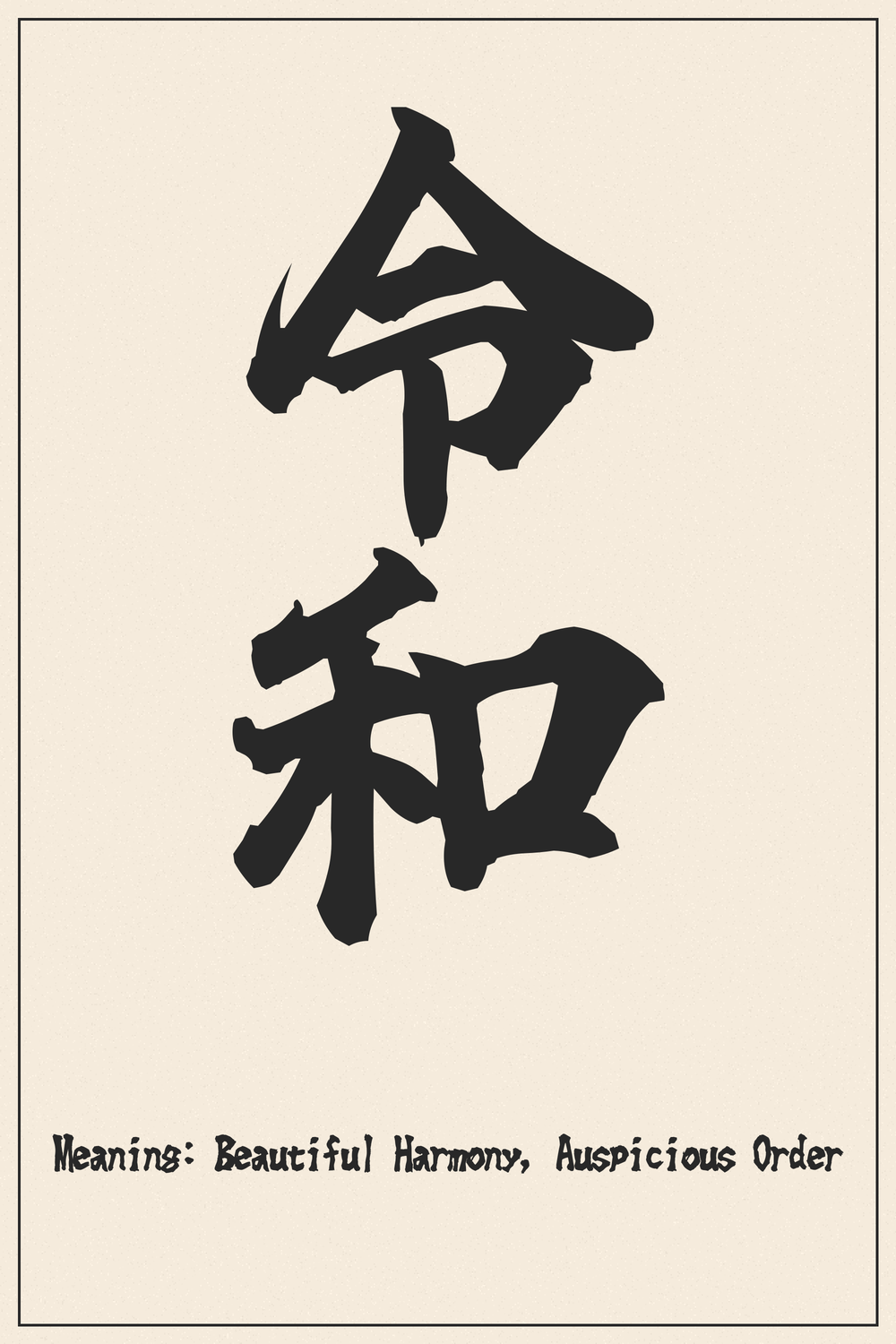
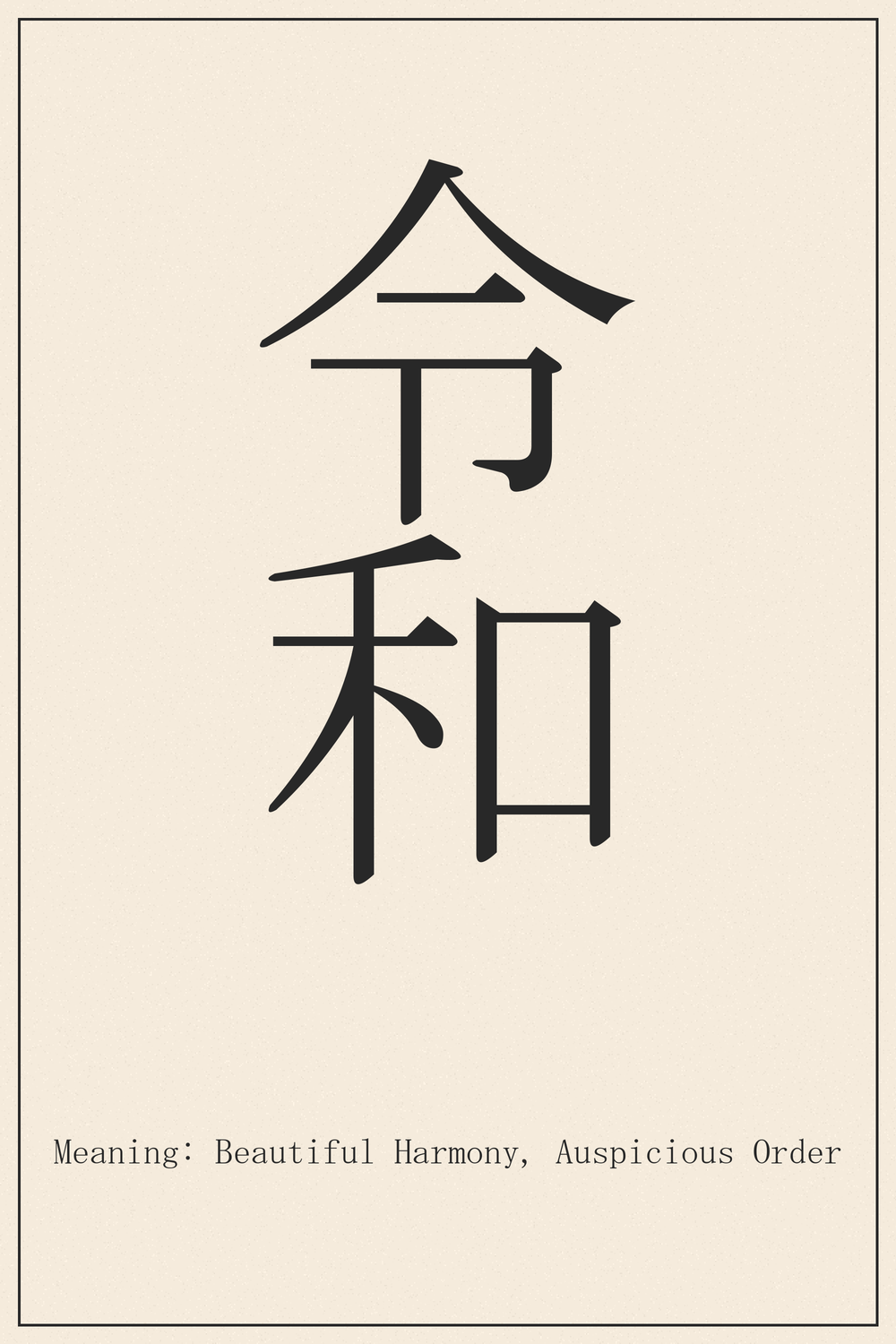
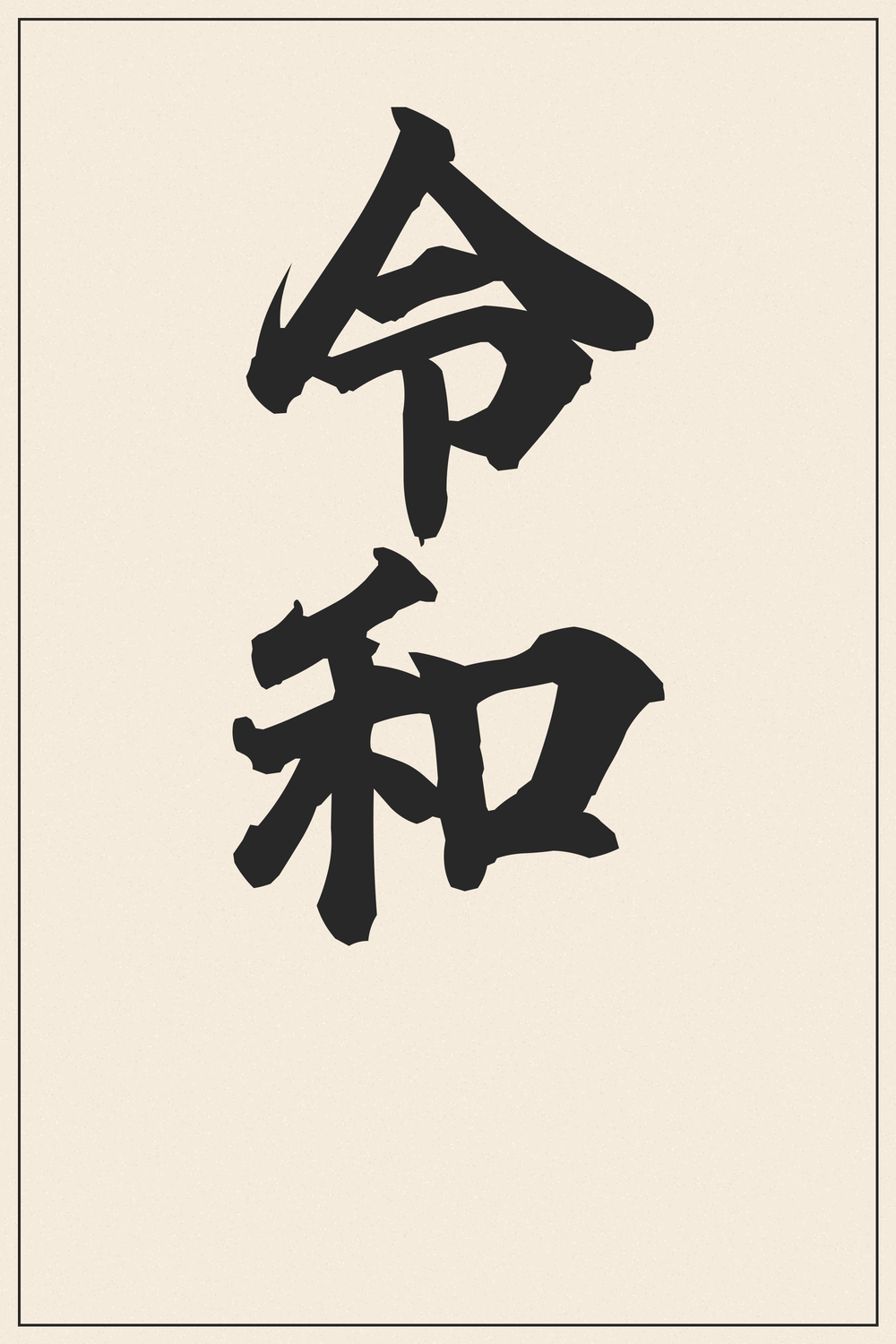
The Kanji compound ‘令和’ symbolizes a modern era in Japan, embodying profound concepts of beauty, order, and harmony. It represents a collective aspiration for a peaceful and flourishing society.
The atmosphere of a Kanji character changes dramatically depending on the font style. A character that looks elegant in a brush style might look bold and modern in a different font.
Recommendation:
Since a tattoo is permanent, we strongly recommend comparing various font styles beyond what is shown here. Use our designs as a trusted reference for the correct structure, but feel free to explore different artistic variations to find the perfect match for your vision.
The Deep Meaning Behind Reiwa
The name ‘令和’ was adopted as the new Japanese imperial era name on May 1, 2019, succeeding the Heisei era. It draws its inspiration from a poem in the ancient Japanese poetry anthology, the Man’yōshū, specifically from a preface to 32 poems on plum blossoms. This marks a significant departure as it is the first era name to be sourced from a classical Japanese text, rather than a Chinese one.
The choice of ‘令和’ carries a powerful message. ‘令’ can mean ‘auspicious’ or ‘beautiful,’ while ‘和’ signifies ‘harmony’ or ‘peace.’ Together, they convey a vision of a beautiful harmony, where people’s hearts come together in a flourishing culture. The government’s official interpretation emphasizes a culture born and nurtured by people coming together beautifully. It represents a hope for an era of peace and prosperity, rooted in the spirit of unity and aesthetic appreciation.
Kanji Breakdown
To fully appreciate ‘令和,’ let’s examine its individual components and their historical significance.
Meaning: Order, command, good, auspicious, beautiful.
Meaning: Harmony, peace, Japan, softness.
Conclusion
The Kanji ‘令和’ is more than just an era name; it encapsulates a profound aspiration for a society characterized by beautiful harmony and order. It is a symbol of hope, cultural depth, and the collective spirit of a nation striving for peace and prosperity.
Choosing ‘令和’ for a tattoo is a powerful statement, reflecting an appreciation for Japanese culture and a personal commitment to the ideals of harmony, beauty, and a flourishing future. Its elegant composition and deep meaning make it an exceptional choice for a meaningful and culturally rich design.
Comments