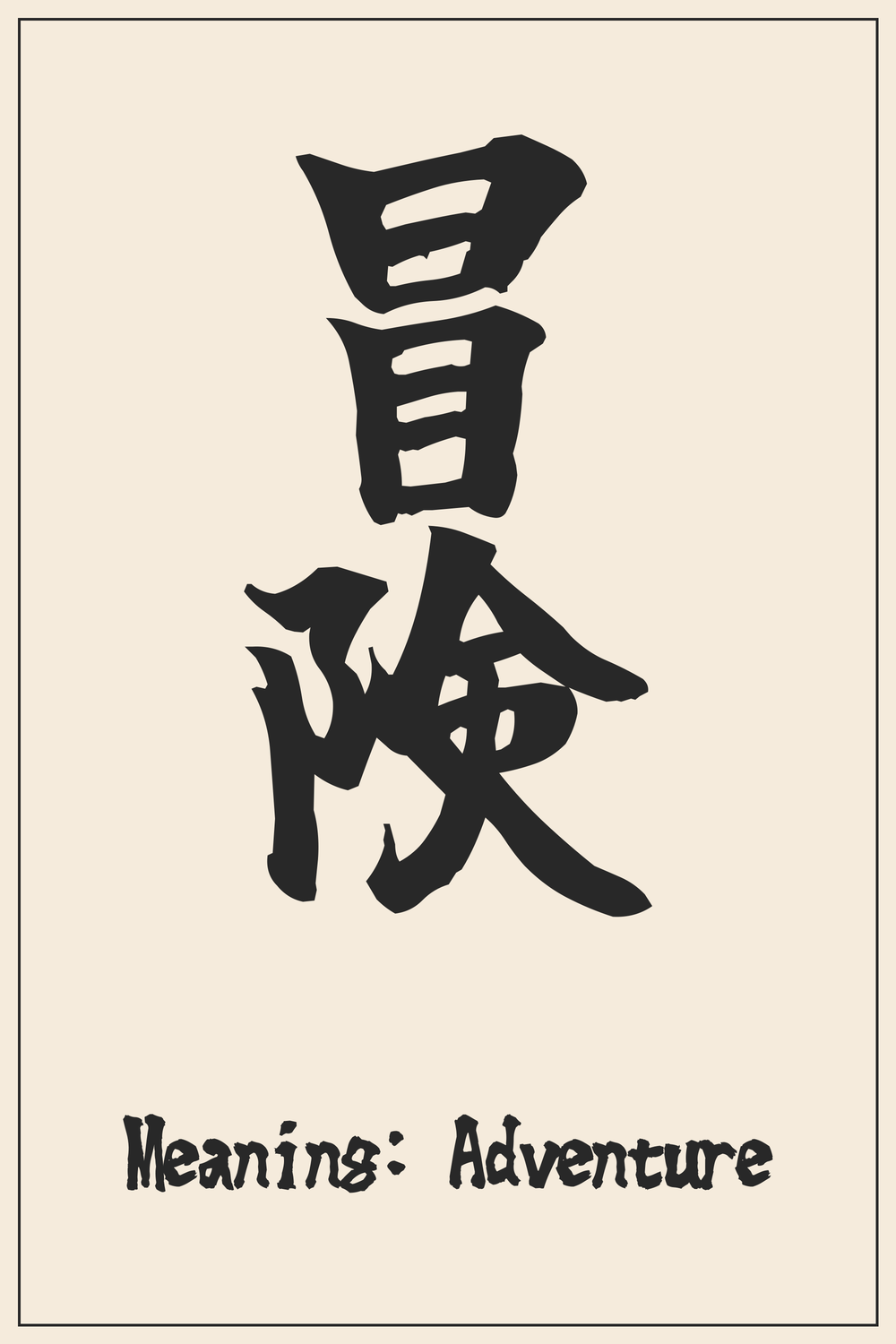
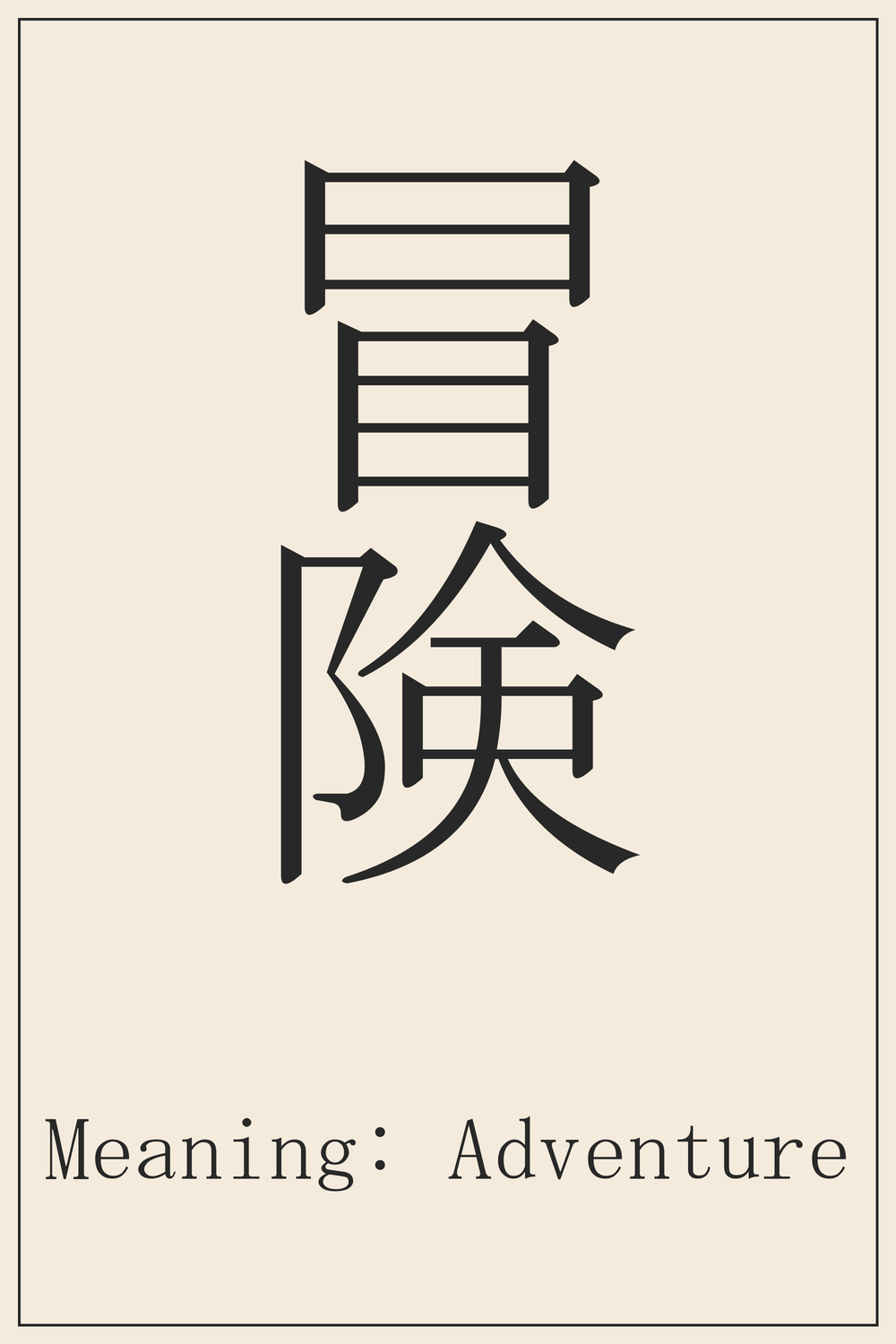
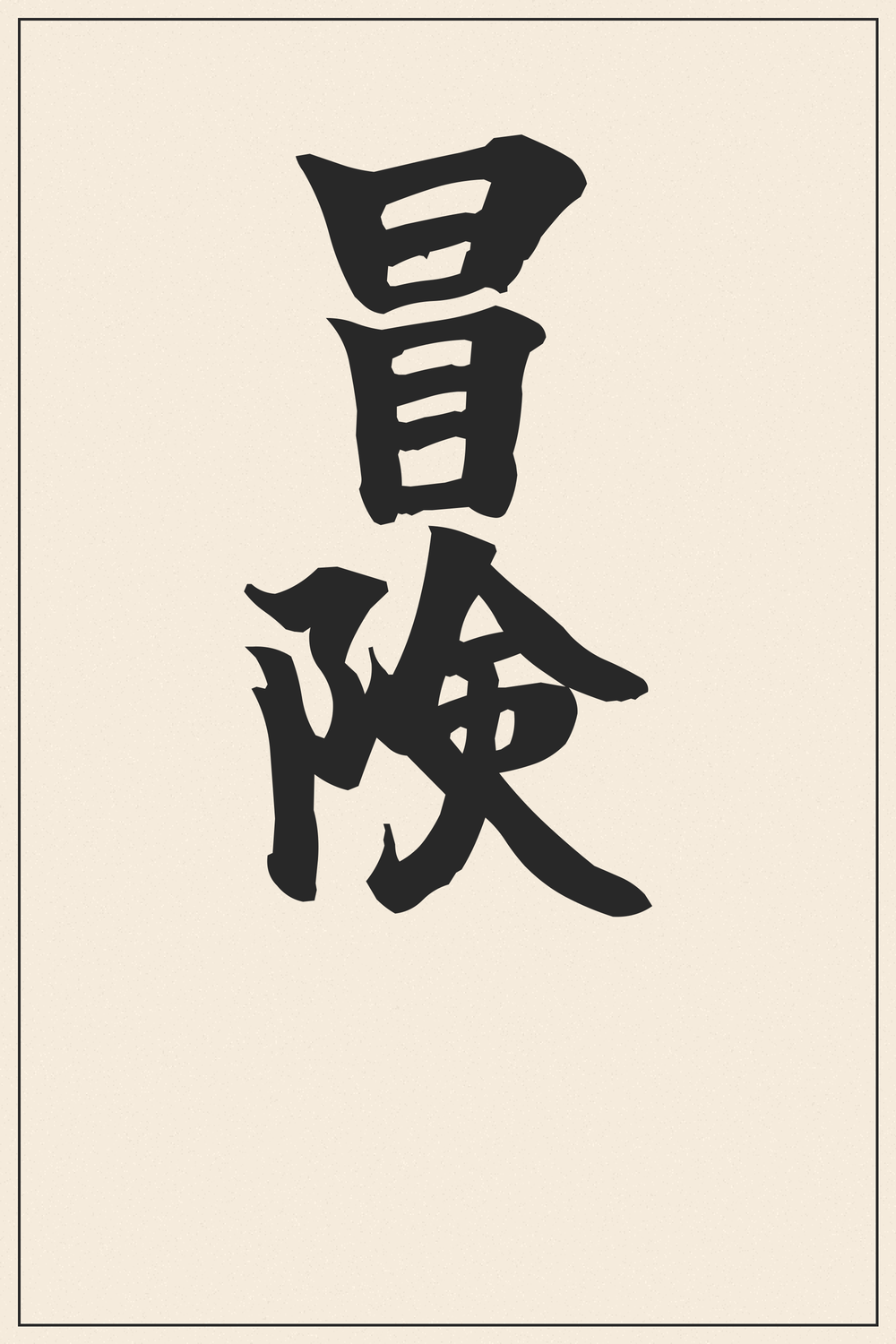
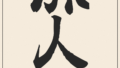
Embrace the thrill of the unknown and the courage to explore with the Kanji for ‘Adventure’. This powerful symbol encapsulates the spirit of daring, risk-taking, and the journey into uncharted territories.
The atmosphere of a Kanji character changes dramatically depending on the font style. A character that looks elegant in a brush style might look bold and modern in a different font.
Recommendation:
Since a tattoo is permanent, we strongly recommend comparing various font styles beyond what is shown here. Use our designs as a trusted reference for the correct structure, but feel free to explore different artistic variations to find the perfect match for your vision.
The Deep Meaning Behind 冒険
The Kanji ‘冒険’ (Bouken) profoundly captures the essence of adventure. The first character, ‘冒’ (bou), translates to ‘to dare,’ ‘to risk,’ or ‘to brave,’ suggesting an act of facing the unknown directly. The second character, ‘険’ (ken), means ‘dangerous,’ ‘steep,’ or ‘perilous,’ highlighting the inherent challenges and difficulties involved.
Together, ‘冒険’ vividly portrays the act of bravely venturing into perilous or uncharted territories. In Japanese culture, this concept is celebrated extensively in literature, manga, and folklore, from ancient heroic tales to modern narratives, symbolizing not just physical journeys but also mental fortitude and a willingness to step beyond one’s comfort zone.
Kanji Breakdown
The compound Kanji ‘冒険’ is formed by two distinct characters, each contributing to its profound meaning of adventure.
Meaning: To dare, to risk, to brave.
This character originally depicted a hat (冃) covering an eye (目), evolving to signify facing something head-on, braving challenges, or venturing into the unknown without fear.
Meaning: Dangerous, steep, precipitous.
Composed of the radical 阝 (mound/hill) and 僉 (all), this character suggests a perilous landscape or a situation fraught with difficulty, emphasizing the risks inherent in any significant venture.
Conclusion
The Kanji ‘冒険’ is more than just a word; it’s a powerful philosophy of life for those who seek growth through challenge and exploration. It represents the courage to step into the unknown, the resilience to overcome obstacles, and the profound reward of experience.
For a tattoo, ‘冒険’ serves as a profound and constant reminder to live boldly, embrace new experiences, and continuously push the boundaries of your world. It is a symbol for the intrepid spirit, encouraging a life rich with discovery and personal transformation.
Comments