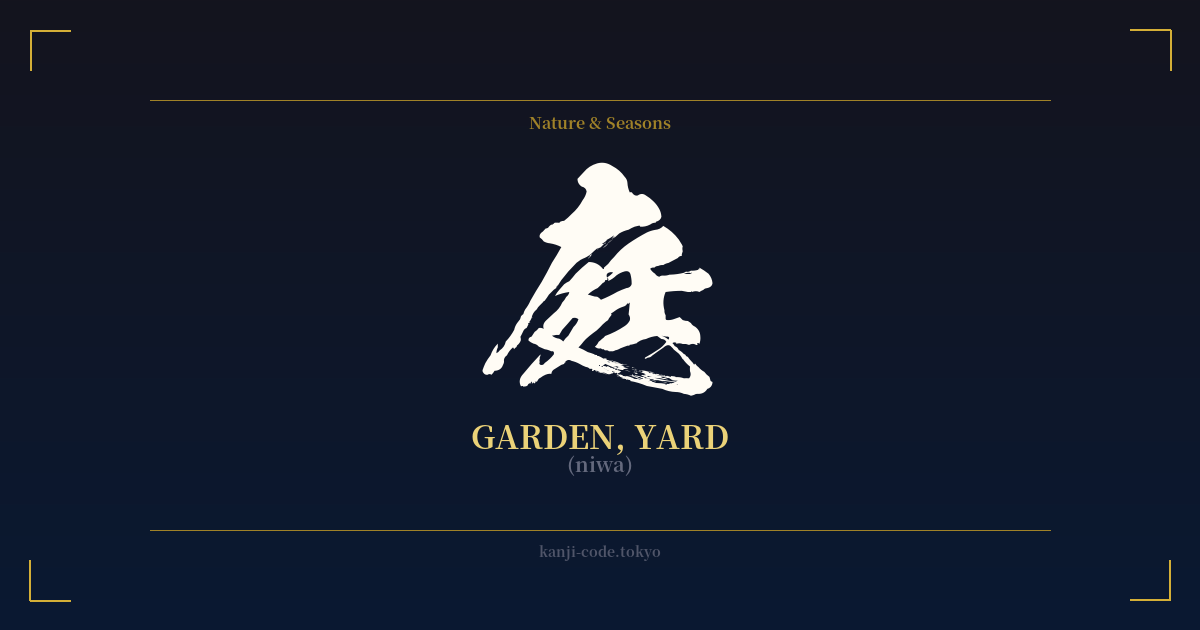
✍️ 庭 (niwa) — Cultural Context
The kanji 庭 (niwa) translates to 'garden' or 'yard,' but this simple definition barely scratches the surface of its cultural significance in Japan. A 'niwa' is far more than a patch of land next to a house; it is a space of immense artistic, spiritual, and philosophical importance, a microcosm of nature meticulously crafted to inspire tranquility and contemplation.
The history of Japanese gardens, or 日本庭園 (Nihon Teien), stretches back over a thousand years, evolving alongside shifts in religion, politics, and aesthetics. Early gardens were designed for the entertainment of aristocrats, featuring ponds for boating and elaborate pavilions. However, with the arrival of Zen Buddhism, the garden transformed into a place for meditation and spiritual discipline.
This led to the development of iconic styles like the 枯山水 (karesansui), or dry landscape garden. In a karesansui, gravel or sand is raked to represent water, and rocks are carefully placed to symbolize mountains, islands, or even mythical creatures. These minimalist gardens are not meant to be entered but viewed from a veranda, encouraging a state of quiet reflection and helping one to see the profound in the simple.
Other styles include the 茶庭 (chaniwa), or tea garden, which acts as a spiritual pathway to the tea house, designed to cleanse the mind before the ceremony. Strolling gardens (回遊式庭園, kaiyū-shiki teien) were popular among the feudal lords of the Edo period, featuring a path that circumnavigates a central pond, revealing a series of carefully composed scenes as one walks.
The very structure of the kanji 庭 hints at its meaning. It is composed of the radical 广 (madare), which signifies a building or enclosure, and 廷 (tei), which originally depicted a royal court or a formal open space. Together, they create the image of a specially designated, manicured space connected to a dwelling—a place set apart from the wildness of nature, yet designed to celebrate its essence.
In modern Japan, the concept of 'niwa' remains deeply ingrained. Even in the most crowded cities, you will find small, perfectly maintained gardens in homes, temples, and public spaces, each one a quiet testament to the enduring Japanese appreciation for harmony between humanity and the natural world.
🖌️ Font Styles for 庭
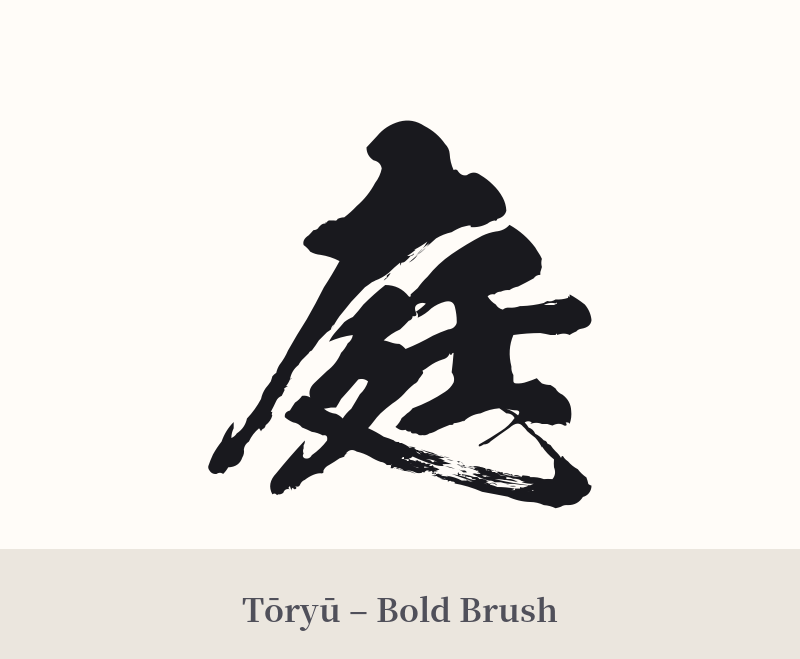
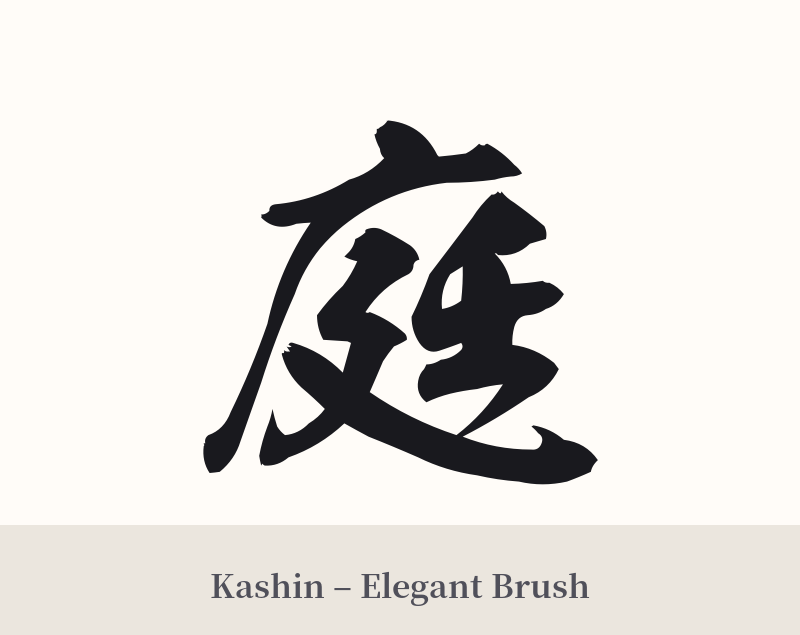
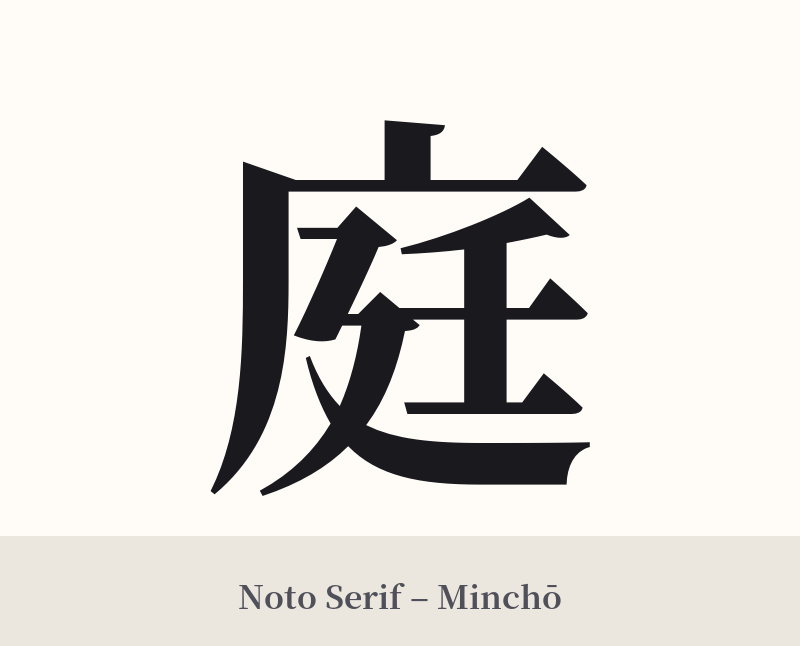
The same kanji can look dramatically different depending on the calligraphy style. Choose a font that matches the mood you want for your tattoo or design.
🎨 Tattoo Suitability
📐 Tattoo Design Guide
A tattoo of 庭 (niwa) should capture its essence of tranquility and structured nature. It's a design that speaks to a love for peace, contemplation, and the beauty of the natural world.
– Placement: Consider areas that feel like a personal sanctuary. The inner forearm, where you can easily gaze upon it, is an excellent choice. The calf or the space just below the collarbone also work well. For a larger, more impactful piece, the back provides a canvas to create a scene around the kanji.
– Font Style: A semi-cursive calligraphy style (Gyōsho) can evoke the organic, flowing forms of nature within the garden. For a more formal, architectural feel that emphasizes the 'designed space' aspect, a crisp and clear block script (Kaisho) is a strong option. A highly abstract, cursive style (Sōsho) can represent the garden's philosophical, almost ethereal quality.
– Visual Tips: Enhance the meaning by incorporating subtle elements from Japanese gardens. Frame the kanji within an Enso circle to represent enlightenment and the universe. Place it above a simple, raked-gravel pattern (karesansui) or a minimalist wave design. Adding a single, delicate maple leaf or cherry blossom petal can also provide context and a touch of color.


Comments