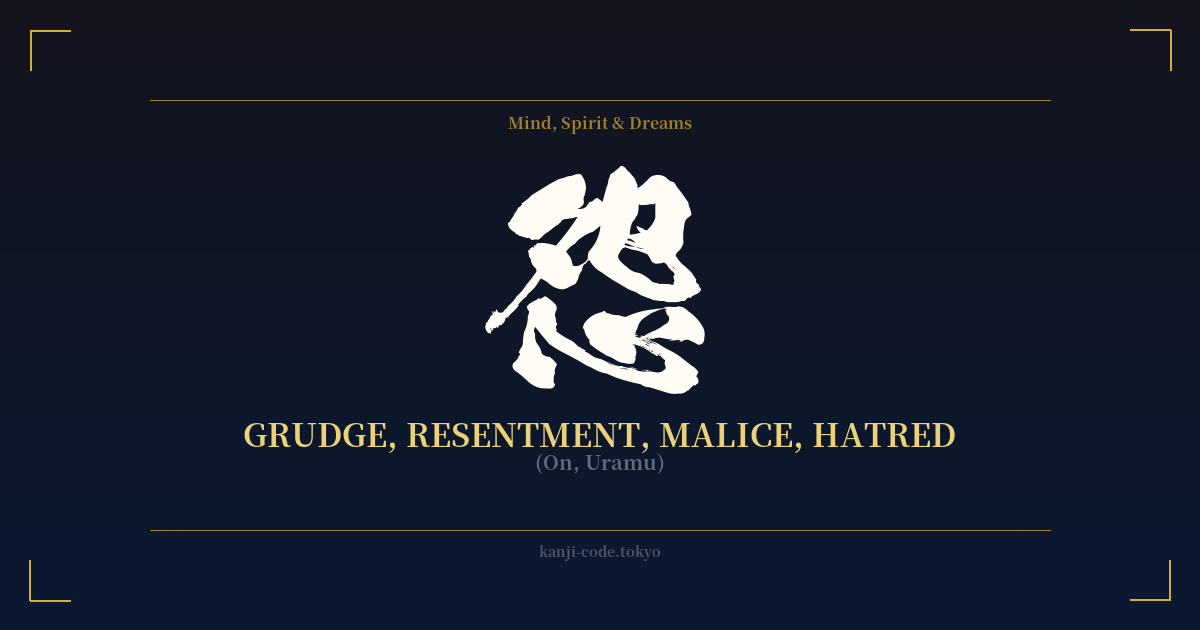
✍️ 怨 (On, Uramu) — Cultural Context
The kanji 怨 (on) delves into one of the darkest corners of the human heart. It doesn't represent fleeting anger or simple dislike; it signifies a deep, lingering grudge born from a perceived injustice, betrayal, or profound suffering. This is a resentment that festers over time, a cold and personal bitterness that can define a person's motivations and outlook. The feeling it encapsulates is called `urami` (怨み) in Japanese, a core concept in understanding certain aspects of the nation's folklore and psychology.
The character's very structure tells a story. It is composed of the radical `心` (kokoro), meaning 'heart' or 'mind', at the bottom. The element above, `夗`, depicts a person turning away or hunched over. Together, they paint a vivid picture: a heart that has turned away from others, closed off and contorted by resentment. It is the visual representation of a soul stewing in its own grievance.
This concept is most powerfully illustrated in the idea of the `onryō` (怨霊), or vengeful spirit. In Japanese ghost stories (kaidan), an `onryō` is the soul of a person who died in a state of extreme `怨`. Their grudge is so potent that it transcends death, allowing them to remain in the world of the living to seek retribution. The famous ghost Oiwa from the play Yotsuya Kaidan is a quintessential `onryō`, driven by the betrayal of her husband. This theme is a cornerstone of Japanese horror, from classic kabuki theater to modern films like Ju-On: The Grudge, where the title itself uses this very kanji.
Unlike the fiery, explosive nature of `怒` (ikari – anger), `怨` is a quiet, consuming force. It's the silent vow of revenge, the inability to forgive, the memory of a wound that never heals. In modern Japan, accusing someone of holding an `urami` is a serious matter, suggesting they are pathologically unable to move on from a past wrong. While it's a powerful word in literature and art to explore themes of vengeance and human suffering, it carries an undeniable and heavy darkness in everyday life.
🖌️ Font Styles for 怨
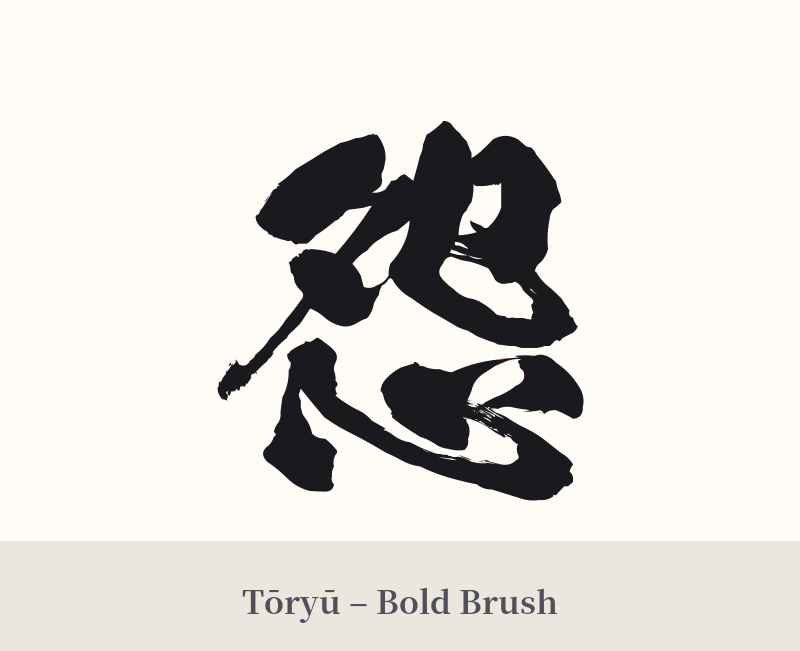
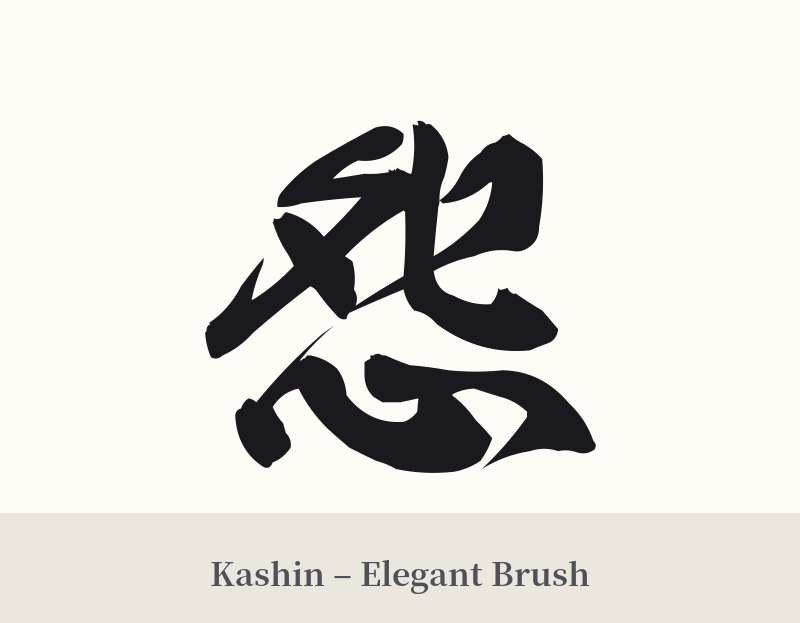
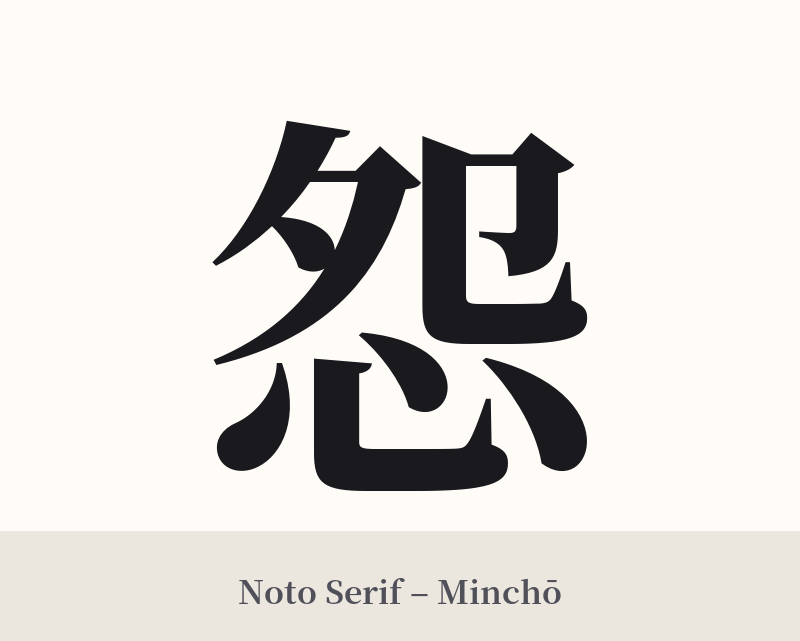
The same kanji can look dramatically different depending on the calligraphy style. Choose a font that matches the mood you want for your tattoo or design.
🎨 Tattoo Suitability
📐 Tattoo Design Guide
Given the intense and personal nature of this kanji, a tattoo of 怨 should be approached with deliberate intent. The design can be used to reflect the source of the grudge, whether it's a cold, calculated feeling or a raw, emotional wound.
– Placement: Consider more private and personal placements like the ribs, sternum, or inner bicep. This reflects the internal, hidden nature of a grudge. A placement on the back, near the heart, could symbolize a betrayal you've turned your back on but still carry.
– Font Style: The choice of font dramatically alters the mood. A scratchy, aggressive calligraphy style (sōsho) can convey raw, untamed resentment. In contrast, a stark, clean Mincho or Kaisho font can represent a cold, unyielding, and patient grudge. A dripping or smudged ink effect can add a layer of sorrow or corruption.
– Visual Elements: To add narrative depth, consider pairing 怨 with other symbols. A spider lily (higanbana), which is associated with death and final goodbyes, can create a somber tone. A broken chain might symbolize a grudge you feel trapped by, while imagery of a ghostly wisp (hitodama) directly links it to the `onryō` folklore.
Comments