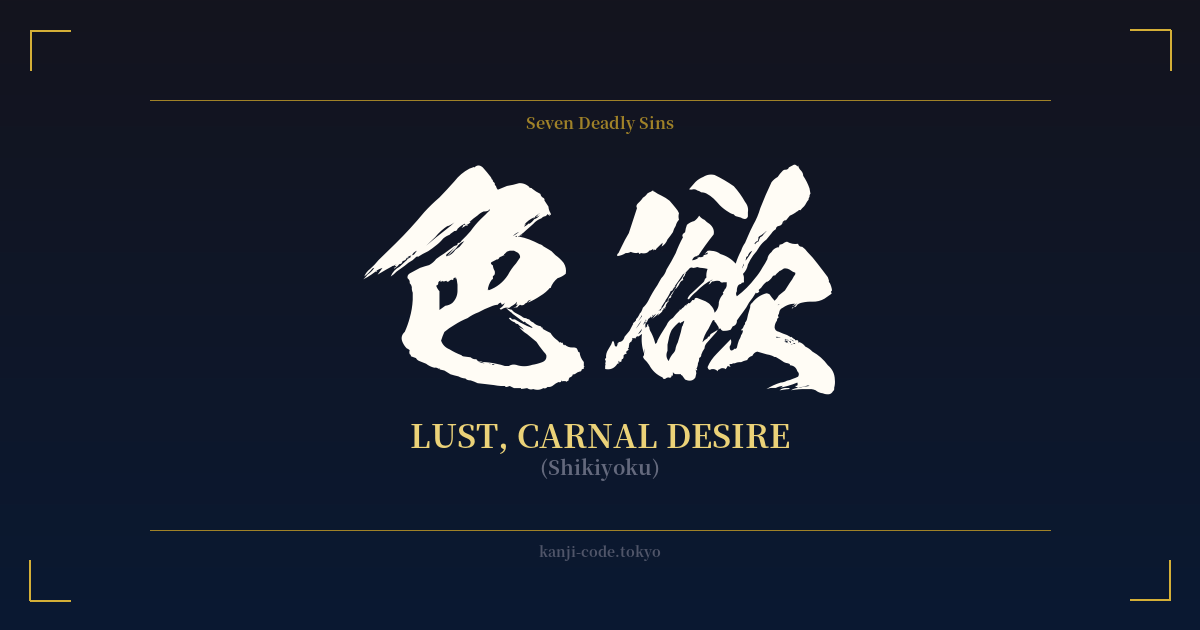
✍️ 色欲 (Shikiyoku) — Cultural Context
色欲 (Shikiyoku) is the Japanese word for lust, carnal desire, or sensual appetite. It is a direct and powerful term, often used in philosophical, religious, and psychological contexts to describe one of humanity's most primal drives.
The word's roots are deeply intertwined with Buddhist teachings. In Buddhism, worldly passions and desires are known as 煩悩 (bonnō), and they are considered obstacles to achieving enlightenment. 色欲 is one of the most fundamental of these desires, representing an attachment to the physical and sensual world.
The first kanji, 色 (shiki), is key to this understanding. While its most common meaning is 'color,' in a Buddhist context, it refers to 'form' or 'matter'—everything that can be perceived by the senses. It is the 'shiki' from the famous Heart Sutra phrase, 色即是空 (shiki soku ze kū), or "form is emptiness." Therefore, in 色欲, it signifies sensual, physical pleasures.
The second kanji, 欲 (yoku), means 'desire,' 'craving,' or 'greed.' When combined, the two characters create a term that translates literally to "desire for the sensual forms," a precise and clinical definition of lust.
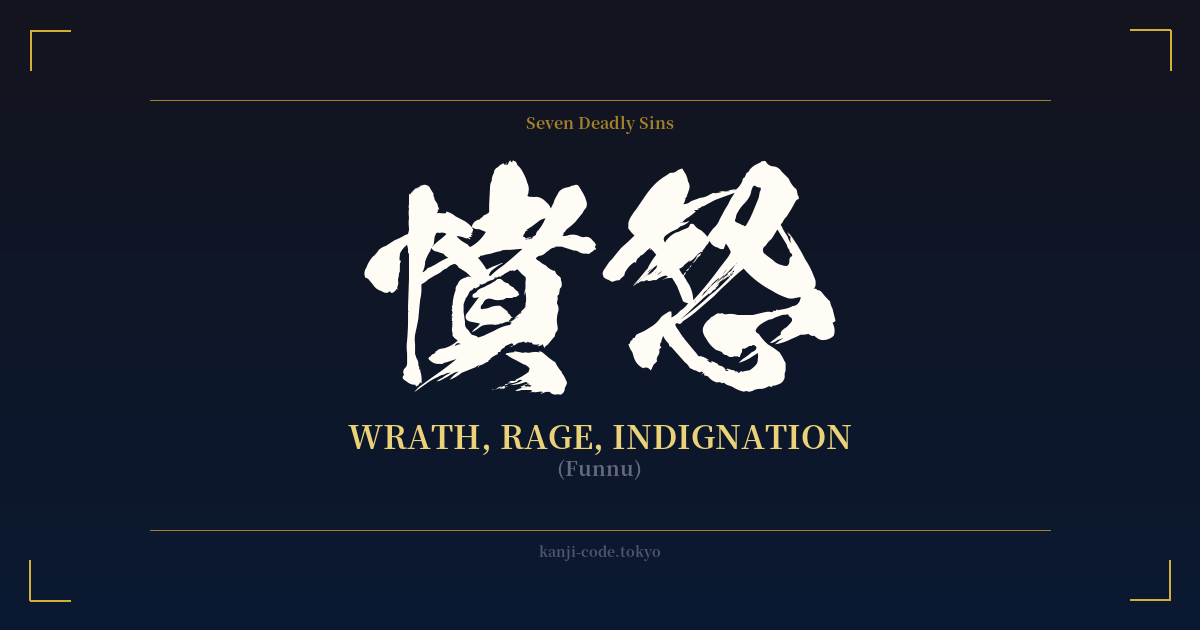
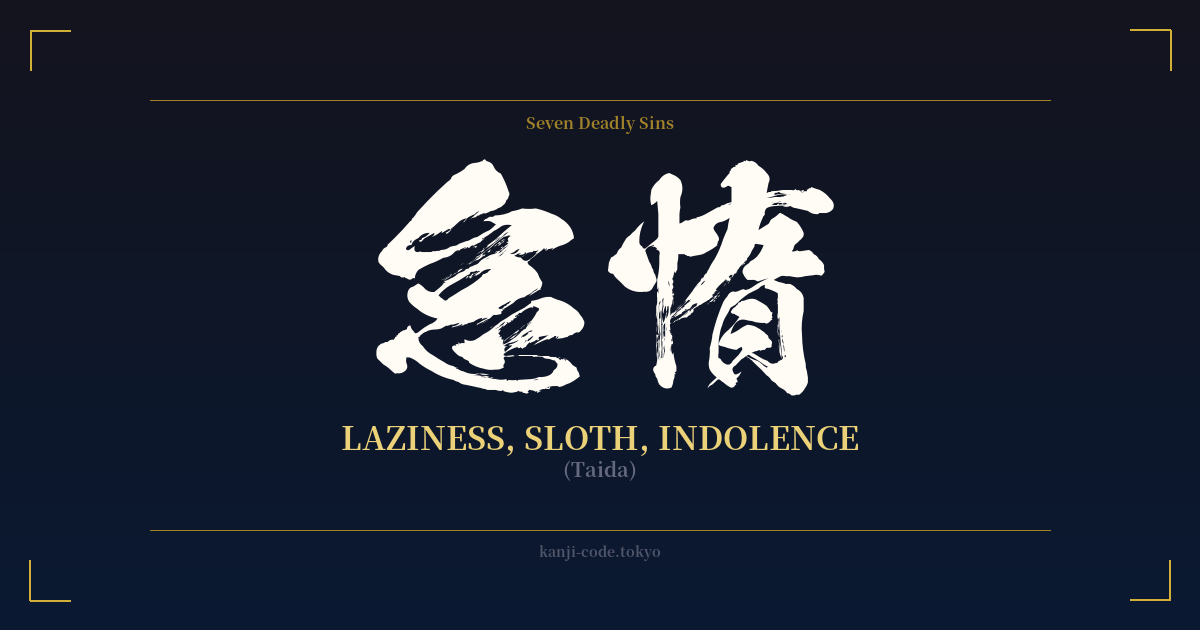
In modern Japan, 色欲 is most widely known as one of the Seven Deadly Sins (七つの大罪, Nanatsu no Taizai), a concept imported from Christianity that has become a popular trope in manga, anime, and video games. In this framework, 色欲 represents the sin of Lust, often personified by a specific character who embodies this trait.
It's important to distinguish 色欲 from concepts like love (愛, ai) or passion (情熱, jōnetsu). 色欲 is almost exclusively negative, implying a base, uncontrolled impulse. It lacks the emotional connection of love or the more positive, driving force of passion. While historical Japanese art, such as ukiyo-e prints from the 'floating world,' openly depicted scenes of pleasure, this was a specific realm of entertainment, separate from the societal values of discipline and self-control. Bearing the word 色欲 is not an artistic statement but a direct label of a base desire.
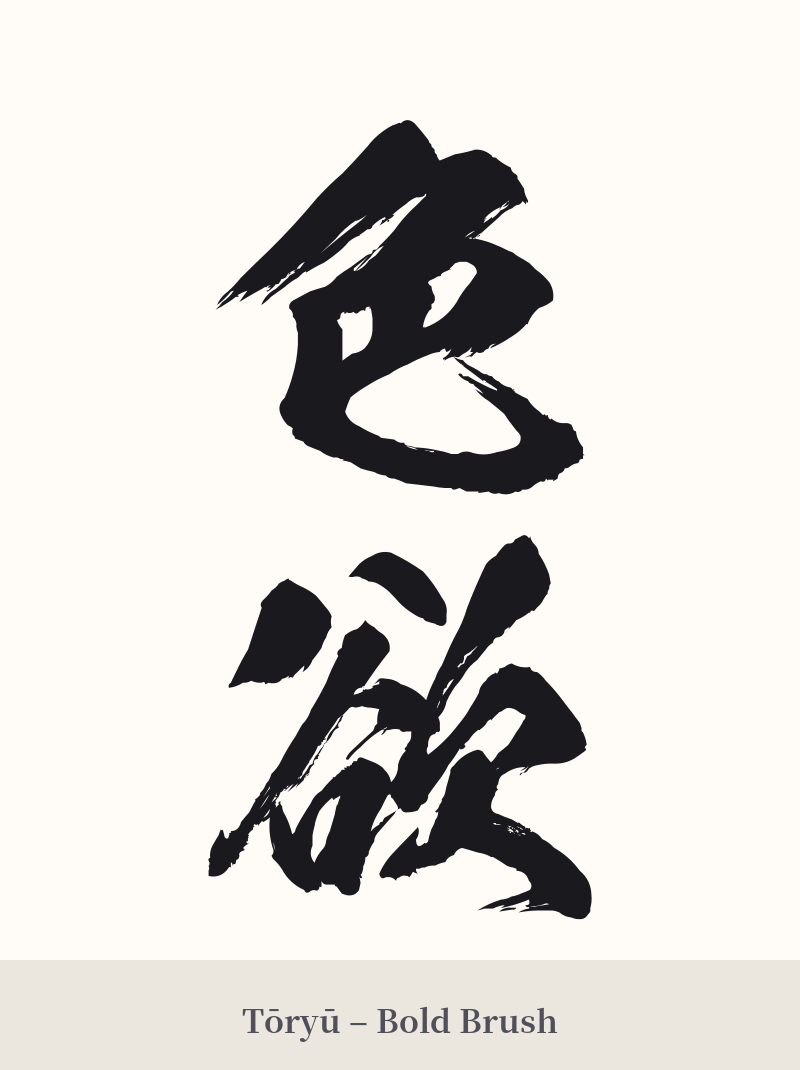
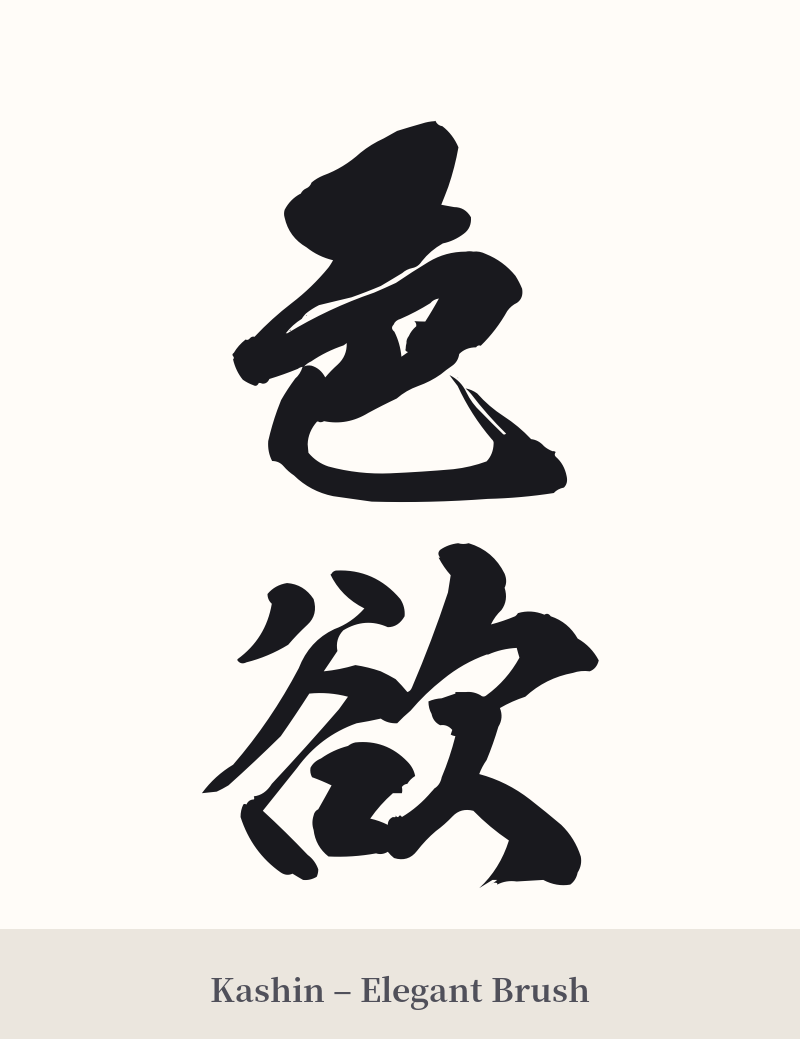
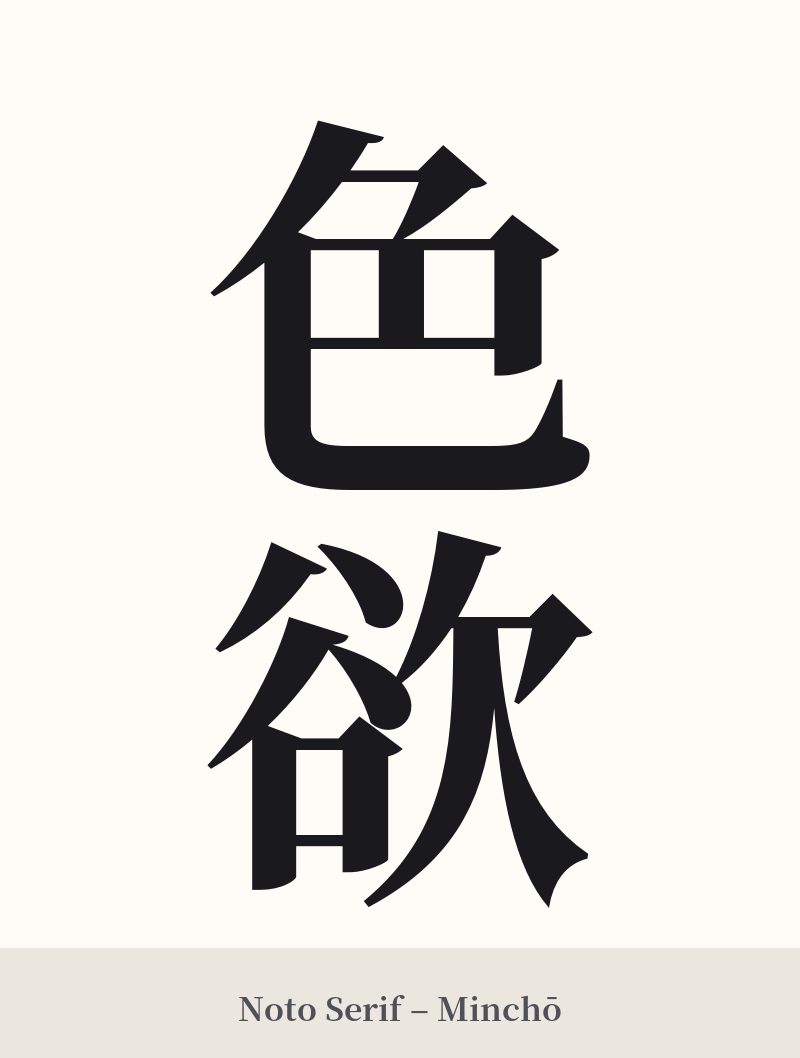
🖌️ Font Styles for 色欲
The same kanji can look dramatically different depending on the calligraphy style. Choose a font that matches the mood you want for your tattoo or design.
🎨 Tattoo Suitability
📐 Tattoo Design Guide
Given the direct and negative meaning of 色欲, this is a word that demands careful consideration for a tattoo.
– Placement: Private or easily concealable areas are highly recommended. The ribs, upper thigh, back, or inner bicep are suitable locations that allow the wearer to choose when to display it.
– Font Style: The style can heavily influence the message. An aggressive, semi-cursive calligraphy style (Gyōsho or Sōsho) can emphasize the raw, untamed nature of lust. In contrast, a sharp, angular block font (like Mincho) can give it a more philosophical or analytical feel, as if labeling a human condition.
– Visual Elements: Consider pairing the kanji with imagery that explores its theme. You could create a design that contrasts the 'base' desire with purity, such as placing the kanji near a lotus flower, which grows from mud. Alternatively, elements like flames or broken chains could represent the consuming and binding nature of lust.
Comments