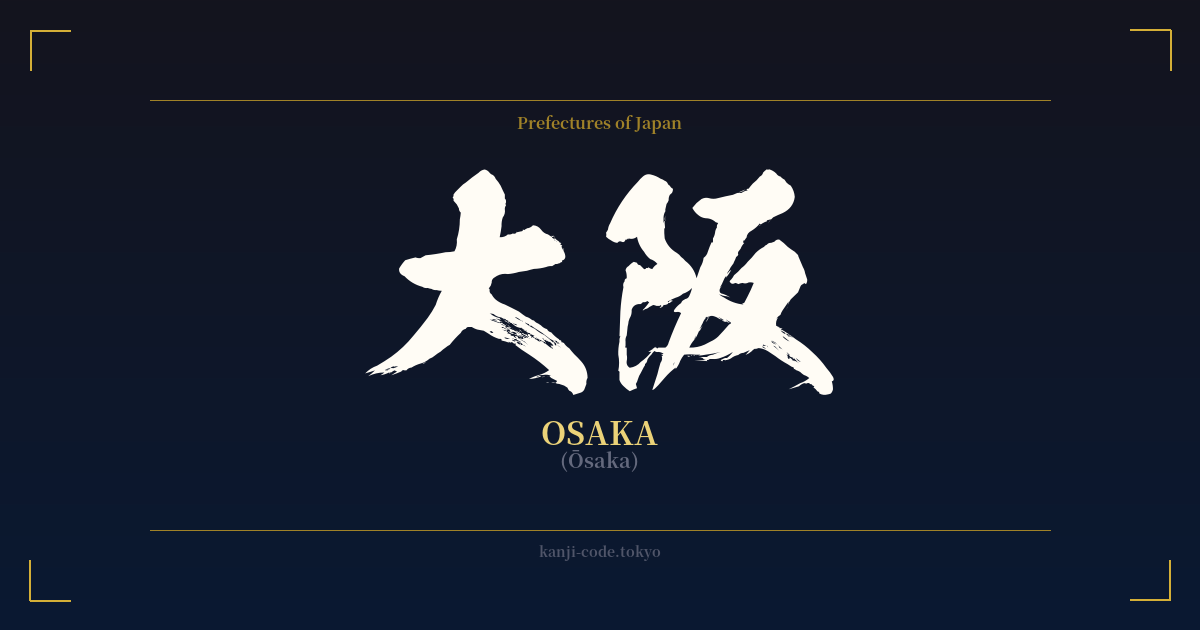
✍️ 大阪 (Ōsaka) — Cultural Context
The name 大阪 (Ōsaka) literally translates to "large slope." This name originates from the geography of the area, specifically a large hill or incline near the Uemachi Plateau where the Ishiyama Hongan-ji Temple, the predecessor to Osaka Castle, was first built. The name captures a simple, physical feature of the landscape that would become one of Japan's most important urban centers.
Interestingly, the city was originally written as 大坂, using a different kanji for "saka" (坂). This character, however, can be deconstructed into components meaning "earth" (土) and "to return" or "to rebel" (反). To some, this combination suggested misfortune, particularly the idea of warriors falling on the battlefield. During the Meiji Restoration in the 19th century, the government officially changed the character to 阪 to avoid these inauspicious connotations. While 阪 also means "slope," it lacks the negative associations of the original character, cementing the modern spelling we know today.
Beyond its literal meaning, Osaka holds a profound cultural identity as "天下の台所" (Tenka no Daidokoro), or the "Nation's Kitchen." During the Edo period, Osaka was the primary hub for rice trading and the distribution of goods from across Japan. This economic dominance fostered a unique culture of pragmatism, commerce, and a deep appreciation for food. The city's spirit is often characterized by the term "kuidaore," which loosely translates to "eating oneself into ruin," highlighting the passionate and central role of food in Osaka life.
This history shapes the modern perception of Osaka. It's known for its energetic, friendly, and down-to-earth people, who stand in contrast to the more formal and reserved reputation of Tokyo residents. The city is a sensory explosion, famous for its neon-lit Dotonbori district, boisterous comedy scene, and, of course, its incredible street food like takoyaki and okonomiyaki. Choosing the kanji for Osaka is to embrace this identity: one of vibrancy, flavor, history, and a distinctly pragmatic yet joyful approach to life.
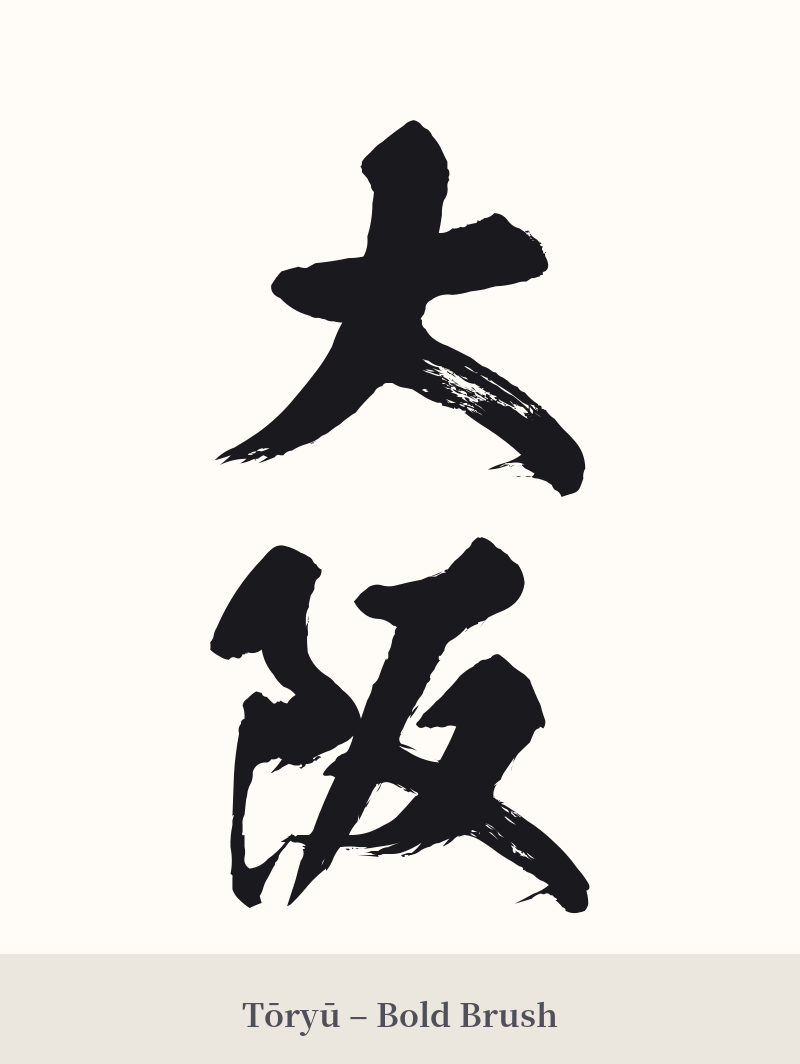
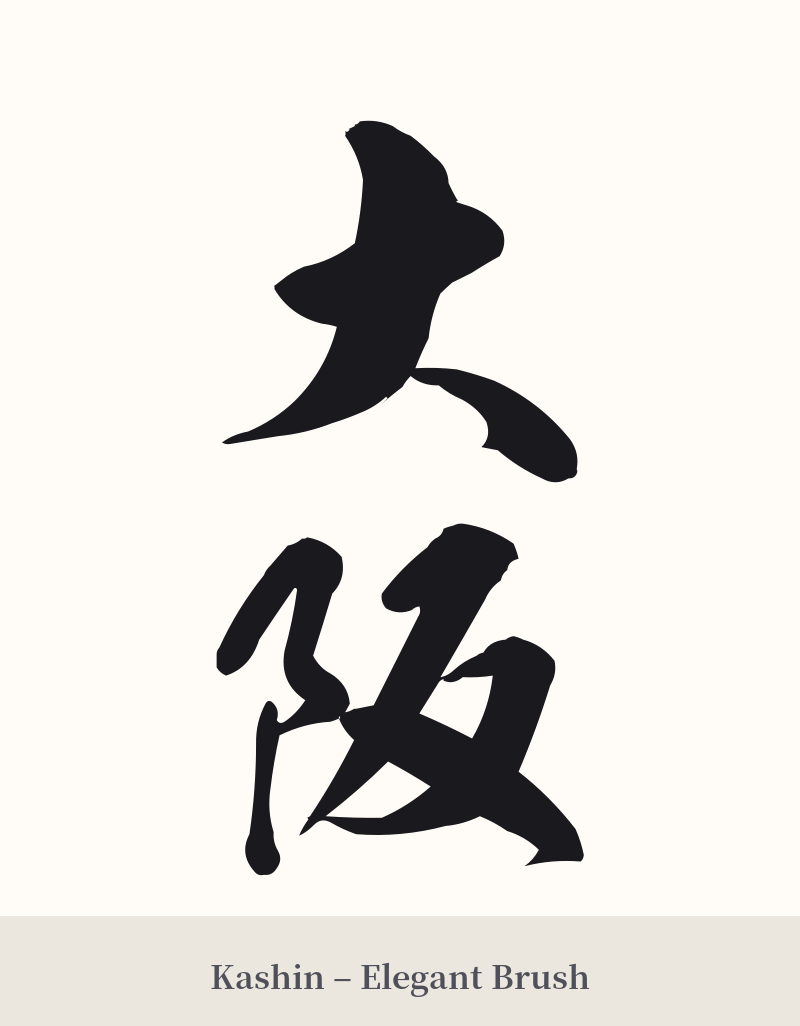
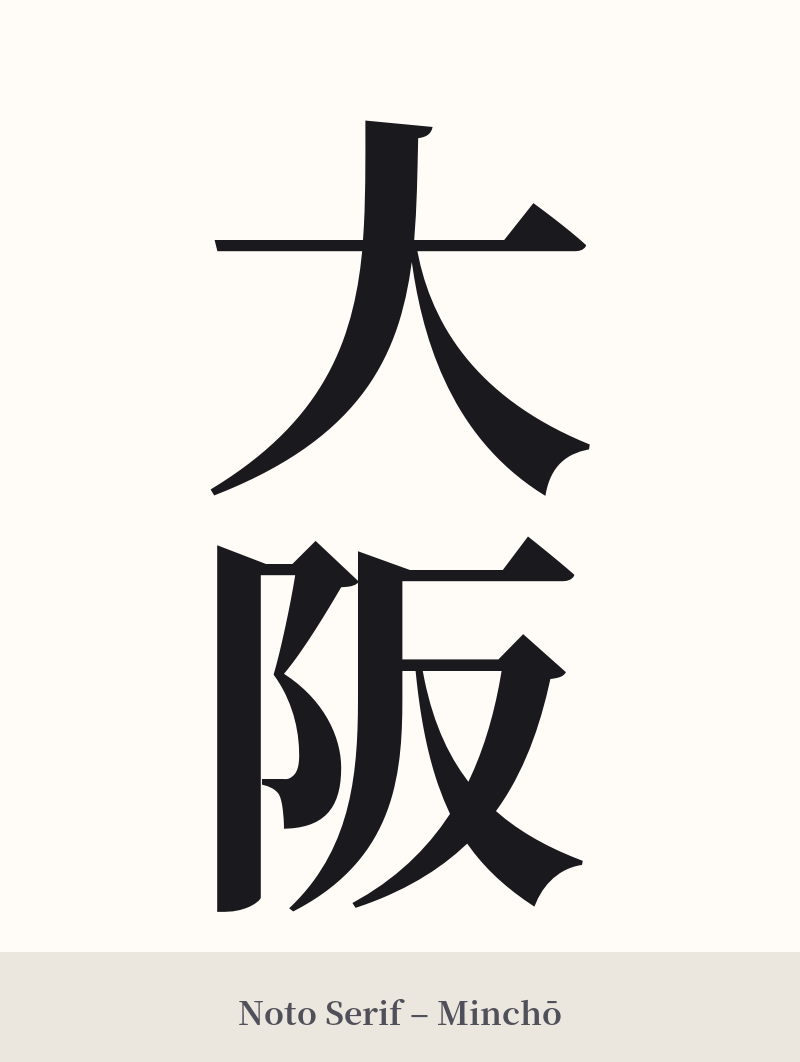
🖌️ Font Styles for 大阪
The same kanji can look dramatically different depending on the calligraphy style. Choose a font that matches the mood you want for your tattoo or design.
🎨 Tattoo Suitability
📐 Tattoo Design Guide
The two characters of 大阪 offer excellent balance for a tattoo, working well in both horizontal and vertical layouts. A vertical orientation is more traditional and looks powerful along the forearm, calf, or spine.
For design styles, consider these options: – Bold Calligraphy (Gyosho): A semi-cursive, dynamic brushstroke style can capture the energy and liveliness of the city itself. – Kantei-ryu: This thick, rounded script was traditionally used for kabuki and sumo advertisements, giving it a classic, bold, and uniquely Japanese feel that connects to entertainment culture. – Modern Gothic Font: A clean, sharp font can represent Osaka's status as a modern, sprawling metropolis.
To add personal flair, consider incorporating imagery associated with the city. A small silhouette of Osaka Castle, a lantern from the Dotonbori canal, or even an abstract wave pattern representing its port status can be woven into the design.
Comments