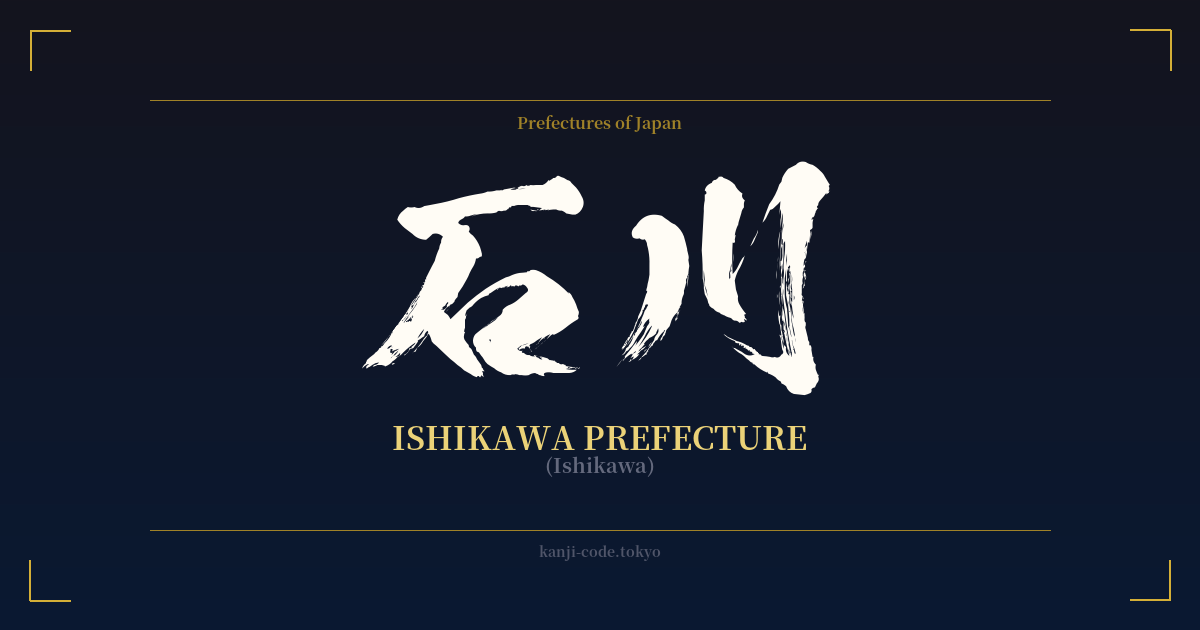
✍️ 石川 (Ishikawa) — Cultural Context
The word 石川 (Ishikawa) beautifully combines two of the most fundamental elements of the Japanese landscape: 石 (ishi), meaning 'stone,' and 川 (kawa), meaning 'river.' Together, they paint a simple yet profound picture of nature—a riverbed strewn with stones, a common sight in the country's mountainous terrain. This imagery evokes feelings of permanence, flow, and the quiet, unadorned beauty celebrated in Japanese aesthetics.
While its literal meaning is evocative, the name Ishikawa is overwhelmingly recognized in Japan as a proper noun. It is both a very common family name and, most famously, the name of Ishikawa Prefecture. Located in the Chūbu region on the coast of the Sea of Japan, this prefecture is a treasure trove of Japanese history and culture.
Ishikawa Prefecture's identity is deeply tied to its feudal past, particularly the Kaga Domain, which was ruled by the powerful Maeda clan for nearly three centuries during the Edo period. The Maeda lords were not only military strategists but also immense patrons of the arts and culture. Their wealth, second only to the Shogun's, was poured into developing crafts and scholarship, transforming the region into a cultural powerhouse that rivals Kyoto.
The prefectural capital, Kanazawa, stands as a testament to this legacy. It is home to Kenrokuen, celebrated as one of Japan's three most beautiful landscape gardens. The city also boasts beautifully preserved samurai and geisha districts (Nagamachi and Higashi Chaya, respectively), which offer a glimpse into the life of feudal Japan. Kanazawa was one of the few major Japanese cities to be spared from bombing during World War II, leaving its historical architecture remarkably intact.
Furthermore, Ishikawa is the heartland of exquisite traditional crafts. It is famous for Kutani-yaki (a vibrant, multi-colored style of porcelain), Kaga-yūzen (an elegant silk dyeing technique), and Wajima-nuri lacquerware. Most notably, Kanazawa produces 99% of all domestic gold leaf in Japan, an art form that adorns everything from temples and crafts to food. Thus, the name Ishikawa represents far more than a 'stone river'; it signifies a land of samurai legacy, artistic brilliance, and enduring tradition.
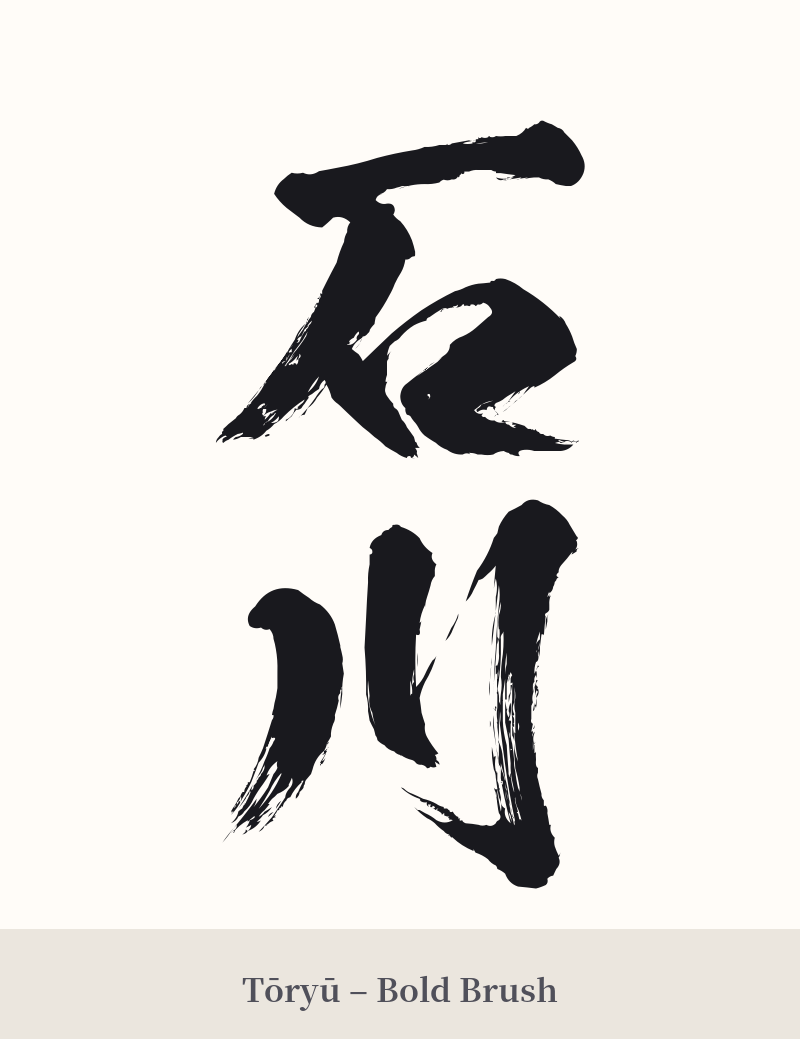
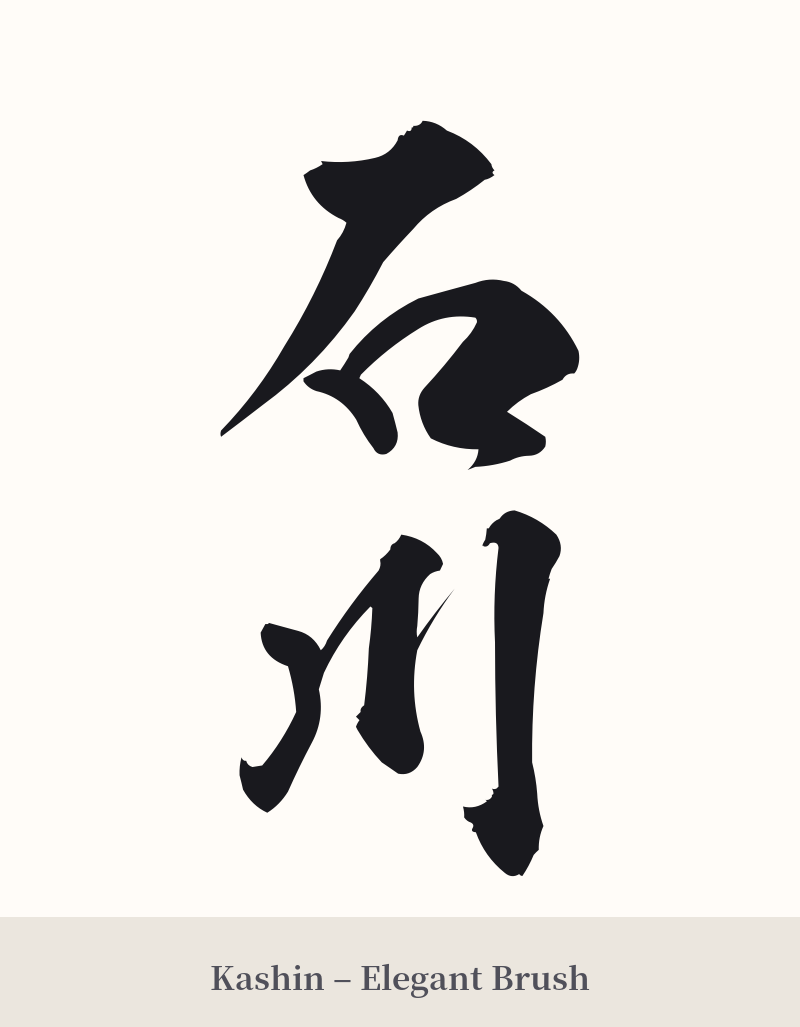
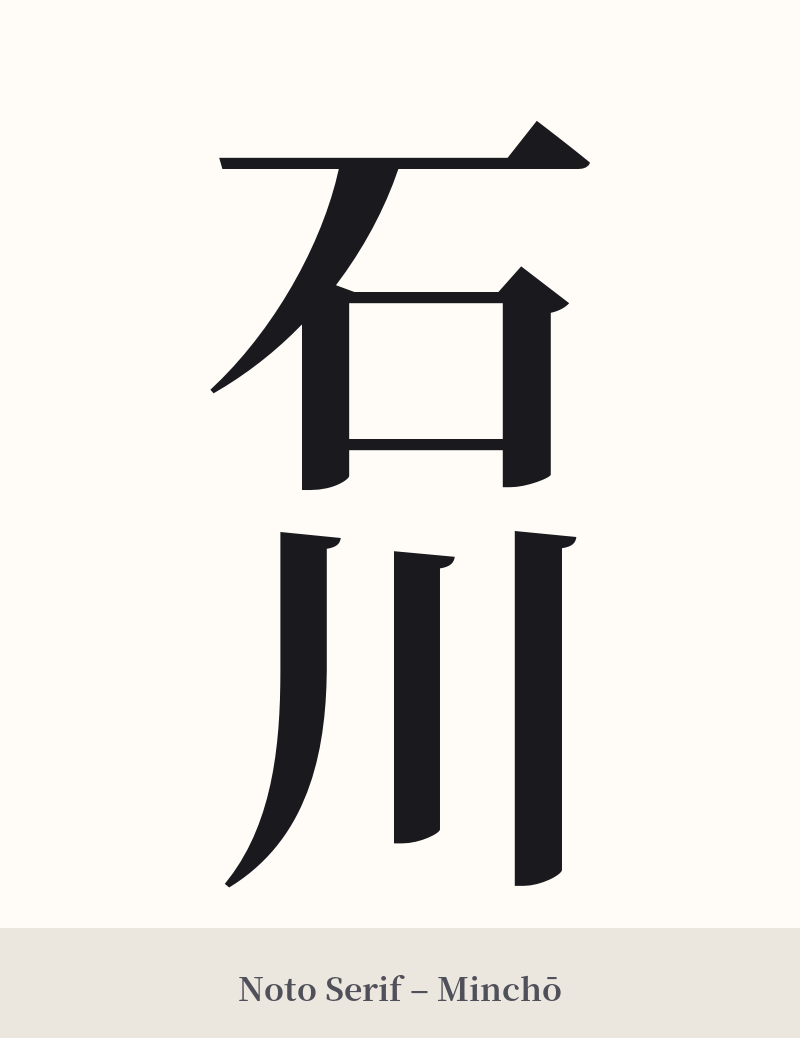
🖌️ Font Styles for 石川
The same kanji can look dramatically different depending on the calligraphy style. Choose a font that matches the mood you want for your tattoo or design.
🎨 Tattoo Suitability
📐 Tattoo Design Guide
The kanji for Ishikawa, being simple and balanced, offer a clean aesthetic for a tattoo. Its identity as a place name or surname, however, should guide the design's intent.
– Placement: Due to its simplicity, it works well in subtle locations like the wrist, ankle, or behind the ear. For a larger piece, it's best integrated into a larger Japanese-style scene (irezumi) that depicts a landscape with a river and stones, giving context to the characters.
– Font Style: A standard, crisp Kaisho (block) script emphasizes the kanji's geometric forms and clarity. For a more artistic feel, a semi-cursive Gyosho script can add a sense of movement, reflecting the 'river' character 川.
– Visual Tips: Consider a vertical orientation, which is traditional for Japanese writing and creates a nice visual flow. To honor the prefecture's heritage, you could incorporate a subtle element like a small fleck of gold leaf into the design or use colors reminiscent of Kutani-yaki porcelain.
Comments