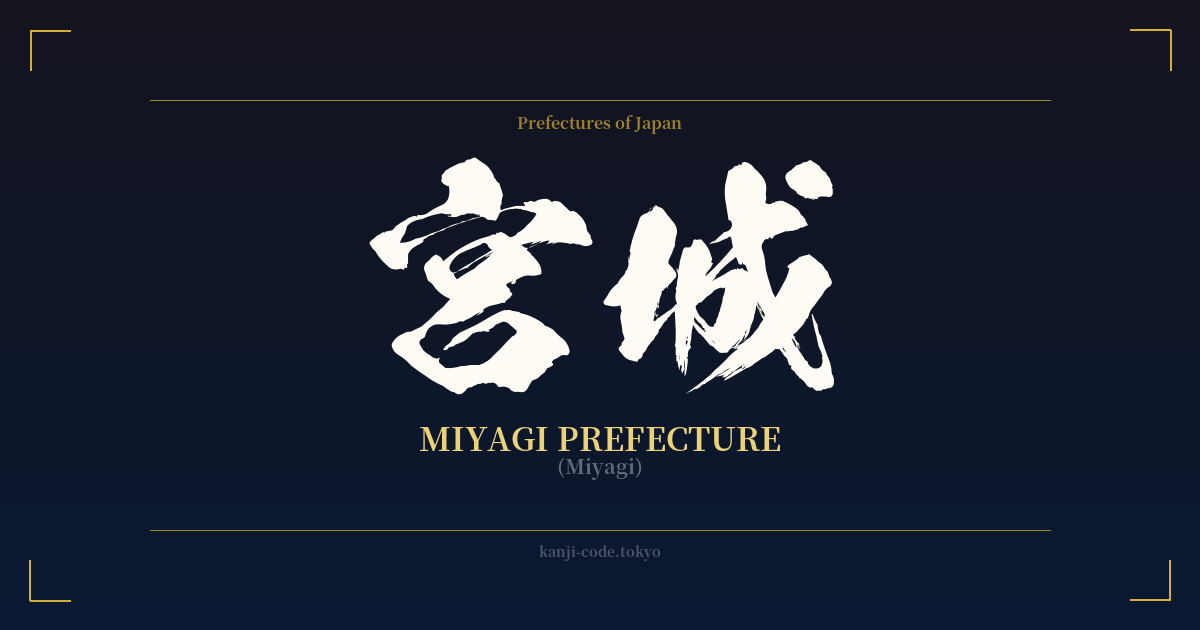
✍️ 宮城 (Miyagi) — Cultural Context
The name 宮城 (Miyagi) translates literally to 'Palace Castle,' a title that hints at the region's deep historical roots as a center of power and governance in ancient Japan. The name is believed to have originated from the Taga Castle (多賀城), an important administrative and military outpost established in the 8th century during the Nara period. This fortress was a key base for the imperial government's control over the northern Tōhoku region, and the district it occupied came to be known as Miyagi.
Today, Miyagi Prefecture is a cornerstone of the Tōhoku region, with its capital, Sendai, being the area's largest city. Sendai is famously known as the 'City of Trees' (杜の都, Mori no Miyako) and was founded by one of Japan's most legendary samurai lords, Date Masamune. Known as the 'One-Eyed Dragon' (独眼竜, Dokuganryū), Masamune was a brilliant strategist and a patron of culture, and his influence is still palpable throughout Miyagi. His iconic black armor and crescent-moon helmet crest are powerful symbols associated with the region's proud samurai heritage.
Miyagi is also celebrated for its breathtaking natural beauty, most notably Matsushima Bay. Dotted with over 260 pine-clad islets, Matsushima has been revered for centuries as one of the Three Great Views of Japan (日本三景, Nihon Sankei). This stunning coastal scenery has inspired poets and artists for generations, capturing a timeless aspect of Japanese aesthetics.
In modern times, Miyagi Prefecture has taken on a new, profound layer of meaning: resilience. The region was at the epicenter of the devastating 2011 Great East Japan Earthquake and tsunami. The immense loss and destruction were met with incredible strength, unity, and a determined spirit of recovery (復興, fukkō). For many, Miyagi now symbolizes not just historical grandeur but also the enduring power of the human spirit to rebuild and move forward in the face of tragedy.
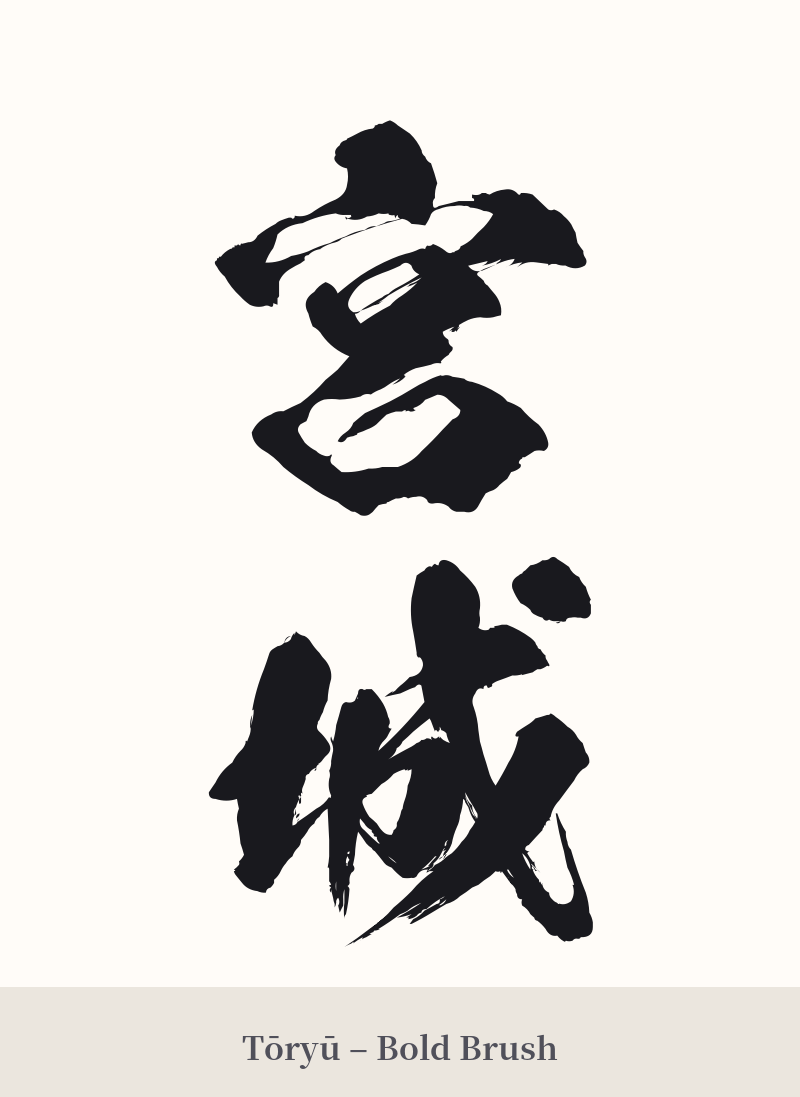
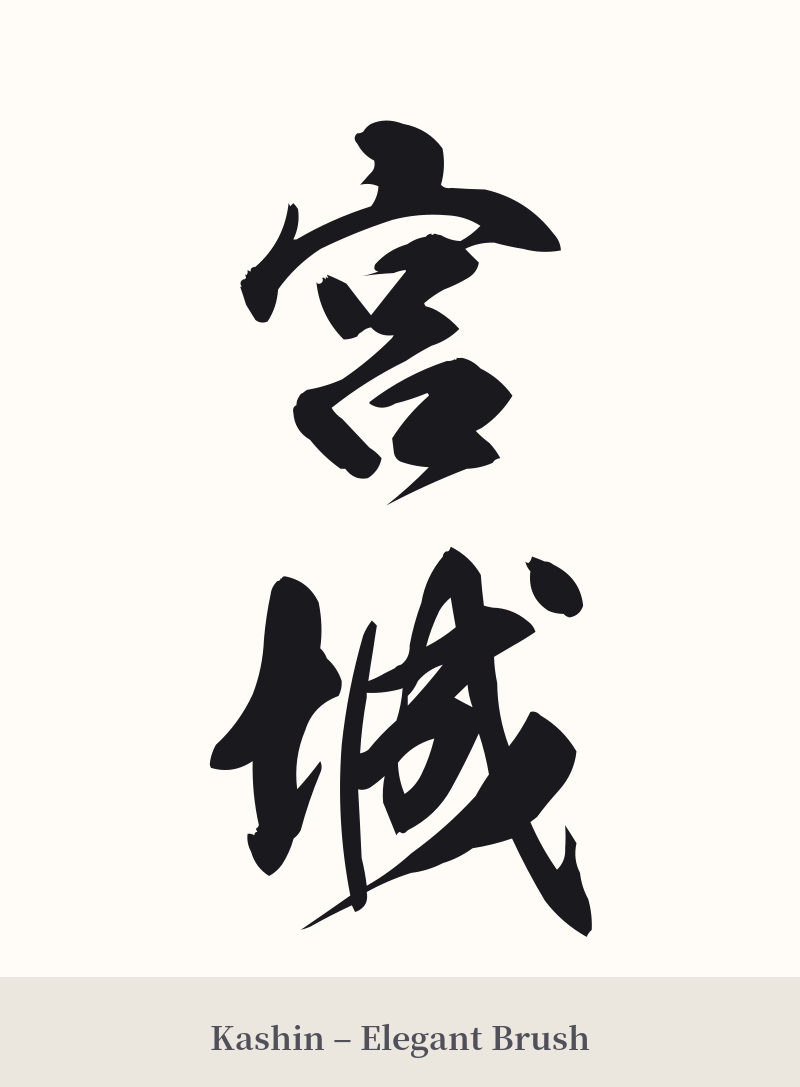
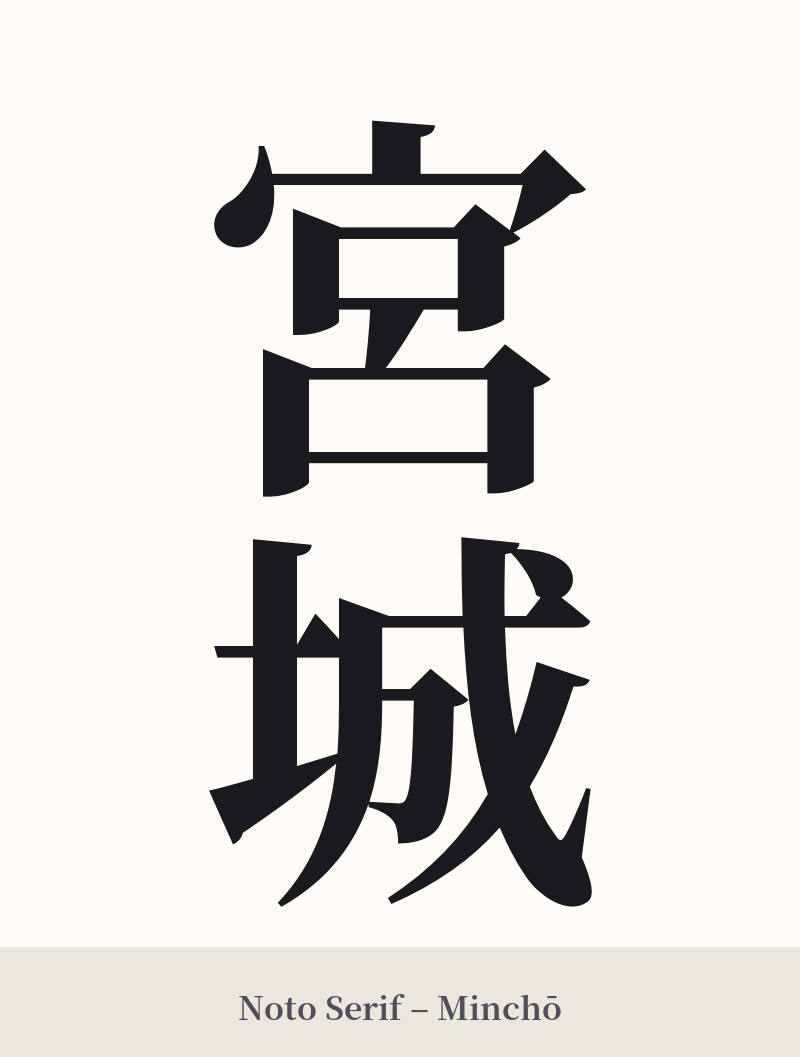
🖌️ Font Styles for 宮城
The same kanji can look dramatically different depending on the calligraphy style. Choose a font that matches the mood you want for your tattoo or design.
🎨 Tattoo Suitability
📐 Tattoo Design Guide
For a 宮城 tattoo, the two characters offer great visual balance and work well in various orientations and styles.
– Placement: A vertical orientation (tategaki) on the forearm, calf, or along the spine creates a classic Japanese look. For a horizontal design, the back of the neck, chest, or inner bicep are strong choices.
– Style: A traditional calligraphy script like Gyōsho (semi-cursive) can give the design a fluid, artistic feel that honors its historical roots. For a more powerful and solid statement, a bold Kaisho (block script) or even a modern, angular font works well.
– Visual Elements: Consider pairing the kanji with imagery connected to Miyagi. Popular motifs include the crescent moon from Date Masamune's helmet, a silhouette of a dragon (for the 'One-Eyed Dragon'), or pine trees and water to evoke the scenery of Matsushima Bay. These additions can transform the design from a simple place name into a rich, personal narrative.
Comments