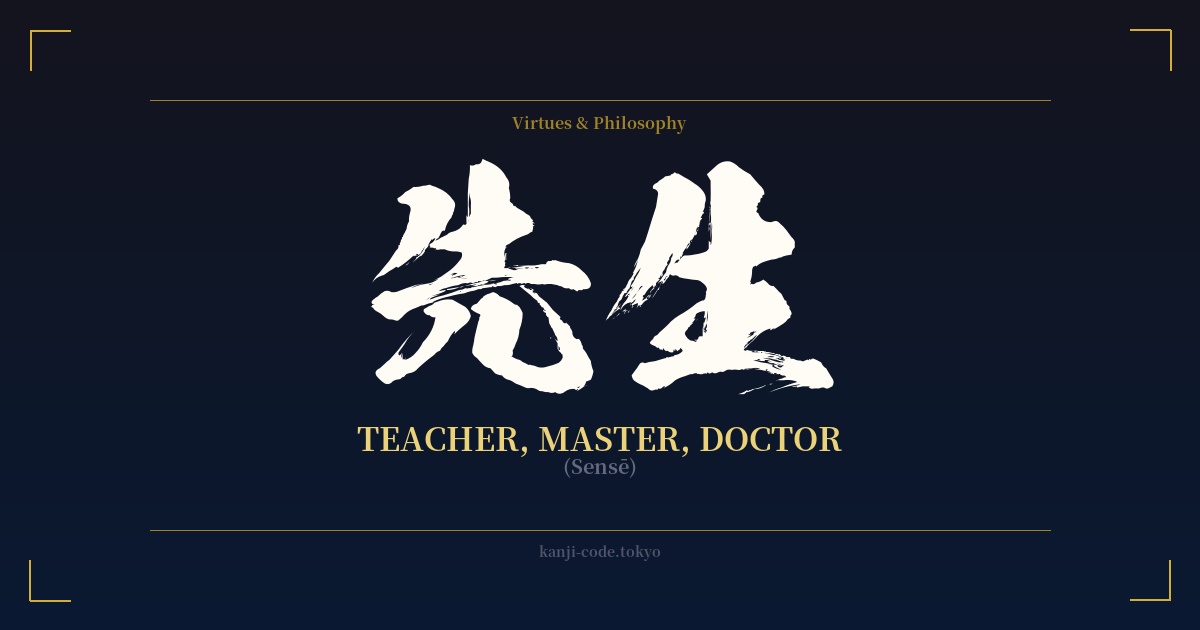
✍️ 先生 (Sensē) — Cultural Context
The word 先生 (Sensē) is one of the most well-known Japanese terms in the world, yet its full cultural weight is often misunderstood. While it translates to 'teacher,' 'master,' or 'doctor,' its essence is far deeper than a simple job title. It is a profound expression of respect for someone who has achieved mastery and provides guidance.
Literally, the kanji break down to 先 (sen – before, ahead) and 生 (sei – life, birth). Together, they mean 'one who was born before.' This origin points to a core value in Japanese society: reverence for experience. A sensei is not just someone who has read more books; they are someone who has lived more, experienced more, and walked the path before you. They are a guide who illuminates the way forward through their accumulated wisdom.
In Japan, the term is used for a wide array of professions beyond schoolteachers. Medical doctors, lawyers, politicians, acclaimed artists, and martial arts masters are all addressed as 'sensei.' This isn't about hierarchy in a corporate sense; it's about acknowledging their specialized knowledge and the immense responsibility they hold. Calling someone 'sensei' is to recognize them as a master of their craft and a pillar of society.
Unlike in many Western cultures where a professional might be called 'Mr. Smith' or 'Dr. Jones,' in Japan, the title is attached directly to their name, as in 'Tanaka-sensei.' It's an inseparable part of their public identity. This usage underscores a fundamental difference in perspective: the title is not just a job, but a role one embodies, complete with social duties and expectations.
The relationship between a sensei and their student (deshi or gakusei) is one of deep mutual respect and obligation. The student owes the sensei loyalty and dedication, while the sensei has a lifelong responsibility to guide and nurture the student's growth. It is this profound, almost familial bond that gives the word 先生 its true power and significance in Japanese culture.
🖌️ Font Styles for 先生
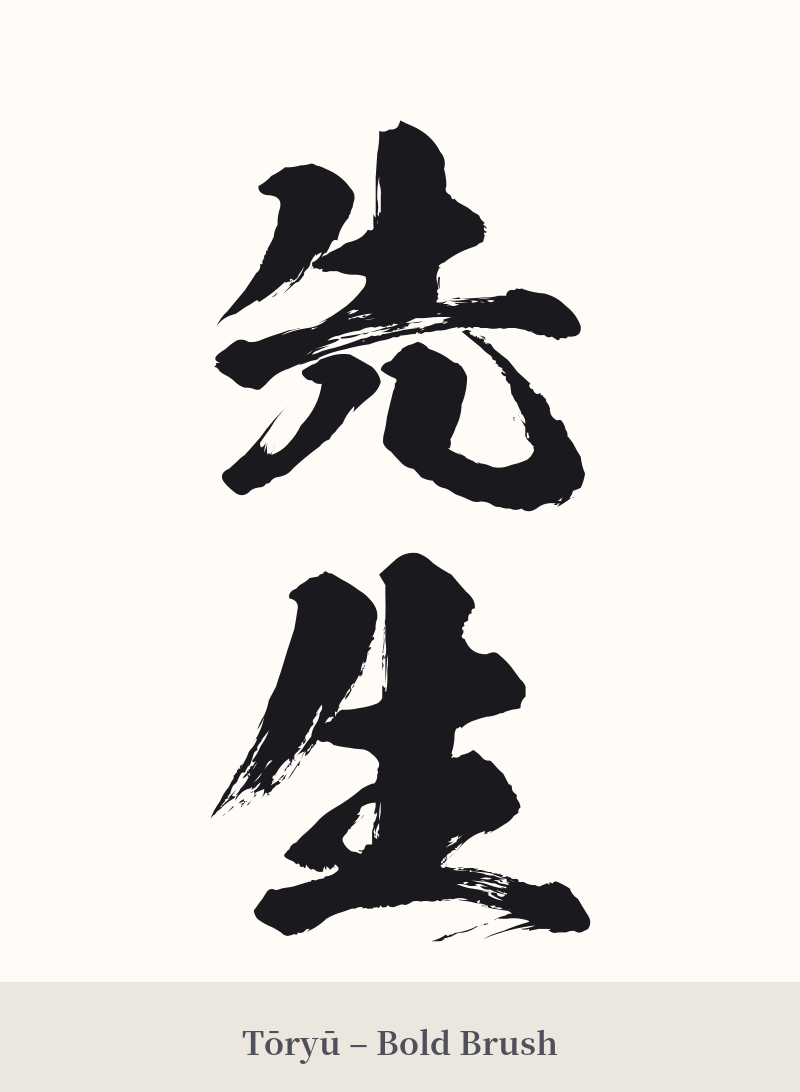
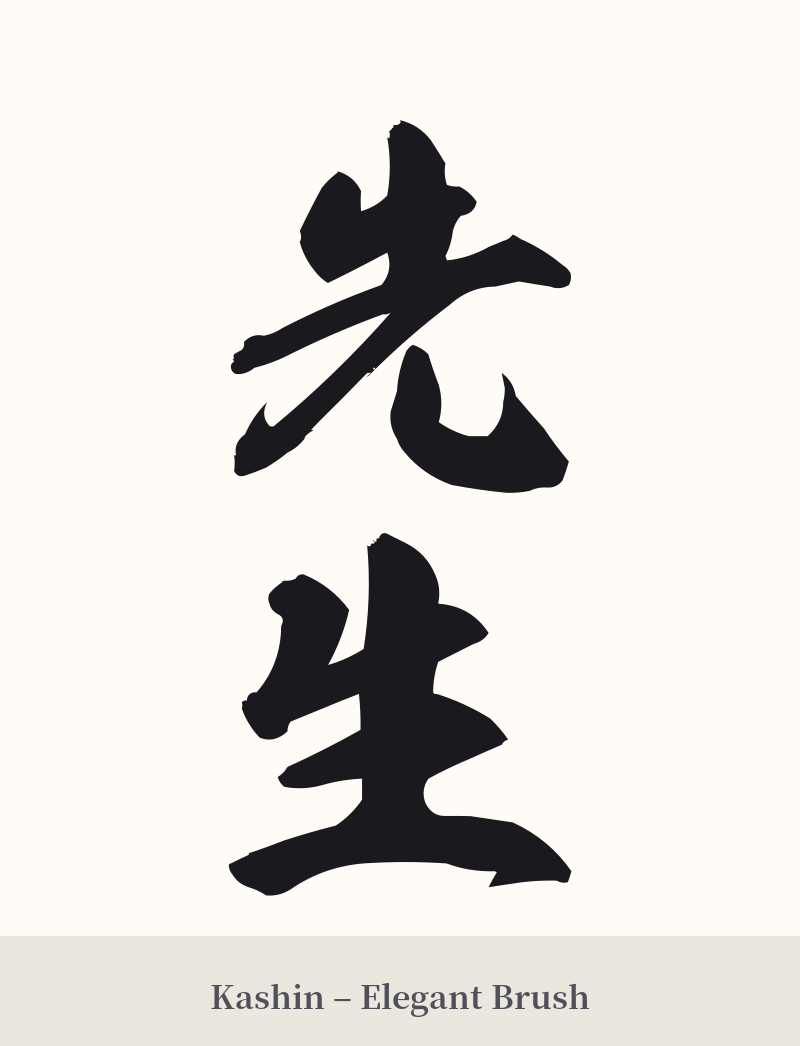
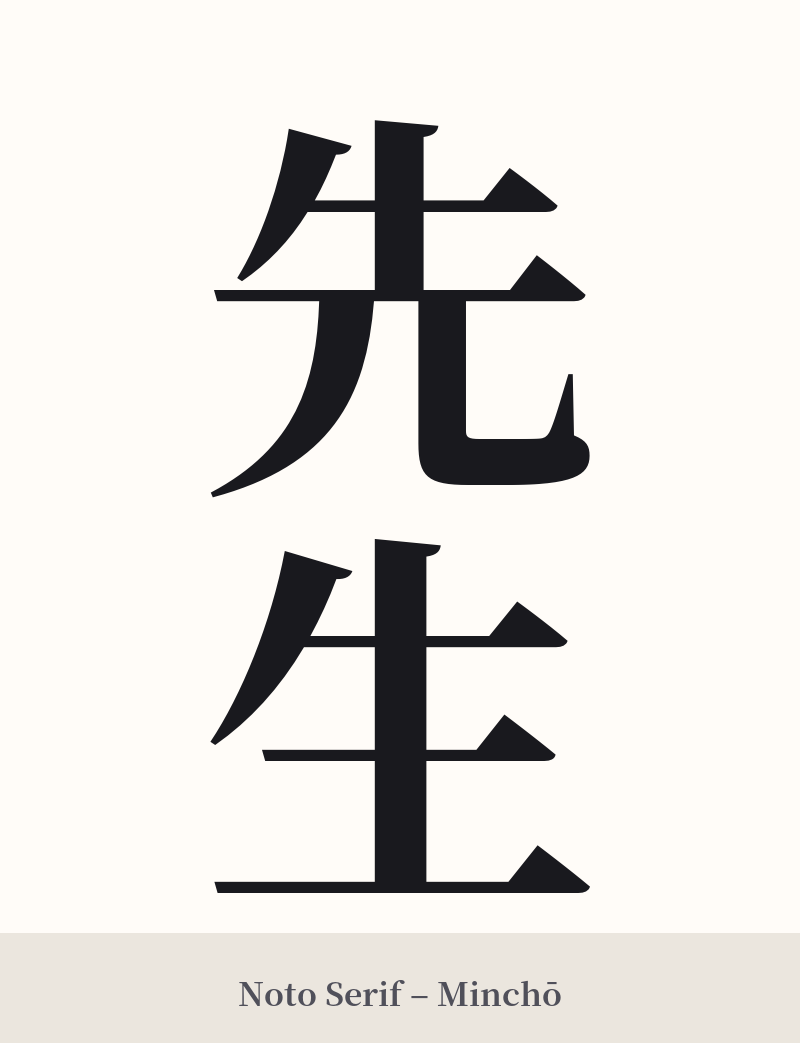
The same kanji can look dramatically different depending on the calligraphy style. Choose a font that matches the mood you want for your tattoo or design.
🎨 Tattoo Suitability
📐 Tattoo Design Guide
A tattoo of 先生 (Sensē) should be designed with respect and subtlety, reflecting the nature of the word itself.
– Placement: Consider areas that feel personal and respectful. The inner forearm, allowing for a vertical orientation, is a classic choice. Other suitable spots include the back of the shoulder or along the ribs, suggesting a personal dedication.
– Style: Traditional Japanese calligraphy (shodō) is highly recommended. A kaisho (block) script offers clarity and formality, while a gyosho (semi-cursive) style can add a sense of artistry and flow. Avoid overly stylized or digital-looking fonts that can trivialize the word's meaning.
– Visual Elements: Because the characters themselves are simple, you might consider pairing them with a symbol that gives context to your tribute. For example, a paintbrush for an art mentor, a specific flower related to a memory, or a simple enso circle to represent enlightenment and the void. A vertical alignment is the most traditional and aesthetically pleasing orientation for two-character kanji compounds.
Comments