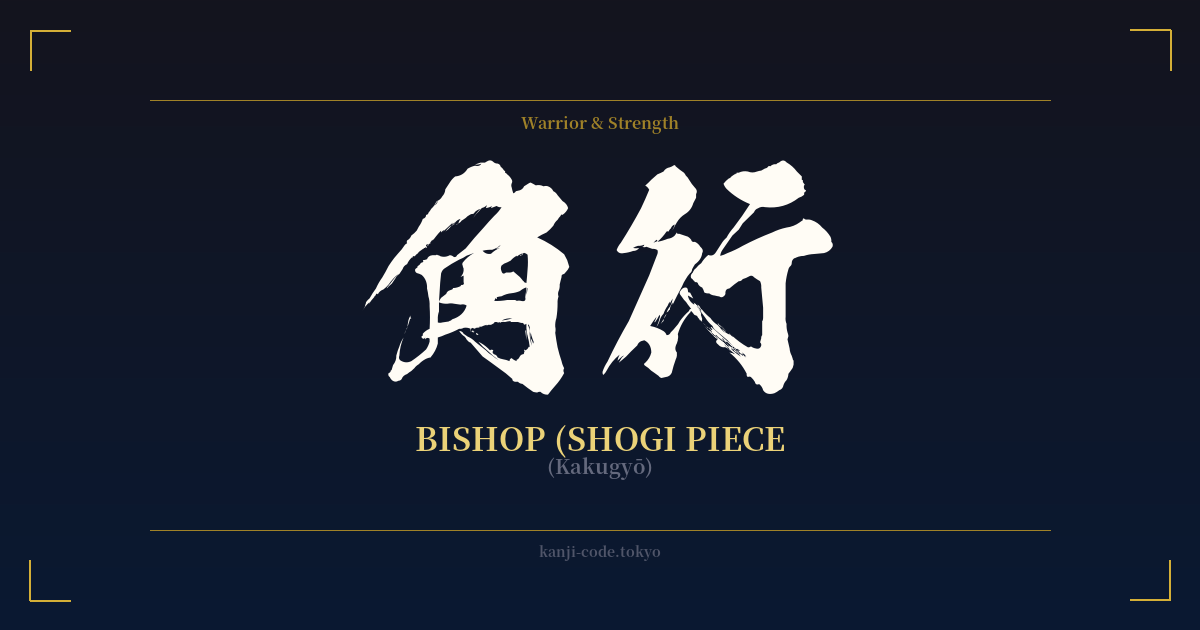
✍️ 角行 (Kakugyō) — Cultural Context
角行 (Kakugyō) is the Japanese name for the Bishop piece in Shogi, or Japanese chess. While it may seem like a simple game piece, its name and function are deeply embedded in the strategic and cultural fabric of one of Japan's most revered board games.
Shogi, often called the 'Game of Generals,' is a complex strategy game that shares ancient roots with Western chess and other games like Xiangqi. However, it possesses unique rules that many feel elevate its complexity, most notably the ability to 'drop' captured pieces back onto the board to fight for you. This creates a dynamic and fluid battlefield where the tide can turn in an instant.
In this intellectual arena, the Kakugyō is a key player. The name itself is a perfect description of its function. The first kanji, 角 (kaku), means 'angle' or 'corner.' The second, 行 (gyō), means 'to go' or 'to move.' Together, they literally mean the 'Angle Mover,' a direct reference to the piece's ability to travel any number of unoccupied squares diagonally.
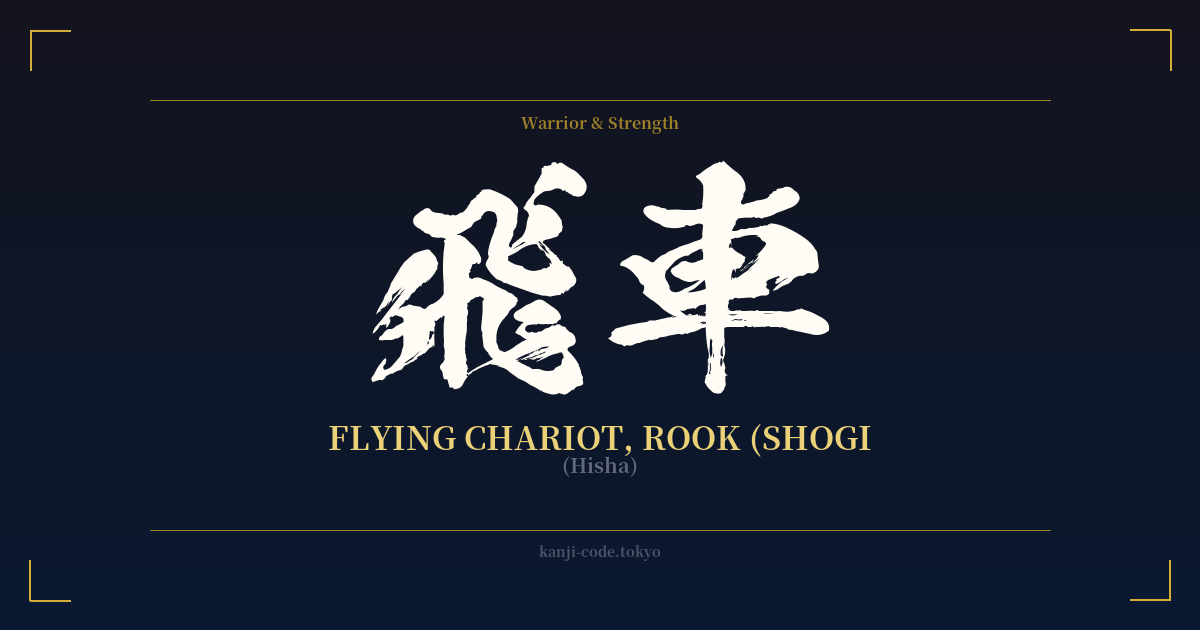
On the Shogi board, the Kakugyō is a powerful long-range attacker, working in tandem with its counterpart, the 飛車 (Hisha), or Rook. While the Hisha controls the straight lines, the Kakugyō dominates the diagonals, creating a crossfire that can lock down the board. A player's skill in using these two major attacking pieces often separates novices from masters.
One of the most exciting aspects of the Kakugyō is its potential for promotion. When it reaches the enemy's back three ranks, it can be flipped over to become a 竜馬 (Ryūma), or 'Dragon Horse.' This promoted piece retains its powerful diagonal movement and gains the ability to move one square orthogonally, like a King. This dramatic increase in power makes a promoted Bishop one of the most formidable pieces in the game.
Symbolically, the Kakugyō represents indirect attack, strategic foresight, and the power of controlling key lines of engagement. It’s not about brute force, but about positioning and finding the perfect angle to strike. To choose Kakugyō is to identify with a form of intelligence that is patient, angular, and devastatingly effective when unleashed at the right moment.
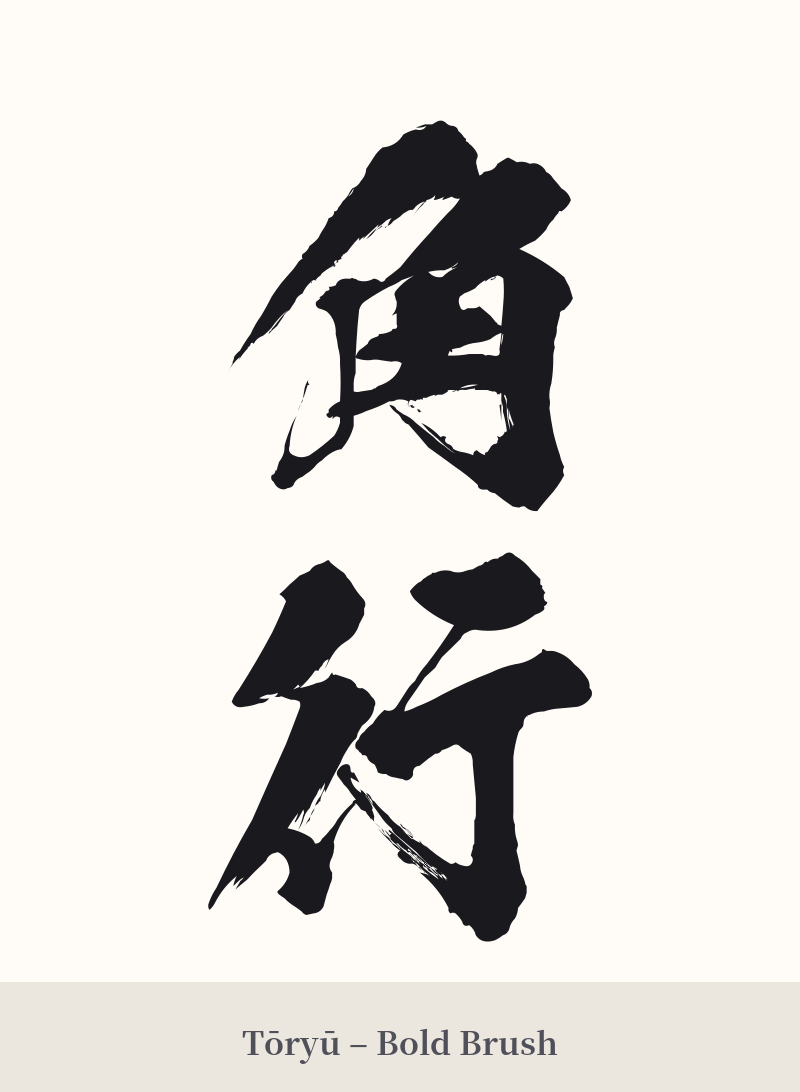
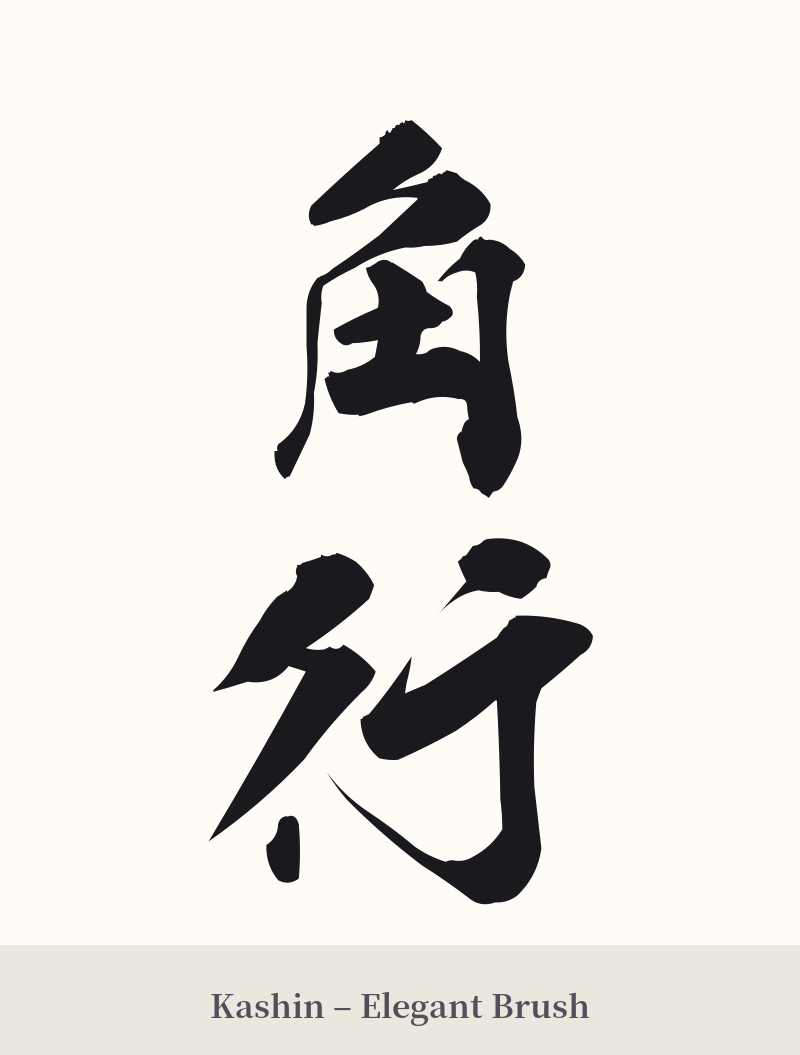
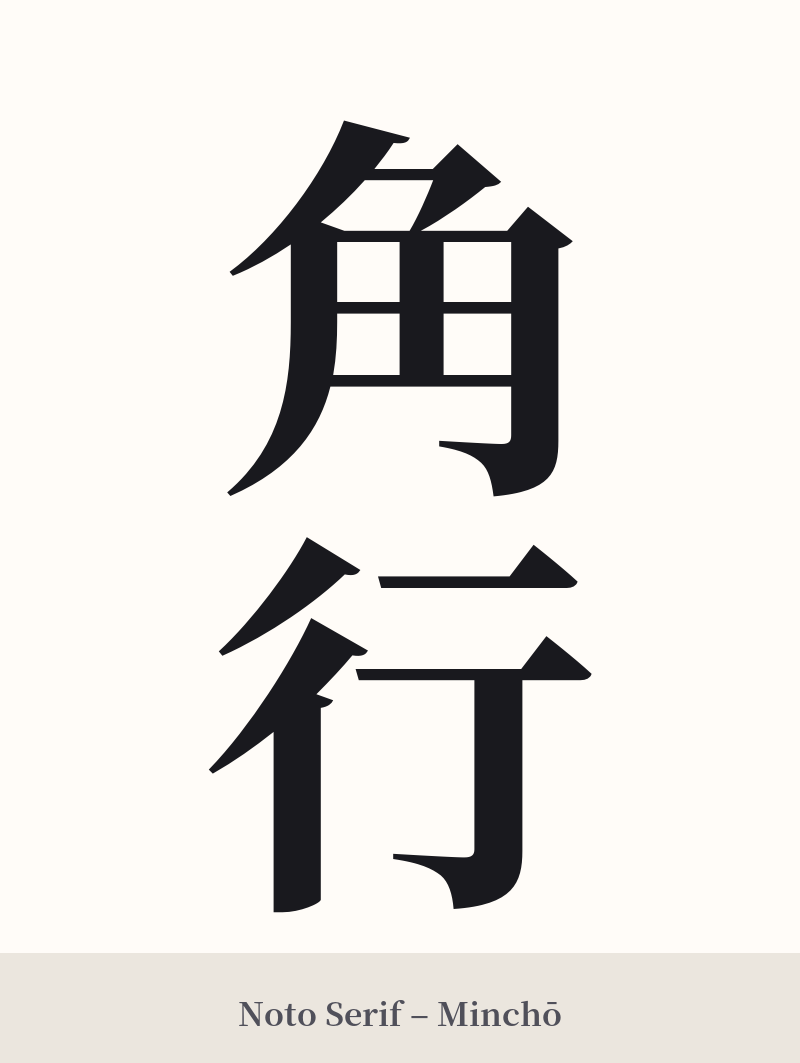
🖌️ Font Styles for 角行
The same kanji can look dramatically different depending on the calligraphy style. Choose a font that matches the mood you want for your tattoo or design.
🎨 Tattoo Suitability
📐 Tattoo Design Guide
A tattoo of 角行 is a statement of interest in the intellectual combat of Shogi. Due to its niche nature, the design should be deliberate and clear.
– Placement: A vertical arrangement on the forearm, calf, or along the spine works well. For a more subtle nod, a smaller version on the inner wrist or behind the ear is an option, as the characters are simple enough to remain legible.
– Font Style: A crisp, blocky Kaishotai script would mimic the formal, carved nature of a Shogi piece. For a more dynamic feel, a semi-cursive Gyōsho script could represent the piece's fluid movement across the board. For the ultimate tribute, you could have the kanji designed in the exact stylized font used on actual wooden Shogi tiles.
– Visual Elements: Consider pairing the kanji with an image of a 'Dragon Horse' (竜馬) to symbolize its potential and promoted power. Placing the characters inside the outline of a pentagonal Shogi tile is another excellent way to provide context and complete the theme.
Comments