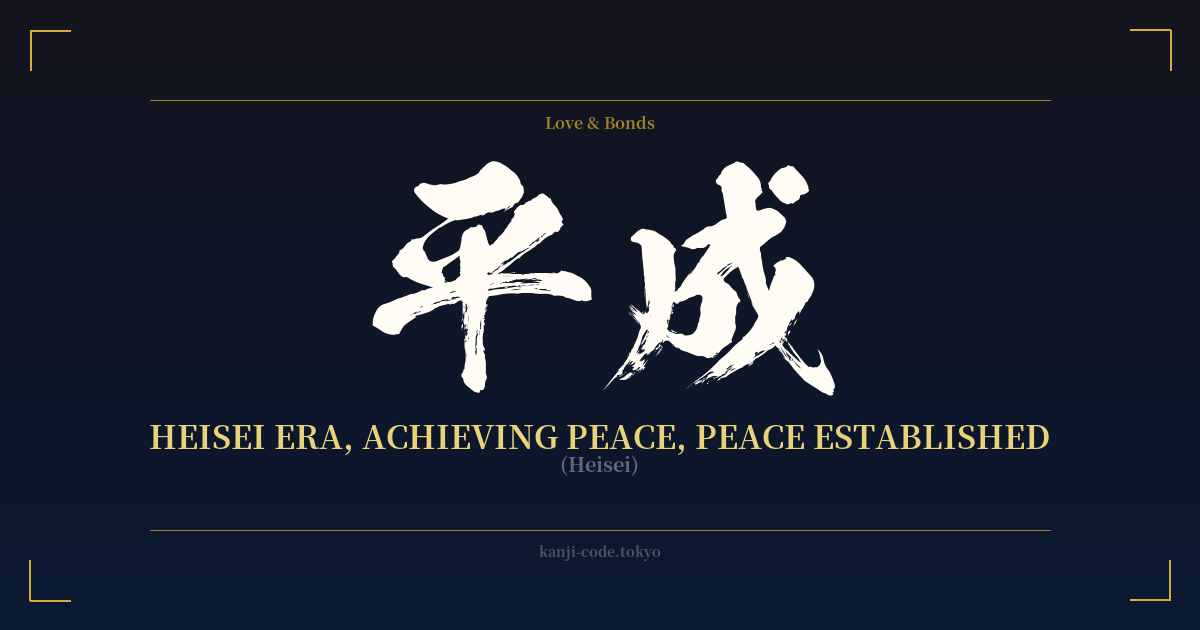
✍️ 平成 (Heisei) — Cultural Context
The word 平成 (Heisei) is more than just a name; it's the title of an entire chapter of modern Japanese history. It represents the era of Emperor Akihito's reign, spanning from January 8, 1989, to April 30, 2019. The name itself translates to 'Achieving Peace' or 'Peace Established,' a profound aspiration that defined the national mood at the time.
The name was carefully chosen from classical Chinese literature, specifically the Records of the Grand Historian (Shiji) and the Book of Documents (Shujing). It combines phrases that mean 'peace inside' (内平) and 'prosperity outside' (外成), as well as 'the land is peaceful and the heavens are prosperous' (地平天成). This choice reflected a deep desire for Japan to maintain peace both domestically and internationally, a stark contrast to the turbulent first half of the preceding Shōwa era, which included World War II.
The Heisei era began at the peak of Japan's economic bubble, but it is more often remembered for the 'Lost Decade' that followed, a period of economic stagnation. It was also an era marked by significant challenges, including the Great Hanshin Earthquake in 1995 and the devastating Tōhoku earthquake, tsunami, and Fukushima nuclear disaster in 2011. These events deeply shaped the national psyche, reinforcing the value of community, resilience, and the peace that was so easily disrupted.
Despite these hardships, the Heisei era is also celebrated for the flourishing of Japanese pop culture on the global stage. The rise of anime, manga, video games, and J-pop cemented Japan's status as a 'soft power' superpower. For many, particularly those who grew up during this time, 'Heisei' evokes a powerful sense of nostalgia for a period defined by relative stability, technological advancement, and a unique cultural identity.
To understand 平成 is to understand Japan's journey in the late 20th and early 21st centuries: a nation grappling with its past, navigating economic and natural challenges, and ultimately striving to live up to the name of its era—to achieve and maintain peace.
🖌️ Font Styles for 平成
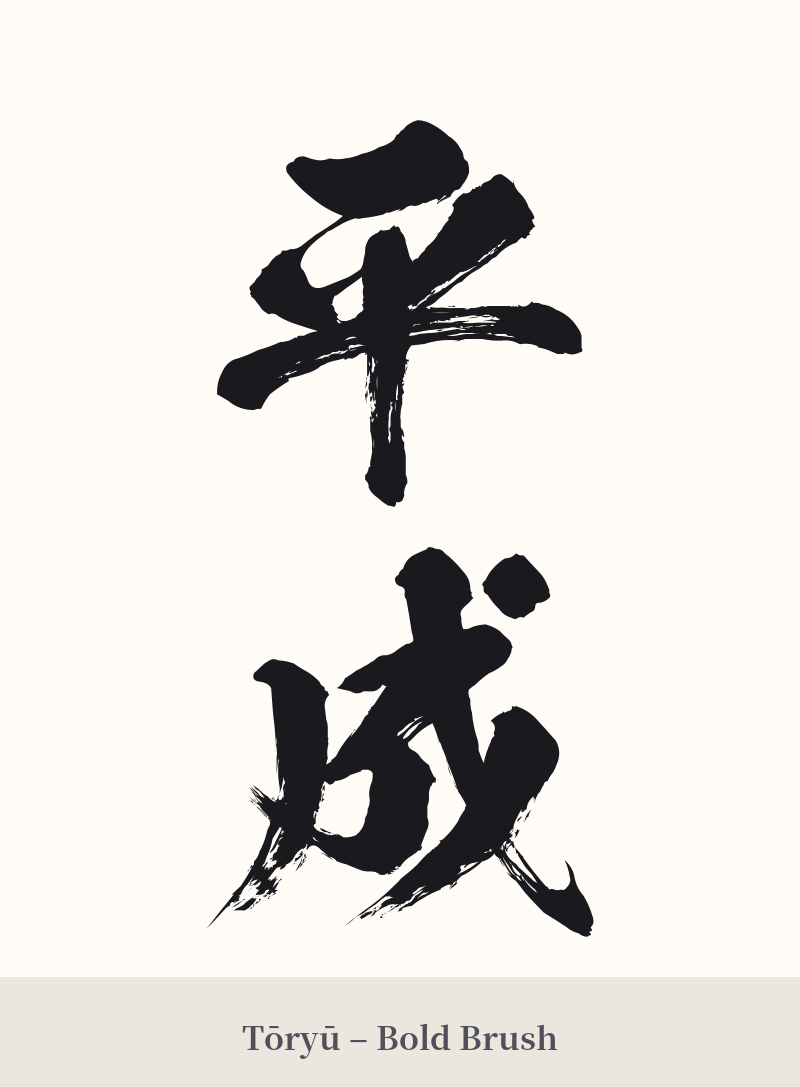
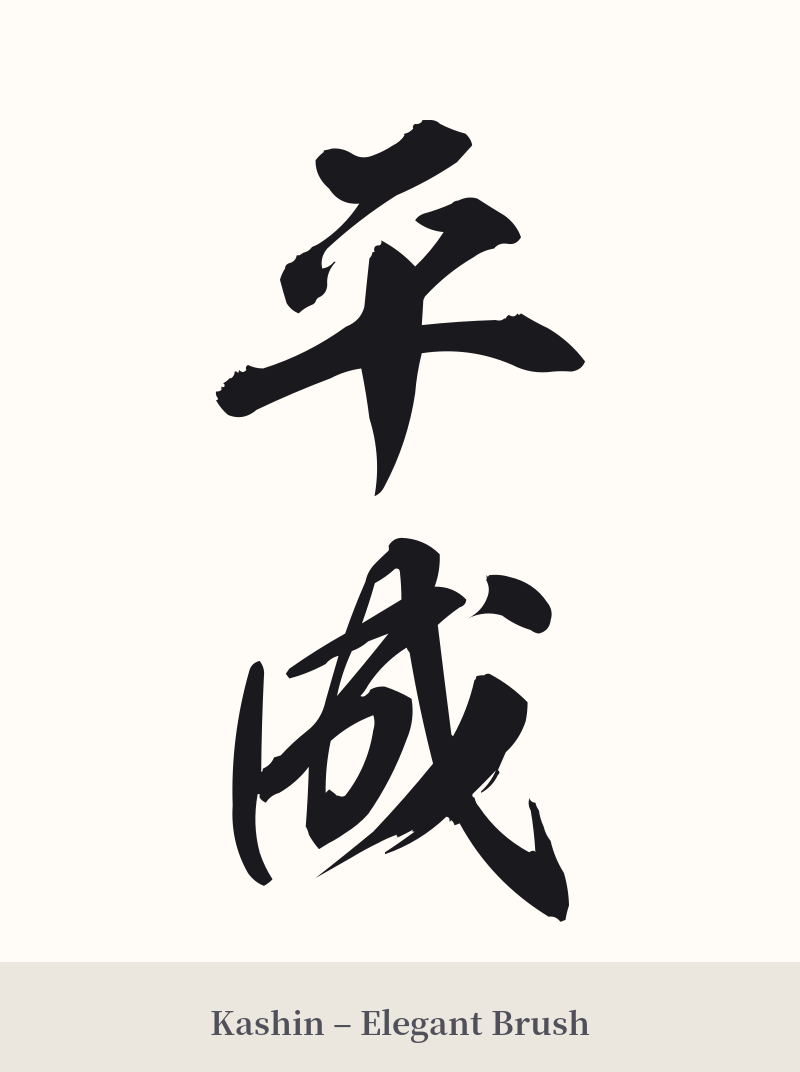
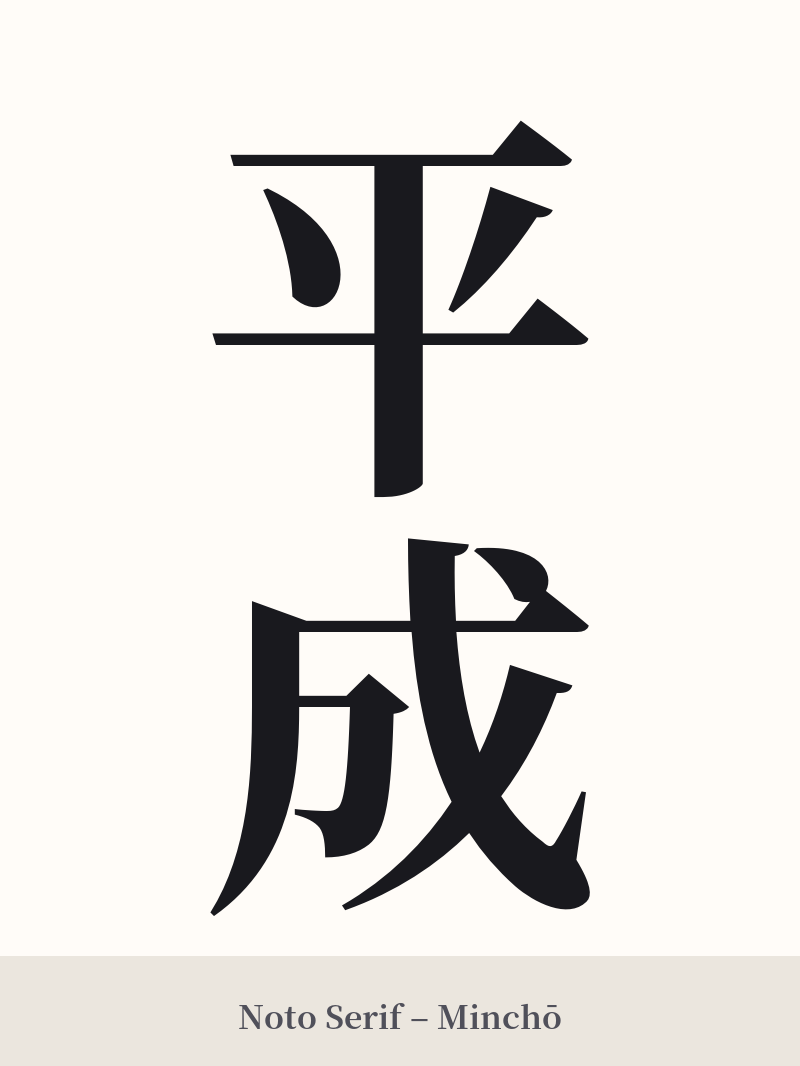
The same kanji can look dramatically different depending on the calligraphy style. Choose a font that matches the mood you want for your tattoo or design.
🎨 Tattoo Suitability
📐 Tattoo Design Guide
A tattoo of 平成 (Heisei) is a tribute to a specific period of time, and the design should reflect its modern, peaceful, and historical nature.
– Placement: Because the characters are relatively simple, this design works well in smaller, more personal locations. Consider the inner wrist, forearm, ankle, or behind the neck. It can also be placed vertically along the spine or arm for a more prominent statement.
– Font Style: The style you choose can significantly alter the feeling. A clean, standard Mincho (serif) or Gothic (sans-serif) font emphasizes the modern, official nature of an era name. For a softer, more personal touch, a flowing Gyosho (semi-cursive) calligraphy style can highlight the 'peace' aspect of the word.
– Visual Elements: Consider pairing 平成 with a symbol that represents the era for you. A cherry blossom could symbolize the beautiful but transient nature of the time that has passed. Alternatively, a simple enso (Zen circle) could frame the kanji, reinforcing the ideas of completeness and the cyclical nature of eras.
Comments