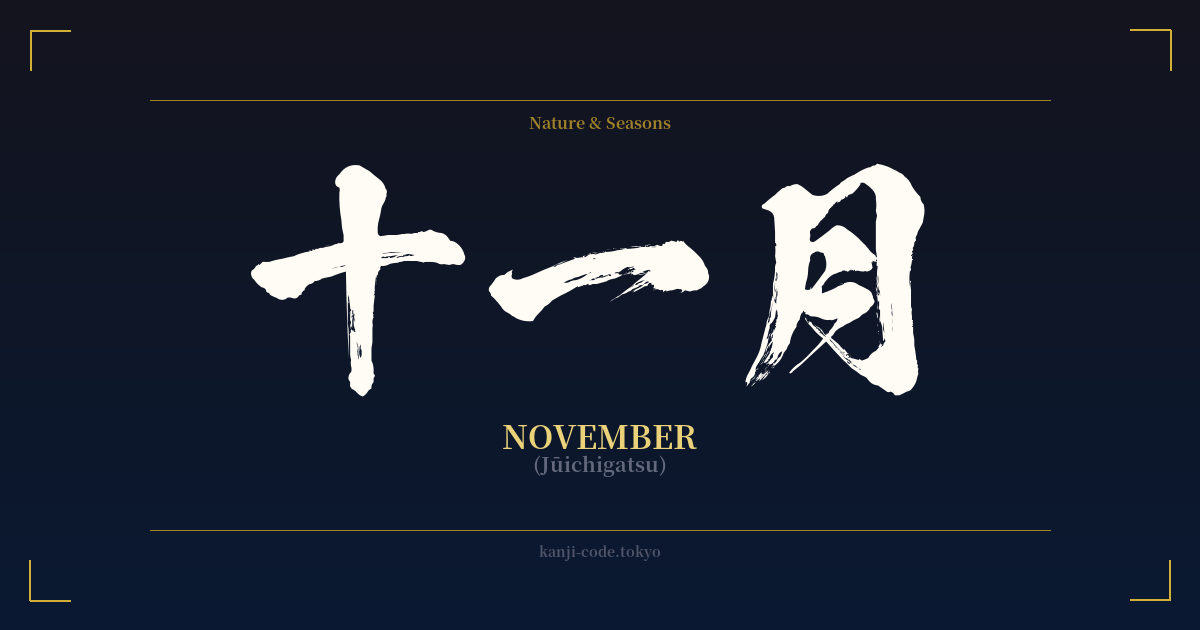
✍️ 十一月 (Jūichigatsu) — Cultural Context
十一月 (Jūichigatsu) is the modern Japanese word for November, the eleventh month of the Gregorian calendar. The name is straightforward and functional, literally translating to "eleventh month." It is composed of the kanji for ten (十), one (一), and month/moon (月). This numerical system for naming months was adopted during the Meiji Restoration in the late 19th century as Japan aligned itself with Western standards, including the Gregorian calendar. Prior to this, Japan used a traditional lunisolar calendar with more poetic names for each month.
The traditional name for November is 霜月 (Shimotsuki), which translates to the "Month of Frost." This name paints a vivid picture of the season's transition. It evokes the feeling of late autumn giving way to the cold breath of winter, when the first frosts appear on the ground in the morning. Shimotsuki captures the crisp, clear air and the sense of nature preparing for its winter slumber, a stark contrast to the purely numerical Jūichigatsu.
November in Japan is marked by significant cultural events and natural beauty. The most important of these is 七五三 (Shichi-Go-San), the "Seven-Five-Three" festival. On or around November 15th, families dress boys aged three and five, and girls aged three and seven, in beautiful traditional kimono and hakama. They visit Shinto shrines to pray for the children's healthy growth and bright future. This rite of passage fills shrines with vibrant colors and joyful families, making it a quintessential image of November.
This month is also a prime time for 紅葉狩り (momijigari), or "autumn leaf hunting." While the season begins earlier in the north, November sees the peak of stunning red, orange, and yellow foliage in many of Japan's most famous viewing spots, including Kyoto, Nara, and Tokyo. The Japanese maple (momiji) and ginkgo trees create breathtaking landscapes, and people flock to parks, temples, and mountains to admire the fleeting beauty. This appreciation for the transient colors of autumn is deeply embedded in the Japanese aesthetic, connecting November to a sense of poignant beauty and the passage of time.
🖌️ Font Styles for 十一月
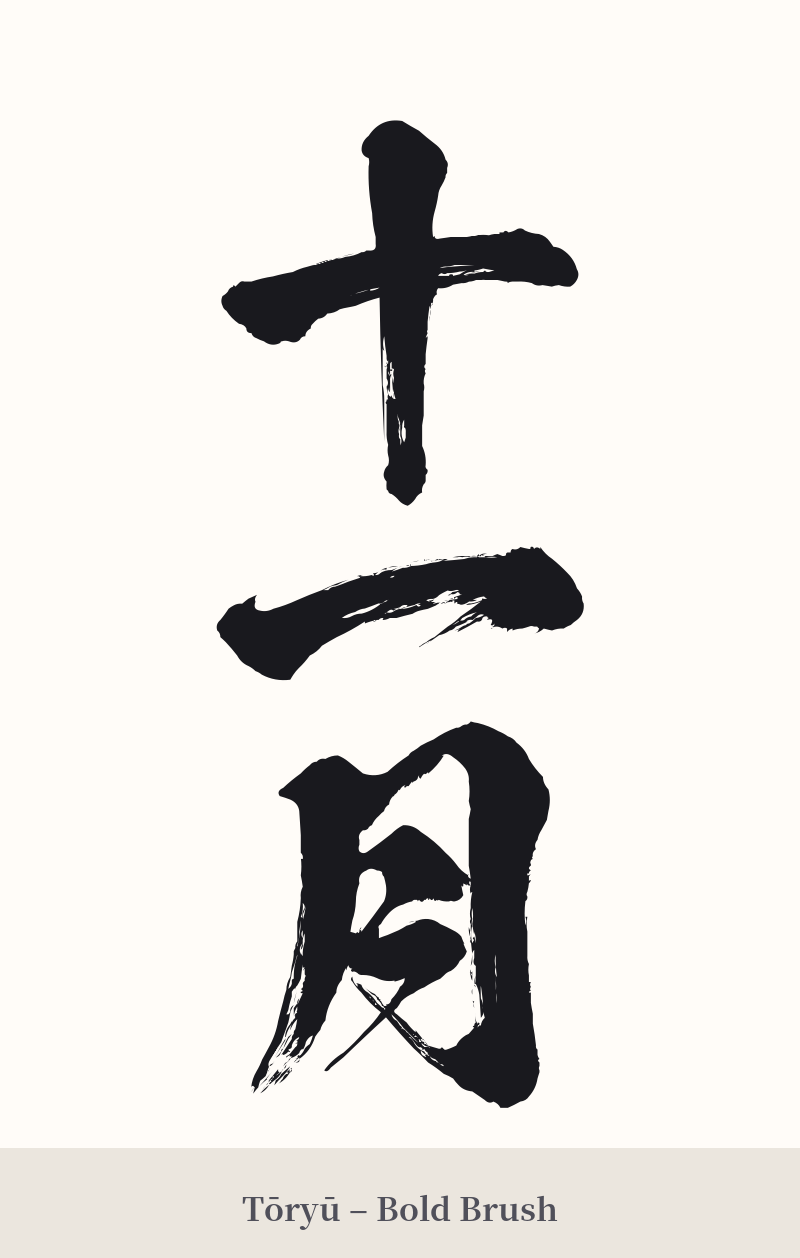
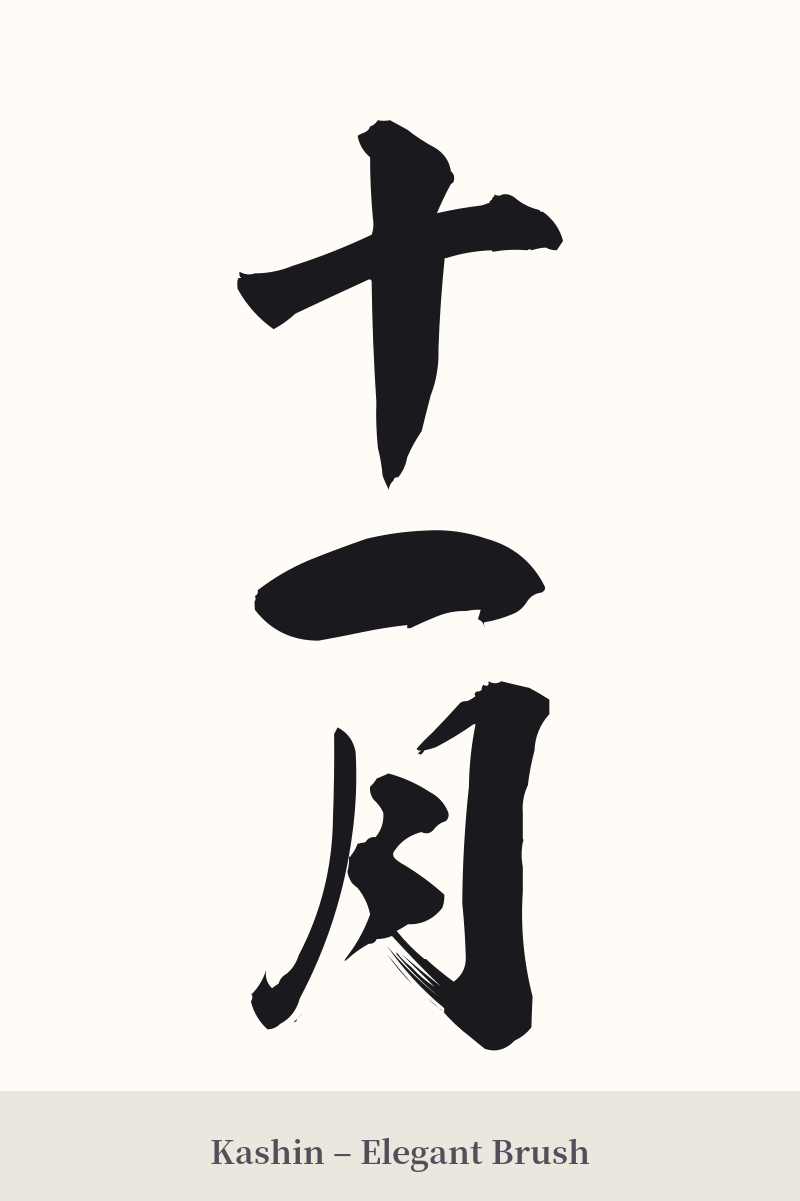
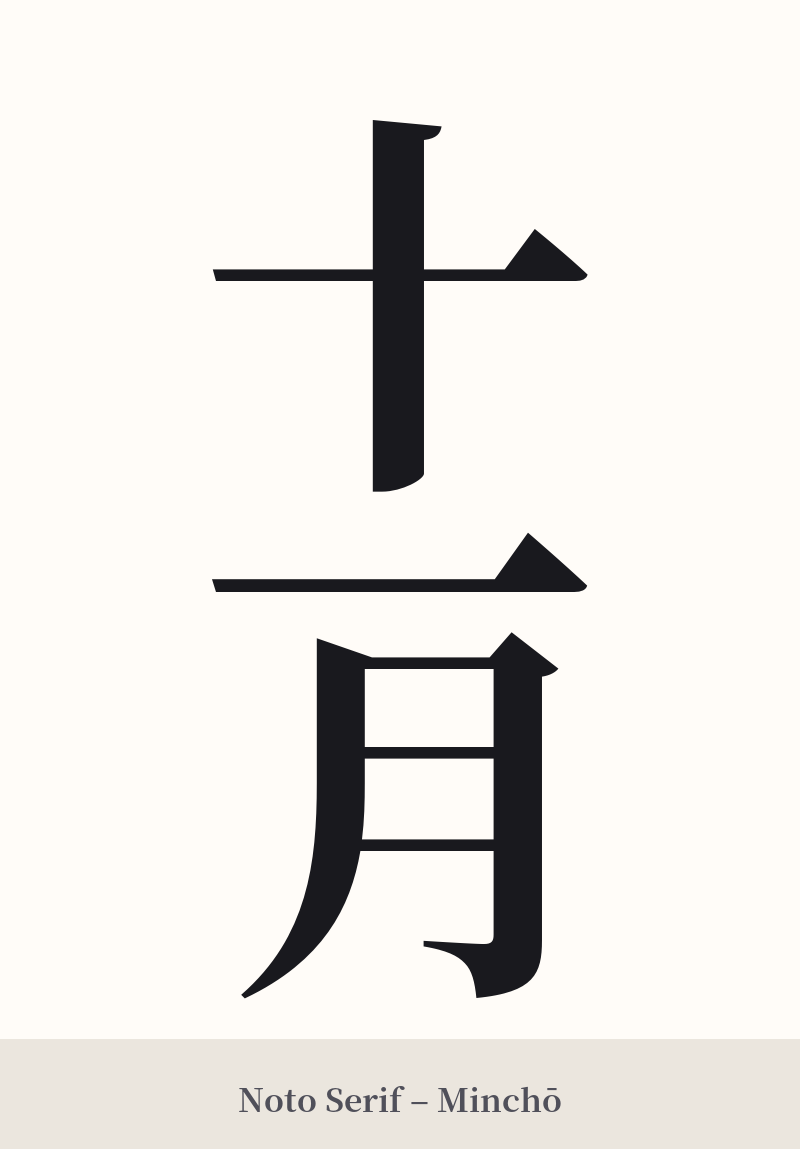
The same kanji can look dramatically different depending on the calligraphy style. Choose a font that matches the mood you want for your tattoo or design.
🎨 Tattoo Suitability
📐 Tattoo Design Guide
Because the characters in 十一月 are individually simple, the choice of font and composition is crucial for a compelling tattoo. A standard block font (Kaisho) might appear too plain. Consider a more dynamic and artistic script, such as a semi-cursive (Gyōsho) or a fluid cursive style (Sōsho), to inject movement and elegance into the design.
For placement, the three characters work well in a vertical orientation. This makes it a great fit for the spine, forearm, or along the ribs. A horizontal arrangement could also work on the chest, collarbone, or upper back.
To elevate the design beyond its literal meaning, consider incorporating classic November imagery. Here are a few ideas: – Pair the kanji with Japanese maple leaves (momiji) in shades of red or orange. – Weave the characters into a design featuring chrysanthemums (kiku), a flower associated with autumn and the imperial family. – Use a background wash of cool blues or grays to evoke the feeling of 霜月 (Shimotsuki), the "Month of Frost," adding a layer of traditional meaning.
Comments