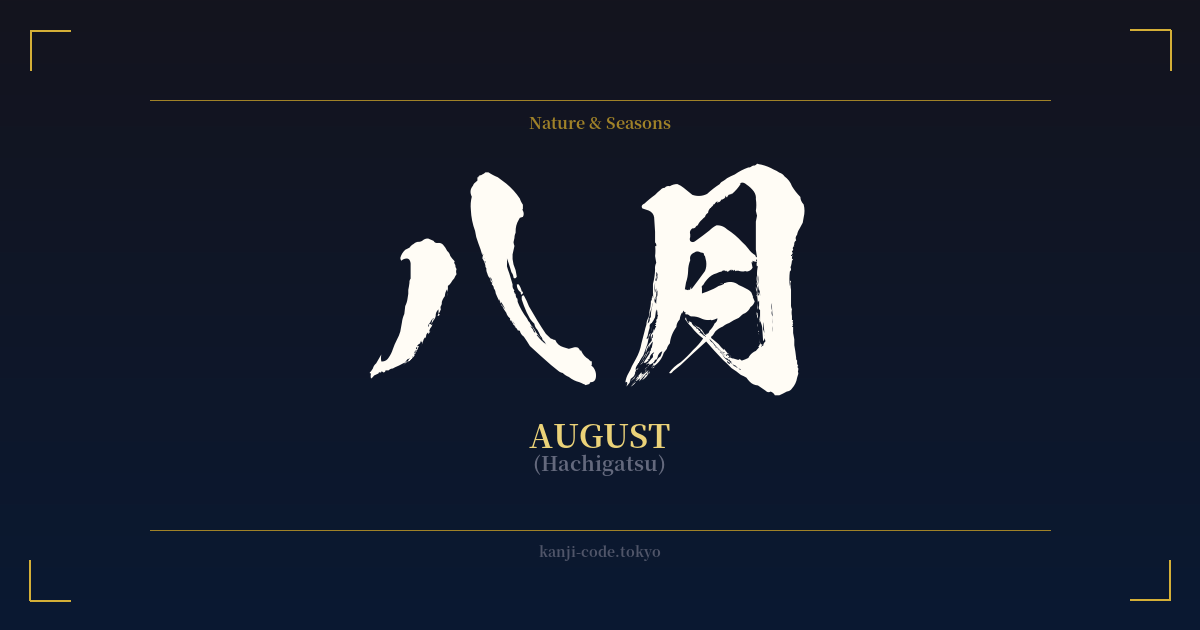
✍️ 八月 (Hachigatsu) — Cultural Context
八月 (Hachigatsu) is the Japanese word for August, literally translating to 'the eighth month.' It marks the zenith of summer in Japan, a time of intense, sweltering heat, the deafening chorus of cicadas (semi), and a vibrant tapestry of cultural and seasonal events.
August in Japan is synonymous with festivals. Countless local shrines and communities host their natsu matsuri (summer festivals), filling the warm evenings with the glow of paper lanterns, the rhythmic beat of taiko drums, and the aroma of street food from yatai stalls. People of all ages don colorful yukata (light summer kimono) to enjoy fireworks displays (hanabi taikai), which are a spectacular and beloved tradition throughout the country.
The most significant cultural event in August is Obon (お盆). This Buddhist festival, typically observed around the middle of the month, is a time to honor the spirits of one's ancestors. It's believed that during Obon, the spirits of the deceased return to visit their living relatives. Families gather, clean the family graves (ohaka mairi), and make offerings of food and flowers. The festival often culminates in bon-odori folk dances and the floating of lanterns down rivers (tōrō nagashi) or ceremonial bonfires (okuribi) to guide the spirits back to the other world, with Kyoto's Gozan no Okuribi being the most famous example.
Before the adoption of the Gregorian calendar, the traditional name for the eighth lunar month was Hazuki (葉月), which means 'Month of Leaves.' The exact origin is debated; some theories suggest it refers to leaves changing color and beginning to fall, while others claim it signifies the lush, full foliage of late summer. This older, more poetic name evokes a different, more naturalistic feeling compared to the straightforward Hachigatsu.
For many, Hachigatsu is also a time of remembrance. The anniversaries of the atomic bombings of Hiroshima (August 6th) and Nagasaki (August 9th), along with the end of World War II (August 15th), are solemnly observed. These dates make August a month of both vibrant celebration and quiet reflection on peace.
🖌️ Font Styles for 八月
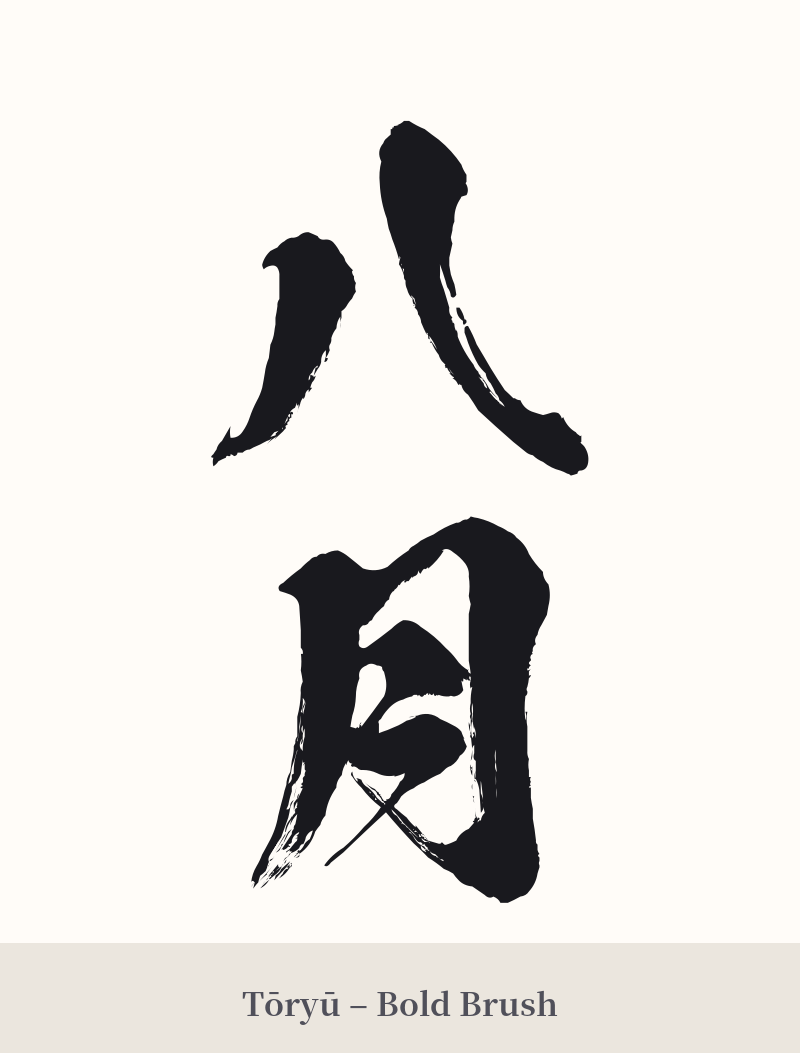
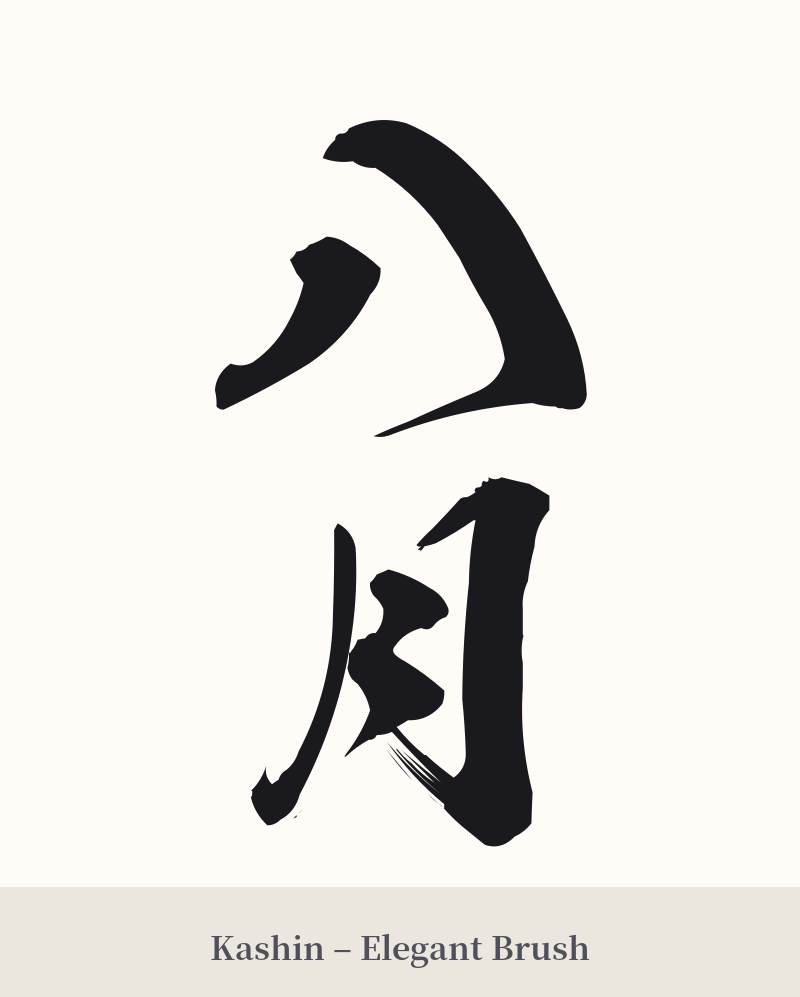
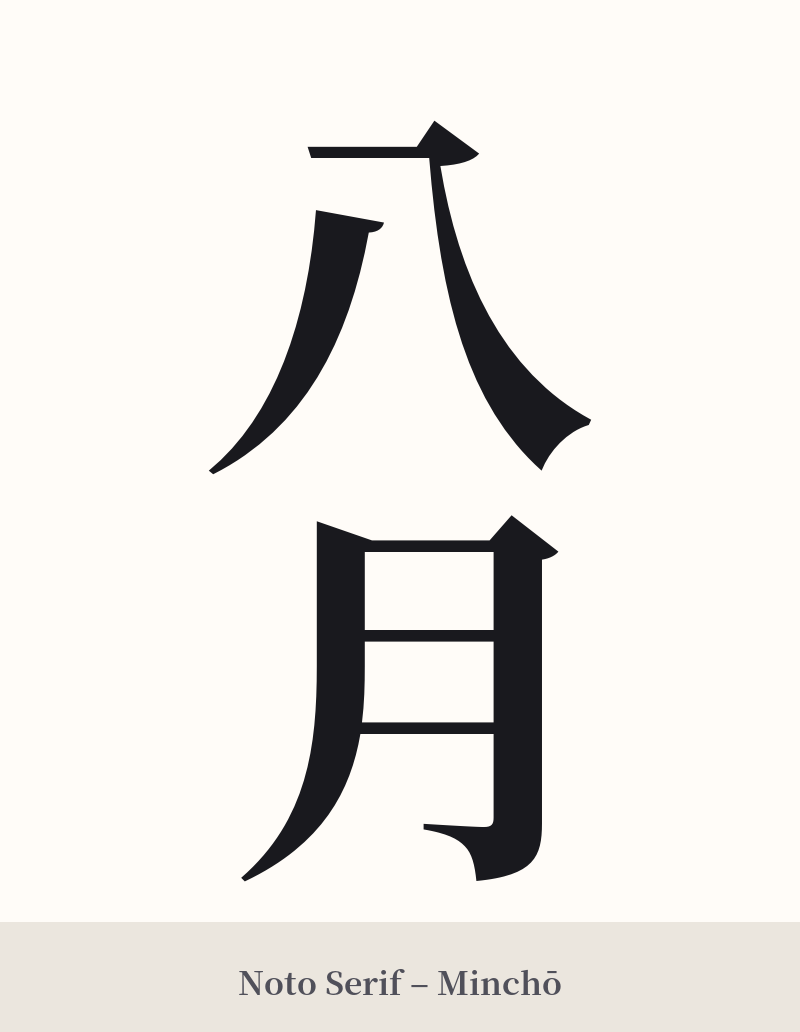
The same kanji can look dramatically different depending on the calligraphy style. Choose a font that matches the mood you want for your tattoo or design.
🎨 Tattoo Suitability
📐 Tattoo Design Guide
Because 八月 is a very specific and personal word, its design should reflect that. It's less of a bold public statement and more of a quiet personal marker.
– Placement: This word is well-suited for smaller, more discreet placements that signify a personal date or memory. Consider the inner wrist, ankle, behind the ear, or along the collarbone. It could also be integrated into a larger piece that tells the story of why August is important to you.
– Style: A clean, minimalist font like a Kaisho (block) or Mincho style would complement the simplicity of the characters. For a slightly more artistic feel, a semi-cursive Gyosho style could add a touch of elegance and flow without sacrificing legibility.
– Visuals: To give the design more depth, consider pairing the kanji with imagery associated with August in Japan. This could include a small firework, a blooming sunflower (himawari), a cicada, or even a stylized full moon to play on the meaning of the character 月 (tsuki/getsu). A vertical orientation is traditional and often looks more balanced for two-character compounds like this.
Comments