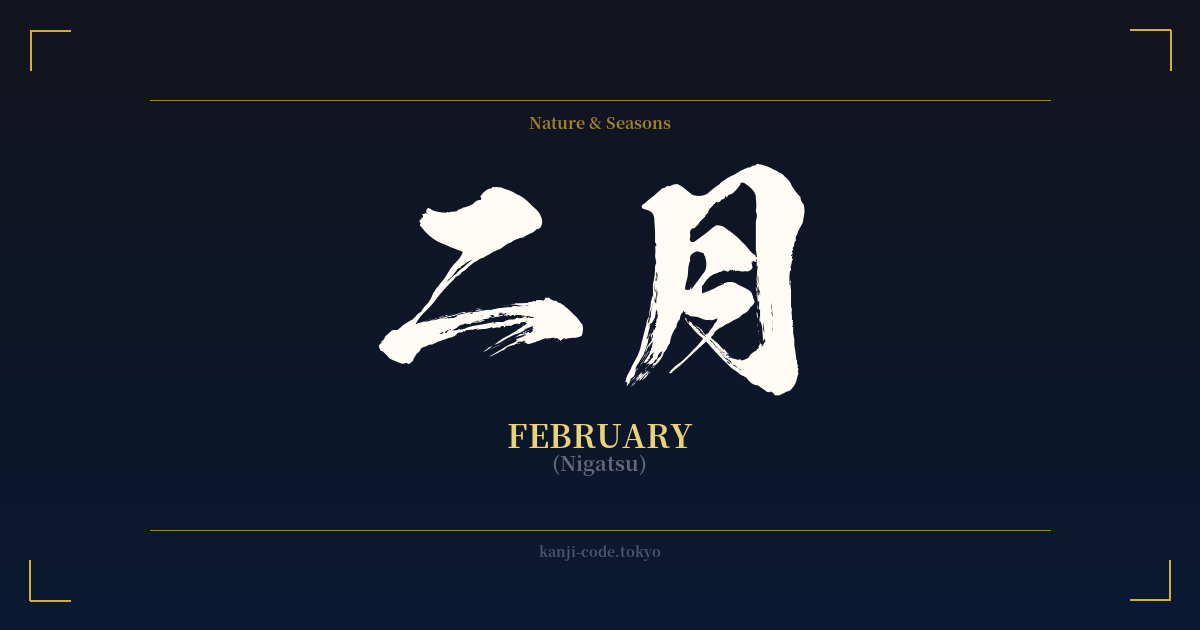
✍️ 二月 (Nigatsu) — Cultural Context
二月 (Nigatsu) is the Japanese word for February, literally translating to 'second month'. While straightforward, this name belies the rich cultural tapestry of Japan's shortest month, a time of transition that bridges the coldest part of winter with the first promises of spring.
Historically, Japan used a lunar calendar and had more poetic names for each month. February's traditional name is 如月 (Kisaragi). The origins of this name are debated, but a popular theory suggests it comes from 衣更着 (kisaragi), meaning 'to wear more clothes', a fitting description for a month where the winter chill still bites deep. Another interpretation links it to the idea of plants and trees 'coming back to life' (生更木, kisaragi), heralding the approaching spring.
Modern February in Japan is marked by several significant events. The most famous is Setsubun (節分), typically held on February 3rd. This festival marks the day before the traditional start of spring (立春, Risshun). Families participate in 'mamemaki' (豆撒き), a ritual of throwing roasted soybeans to drive out oni (demons) and welcome good fortune for the year ahead. It's a lively and symbolic cleansing of the old to make way for the new.
While the West has its own Valentine's Day traditions, Japan has a unique take. On February 14th, it is customary for women to give chocolates to men. There's a distinction between 'giri-choco' (義理チョコ, 'obligation chocolate') for colleagues and male friends, and 'honmei-choco' (本命チョコ, 'true love chocolate'), often handmade, for a romantic partner. A month later, on March 14th (White Day), men are expected to reciprocate with gifts for the women who gave them chocolate.
Perhaps the most beautiful aspect of February is the blooming of the plum blossoms (梅, ume). Arriving before the more famous cherry blossoms, the resilient ume flowers are a cherished symbol of perseverance and hope, often blooming amidst the snow. Their sweet fragrance and delicate colors—ranging from white to deep pink—are a clear sign that the long winter is finally beginning to yield to the warmth and life of spring.
🖌️ Font Styles for 二月
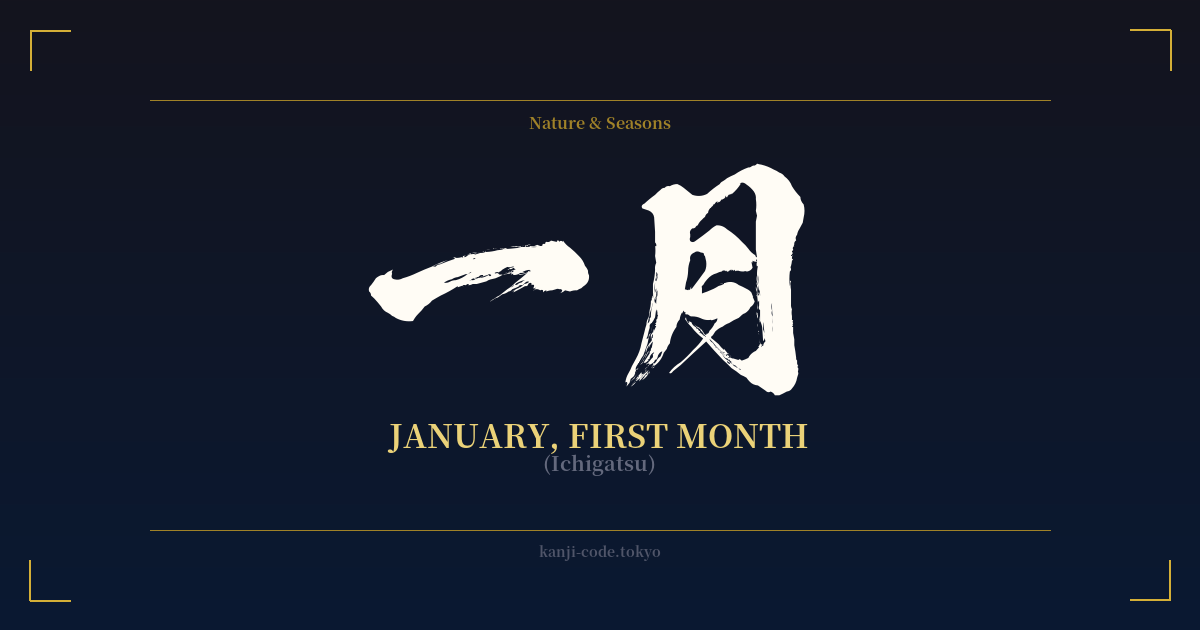
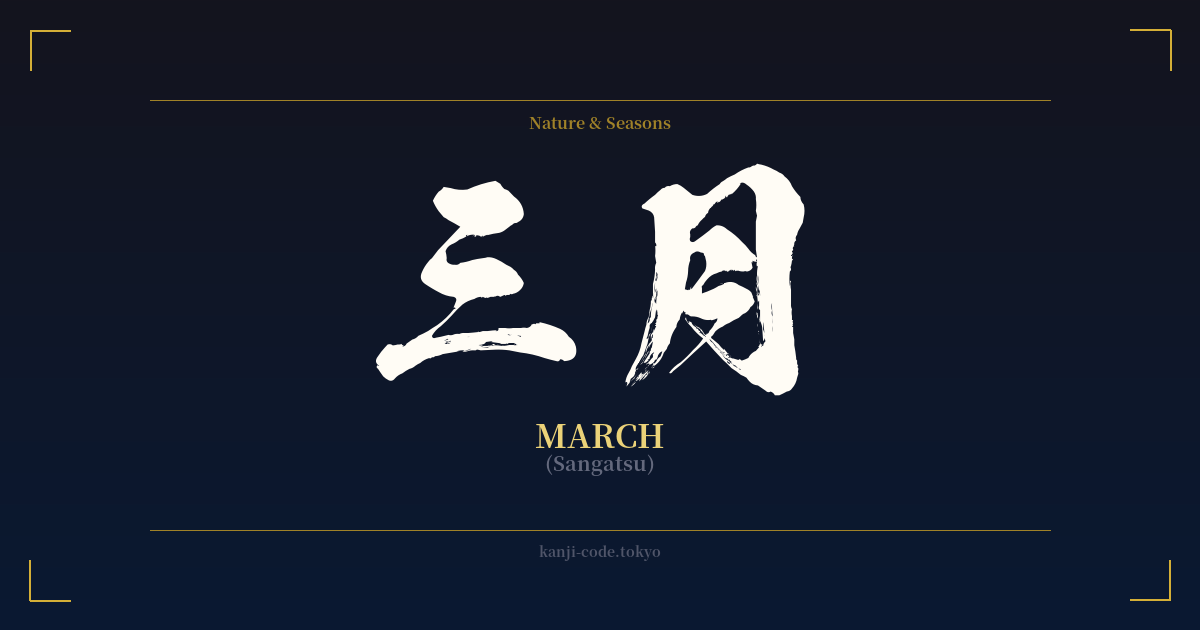
The same kanji can look dramatically different depending on the calligraphy style. Choose a font that matches the mood you want for your tattoo or design.
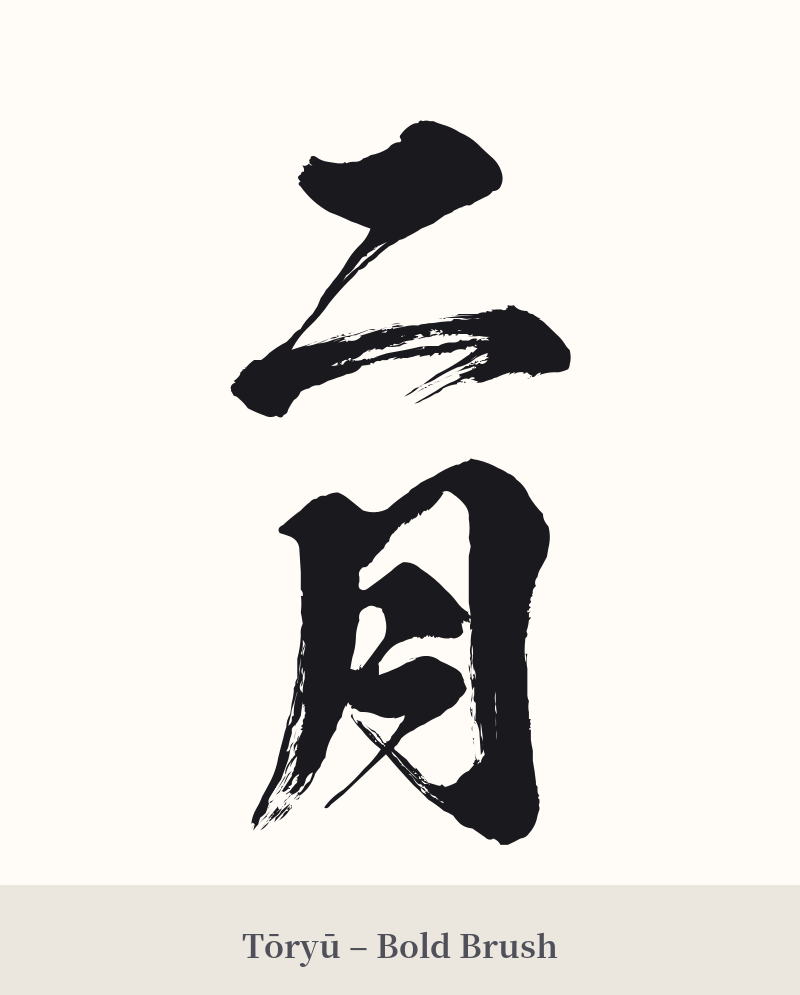
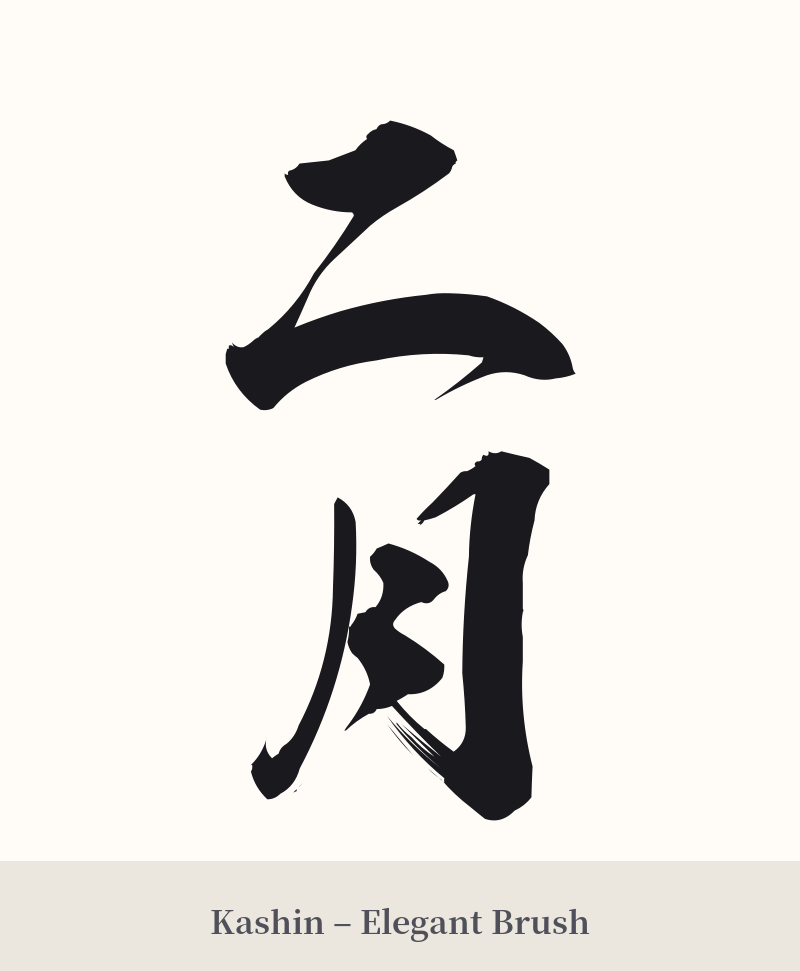
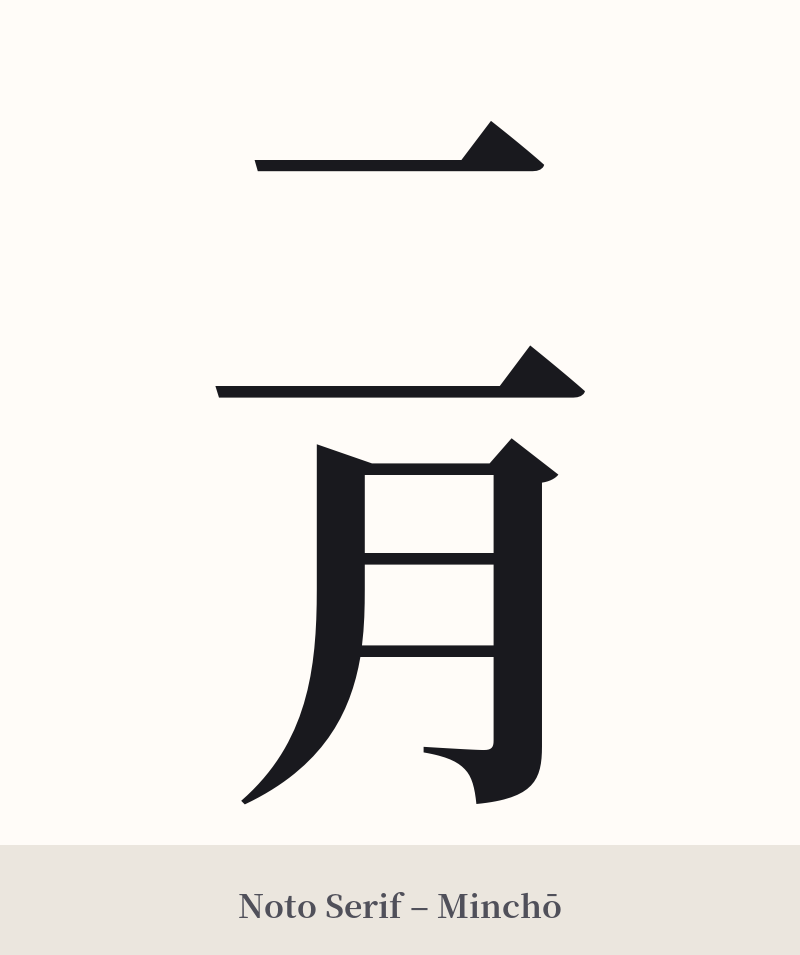
🎨 Tattoo Suitability
📐 Tattoo Design Guide
While 二月 is a very simple kanji pairing, it can be stylized to create a meaningful and personal tattoo. Due to its simplicity, it works best as a smaller, more subtle piece.
– Placement: Consider discreet locations like the inner wrist, behind the ear, on the ankle, or along the collarbone. It can also be integrated into a larger design that tells a more complete story.
– Font Style: A dynamic, flowing calligraphy (shodō) style can inject much-needed energy and artistry into the two simple characters. Conversely, a clean, minimalist, sans-serif font can emphasize its modern, straightforward nature.
– Visual Tips: To elevate the design beyond a simple label, consider pairing it with imagery associated with February in Japan. A branch of blooming plum blossoms (ume) wrapping around the vertically-written kanji can be stunning. You could also incorporate snowflake motifs to represent the end of winter or even a stylized oni mask as a nod to Setsubun.
Comments