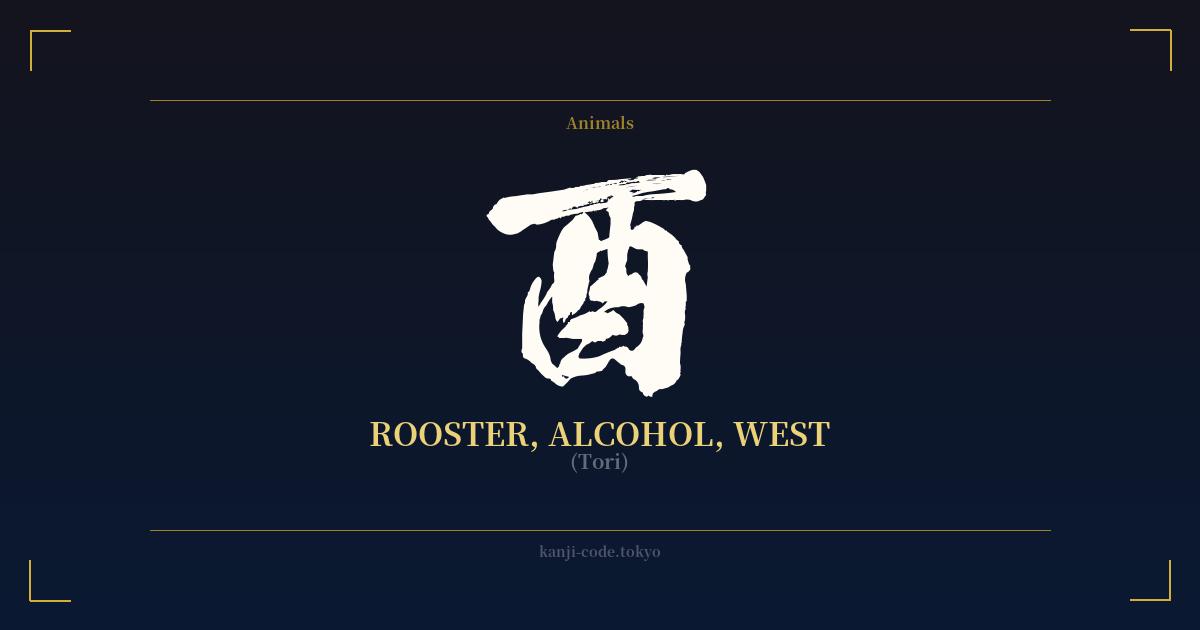
✍️ 酉 (Tori) — Cultural Context
The kanji 酉 (Tori) is a fascinating character with a layered history, originating not from an animal, but from a tool of celebration and ritual: a sake jar. Its earliest form was a pictograph of a long-necked vessel used for storing and serving alcoholic beverages. This ancient connection is why 酉 serves as the radical (a base component) in many kanji related to alcohol and fermentation, such as 酒 (sake), 酔 (drunk), and 醸 (to brew).
Over time, 酉 was adopted to represent the tenth of the twelve Earthly Branches (十二支, Jūnishi), the system that forms the Chinese zodiac. In this context, it became associated with the Rooster. It's crucial to understand that 酉 is the symbolic, zodiacal Rooster, not the literal bird you see on a farm. The kanji for the physical animal is 鶏 (niwatori). This distinction is fundamental; 酉 carries the abstract, cyclical, and astrological weight of the zodiac sign.
As part of the zodiac, 酉 is also tied to a specific time of day and a cardinal direction. It corresponds to the period between 5 PM and 7 PM, the time when birds, including chickens, were said to return to their roosts for the evening. This also aligns with its directional meaning of West, the direction of the setting sun. This multifaceted connection—to a time, a direction, and an animal—showcases the holistic worldview embedded in the zodiac system.
In Japanese culture, those born in the Year of the Rooster (酉年, Tori-doshi) are often thought to possess certain traits. They are seen as observant, hardworking, and courageous, much like the rooster that crows to announce the dawn. On the other hand, they can also be perceived as a bit proud or vain. This symbolism makes 酉 a character not just of an animal, but of a specific personality archetype within the cultural imagination.
Therefore, the single character 酉 encapsulates a journey from a simple pictograph of a sake jug to a complex symbol representing a zodiac animal, a time of day, a direction, and a set of human characteristics. Its meaning is less about the animal itself and more about its place within a larger cosmological system.
🖌️ Font Styles for 酉
The same kanji can look dramatically different depending on the calligraphy style. Choose a font that matches the mood you want for your tattoo or design.
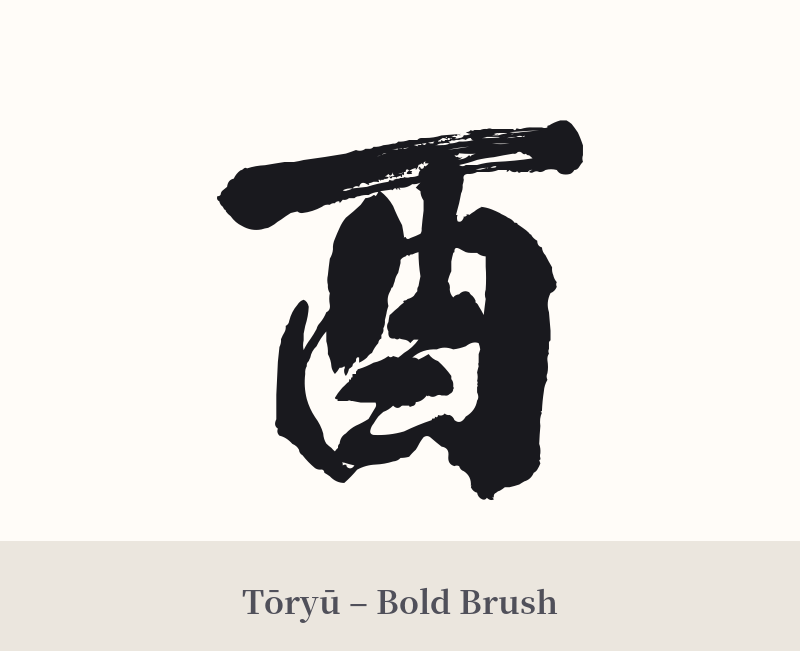
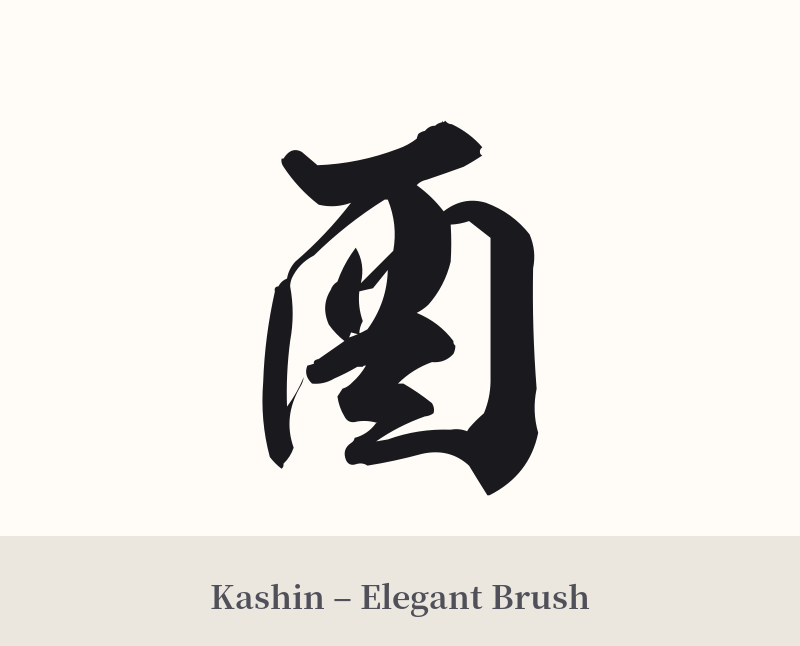
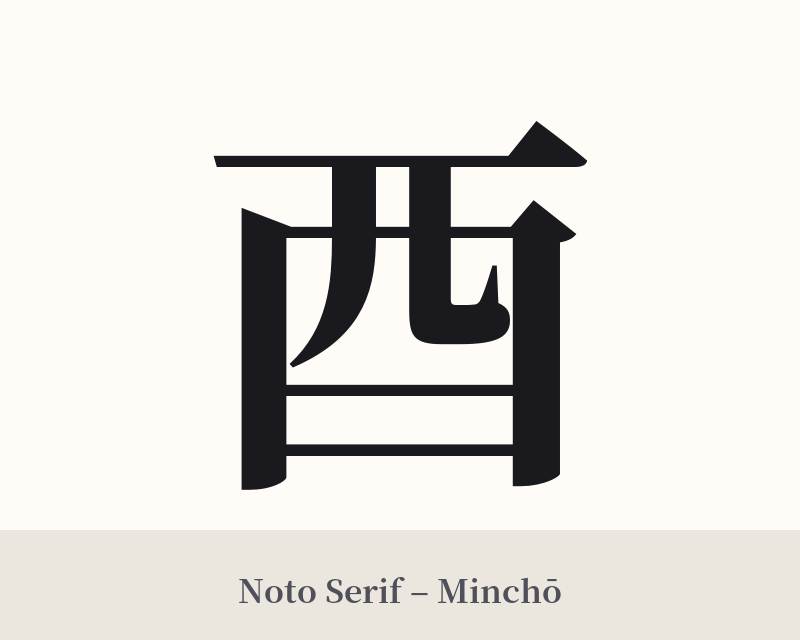
🎨 Tattoo Suitability
📐 Tattoo Design Guide
The simple and symmetrical form of 酉 makes it versatile for tattoo design. Its clean lines lend themselves well to a variety of styles and placements.
– Placement: Due to its compact shape, it works excellently as a small, subtle tattoo on the wrist, ankle, behind the ear, or on a finger. For a more prominent piece, it can be placed on the forearm or calf, where its balanced form can be appreciated.
– Font Style: A bold, blocky font like Kaisho (block script) or a modern Gothic style will emphasize its strong, stable structure. Conversely, a flowing cursive (Sosho) or semi-cursive (Gyosho) script can give it a more organic feel, hinting at the liquid origins of the character.
– Visual Tips: To avoid ambiguity, consider pairing 酉 with a realistic or stylized image of a rooster. This combination clarifies the intended zodiac meaning. Another creative approach is to lean into its dual meaning by incorporating it into a design featuring sake cups, flowing water, or abstract waves, creating a piece that tells a richer story.
Comments