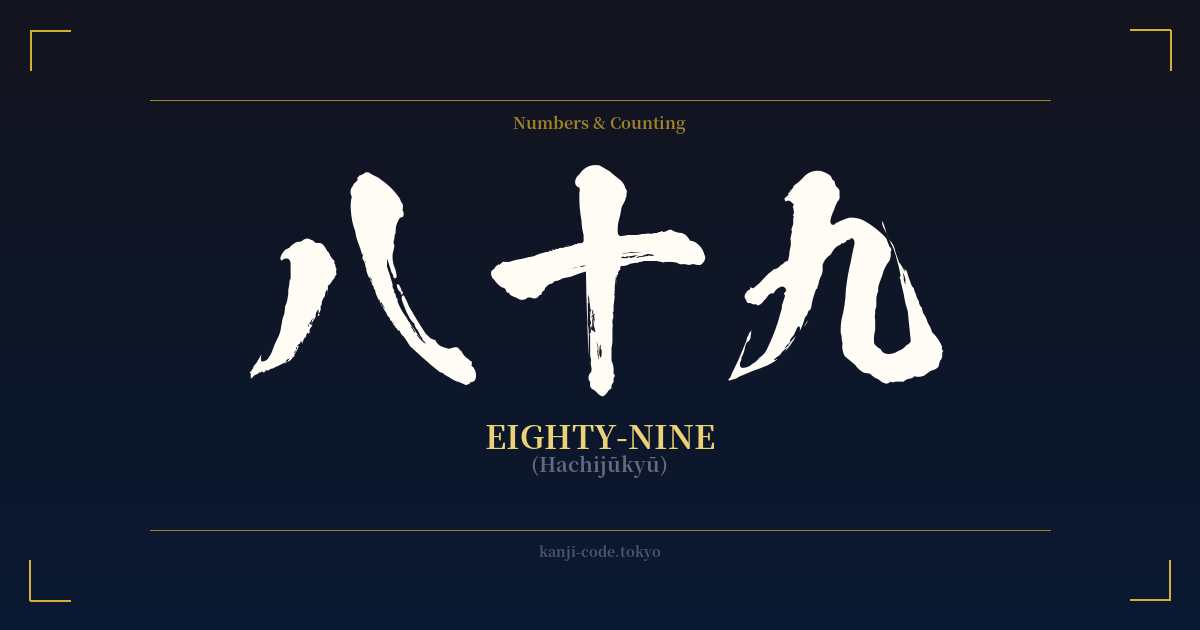
✍️ 八十九 (Hachijūkyū) — Cultural Context
The Japanese word for eighty-nine, 八十九 (Hachijūkyū), is a perfect illustration of the logical, additive nature of the Sino-Japanese numbering system. It is constructed quite literally: 八 (hachi) means 'eight,' 十 (jū) means 'ten,' and 九 (kyū) means 'nine.' Put together, it reads as 'eight tens plus nine,' forming the number eighty-nine. This straightforward system, borrowed from Chinese, allows for the creation of large numbers using a small set of fundamental characters.
While the number 89 itself doesn't carry a specific, widely recognized cultural meaning, the individual digits within it do. The number eight (八) is often considered very auspicious in Japan. Its shape, which widens at the bottom (末広がり, suehirogari), is said to symbolize growth, prosperity, and ever-expanding good fortune. This makes it a popular number for everything from business names to the number of items in a gift set.
Conversely, the number nine (九) can carry a negative connotation. One of its readings, 'ku,' is a homophone for the Japanese word for suffering or agony (苦). For this reason, some hotels or hospitals in Japan may skip the number nine when numbering rooms, similar to how the number thirteen is sometimes avoided in Western cultures. The presence of both a 'lucky' and an 'unlucky' number within 89 creates a neutral ground, with neither superstition dominating its perception.
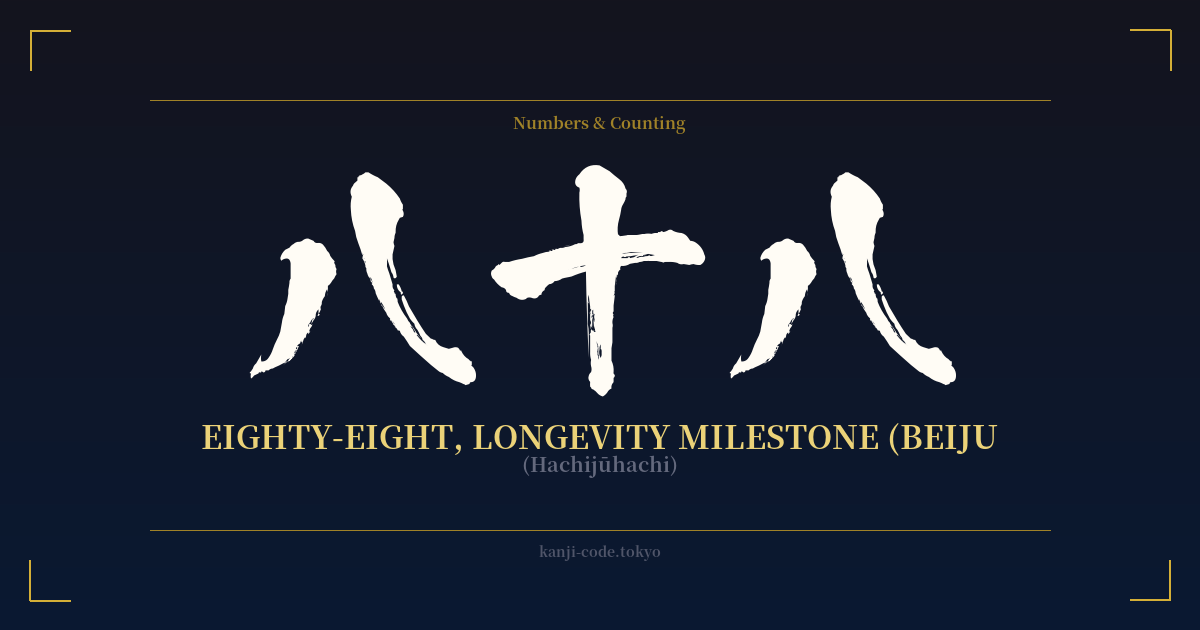
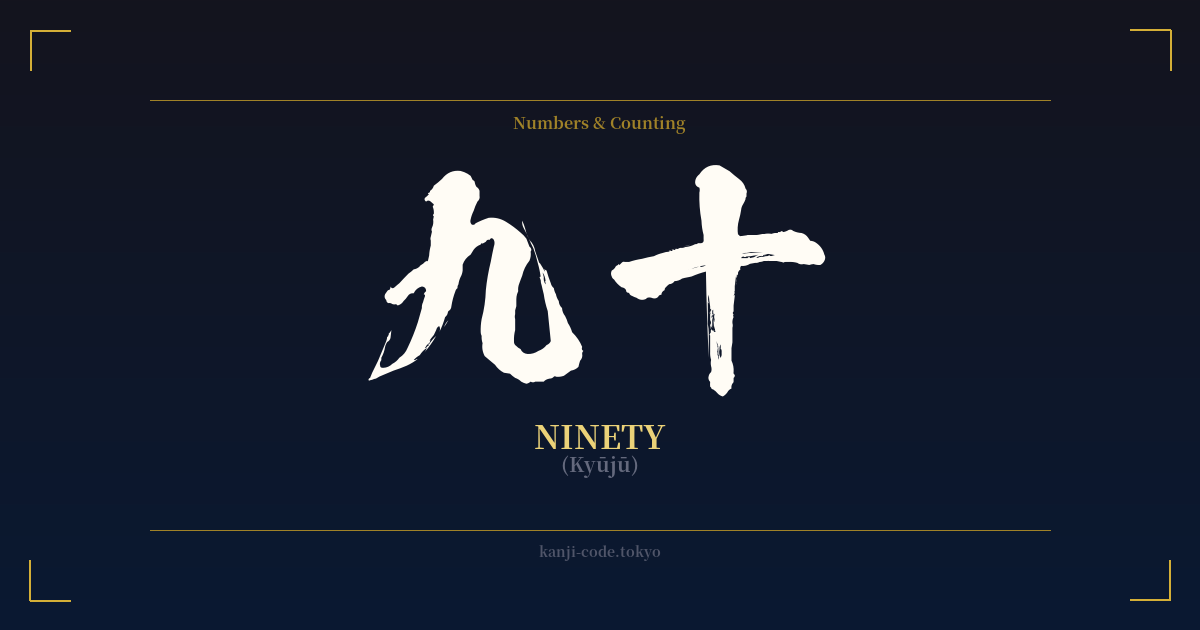
In Japanese culture, certain ages are marked with special longevity celebrations called 'chōju.' For example, the 77th birthday is 'Kiju' (喜寿), the 88th is 'Beiju' (米寿), and the 90th is 'Sotsuju' (卒寿). Interestingly, the 89th birthday does not have its own specific celebration or name, falling between the significant milestones of 88 and 90. This makes it a culturally unremarkable age, simply a step on the path to the next major celebration.
In modern Japan, Arabic numerals (0-9) are used for most everyday purposes, from price tags to phone numbers. Kanji numerals like 八十九 are now more commonly seen in formal documents, traditional contexts like certificates or ritual items, and in vertical writing. The use of kanji for numbers lends a sense of tradition and formality that Arabic numerals lack.
🖌️ Font Styles for 八十九
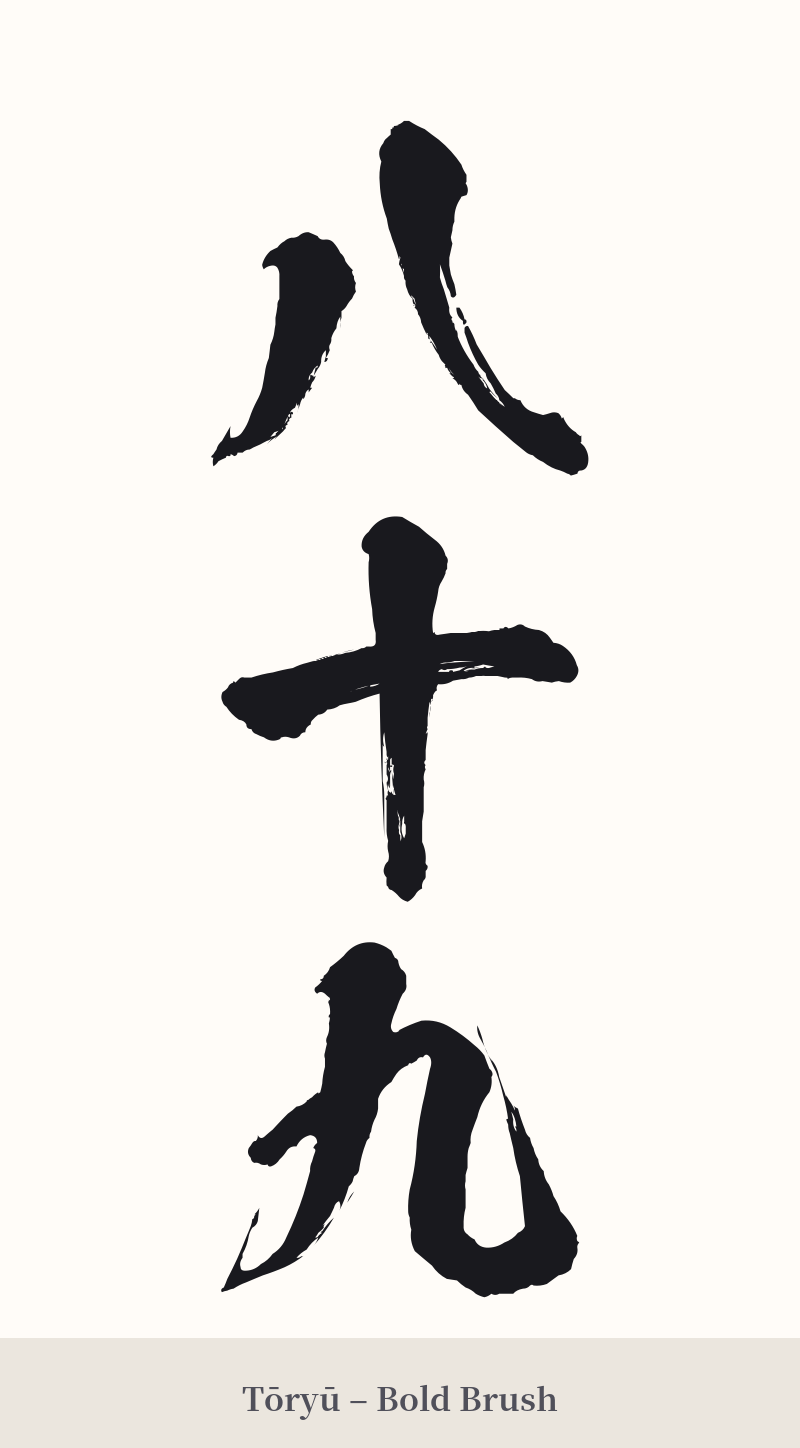
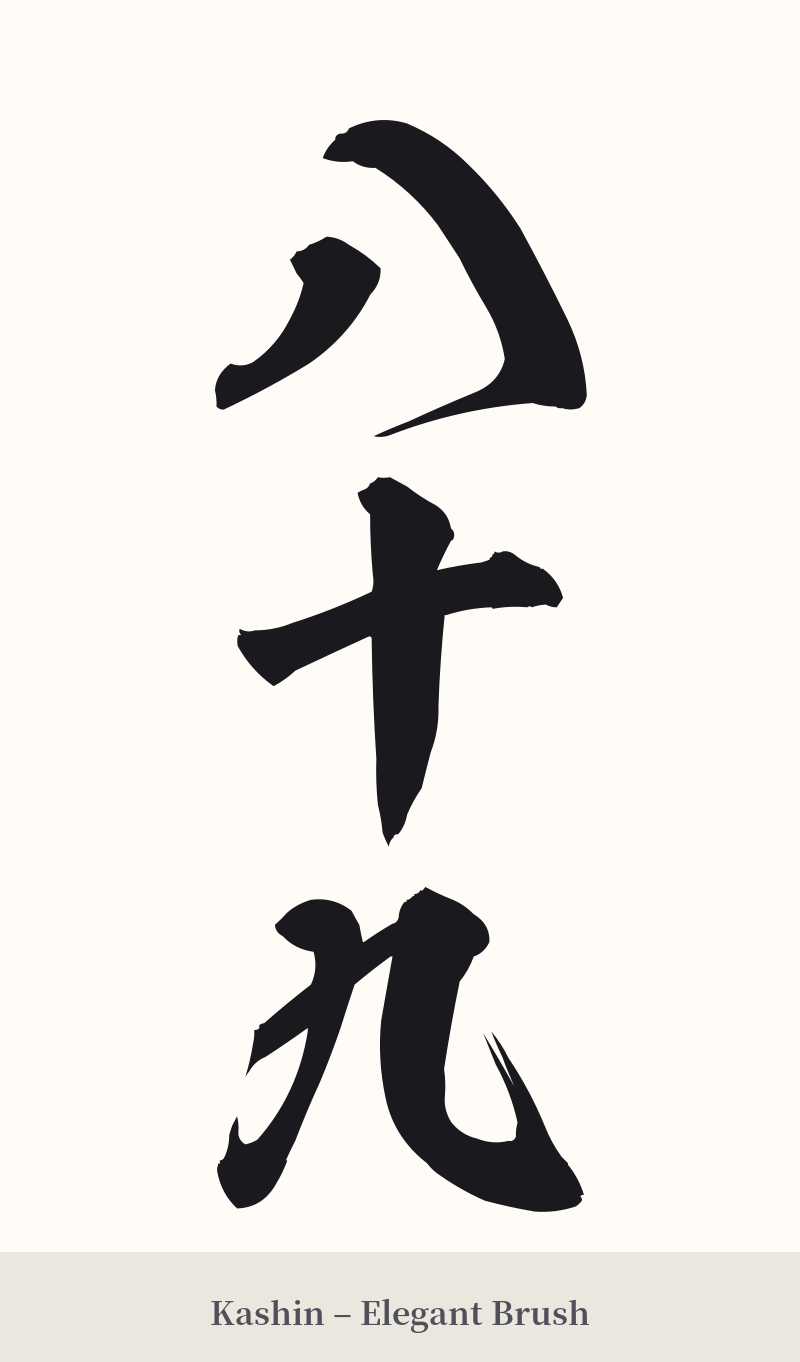
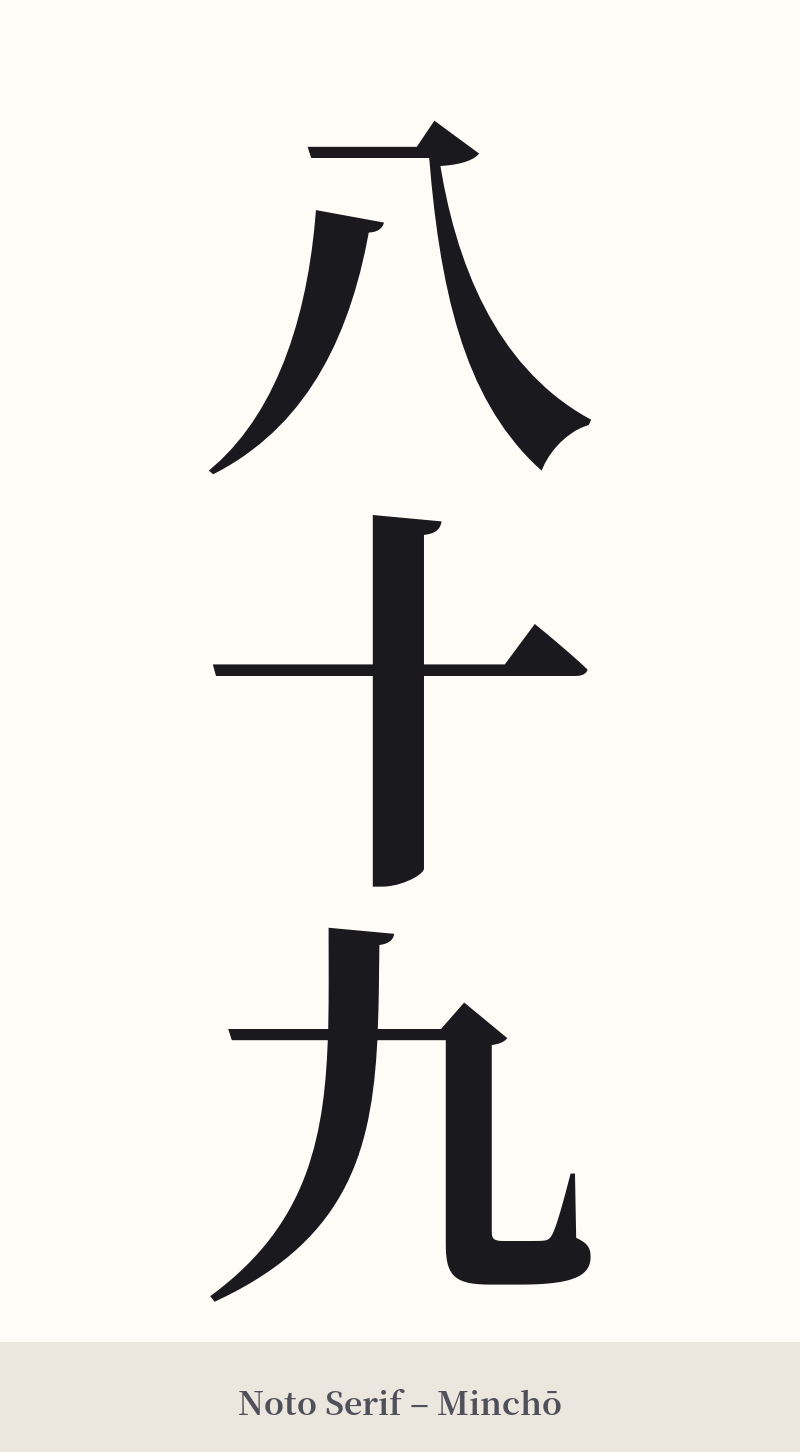
The same kanji can look dramatically different depending on the calligraphy style. Choose a font that matches the mood you want for your tattoo or design.
🎨 Tattoo Suitability
📐 Tattoo Design Guide
If you have a strong personal reason to get the number eighty-nine as a tattoo, the design should reflect its simple and direct nature.
– Placement: This design is best suited for small, discreet locations. Consider the inner wrist, ankle, behind the ear, or along the collarbone. A large-scale version on a major area like the back or chest would likely appear sparse and lack impact.
– Style: A clean, minimalist font is the most fitting choice. A standard Mincho (serif) or Gothic (sans-serif) style will honor the characters' simplicity. Overly complex or aggressive brushstroke (shodō) styles might overwhelm the basic forms of the kanji.
– Orientation: Vertical placement (縦書き, tategaki) is a classic choice for Japanese script and would look natural for these characters. Arranging them from top to bottom (八, then 十, then 九) is the traditional way.
– Composition: Rather than a standalone piece, consider integrating 八十九 into a larger design. It could represent the year '89 as part of a date, or be a component of a design that explains its personal significance to you.
Comments