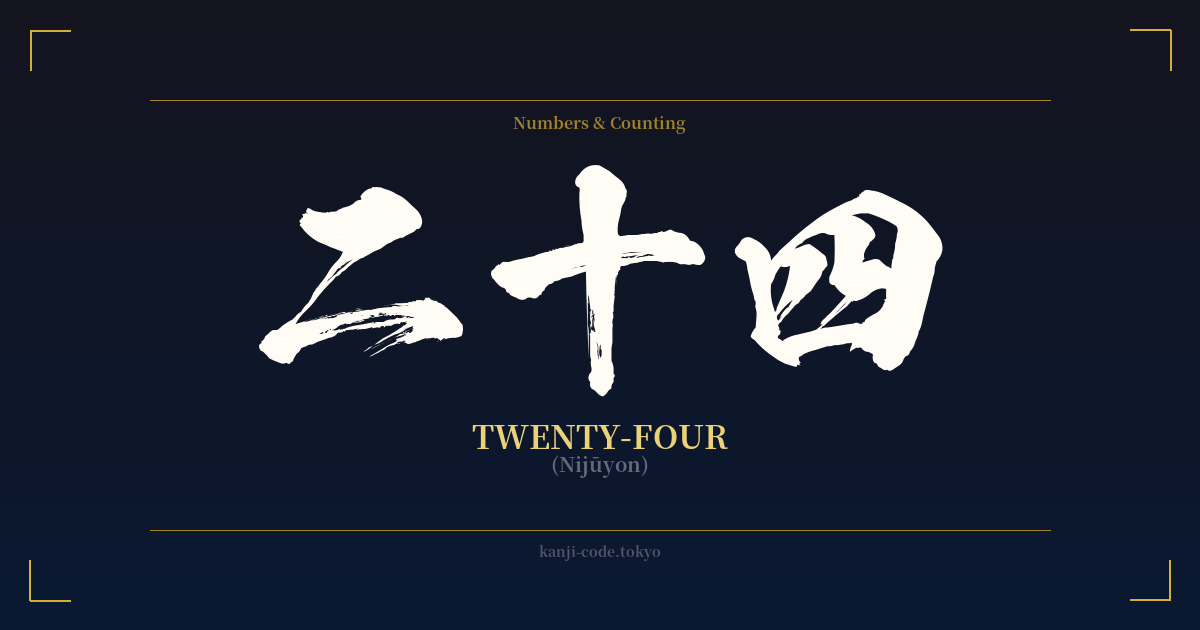
✍️ 二十四 (Nijūyon) — Cultural Context
The Japanese word for twenty-four, 二十四 (Nijūyon), is constructed with a straightforward logic that reveals the mathematical foundation of the kanji system. It literally translates to 'two-ten-four' (二十 + 四), representing two sets of ten plus four. This structure is the standard for forming numbers in Japanese, providing a clear and efficient way to express numerical values.
While a simple number on the surface, twenty-four holds significant cultural weight, primarily through its connection to time and nature. The most prominent example is the Twenty-Four Solar Terms (二十四節気, Nijūshisekki). Originating in ancient China, this system divides the solar year into 24 distinct periods, each marking a particular natural phenomenon or agricultural event. These terms, such as Risshun (立春, the beginning of spring) and Geshi (夏至, the summer solstice), helped farmers track the seasons and governed traditional customs and festivals. In Japan, the Nijūshisekki remains a poetic and evocative way to describe the subtle shifts in the environment throughout the year, deeply embedding the number 24 into the nation's seasonal consciousness.
Beyond the seasons, the number is fundamental to the modern measurement of a day, as in 二十四時間 (nijūyo jikan), or 24 hours. This universal concept anchors the number in the rhythm of daily life, from work schedules to broadcast media. The number also appears in a spiritual context within Buddhism, where the Twenty-Four Protective Deities (二十四諸天, Nijūyo Shoten) are a group of Dharmapala who vow to protect the faith and its followers.
A crucial nuance of 二十四 involves the final character, 四 (four). In Japanese, the number four has two common readings: 'shi' and 'yon.' The reading 'shi' is a homophone for the word for death (死), making the number a source of superstition known as tetraphobia. To avoid this unlucky association, the reading 'yon' is frequently used, as is the case in 'Nijūyon.' This linguistic choice is a small but telling example of how cultural beliefs shape the Japanese language, even in something as basic as counting.
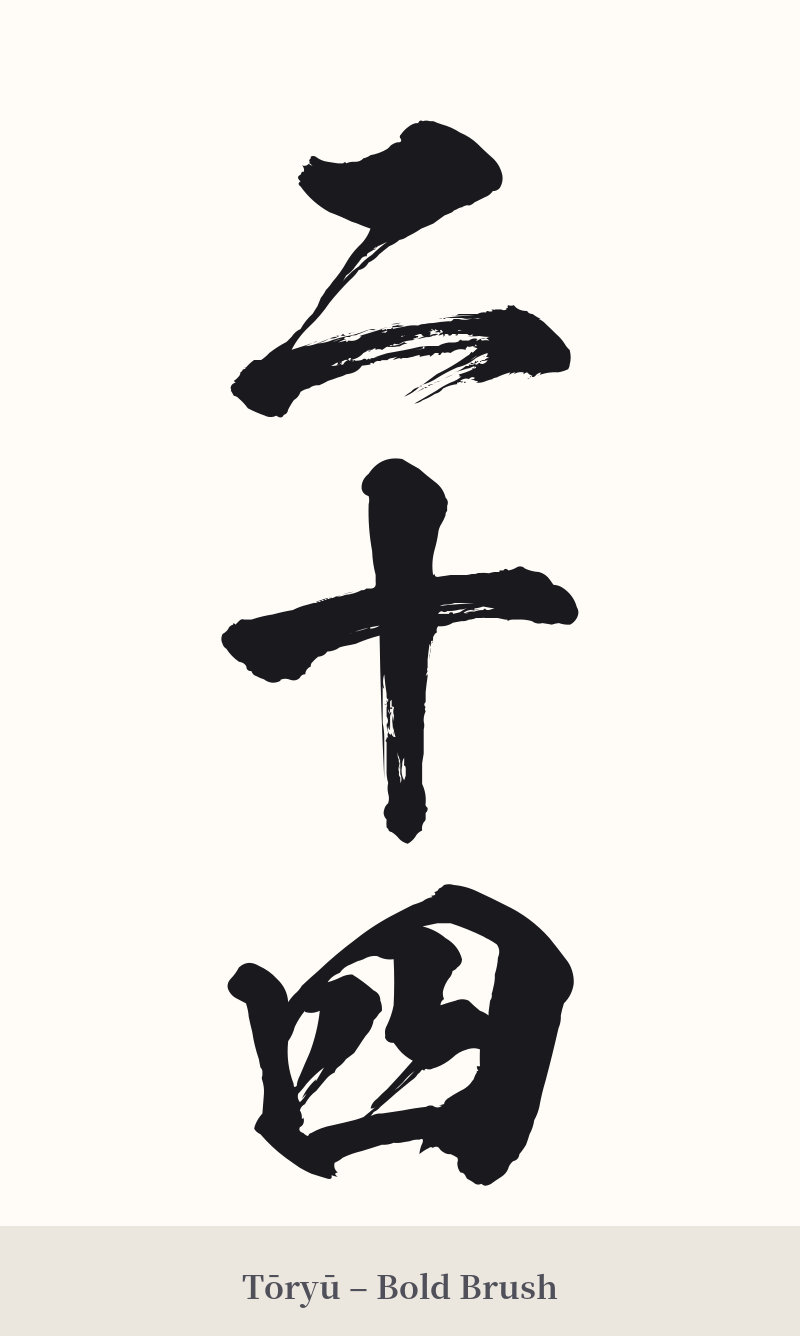
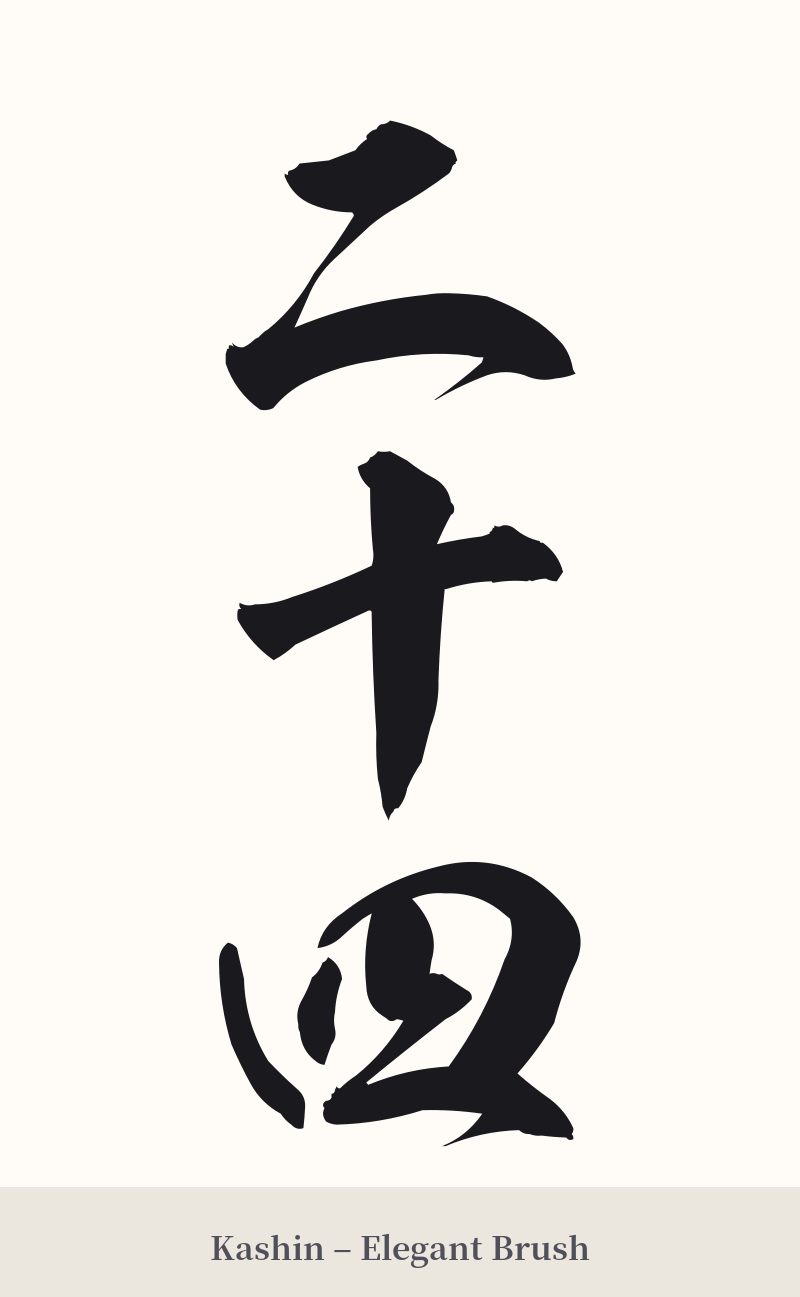
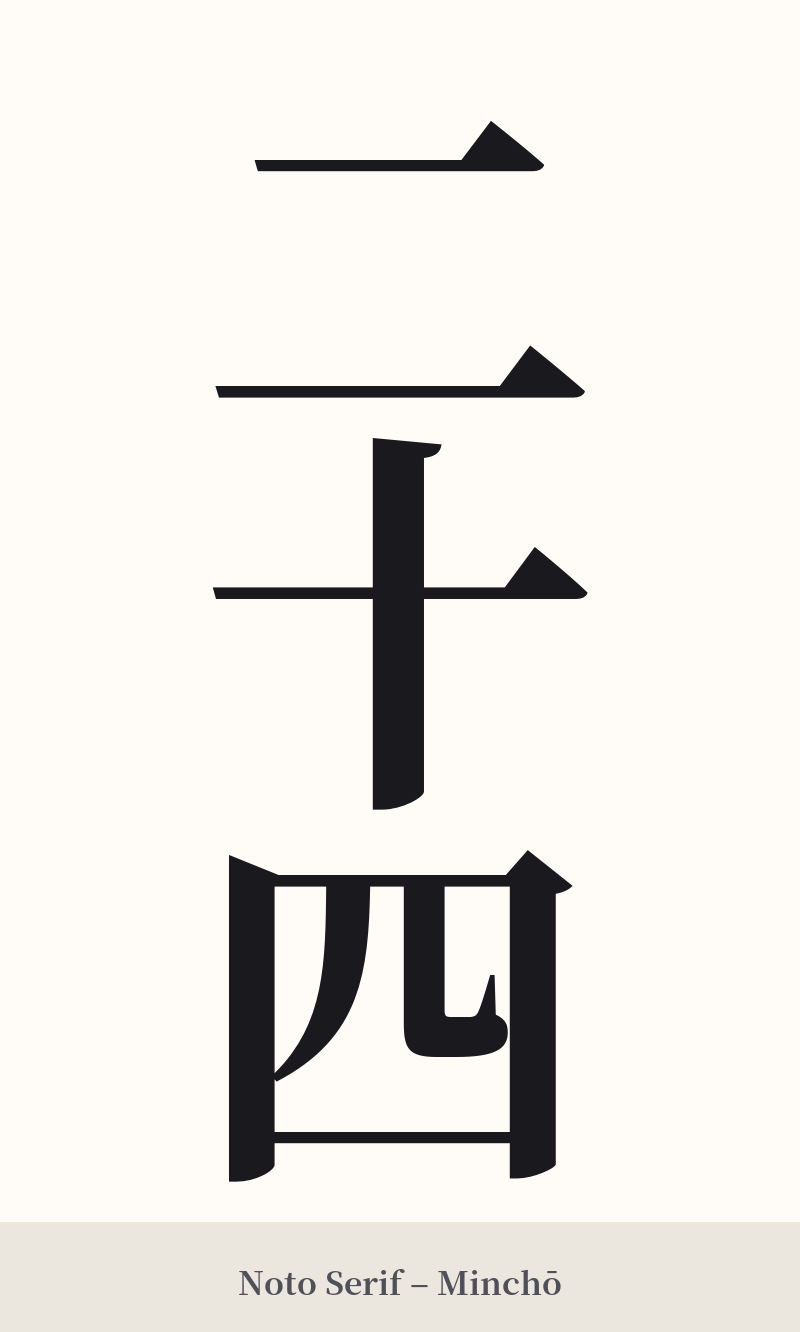
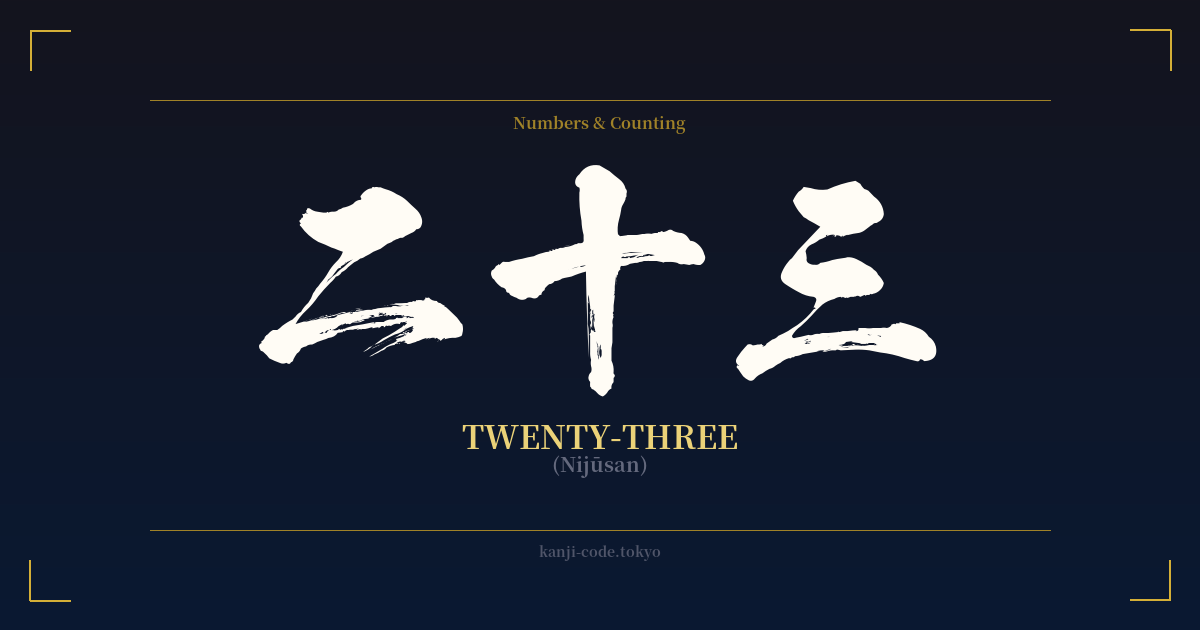
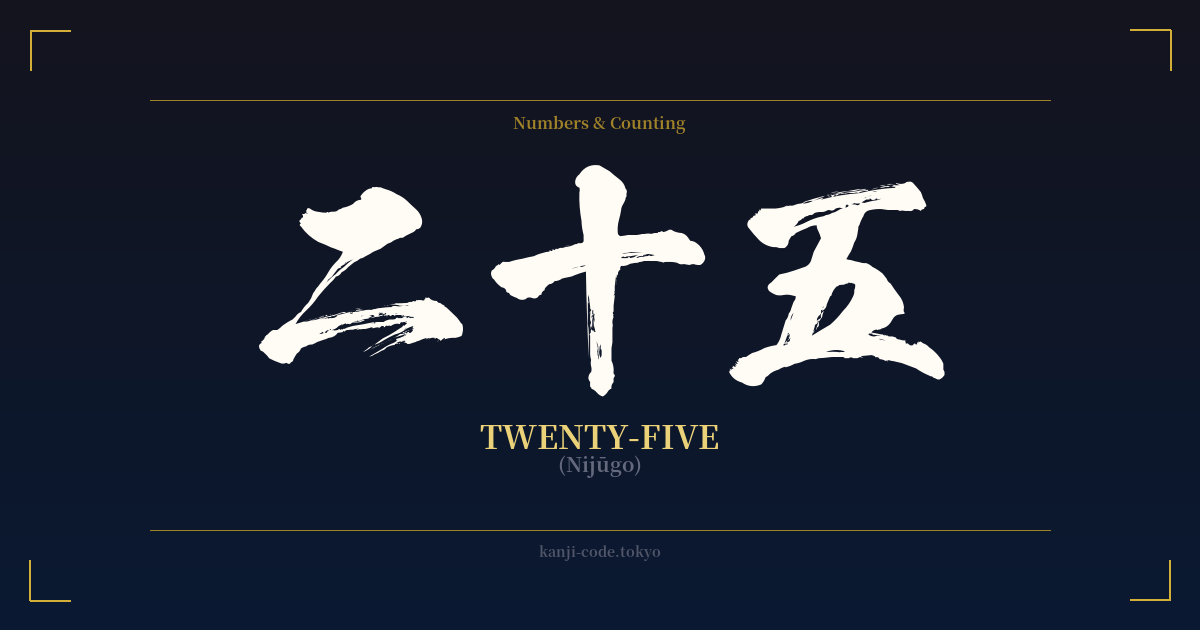
🖌️ Font Styles for 二十四
The same kanji can look dramatically different depending on the calligraphy style. Choose a font that matches the mood you want for your tattoo or design.
🎨 Tattoo Suitability
📐 Tattoo Design Guide
For a tattoo of 二十四, the composition of the three characters offers several design possibilities. A vertical arrangement is highly recommended as it aligns with traditional Japanese writing, creating a clean and elegant look that works well on the forearm, spine, or along the calf.
A horizontal layout is also a strong option, suitable for placement across the chest, upper back, or collarbone. The simple, geometric forms of 二 and 十 contrast nicely with the slightly more complex enclosure of 四, creating a balanced visual rhythm.
When considering font styles, here are a few suggestions: – Kaisho (block script): This style emphasizes the clear, numerical quality of the kanji. It's a clean, legible, and timeless choice. – Gyōsho (semi-cursive script): For a more fluid and artistic feel, gyōsho can connect the characters slightly, adding a sense of movement without sacrificing readability. – Minimalist strokes: A modern approach could involve reducing the characters to their most essential strokes, creating an abstract yet recognizable design.
To add symbolic depth, consider incorporating imagery related to the number's cultural context. Pairing it with a motif representing one of the 24 solar terms—like a maple leaf for autumn or a lotus for summer—can tell a richer story. Alternatively, a subtle clock face or an enso circle could be integrated to represent the 24 hours of a day.
Comments