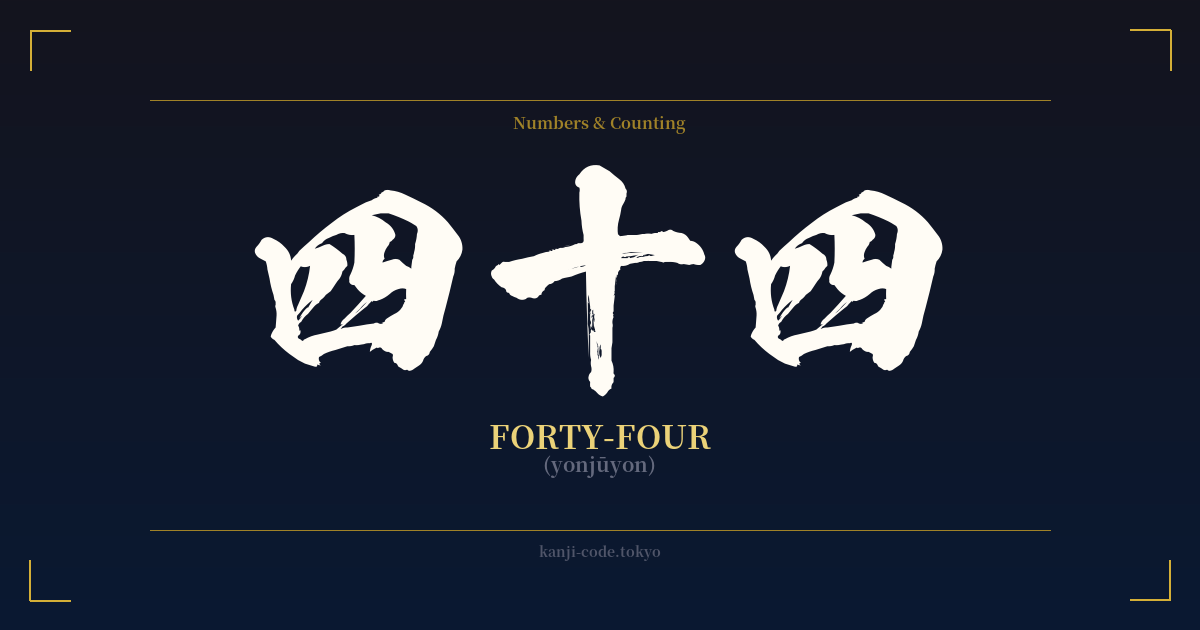
✍️ 四十四 (yonjūyon) — Cultural Context
The kanji compound 四十四 (yonjūyon) literally translates to 'forty-four.' It is constructed in a straightforward manner: 四 (yon, four), followed by 十 (jū, ten), and another 四 (yon, four), creating the number 44. While its structure is simple, its cultural significance is profound and overwhelmingly negative due to a widespread superstition known as tetraphobia.
In Japanese, one of the words for the number four is 'shi' (し). This sound is identical to the pronunciation of the kanji for death, 死 (shi). This unfortunate homophone has led to the number four being considered the unluckiest number in Japan, much like the number 13 in many Western cultures, but arguably with even greater social impact.
This fear of the number four, or tetraphobia, permeates daily life in Japan and other East Asian countries. Many hospitals and hotels will omit the fourth floor, going straight from floor three to five. Apartment buildings often skip room numbers containing a four. Gifting items in sets of four is a major social faux pas, as it is seen as wishing ill fortune or even death upon the recipient.
If the number four is 'death,' then forty-four (四十四) is interpreted as 'double death.' The reading 'shijūshi' is particularly avoided as it sounds perilously close to a string of morbid words. To mitigate this, the alternative, neutral reading 'yon' for four is used, making the standard pronunciation 'yonjūyon.' However, this linguistic workaround does little to erase the deep-seated cultural aversion to the number itself. The visual of two fours side-by-side is enough to trigger the negative association.
For anyone considering this for a design, it's crucial to understand that this isn't an obscure piece of trivia. It's a living, breathing superstition that affects architecture, social etiquette, and language. Choosing 四十四 for a permanent piece of body art would be fundamentally misunderstanding its powerful role as a symbol of bad luck and mortality in Japanese culture. It would be perceived not as edgy or cool, but as a deeply unfortunate and uninformed choice.
🖌️ Font Styles for 四十四
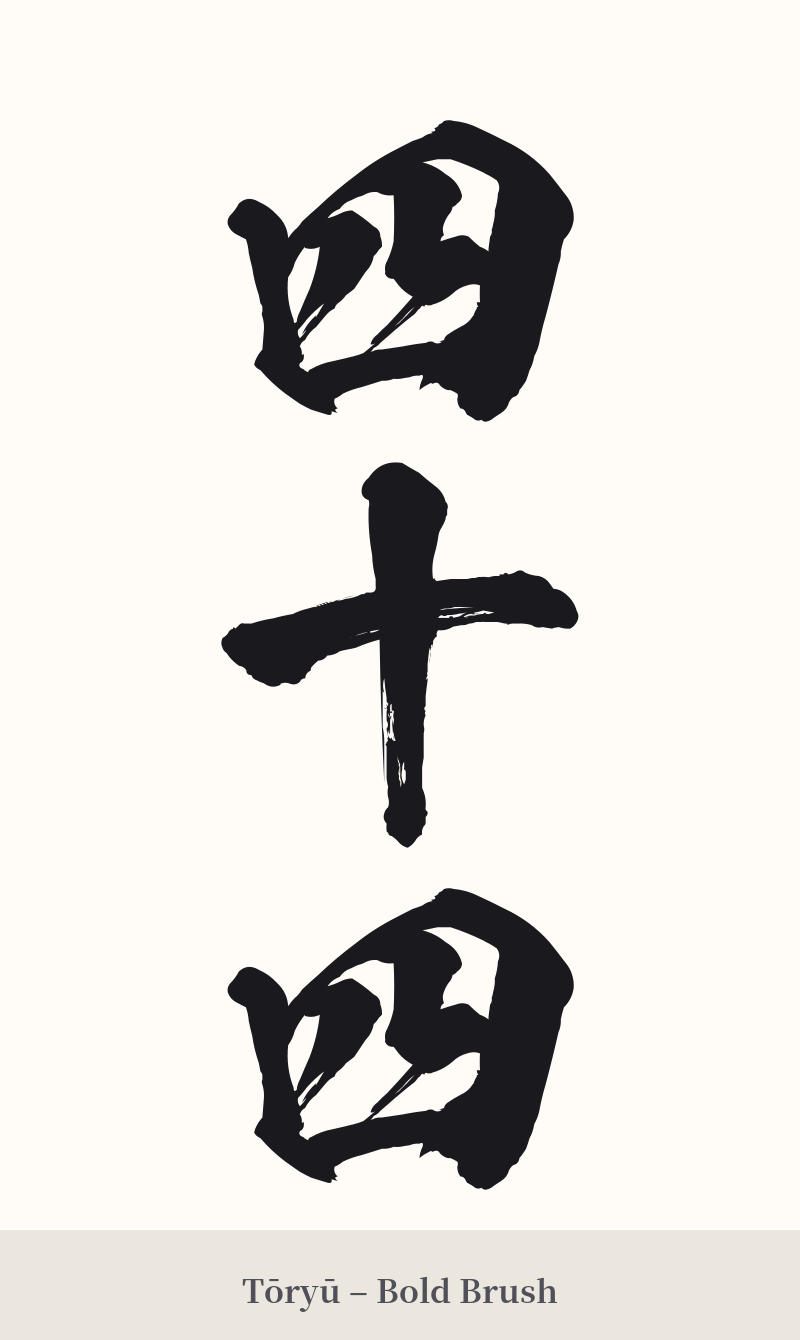
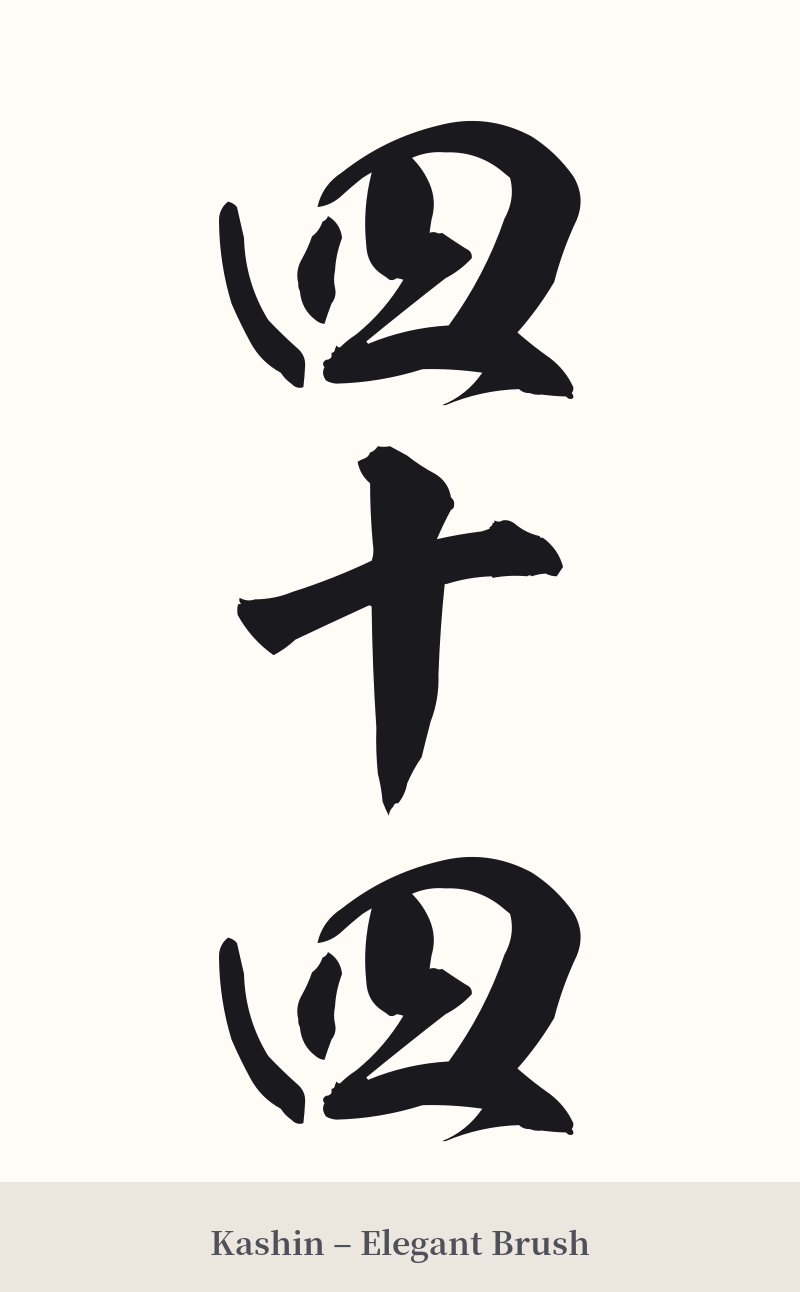
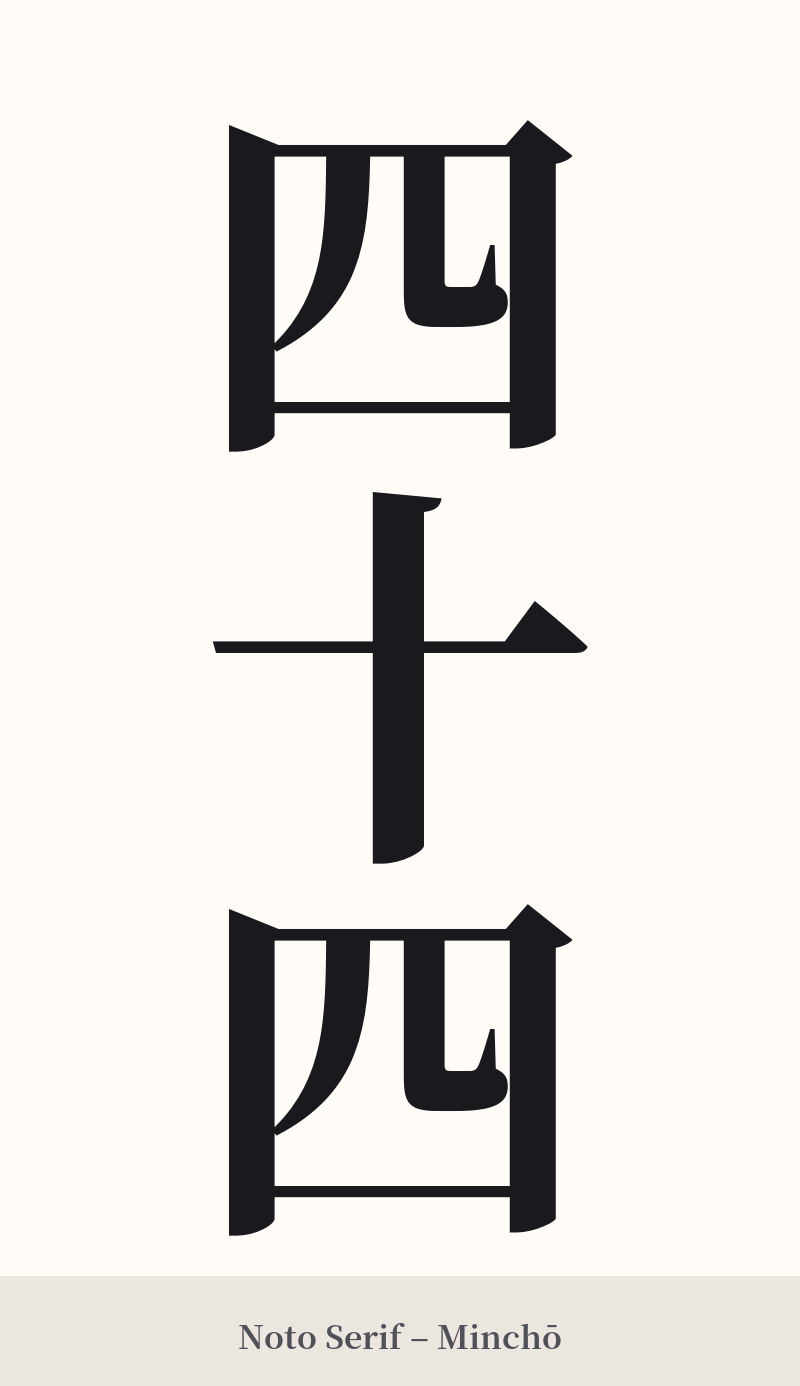
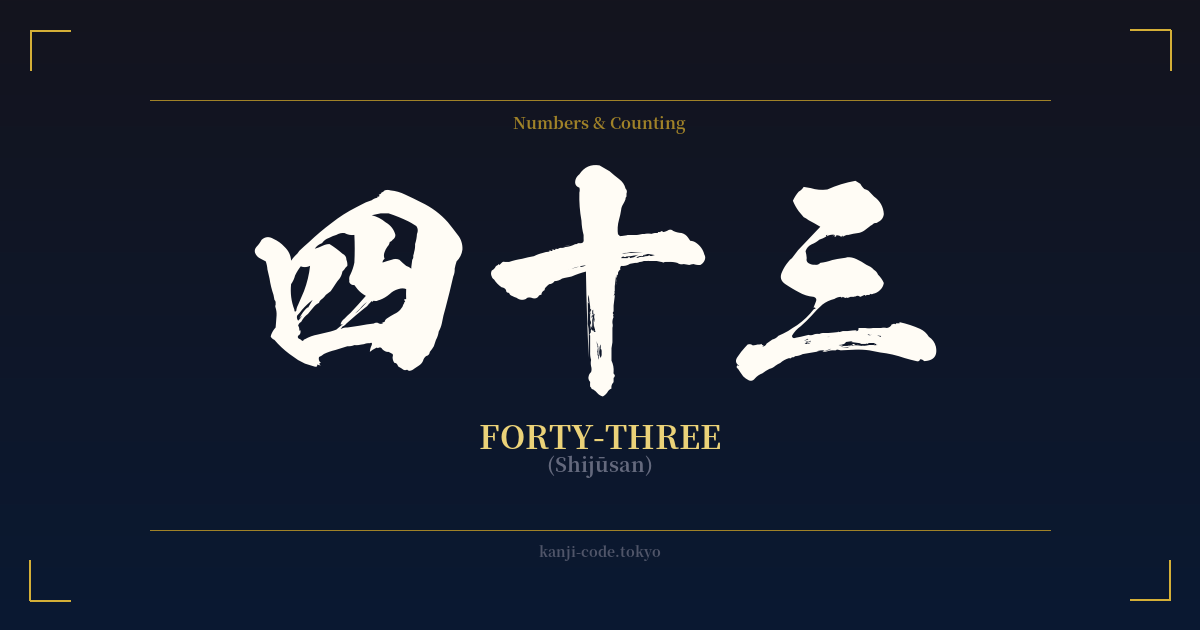
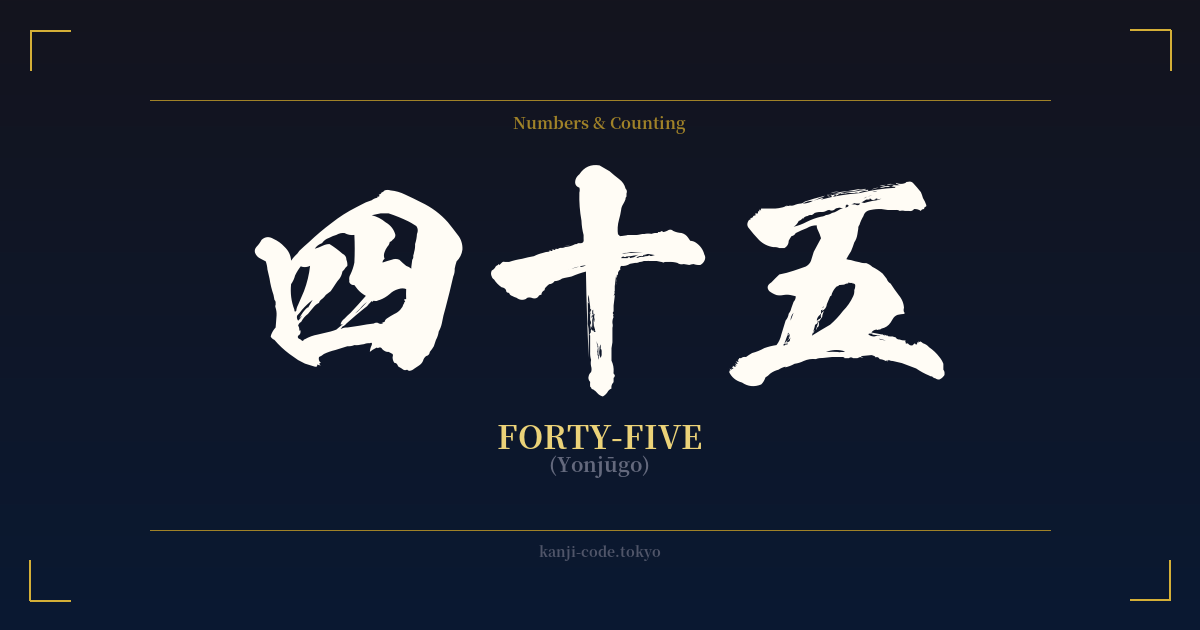
The same kanji can look dramatically different depending on the calligraphy style. Choose a font that matches the mood you want for your tattoo or design.
🎨 Tattoo Suitability
📐 Tattoo Design Guide
Given the severe negative connotations, we strongly advise against tattooing 四十四. A native Japanese observer would likely react with confusion, concern, or even pity. It is the cultural equivalent of tattooing 'Bad Luck' or 'Death Wish' on your skin.
If you are absolutely committed to a number-based tattoo and are drawn to the aesthetic of these characters for some reason, consider these points as warnings rather than recommendations: – The characters themselves are simple and blocky. A minimalist, sans-serif font like Mincho or a clean Gothic style would be easy to render. – Due to its three-character structure, a vertical alignment is common. This would read from top to bottom: 四, then 十, then 四. – A horizontal layout is also possible but less traditional for multi-kanji words in calligraphy.
Instead of this taboo number, consider more auspicious alternatives. The number eight (八) is considered very lucky because its shape widens at the bottom, suggesting prosperity. The number seven (七) is also widely seen as fortunate, linked to the Seven Lucky Gods (七福神, Shichifukujin).
Comments