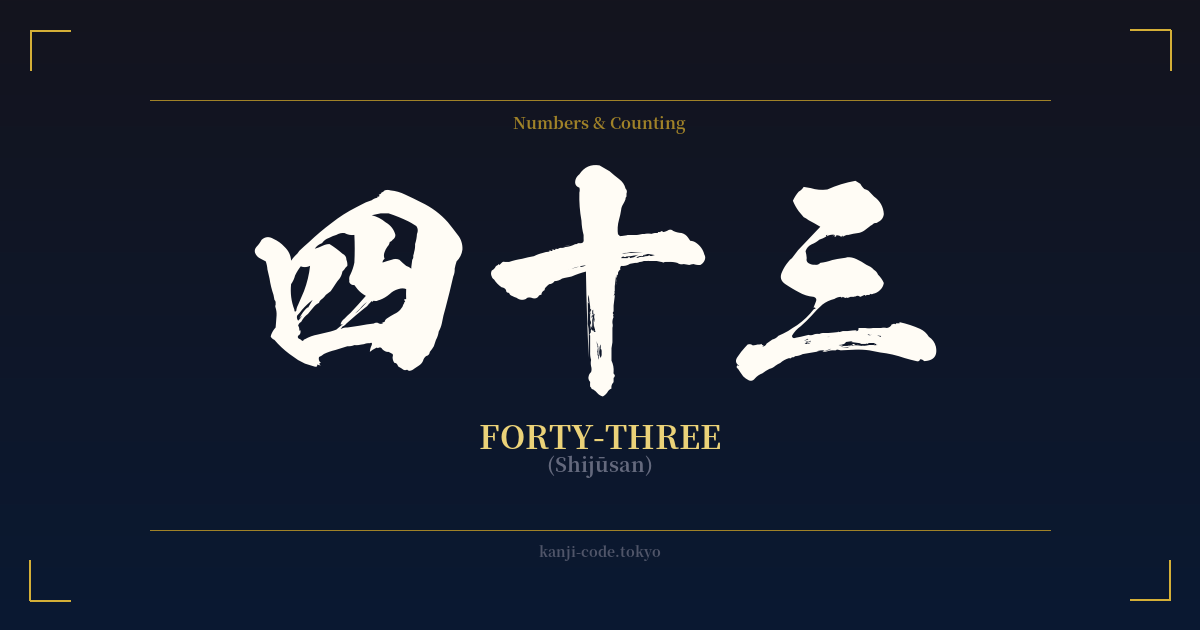
✍️ 四十三 (Shijūsan) — Cultural Context
The Japanese word for forty-three, 四十三 (shijūsan), is a straightforward construction that reveals the logic of the language's numbering system. It is literally 'four-ten-three', combining the characters for four (四), ten (十), and three (三). This additive and multiplicative system is a hallmark of East Asian languages, making large numbers easy to form and understand.
However, the simplicity of its construction belies a significant cultural nuance, centered entirely on the number four. In Japanese, one of the readings for the kanji 四 is 'shi', which is identical to the pronunciation of the kanji for death, 死. This unfortunate homophone has given rise to 'tetraphobia', a widespread superstition surrounding the number four.
This aversion is not a relic of the past; it actively shapes modern Japanese life. You will often find that hospitals and hotels skip the fourth floor, going directly from three to five. Room numbers containing '4' are frequently avoided. In gift-giving, sets of four are considered a social faux pas, implying a wish of death upon the recipient. While the alternative reading 'yon' is often used to circumvent this issue (e.g., 'yonjū' for forty), the 'shi' reading persists in many standard contexts, including 'shijūsan'.
Interestingly, this negativity is juxtaposed with the number three (三, san), which is generally seen as lucky. The number three represents stability and creation, appearing in many positive cultural and religious concepts. Ten (十, jū) acts as the neutral base-10 marker.
Furthermore, the age of 43 for men has a specific cultural resonance connected to 'yakudoshi' (厄年), or 'unlucky years'. The major unlucky year for men is 42 (shini, which can sound like 'to die'). The year immediately following, age 43, is known as 'ato-yaku' (後厄), the 'post-calamity' year. While the worst is considered over, it's still a period that calls for caution and awareness. Therefore, the number 43 can be linked to the idea of emerging from a period of great misfortune, a context that adds a layer of depth beyond the simple numerical value.
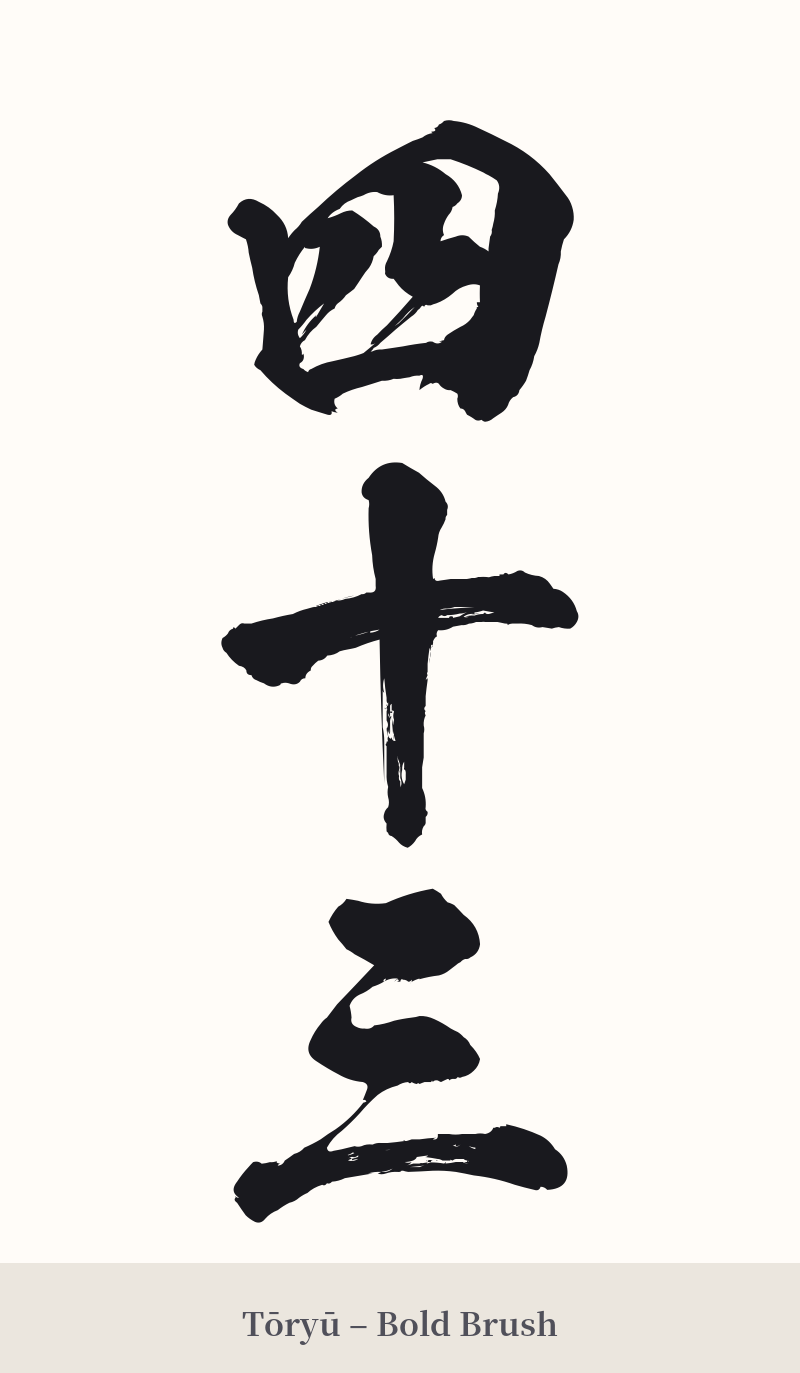
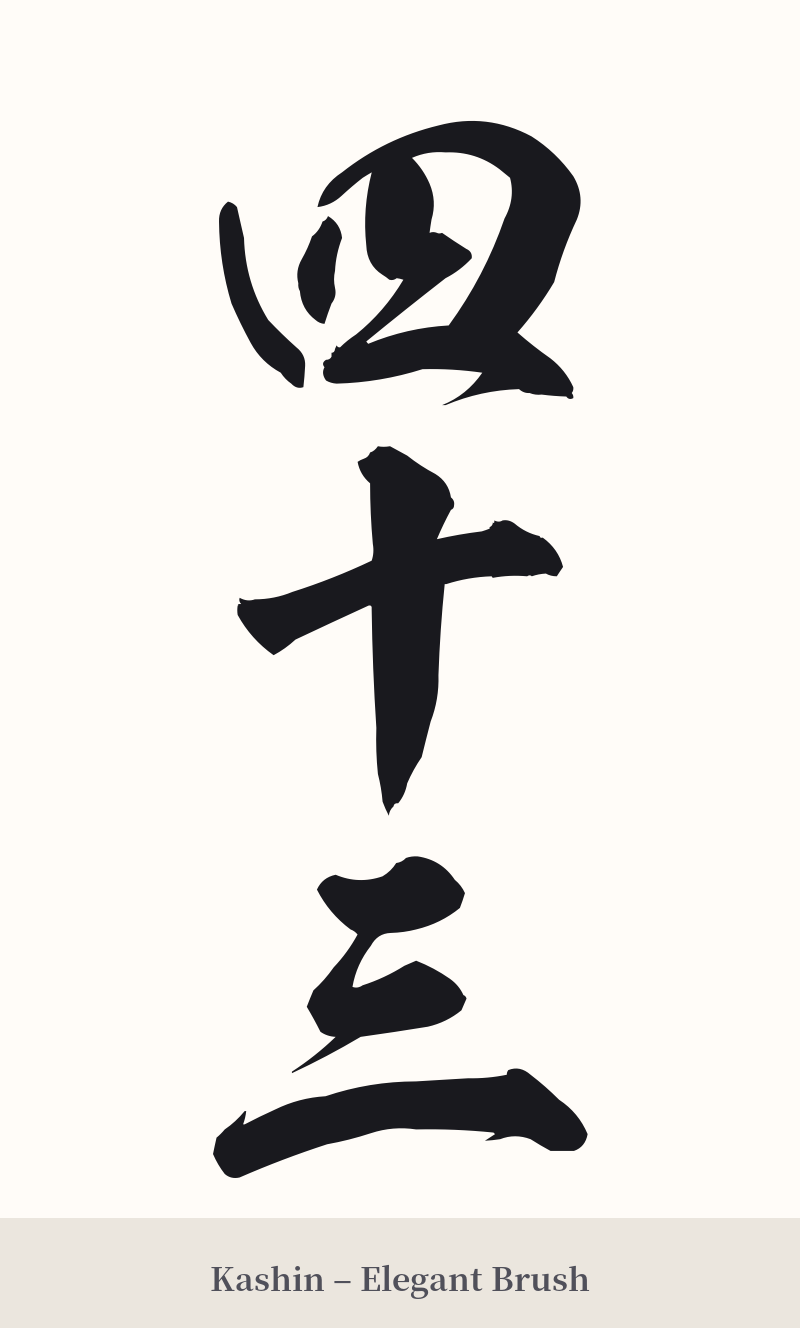
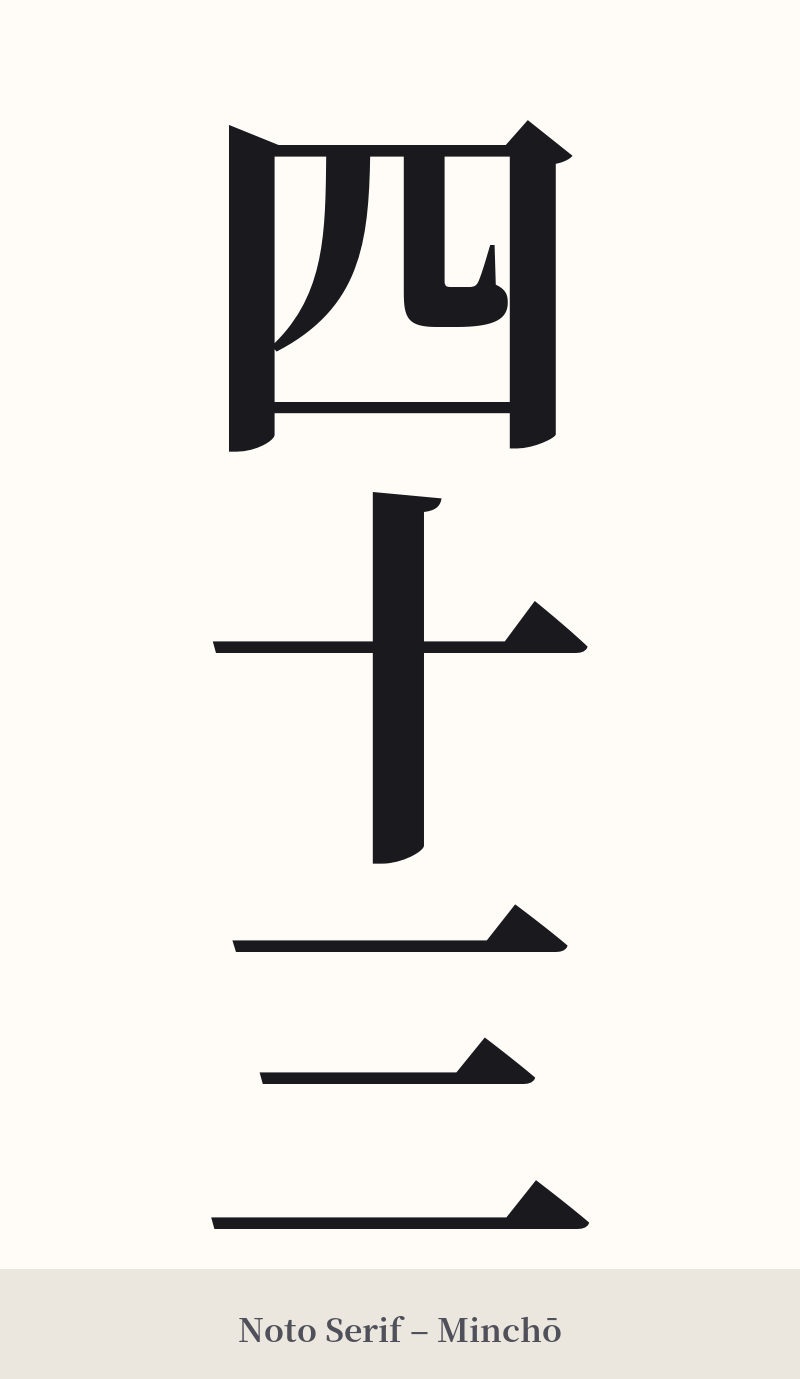
🖌️ Font Styles for 四十三
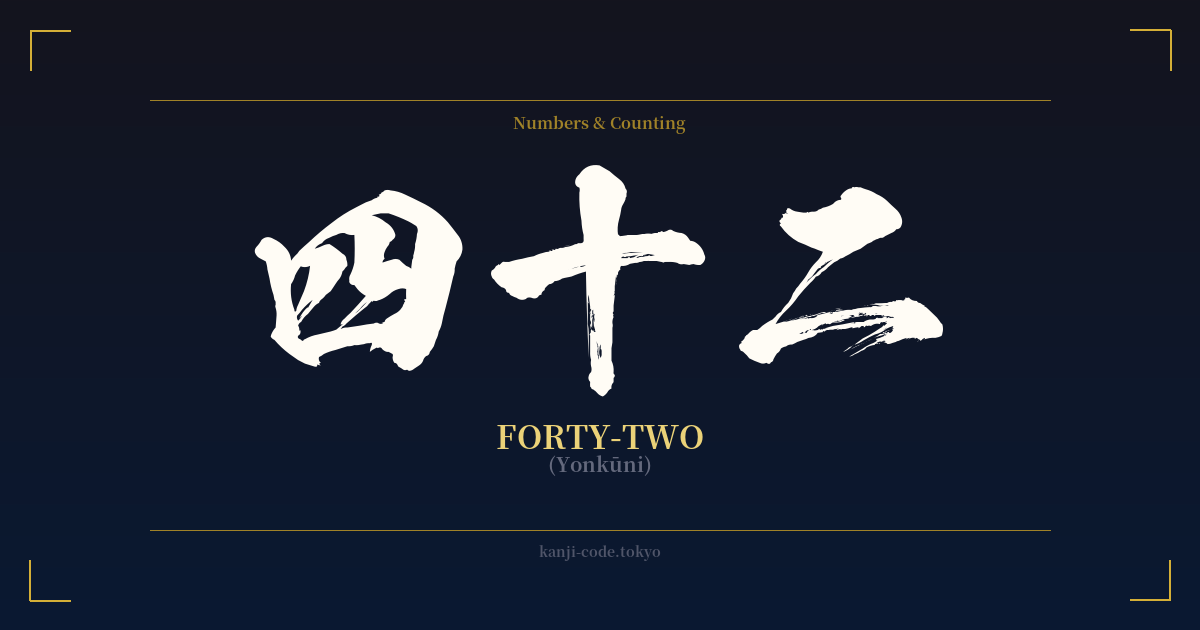
The same kanji can look dramatically different depending on the calligraphy style. Choose a font that matches the mood you want for your tattoo or design.
🎨 Tattoo Suitability
📐 Tattoo Design Guide
A tattoo of 四十三 is best suited for a design where personal significance outweighs universal symbolism. Because the characters are simple and well-known, the artistic execution is key to elevating it beyond a mere label.
– Placement: A vertical arrangement is the most traditional and aesthetically pleasing for multi-character kanji. Consider discreet placements like the inner wrist, along the forearm, behind the ear, or on the ankle, reflecting the personal nature of the number.
– Font Style: For a clean, modern look, a sans-serif Gothic or a classic Mincho typeface works well. To add more artistic flair and movement, a semi-cursive script like Gyōsho can connect the simple characters into a more fluid and visually interesting piece.
– Visual Tips: Since the meaning is not immediately apparent to non-speakers, consider incorporating it into a larger design that tells the story of why '43' is important to you. This could be a date, an age, or a symbolic number integrated with other imagery that provides context and personal meaning.
Comments