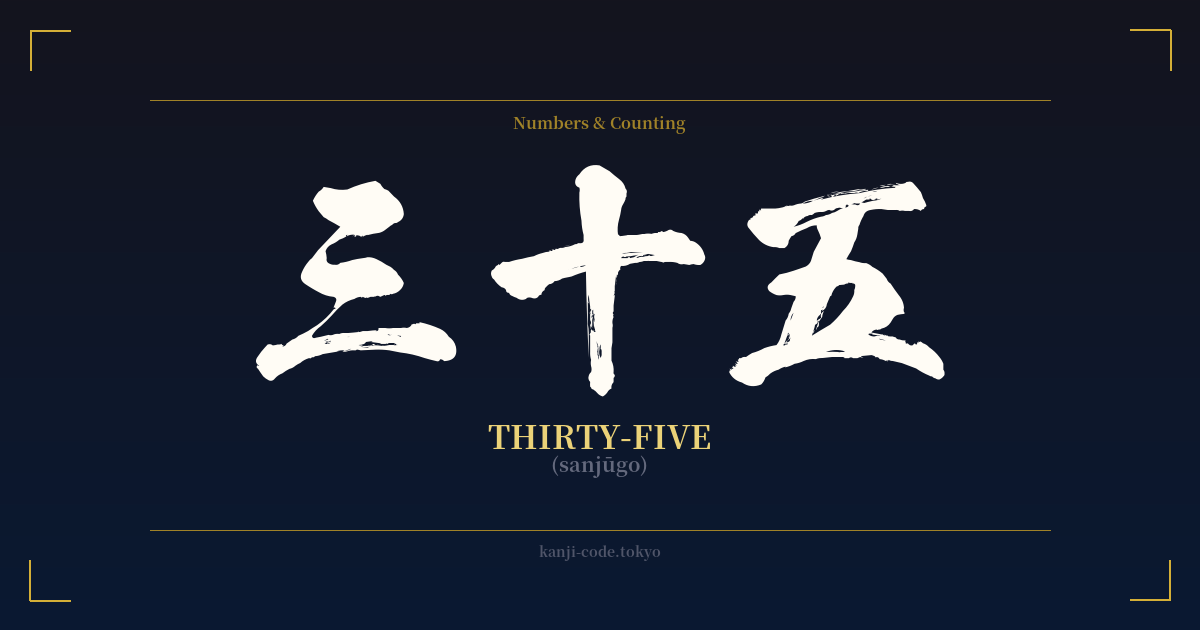
✍️ 三十五 (sanjūgo) — Cultural Context
The Japanese word 三十五 (sanjūgo) translates directly and literally to 'thirty-five.' Its construction is a perfect window into the logic of Japanese numerals. The system is straightforwardly mathematical: 三 (san) means three, 十 (jū) means ten, and 五 (go) means five. Put them together, and you get 'three-tens-five,' or thirty-five. This base-ten system makes learning to count in Japanese quite intuitive once you memorize the characters for one through ten, plus the characters for hundred, thousand, and so on.
Unlike certain numbers in Japanese culture that are imbued with deep meaning, 35 is largely neutral. It doesn't carry the ominous weight of 4 (四, shi), which is a homophone for death (死), or 9 (九, ku), which can sound like suffering (苦). Nor does it possess the auspicious connotations of 7 (七, shichi) or 8 (八, hachi), which are considered lucky.
Because of this neutrality, the number thirty-five exists in a purely functional space. It's an age, a price, a date, a chapter number, or a street address. It simply is what it is, without a second layer of symbolism. In Japanese culture, specific numbered ages hold great significance, but thirty-five is not one of them. For instance, the 'Shichi-Go-San' (七五三, 7-5-3) festival celebrates children reaching these auspicious ages. Later in life, people are wary of 'yakudoshi' (厄年), or unlucky years, which are traditionally 42 for men and 33 for women.
Thirty-five falls neatly between these major milestones, making it a relatively unremarkable age in a cultural sense. It represents a period of established adulthood, a time when one is often settled in a career and family life, but it doesn't have a specific ritual or public acknowledgment associated with it. This lack of inherent symbolism is precisely why it's such an unusual choice for something as permanent and expressive as a tattoo. While a number can hold immense personal meaning—a jersey number, an anniversary, a lucky number from a significant event—the word 三十五 itself does not carry that story. It is a blank slate, waiting for a personal narrative to give it context, a narrative that will almost certainly be lost on anyone who sees it.
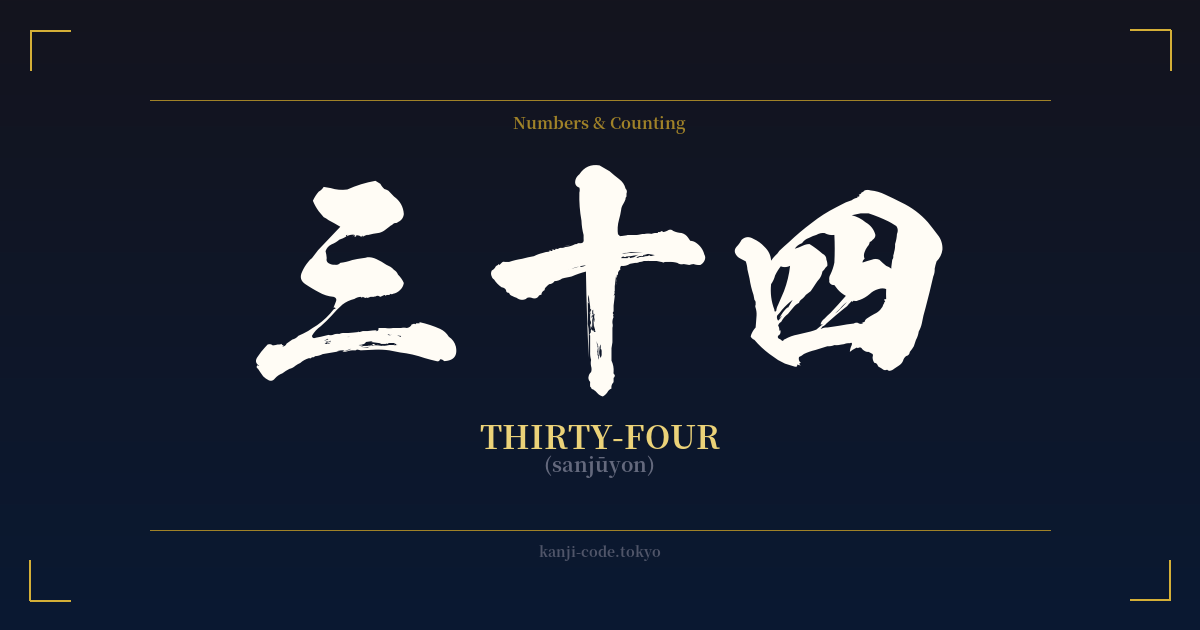
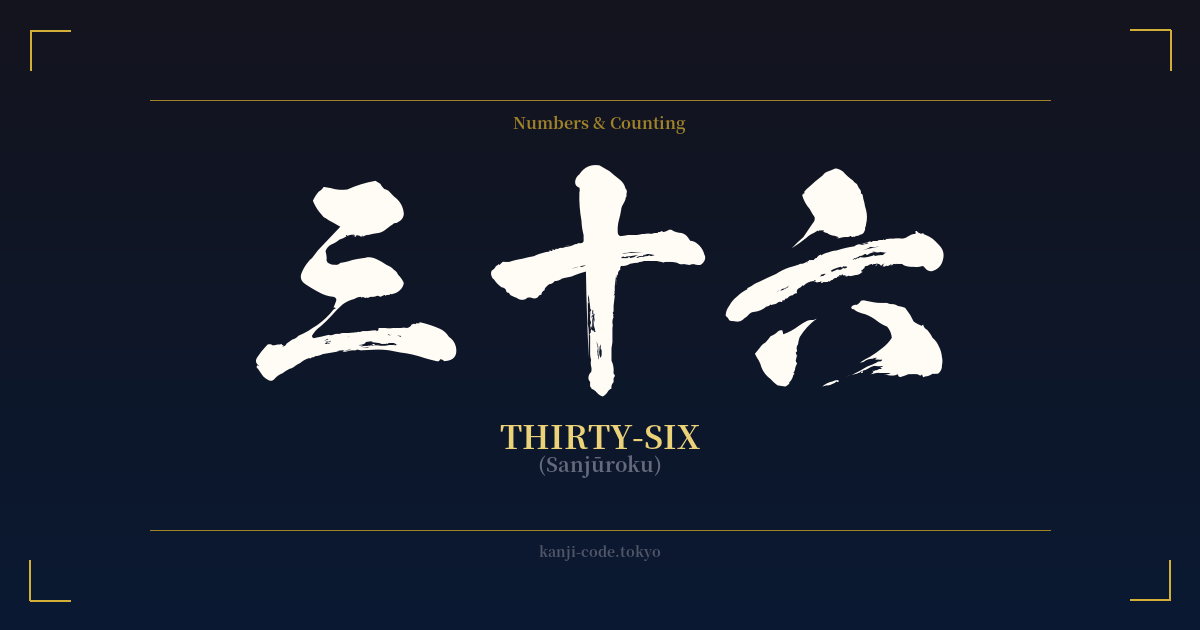
🖌️ Font Styles for 三十五
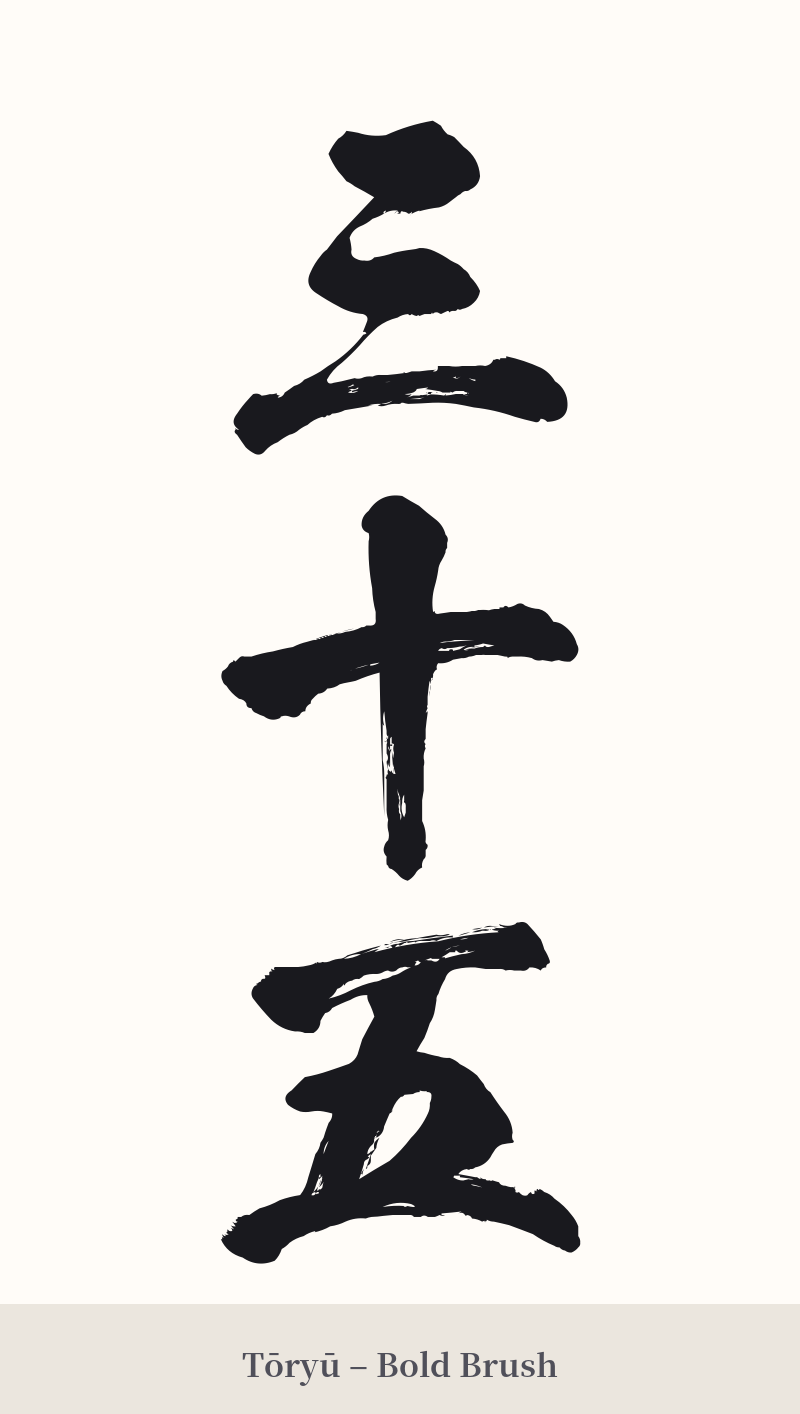
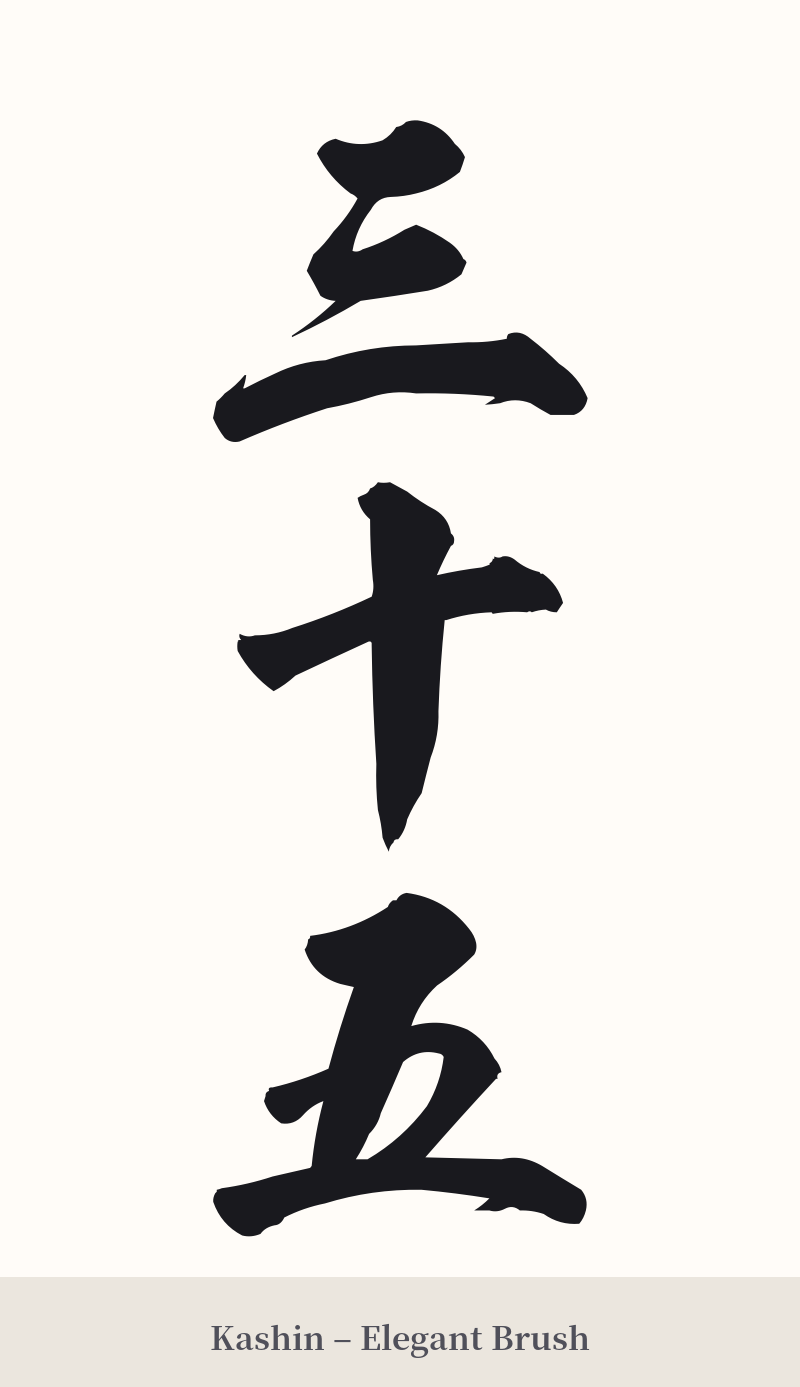
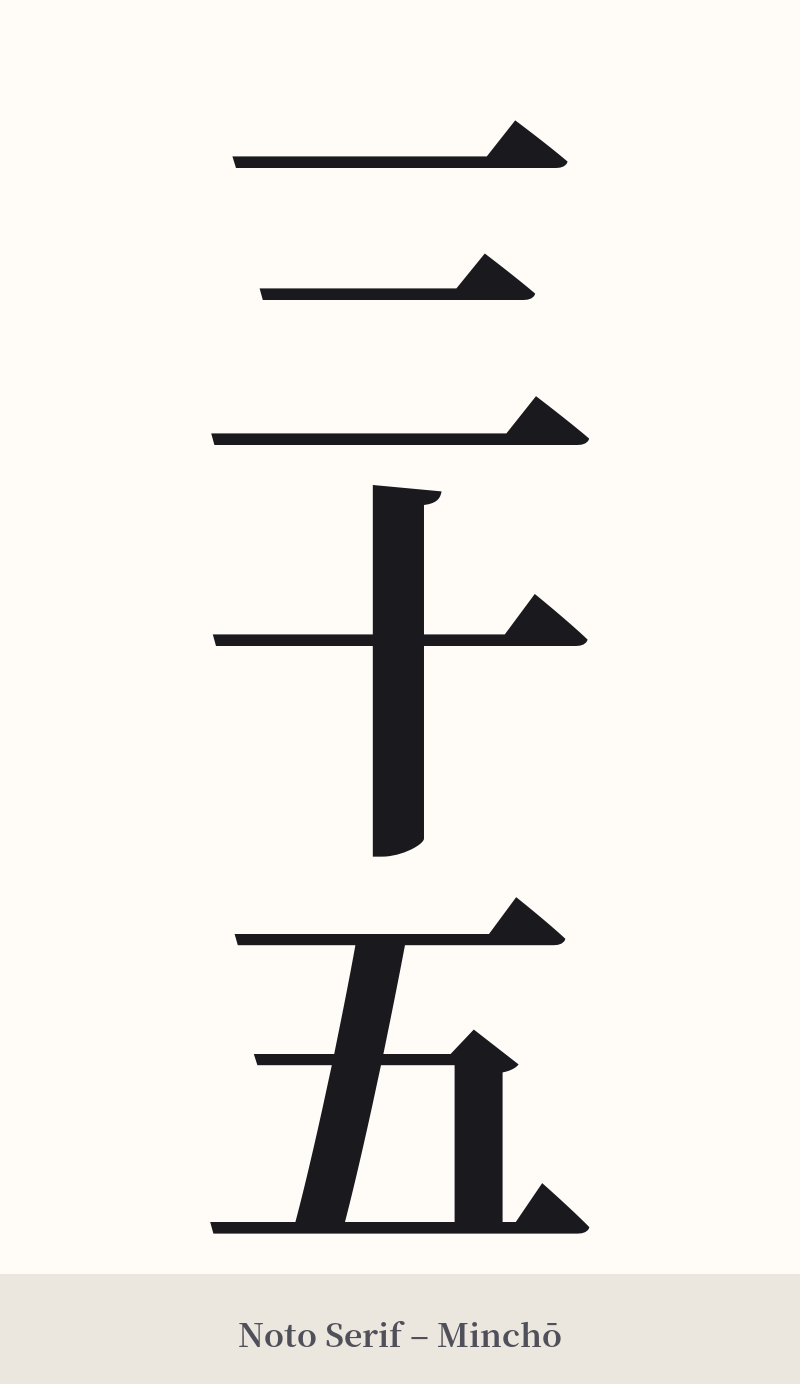
The same kanji can look dramatically different depending on the calligraphy style. Choose a font that matches the mood you want for your tattoo or design.
🎨 Tattoo Suitability
📐 Tattoo Design Guide
While 三十五 is not recommended as a standalone tattoo due to its lack of symbolic depth, if it holds a deep personal meaning for you, the design should be approached with care. The goal is to elevate it from a simple number into something more artistic.
– Orientation: A vertical alignment is the most traditional and aesthetically pleasing way to write multi-character Japanese words. This would place 三 at the top, followed by 十, and then 五 at the bottom. This format flows naturally and has a classic calligraphic feel.
– Font Style: Avoid standard, blocky computer fonts like Mincho or Gothic. These will make the tattoo look like a label. Instead, opt for a dynamic, hand-brushed calligraphy style (shodō). An expressive script with variation in line thickness and visible brush strokes can impart a sense of artistry and intention that a plain font lacks.
– Placement: Given its simple nature, a large, prominent placement like the back or chest might feel underwhelming. Consider a more discreet location that feels personal, such as the inner forearm, the ribs, or along the ankle. This frames it as a personal memento rather than a public declaration.
– Integration: The best way to use 三十五 in a tattoo is to incorporate it into a larger design that tells its story. If it's an anniversary, it could be woven into an image of a flower that bloomed at that time. If it's a sports number, it could be part of a more abstract piece representing motion and passion.
Comments