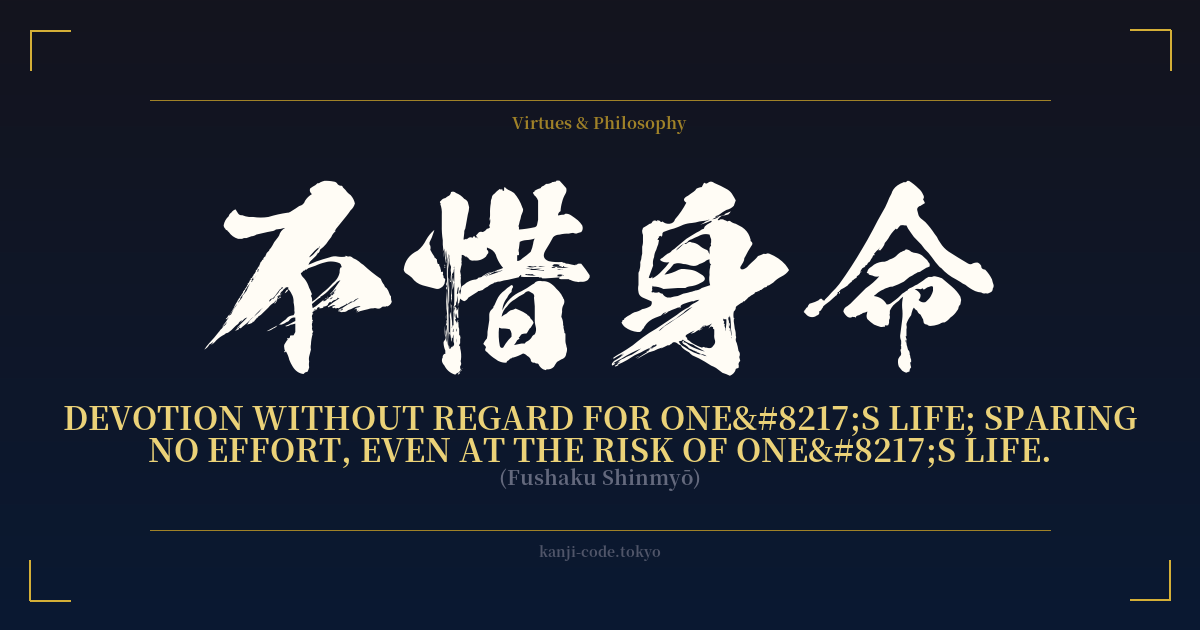
✍️ 不惜身命 (Fushaku Shinmyō) — Cultural Context
不惜身命 (Fushaku Shinmyō) is a four-character idiom that speaks to the pinnacle of selfless devotion. It translates to the willingness to give one's all, even life itself, for a greater purpose without a second thought or regret.
The phrase is composed of two parts: 不惜 (fushaku), meaning 'not sparing' or 'not begrudging,' and 身命 (shinmyō), meaning 'body and life.' Together, they create a powerful image of someone who does not hold back their physical self or their very existence when pursuing a goal or upholding a belief.
Its origins lie deep within Buddhist teachings, particularly in the Lotus Sutra. In these scriptures, 不惜身命 describes the Bodhisattvas, enlightened beings who postpone their own nirvana to help others. They dedicate themselves to spreading the teachings of the Dharma, sparing no effort and unafraid of sacrificing their own lives for the salvation of all sentient beings. This context imbues the phrase with a sense of noble, spiritual sacrifice rather than mere recklessness.
While its roots are religious, the concept has permeated secular Japanese culture. It resonates strongly with the ideals of dedication found in martial arts and the way of the warrior, Bushido, where loyalty and duty could demand the ultimate sacrifice. However, its application is much broader today.
In modern Japan, you might hear 不惜身命 used to describe a doctor working tirelessly to save patients, an artist who pours their entire being into their craft, a researcher pushing the boundaries of knowledge, or a first responder running toward danger. It signifies a commitment so profound that personal comfort and safety become secondary to the mission at hand.
To embrace the idea of Fushaku Shinmyō is to have a cause, a person, or a passion so important that you would dedicate your entire being to it. It’s a declaration of ultimate purpose and unwavering resolve, a concept that is both humbling and inspiring.
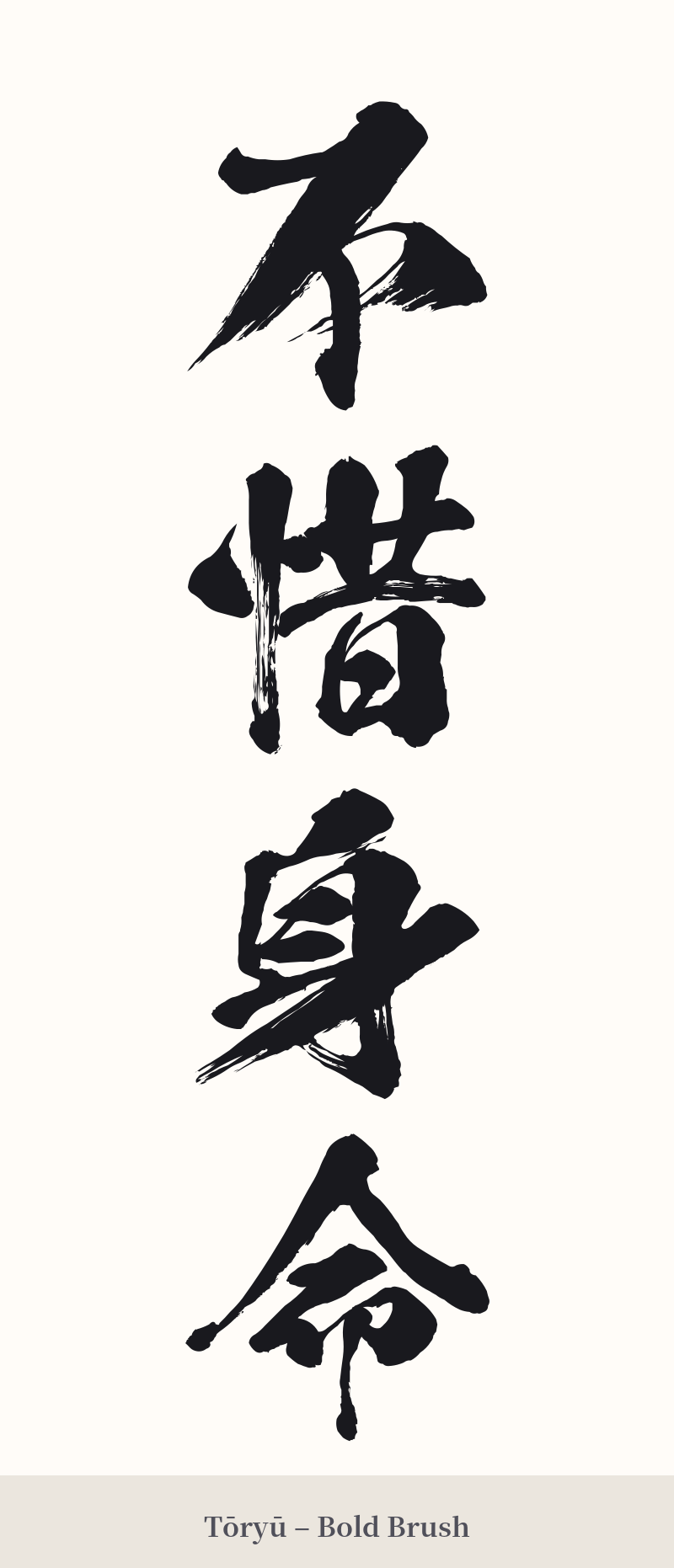
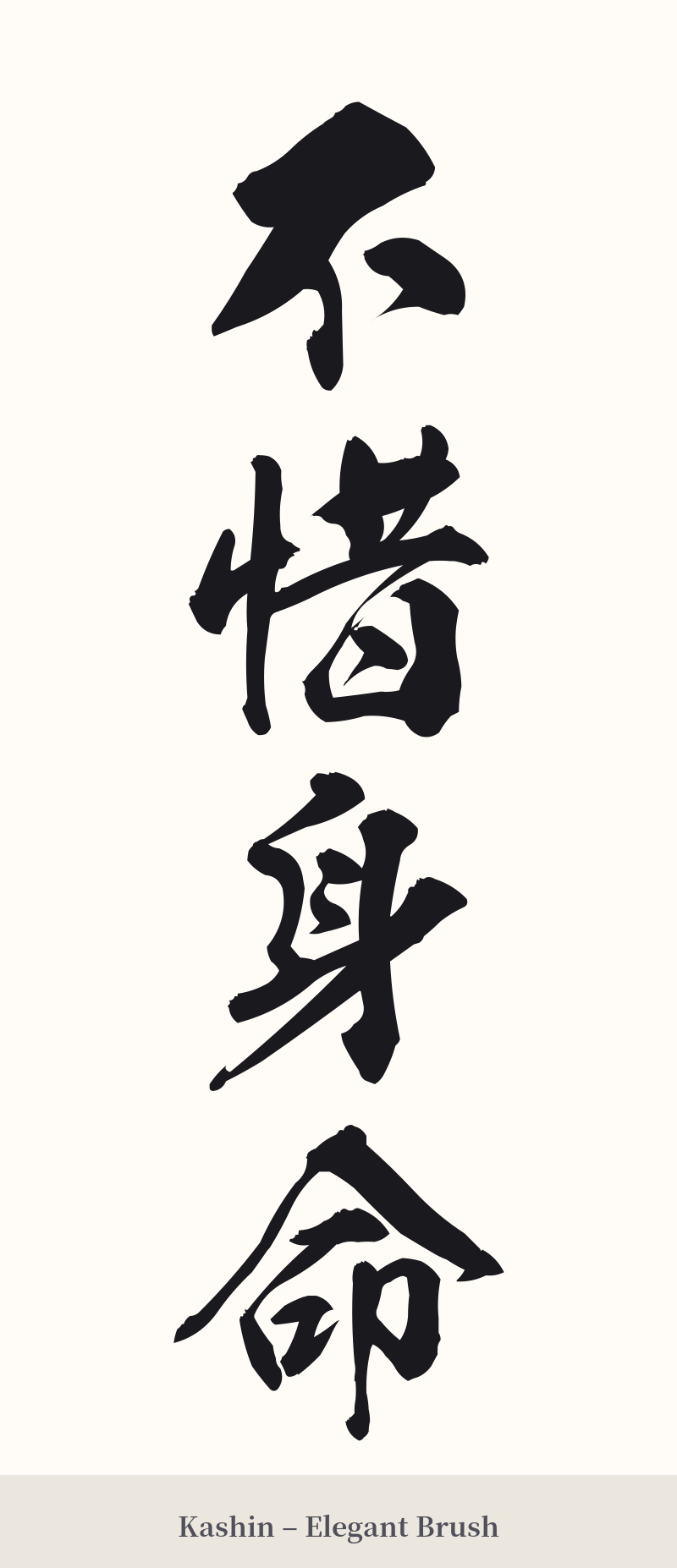
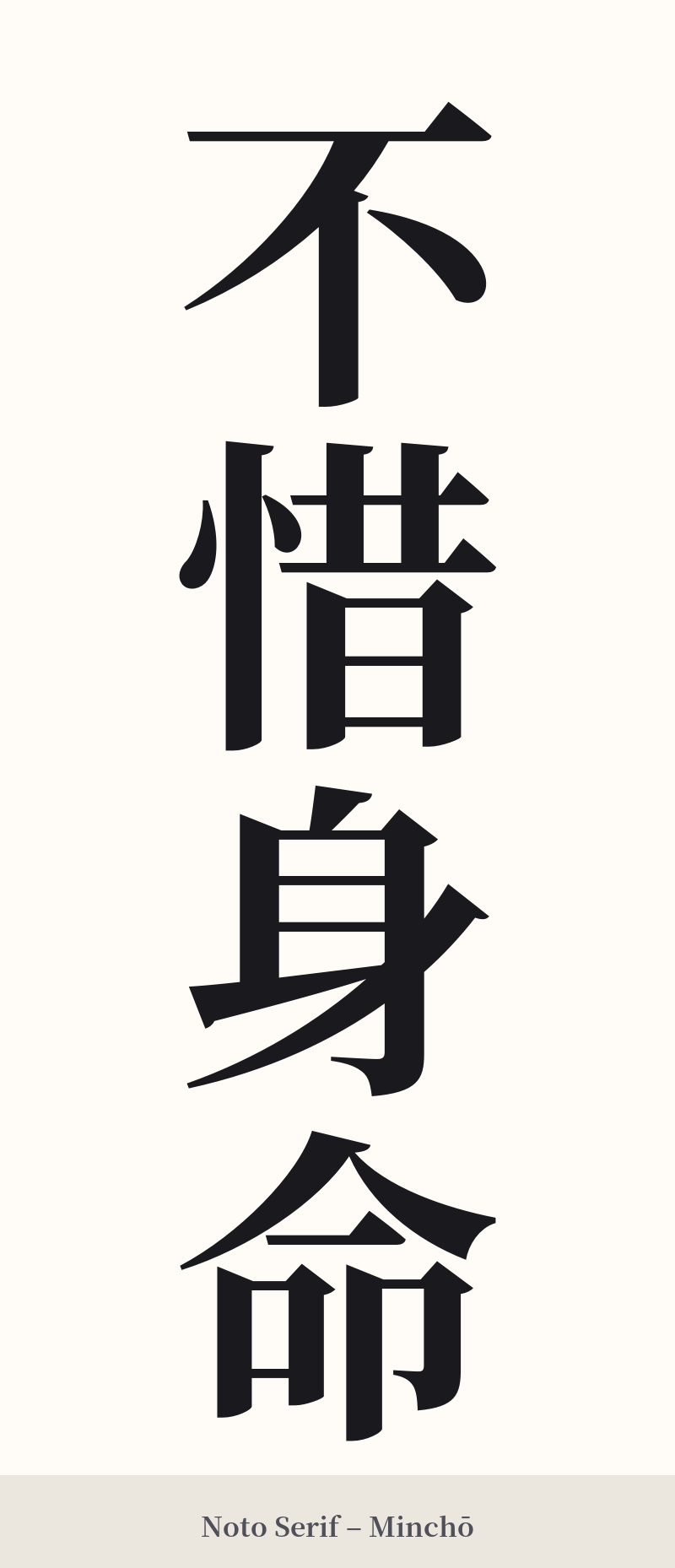
🖌️ Font Styles for 不惜身命
The same kanji can look dramatically different depending on the calligraphy style. Choose a font that matches the mood you want for your tattoo or design.
🎨 Tattoo Suitability
📐 Tattoo Design Guide
The power of 不惜身命 lies in its traditional form as a four-character idiom (yojijukugo). A vertical orientation is highly recommended to honor this tradition and create a visually striking design.
– Placement: A vertical layout is perfect for the spine, forearm, or calf. This allows the characters to flow downwards, creating a sense of gravity and importance. A horizontal placement across the chest or upper back can also work well.
– Font Style: The choice of script can dramatically alter the feel. A dynamic, semi-cursive calligraphy style (gyōsho) can emphasize the passion and unwavering commitment. For a more stoic and resolute feel, a clean, angular block script (kaisho) is an excellent choice. Avoid overly stylized or unreadable fonts that detract from the legibility and dignity of the phrase.
– Visual Elements: While the four kanji are powerful enough to stand alone, you could pair them with a simple, related motif. A single lotus flower blooming at the base could symbolize the purity of purpose emerging from sacrifice. However, be careful not to clutter the design; the kanji should always be the undeniable focal point.
Comments