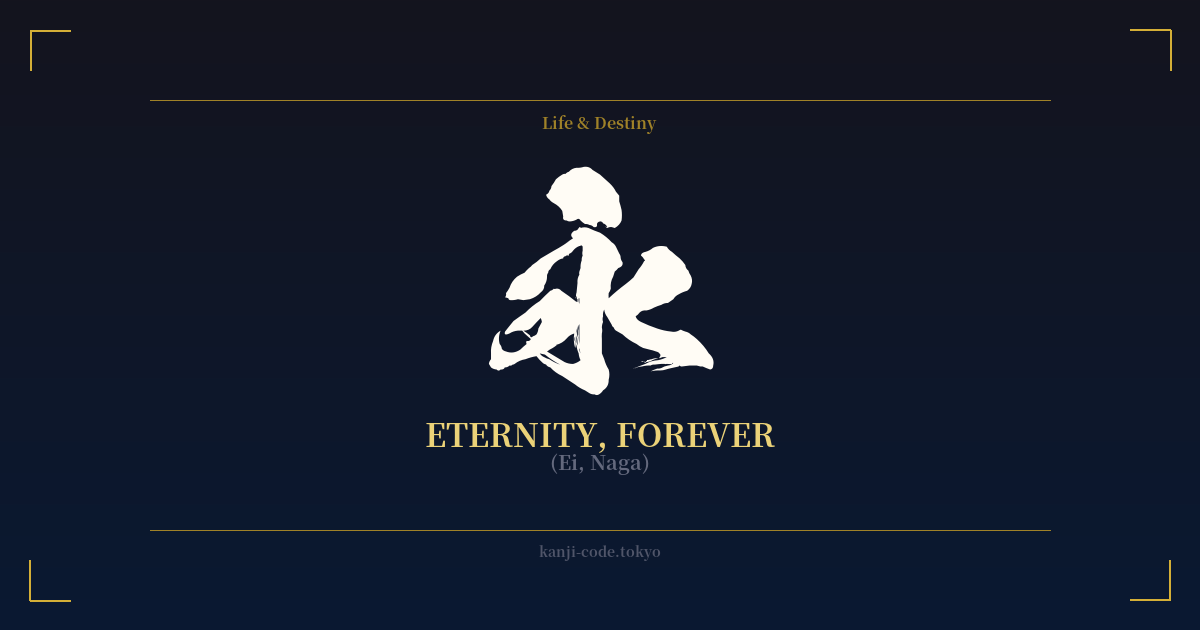
✍️ 永 (Ei, Naga) — Cultural Context
The kanji 永 (ei) is a simple yet profoundly beautiful character that encapsulates the vast concept of eternity, forever, and permanence. Its origins are believed to lie in a pictograph depicting a long, winding river, or perhaps a person swimming through its flowing current. This imagery powerfully conveys a sense of an endless, uninterrupted stream of time, flowing from the distant past into the far future.
In Japanese culture, 永 is not just an abstract idea but a tangible presence in language and philosophy. It is a cornerstone of concepts related to longevity, stability, and enduring states. You see it in words like 永住 (eijū), meaning 'permanent residence,' and in the poetic term 永眠 (eimin), or 'eternal sleep,' a gentle euphemism for passing away.
Perhaps the most fascinating cultural aspect of 永 is its central role in the art of calligraphy (書道, shodō). The character is the foundation of a teaching method known as 永字八法 (Eiji Happō), or 'The Eight Principles of the Character 永'. This principle states that the simple, five-stroke form of 永 contains the eight most fundamental brushstrokes required to write all other kanji. Aspiring calligraphers spend countless hours practicing this single character to master the essential techniques of flicks, sweeps, and stops. This makes 永 a symbol not just of eternity, but of foundational mastery and the disciplined pursuit of art.
Beyond calligraphy, the character taps into deep-seated values within Japanese spirituality. In Shintoism, it resonates with the reverence for nature's enduring cycles—the eternal mountains, the ageless seas, and the recurring seasons. In Buddhism, it can evoke the concept of kalpas, immeasurably long periods of time through which the cosmos evolves. As such, 永 can represent a desire for lasting peace, an unbreakable bond, or a connection to something timeless and greater than oneself. It is a quiet, powerful statement of endurance against the fleeting nature of the everyday.
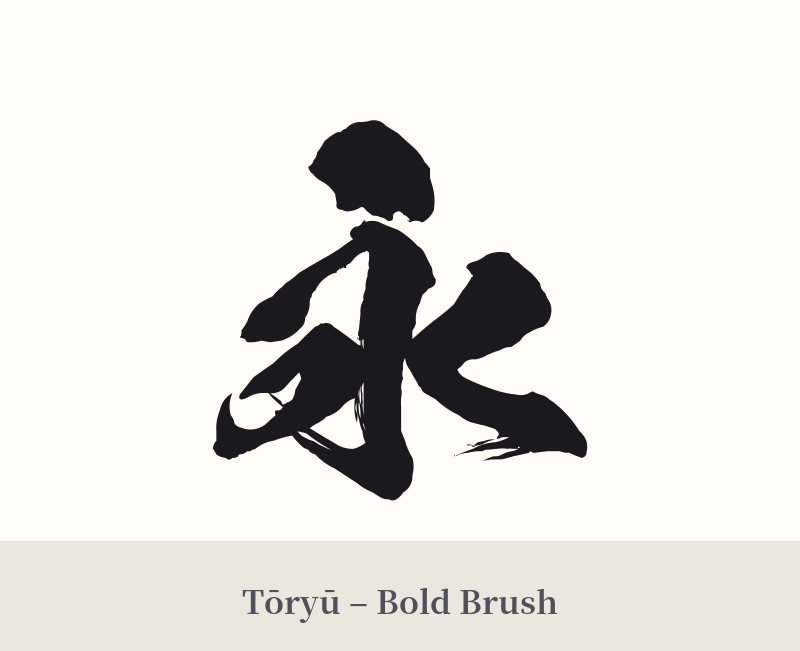
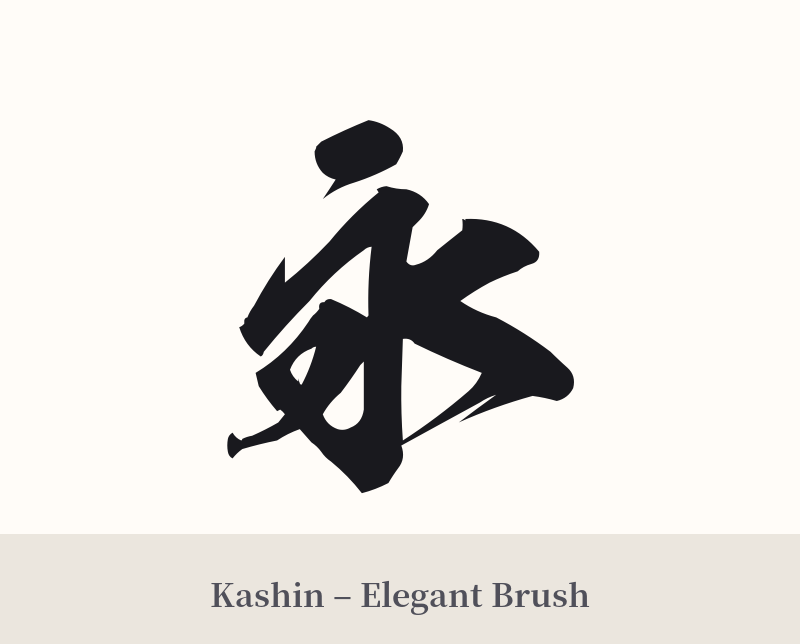
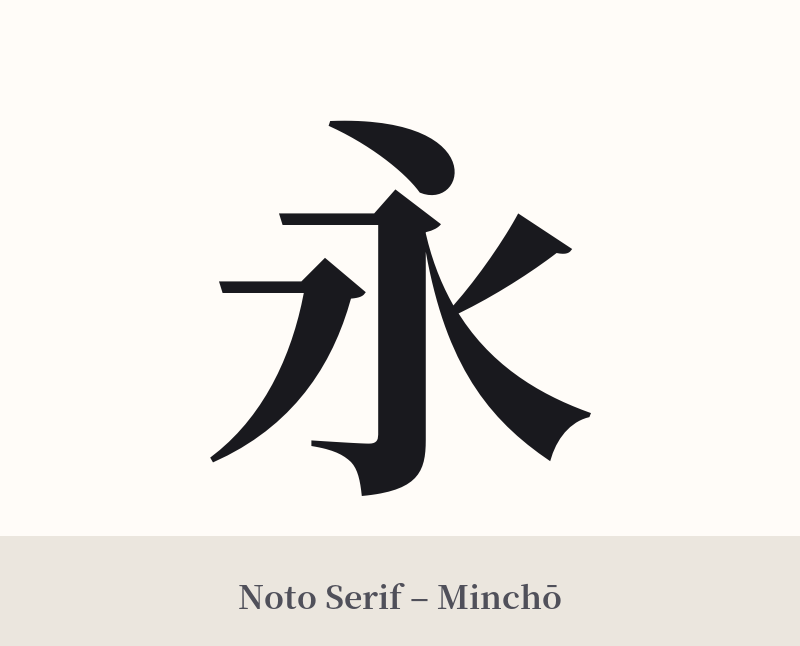
🖌️ Font Styles for 永
The same kanji can look dramatically different depending on the calligraphy style. Choose a font that matches the mood you want for your tattoo or design.
🎨 Tattoo Suitability
📐 Tattoo Design Guide
The kanji 永 offers remarkable design versatility due to its elegant simplicity.
– Placement: Its balanced, vertical form is well-suited for the spine, forearm, or along the ribs. For a more subtle statement, its simplicity allows it to work beautifully in smaller sizes on the wrist, ankle, or behind the ear.
– Font Style: A traditional calligraphy style (shodō) is a classic choice. A dynamic, semi-cursive script (gyōsho) can emphasize the 'flowing river' origin of the character, while a bold, formal script (kaisho) will give it a sense of stability and permanence. A minimalist, clean-lined font can also create a very modern and chic look.
– Visual Tips: Consider integrating 永 with other elements to deepen its meaning. Pairing it with an Enso circle can represent eternity within the cycle of life and enlightenment. A subtle background of flowing water or waves can pay homage to its pictographic roots. For color, a classic black ink is timeless, but a deep red can symbolize an eternal passion or bond.
Comments