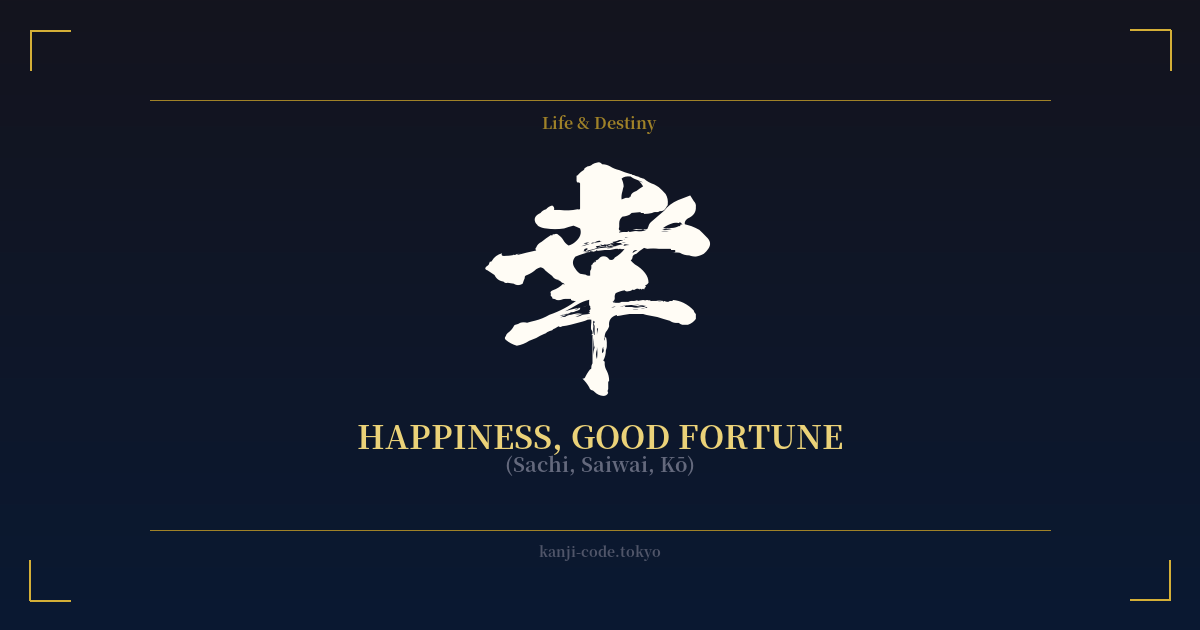
✍️ 幸 (Sachi, Saiwai, Kō) — Cultural Context
The kanji 幸 (sachi, saiwai) is one of the most cherished and ubiquitous characters in the Japanese language, a symbol of pure positive aspiration. You see it everywhere: on New Year's cards wishing for a year filled with good fortune (幸多き年, sachi ōki toshi), in wedding speeches celebrating a couple's happiness (幸せ, shiawase), and woven into countless personal names like Sachiko (幸子, child of fortune) or Miyuki (美幸, beautiful fortune).
Its presence in everyday life suggests a simple, bright concept. However, the character's origin story reveals a much darker and more profound philosophy. Etymologically, 幸 is derived from ancient oracle bone script pictographs of handcuffs or shackles. This symbol of restraint and punishment seems like the very antithesis of happiness, yet its evolution is the key to its meaning.
In ancient legal systems, punishment could range from fines to physical mutilation or execution. If an individual committed a crime and was sentenced merely to be shackled, they had escaped a far worse fate. They were still alive, their body was intact. This narrow avoidance of catastrophe—this relief—was the original form of 'good fortune.' Happiness, in this ancient context, was not the presence of joy but the absence of utter disaster. It was a profound sense of gratitude for having been spared.
This origin story is perfectly encapsulated in the Japanese proverb 不幸中の幸い (fukōchū no saiwai), which translates to 'a stroke of luck in the midst of misfortune' or 'a blessing in disguise.' It reflects a mature, resilient worldview where happiness isn't a constant state but a precious outcome often defined by the hardships it overcomes. The character 幸 reminds us that true contentment can be found in appreciating what we have by acknowledging what we could have lost.
In modern Japanese, the nuance continues. The word 幸せ (shiawase) generally refers to a personal, subjective feeling of happiness and contentment in one's life. The reading 幸 (sachi), on the other hand, often carries a sense of a greater blessing, a more profound fortune, or a gift from fate. While both stem from the same character, they capture different shades of a universally desired state, one rooted in the deep cultural understanding that light is most brilliant when contrasted with shadow.
🖌️ Font Styles for 幸
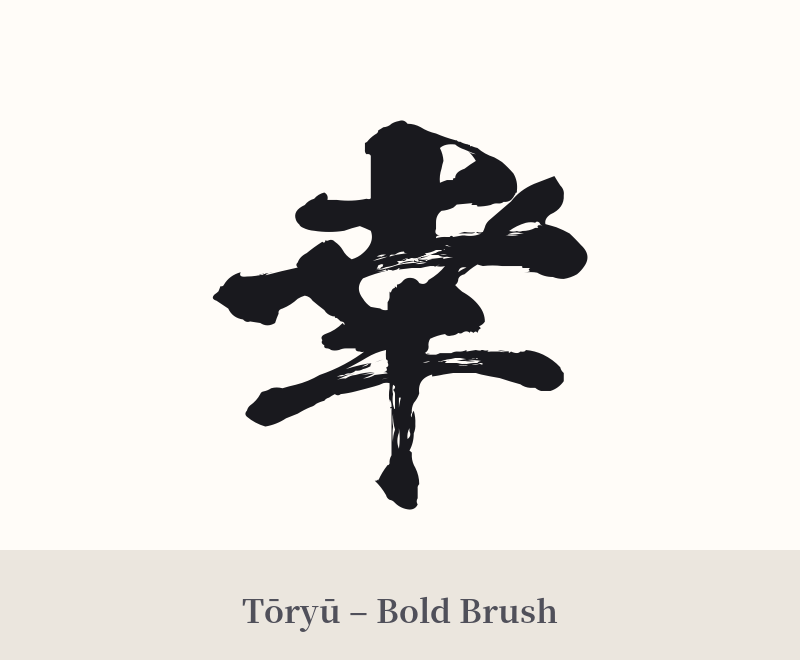
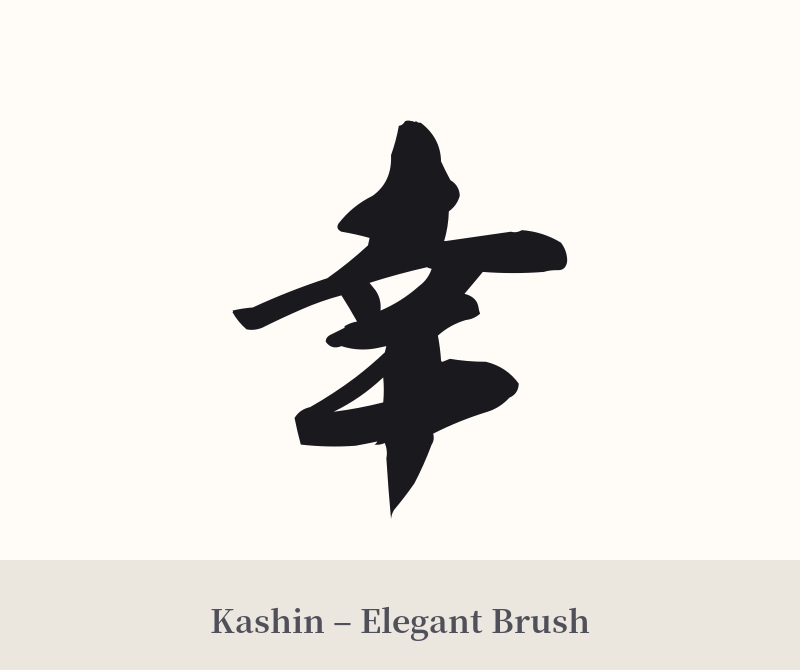
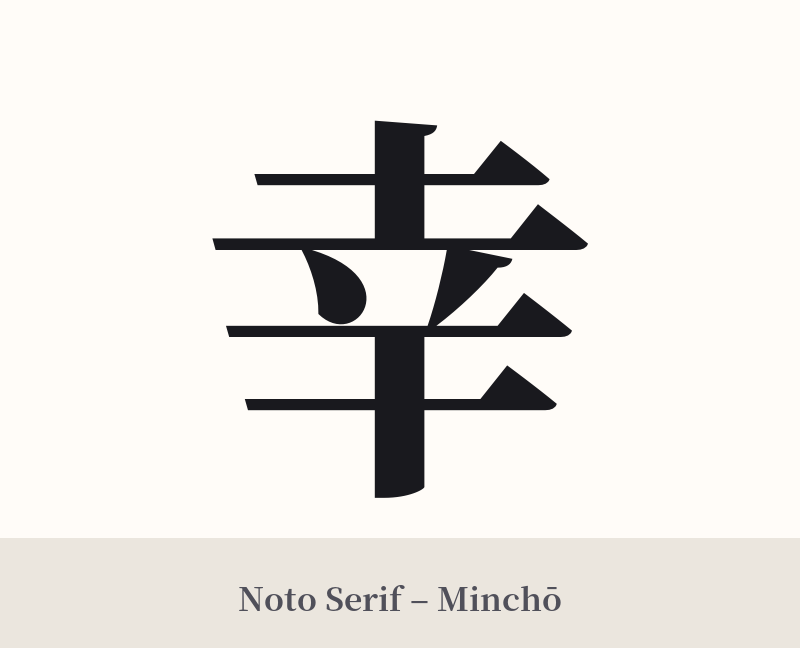
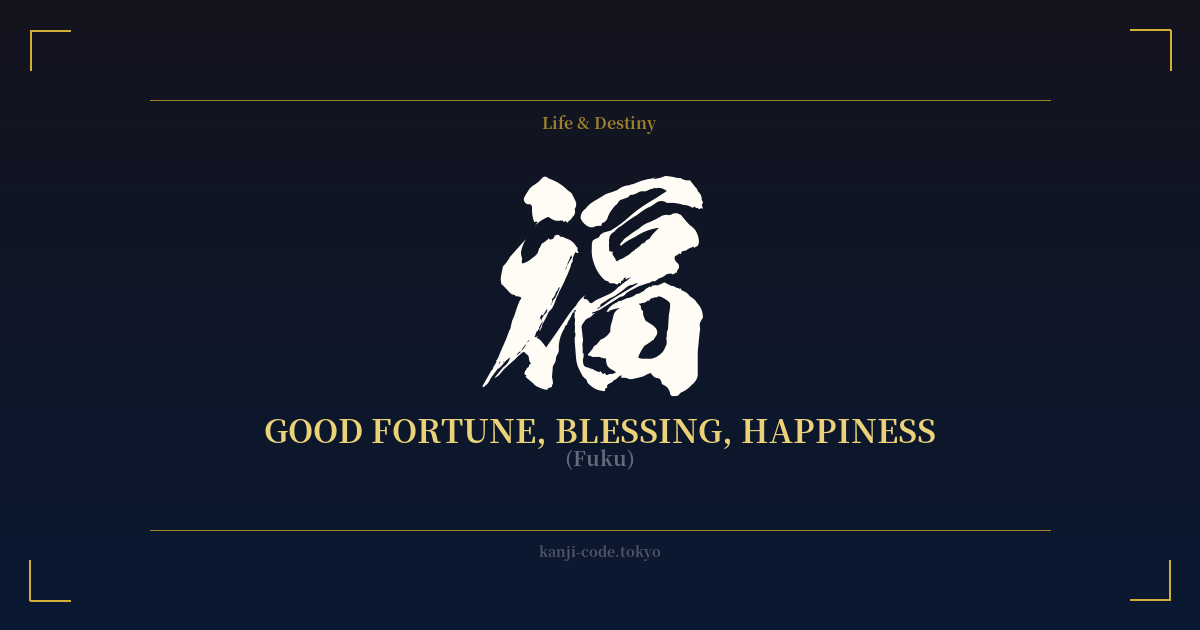
The same kanji can look dramatically different depending on the calligraphy style. Choose a font that matches the mood you want for your tattoo or design.
🎨 Tattoo Suitability
📐 Tattoo Design Guide
The kanji 幸 is an excellent choice for a tattoo due to its positive meaning and clean aesthetic. Its simplicity allows for a great deal of versatility in design.
– Placement: Because of its compact and balanced shape, 幸 works beautifully in small, personal locations like the inner wrist, behind the ear, on the ankle, or over the heart. For a larger statement, it can be inked on the forearm, shoulder blade, or the nape of the neck, where its simple elegance can be appreciated.
– Font Styles: A standard block script (Kaisho) emphasizes its classic, timeless quality. For a more artistic and fluid look, a semi-cursive style (Gyosho) adds a touch of movement and personality. A full cursive script (Sosho) can render it into a highly abstract and unique piece of art, almost like a personal sigil.
– Visual Combinations: Consider pairing 幸 with other symbolic imagery. Placing it within an ensō circle can represent the pursuit of happiness within the cycle of life. Combining it with a cherry blossom (sakura) could symbolize the beautiful but fleeting nature of happiness, while pairing it with a koi fish can represent the good fortune that comes from perseverance.
Comments