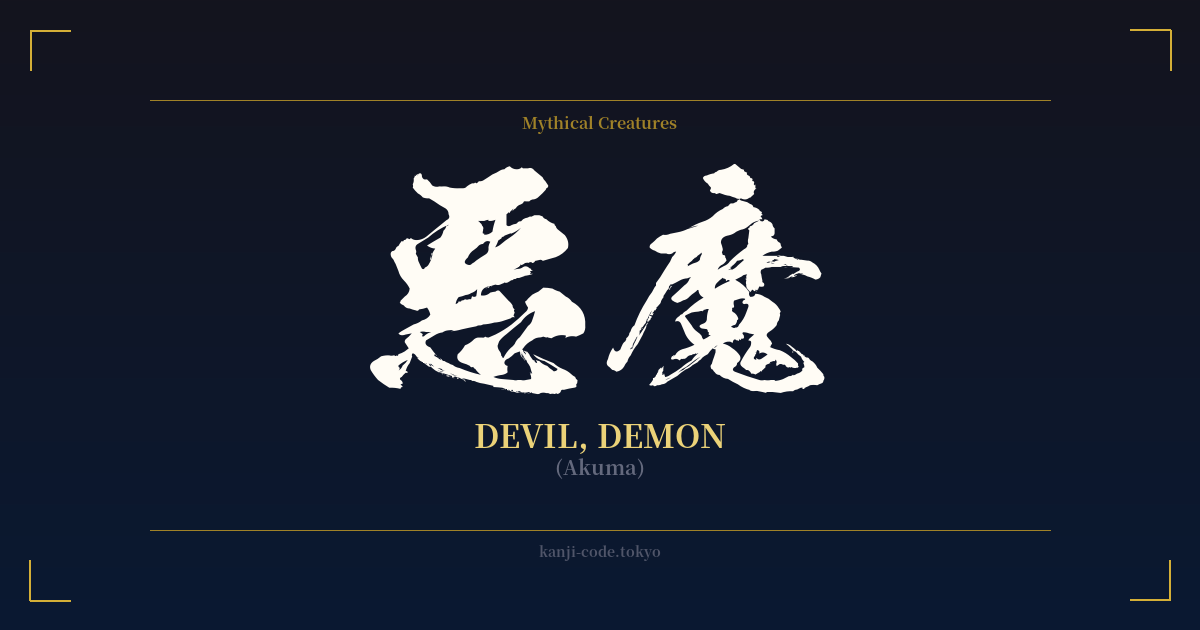
✍️ 悪魔 (Akuma) — Cultural Context
The word 悪魔 (Akuma) is the quintessential Japanese term for 'devil' or 'demon,' a concept with deep roots in religious and mythological traditions. Composed of the kanji for 'evil' (悪) and 'demon' (魔), the term is direct and potent, leaving little room for misinterpretation. Its origins in Japan are heavily tied to the introduction of Buddhism, where it was used to describe Mara, a supernatural being who tempted the historical Buddha, Siddhartha Gautama, by trying to seduce him with visions of beautiful women.
This distinguishes Akuma from native Japanese spirits or monsters like Oni (鬼) or Yokai (妖怪). While an Oni is a brutish, often red-skinned ogre from folklore who might be defeated by a clever hero, an Akuma is closer to the Abrahamic concept of a Devil or Satan—a fundamental force of malevolence, temptation, and spiritual corruption. Akuma are often depicted as intelligent, cunning beings who seek to lead humans astray and claim their souls, operating on a more metaphysical plane than the physically imposing Oni.
In classical literature and art, Akuma were figures of ultimate dread, embodying the antithesis of divine order and purity. They were the architects of suffering and the lords of Jigoku (地獄), the Japanese Buddhist hell. This portrayal cemented their place as symbols of absolute evil in the cultural consciousness.
However, modern Japanese pop culture has dramatically reshaped the image of the Akuma. In countless anime, manga, and video games, from 'Devilman' to 'Blue Exorcist' and 'Chainsaw Man,' the Akuma has been reimagined. They are often portrayed as anti-heroes, tragic figures bound by a curse, or even misunderstood protagonists. This modern take explores themes of harnessing dark power for good, fighting one's inner demons (sometimes literally), and questioning the binary of good versus evil. The character Akuma (Gouki in Japan) from the 'Street Fighter' series is a perfect example—a warrior who has embraced a dark power to achieve ultimate strength, embodying both immense power and self-imposed isolation. This evolution has made 悪魔 a symbol not just of evil, but also of forbidden power, rebellion, and complex morality.
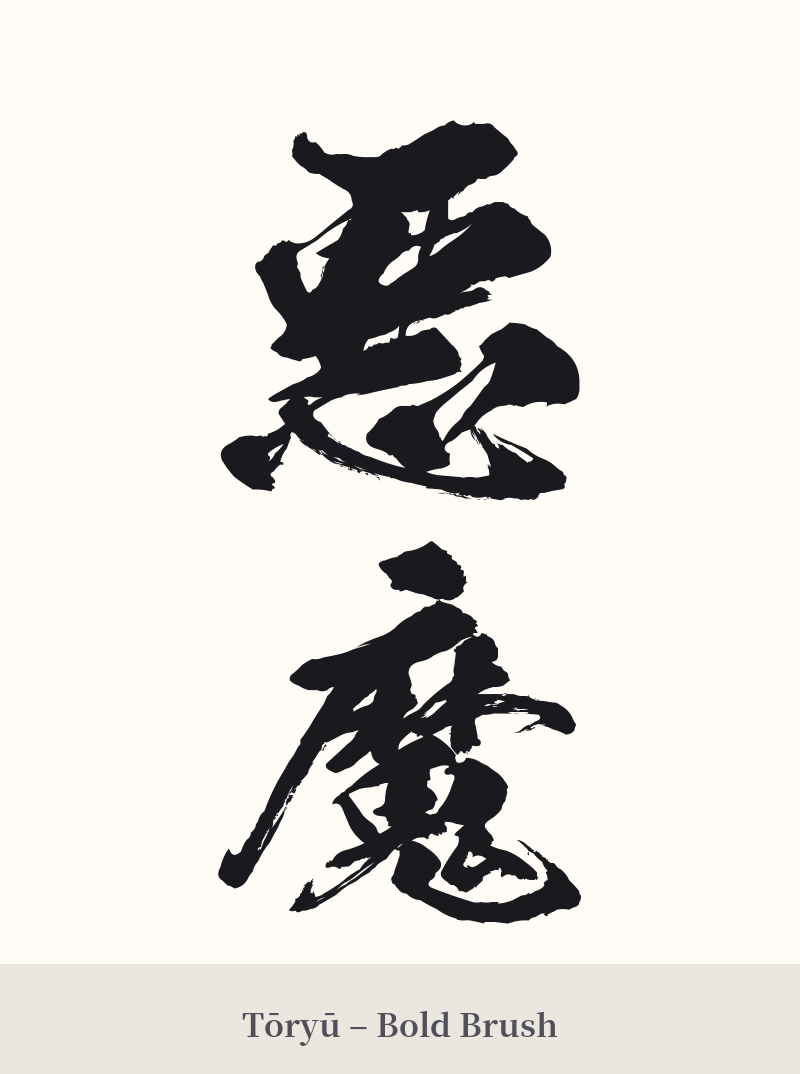
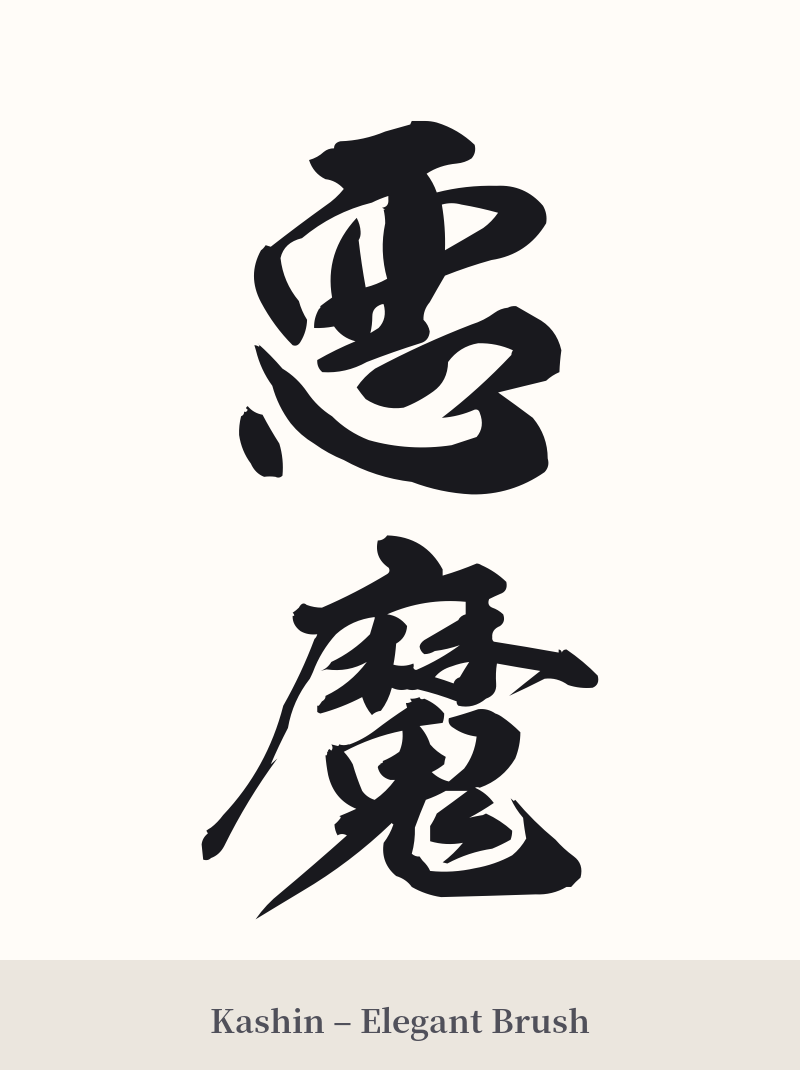
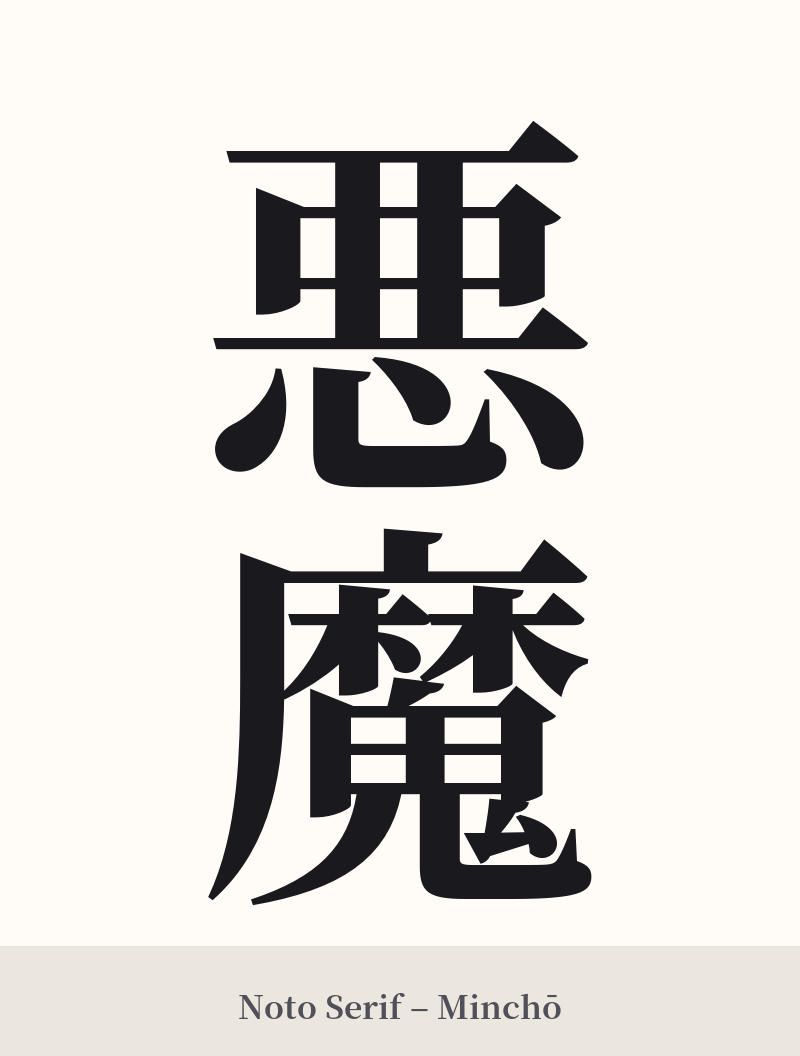
🖌️ Font Styles for 悪魔
The same kanji can look dramatically different depending on the calligraphy style. Choose a font that matches the mood you want for your tattoo or design.
🎨 Tattoo Suitability
📐 Tattoo Design Guide
The kanji 悪魔 (Akuma) offers a powerful visual that suits a bold tattoo design. Due to the complexity, especially of the second character 魔, it requires careful consideration of style and placement.
– Placement: This design benefits from space. Consider larger areas like the back (either centered vertically along the spine or across the shoulder blades), the chest, or the length of a forearm or calf. These placements allow a tattoo artist to render the 21 strokes of 魔 without it becoming a blur over time.
– Style: A dramatic, expressive calligraphy style (shodō) can emphasize the chaotic and powerful nature of the word. A thick, gritty brushstroke can convey raw energy. Alternatively, a sharp and precise Mincho-style font can give it a more menacing, refined, and sinister feel.
– Visuals: Consider a vertical orientation, which is traditional and visually striking. You can enhance the design by incorporating related imagery. Red or black ink is classic, but a 'blood-splatter' effect or dark, smoky tendrils weaving around the characters could amplify the demonic theme. Pairing it with a Hannya mask or lotus flowers in dark colors can add layers of Japanese symbolism.
Comments