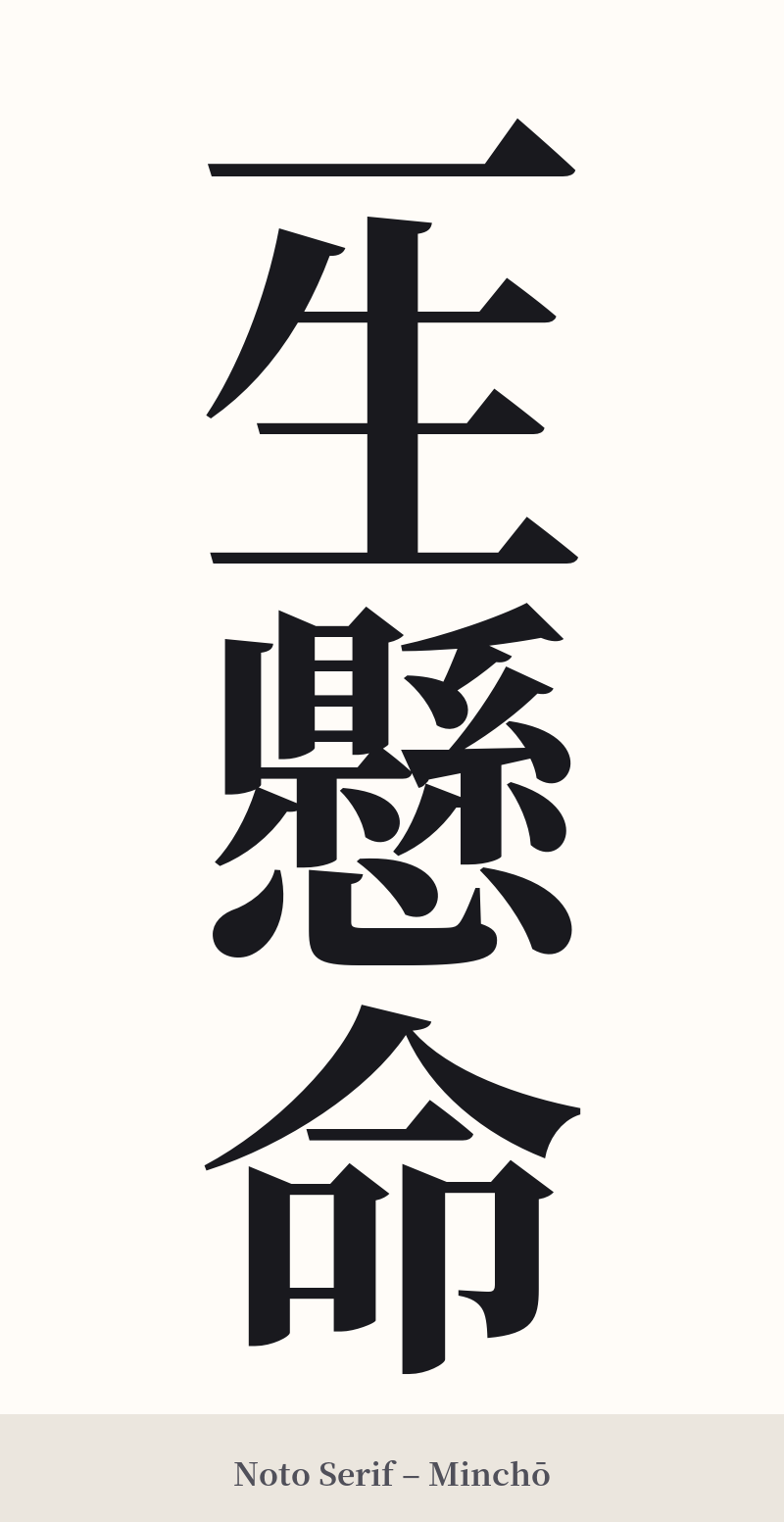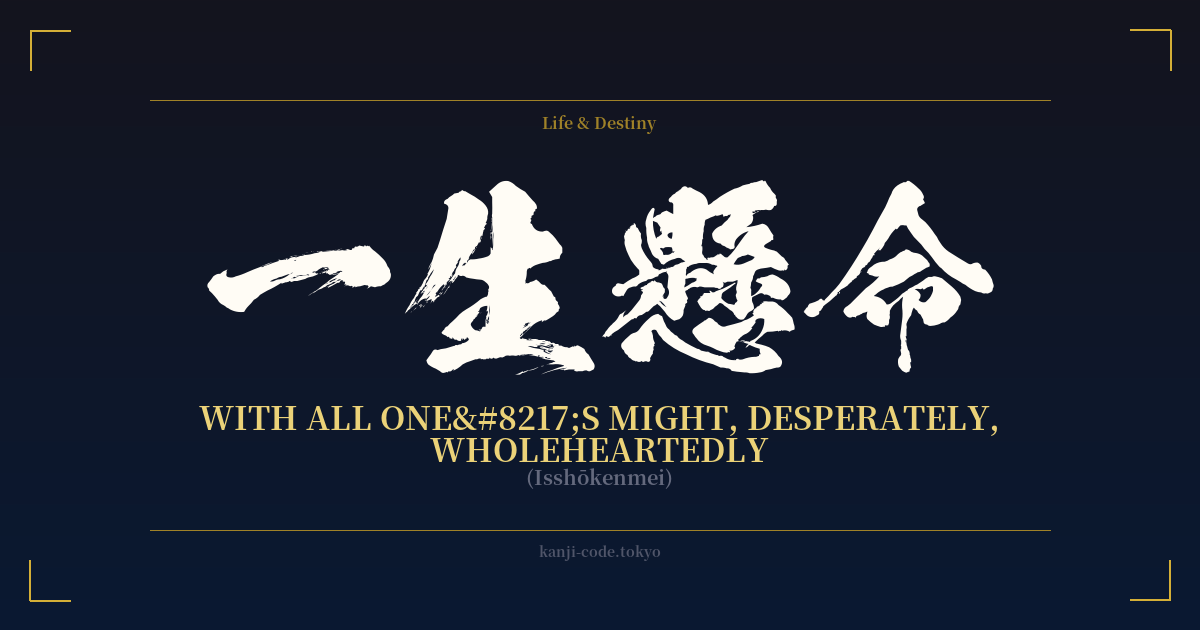
一生懸命 (With all one’s might, desperately, wholeheartedly): Meaning & Origin – Japanese Kanji Design

🌟 Life & Destiny

✍️ 一生懸命 (Isshōkenmei) — Cultural Context

一生懸命 (Isshōkenmei) is more than just a phrase in Japan; it's a deeply ingrained cultural concept that embodies the spirit of doing something with all of one's might, wholeheartedly, and with a level of desperation that leaves no room for regret.

To truly understand its weight, we must look to its historical roots in the age of the samurai. The original expression was actually 一所懸命 (Issho Kenmei). In this version, the character 所 (sho) means 'place'. For a samurai during the Kamakura period, this 'one place' referred to the plot of land granted to them by their lord. This land was their entire livelihood, their family's security, and the source of their status. They were expected to manage and defend this single place with their lives. Thus, 'Issho Kenmei' literally meant 'to hang one's life on one place'. It was a pledge of life-or-death defense over what mattered most.

Over centuries, as the feudal system waned and society changed, the phrase evolved. The character 所 (sho, place) was gradually replaced by the homophonous character 生 (shō, life). This subtle shift had a profound impact on the meaning. The focus moved from defending a physical 'place' to dedicating one's entire 'life' (一生, isshō) to a task. This evolution made the concept universally applicable to anyone, not just landowners or warriors.

Today, 一生懸命 is a cornerstone of the Japanese work ethic and mindset. It's the spirit a student channels while studying for university entrance exams, the focus an athlete brings to their training for the Olympics, and the dedication a craftsman pours into perfecting their art. It is the opposite of doing something half-heartedly. It signifies a total, all-consuming commitment where you pour every ounce of your energy, spirit, and being into the endeavor at hand. It's a powerful declaration of intent, promising to try so hard that, regardless of the outcome, you will have no regrets about the effort you've given.

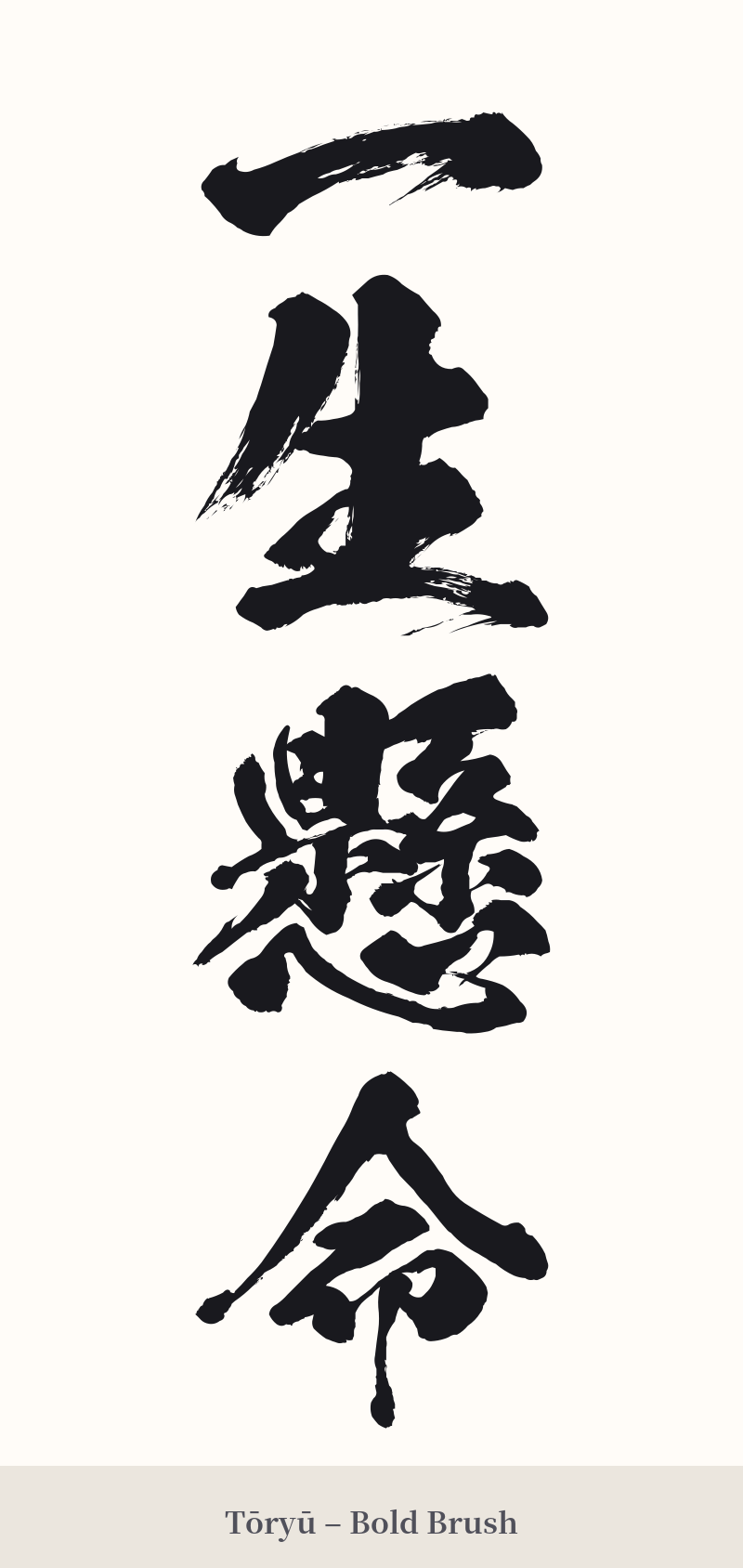
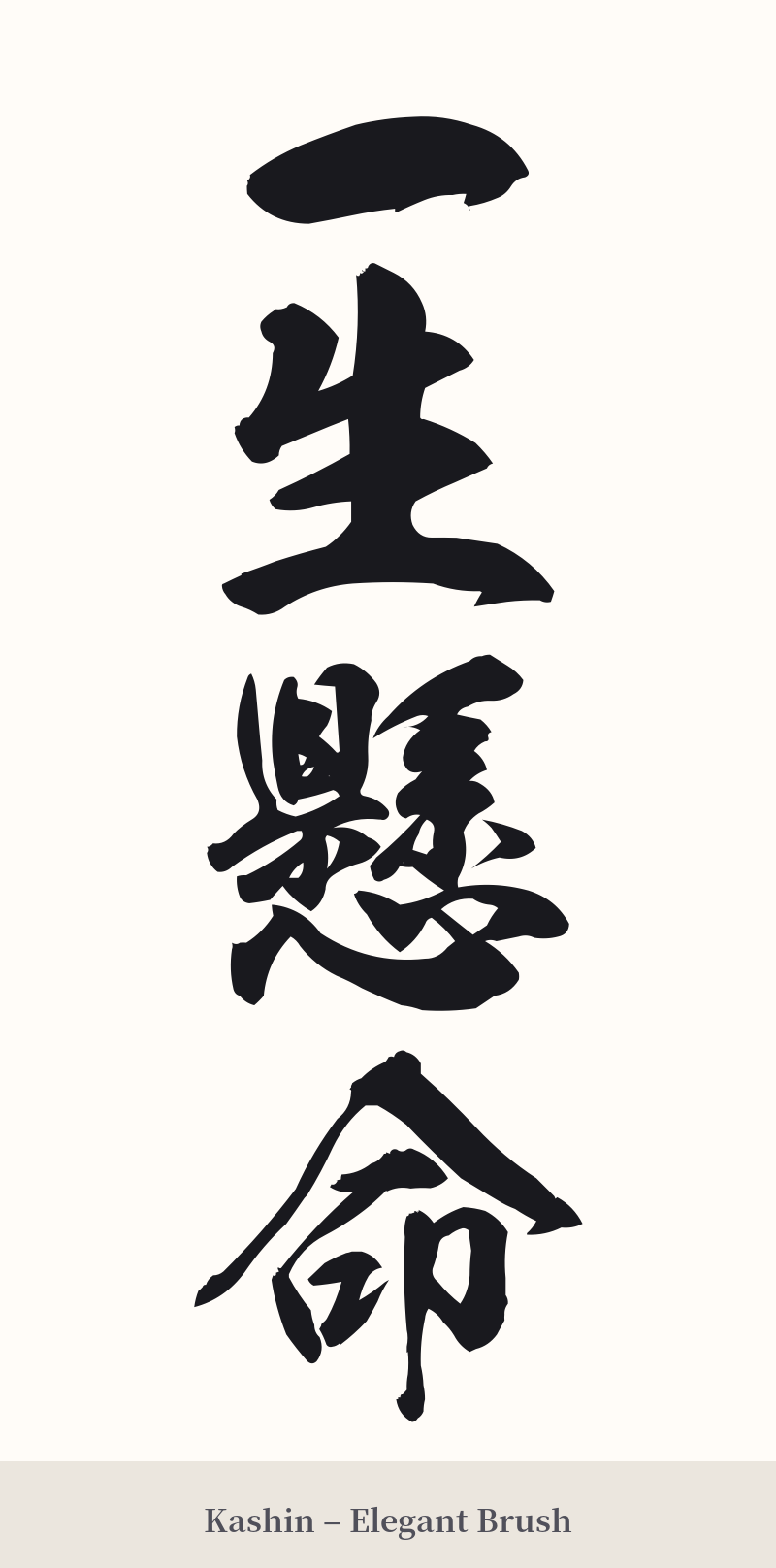
🖌️ Font Styles for 一生懸命

The same kanji can look dramatically different depending on the calligraphy style. Choose a font that matches the mood you want for your tattoo or design.
🎨 Tattoo Suitability

★★☆ Moderately Suitable
This is a very famous and powerful idiom representing total dedication, making its meaning profound. However, the high stroke count of the third character (懸) makes it challenging for clear tattooing, especially at smaller sizes, which lowers its overall suitability.
⚠️ Cultural Note: The character 懸 is extremely complex (20 strokes). A highly skilled artist is essential to prevent the lines from blurring into an illegible blob over time. This design requires a significant amount of space to be legible long-term.

📐 Tattoo Design Guide

A four-character idiom like 一生懸命 offers a classic and powerful aesthetic for a tattoo.

– Placement: Vertical alignment is the most traditional and visually striking way to display this phrase. It works exceptionally well along the spine, forearm, or calf, where its length can be emphasized. A horizontal placement across the chest or upper back is also a strong option.

– Size: Due to the complexity of the third character, 懸 (ken), this design should not be small. A larger size is necessary to ensure the individual strokes remain clear and don't blur together over time. Discuss the minimum viable size with your artist.

– Style: A dynamic, semi-cursive calligraphy style (Gyōsho) can capture the energy and desperation inherent in the word. For a more stoic and resolute feel, a clean, architectural block script (Kaisho) is an excellent choice. Avoid overly ornate fonts that could obscure the already-complex characters.
🔍 Kanji Breakdown: 一生懸命

Pronounced 'ichi' or 'is-', this is the kanji for 'one'. As the simplest character, it represents a beginning, a single unit, or the concept of wholeness. Here, it begins the compound 'isshō' (一生), meaning 'one life'.
Pronounced 'shō', this character means 'life', 'birth', or 'to live'. Paired with '一', it forms 一生 (isshō), which translates to 'one's whole life', establishing the scale of the commitment described by the phrase.
Pronounced 'ken', this is the most complex character in the phrase, meaning 'to hang' or 'to suspend'. It evokes the powerful image of putting something on the line or betting everything on a single endeavor, capturing the 'desperate' nuance of the term.
Pronounced 'mei', this character means 'life', 'fate', or 'destiny'. Its inclusion at the end solidifies the meaning, implying that one is putting their very life or fate (命) on the line, making the effort a matter of ultimate importance.

❓ Frequently Asked Questions

What's the difference between 一生懸命 (Isshōkenmei) and the older 一所懸命 (Issho Kenmei)?
The original form, 一所懸命 (Issho Kenmei), referred to a samurai defending his 'one place' (一所) of land with his life. The modern, more common form, 一生懸命 (Isshōkenmei), means dedicating one's 'whole life' (一生) to a task. While they are often used interchangeably today, 一生懸命 is more prevalent and has a broader, more personal meaning.
Is 一生懸命 a common phrase in Japan?
Yes, it is extremely common and highly respected. It's used frequently in school, sports, and business to encourage and describe intense effort, such as 'I will study with all my might' (一生懸命勉強します – Isshōkenmei benkyō shimasu).
Why is 一生懸命 considered a 'medium' suitability for a tattoo?
While the meaning is powerful and positive, the practicality of the design presents a challenge. The third character, 懸, has 20 strokes. If tattooed too small or by an inexperienced artist, it can easily become an illegible smudge over time. It requires careful planning, a skilled artist, and a large enough space on the body.

🔗 Related Kanji

⚠️ Important: Before You Get Inked

The Kanji designs and meanings on this site are for inspiration purposes. While we strive for accuracy, Japanese characters can have multiple nuances depending on the context.

Tattoos are permanent. We strongly recommend consulting with a native Japanese speaker or a professional tattoo artist to verify the design and meaning before getting a tattoo.

Did I save you from a bad tattoo?

Creating accurate Kanji definitions takes time and research.
If this guide helped you, please consider buying me a Green Tea to support the site! 🍵

🌟 Life & Destiny

Comments

Copied title and URL