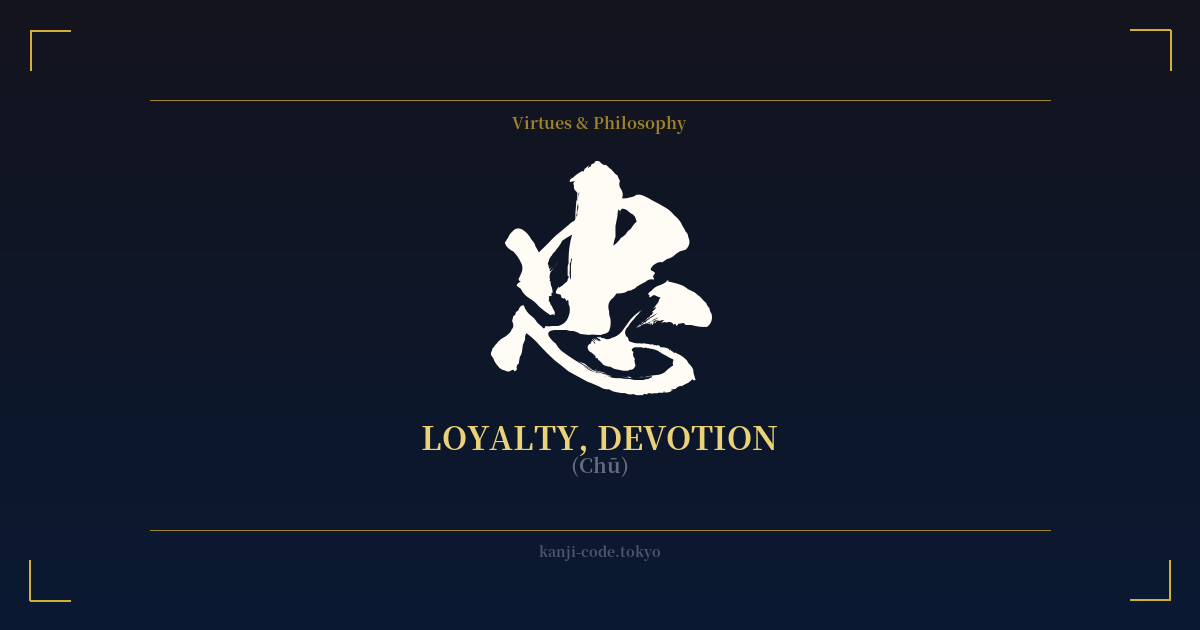
✍️ 忠 (Chū) — Cultural Context
The kanji 忠 (Chū) is one of the most significant virtues in Japanese culture, representing a profound sense of loyalty, devotion, and faithfulness. Its meaning goes far beyond simple allegiance; it speaks to an unwavering commitment from the very core of one's being. The character's construction tells this story beautifully: it is composed of 中 (naka), meaning 'center' or 'middle', and 心 (kokoro), meaning 'heart' or 'mind'. Together, they create the image of a 'centered heart'—a heart that is true, unswerving, and fully dedicated to a person, a cause, or a principle.
Historically, 忠 is most famously associated with Bushidō (武士道), the moral code of the samurai. For a warrior, loyalty to their lord (daimyō) was the paramount virtue, often superseding even family ties or personal safety. This wasn't blind obedience but a deep, reciprocal bond built on honor and duty. The most legendary tale illustrating this concept is that of the 47 Rōnin. These masterless samurai spent over a year plotting to avenge their fallen lord, knowing full well that their act of loyalty would result in their own mandated death. Their story is a cornerstone of Japanese folklore, endlessly retold in plays and films as the ultimate expression of 忠.
This powerful ideal is also captured in a more modern and universally beloved story: that of Hachikō, the Akita dog. Hachikō waited for his deceased owner at Shibuya station every day for over nine years. His incredible devotion earned him the name Chūken Hachikō (忠犬ハチ公), or 'Loyal Dog Hachikō'. A statue commemorating him stands outside the station today, serving as a popular meeting spot and a national symbol of the enduring power of loyalty. The story of Hachikō demonstrates how the spirit of 忠 transcends feudal codes and resonates as a pure, heartfelt expression of devotion.
While the era of samurai and feudal lords is long past, the spirit of 忠 continues to influence Japanese society. It can be seen in the strong sense of loyalty an employee might feel towards their company, the dedication of a student to their school, or the fierce support for a local sports team. It represents a commitment that is not taken lightly—a promise that comes from the heart and is intended to endure.
🖌️ Font Styles for 忠
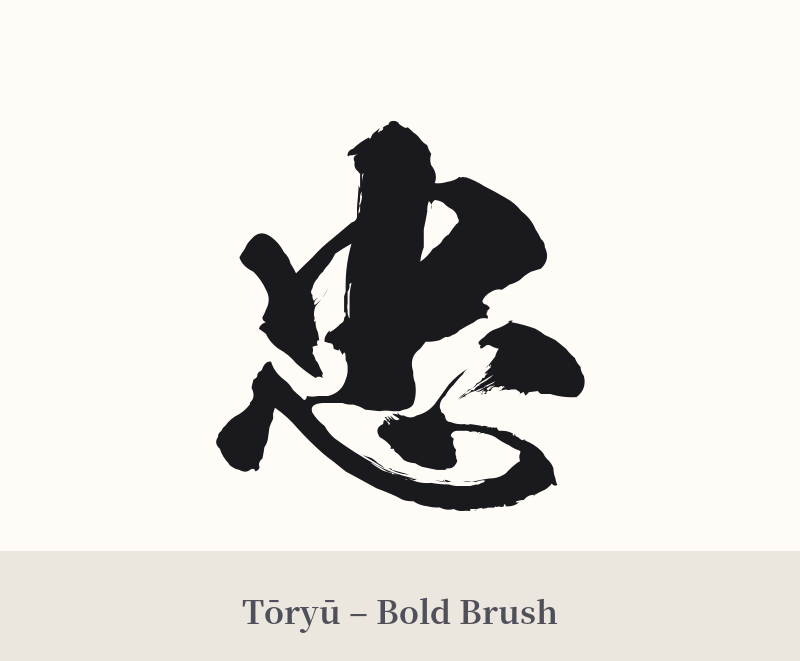
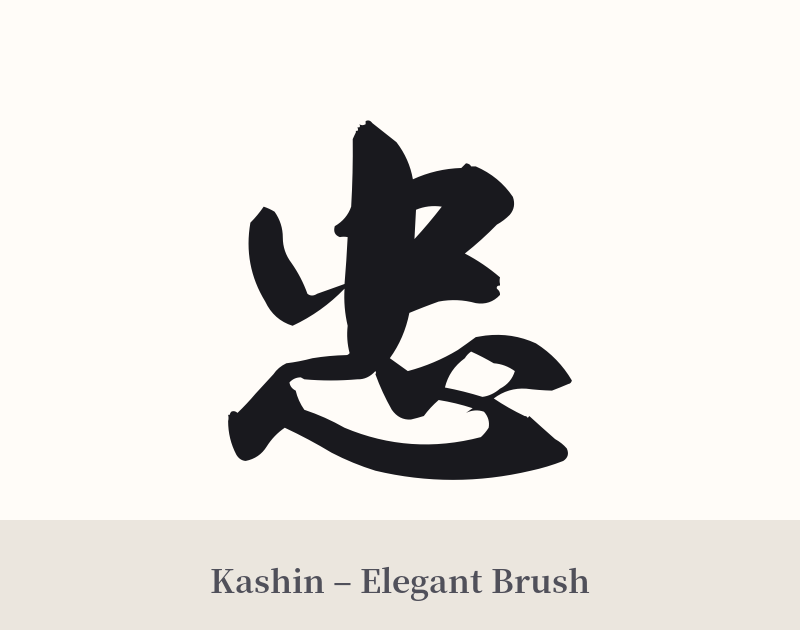
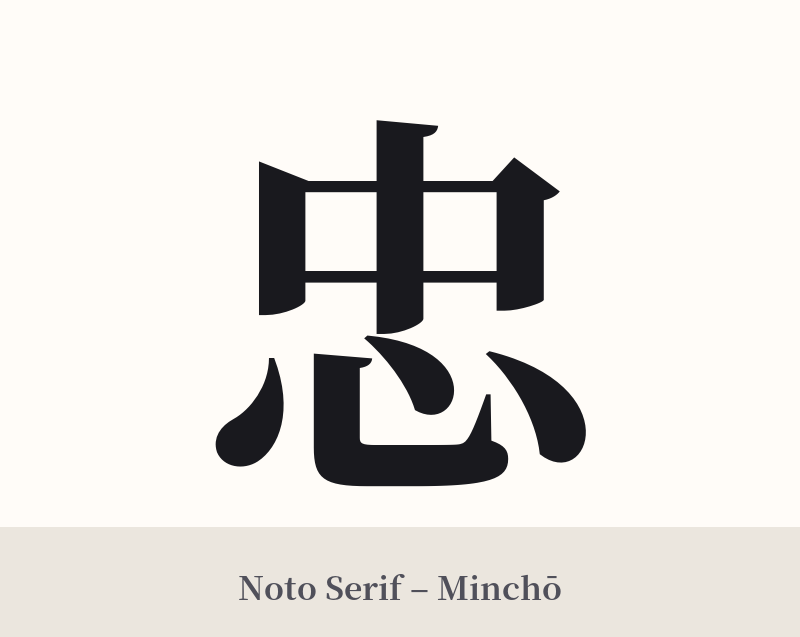
The same kanji can look dramatically different depending on the calligraphy style. Choose a font that matches the mood you want for your tattoo or design.
🎨 Tattoo Suitability
📐 Tattoo Design Guide
The kanji 忠 is a powerful statement on its own, making it an excellent choice for a standalone tattoo. Its balanced, symmetrical structure works well in various styles.
– Placement Suggestions: For a single, impactful character like 忠, consider placements that offer a flat, visible canvas. The inner forearm, the back of the calf, the chest over the heart, or the space between the shoulder blades are all excellent choices. These locations allow the character to be presented clearly and with purpose.
– Font Style Recommendations: A traditional Japanese calligraphy (shodō) style is highly recommended to honor the kanji's historical weight. A bold, blocky 'kaisho' script emphasizes stability and strength. A slightly more fluid, semi-cursive 'gyōsho' script can add a sense of personal conviction and movement. Avoid overly thin or decorative fonts that might detract from the character's inherent power.
– Visual Tips: Consider having the artist use a brushstroke effect (sumi-e style) to give the tattoo a dynamic, hand-painted feel. While 忠 is strong enough to stand alone, it can be incorporated into a larger piece with thematically relevant elements like a samurai helmet (kabuto), cherry blossoms (symbolizing the transient nature of life), or a koi fish swimming upstream (symbolizing perseverance).
Comments