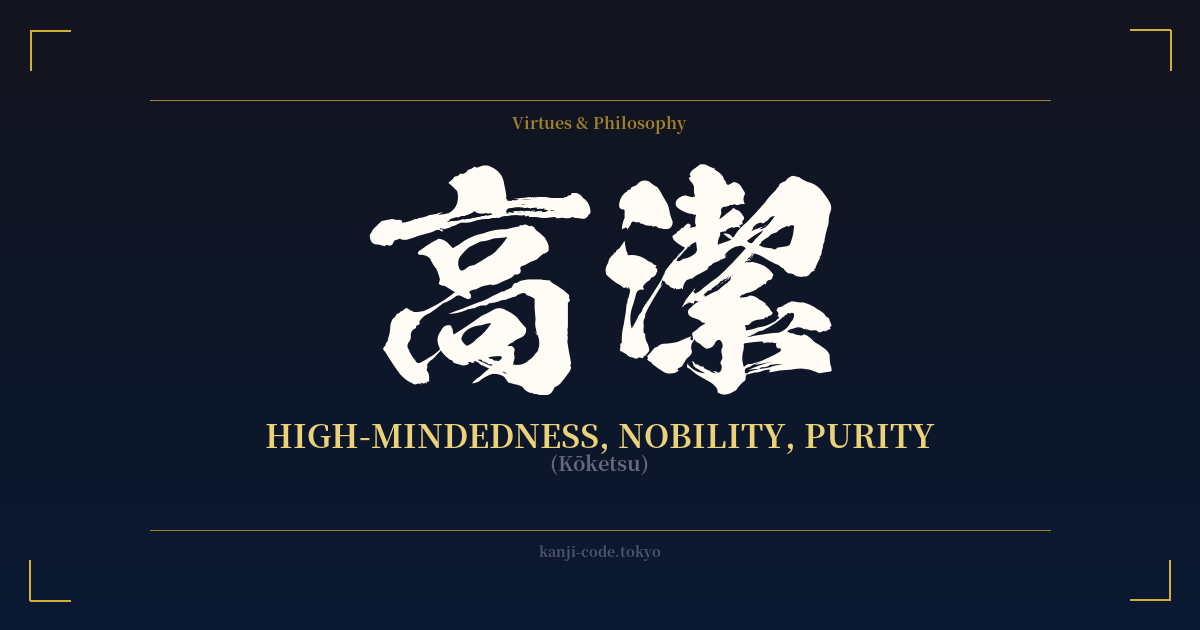
✍️ 高潔 (Kōketsu) — Cultural Context
高潔 (Kōketsu) is a Japanese word that embodies a profound and deeply respected virtue: high-mindedness, nobility of spirit, and moral purity. It’s not a term used lightly; it describes a character that is incorruptible, principled, and untainted by greed or personal gain. At its core, Kōketsu is the fusion of elevated ideals and personal integrity.
The word is a direct combination of its two kanji. 高 (kō) means 'high,' suggesting not just physical height but also a higher plane of thought and existence. 潔 (ketsu) means 'pure' or 'undefiled,' and is linked to the important cultural concept of 潔さ (isagiyosa), which describes a certain purity or gallantry in one's actions, an ability to act decisively and without regret, even in difficult circumstances.
Historically, the ideal of Kōketsu resonates strongly with the principles of Bushido, the code of the samurai. A true warrior was expected to be above petty concerns, serving their lord and their principles with unwavering loyalty and a pure heart. While a samurai sought martial prowess, it was their inner moral compass—their Kōketsu—that defined their true worth. They were expected to be unswayed by bribery and to hold their honor above their own life.
In modern Japan, Kōketsu is a term of immense praise, often reserved for individuals who demonstrate exceptional integrity in public life. It might be used to describe a politician who refuses to engage in corruption, a judge known for their impartiality, or a leader who puts the well-being of others before themselves. To be called 'Kōketsu' is to be recognized as a person of rare and admirable character.
This word speaks to a quiet, internal strength. It isn't about grand, flashy gestures of heroism, but about the consistent, daily choice to live by a strict moral code. It’s the quality of someone who cannot be bought, who remains true to their principles even when it's difficult, and who maintains their inner purity in a world that often tries to compromise it. It represents an aspirational state of being, a goal for anyone who values honor and integrity above all else.
🖌️ Font Styles for 高潔
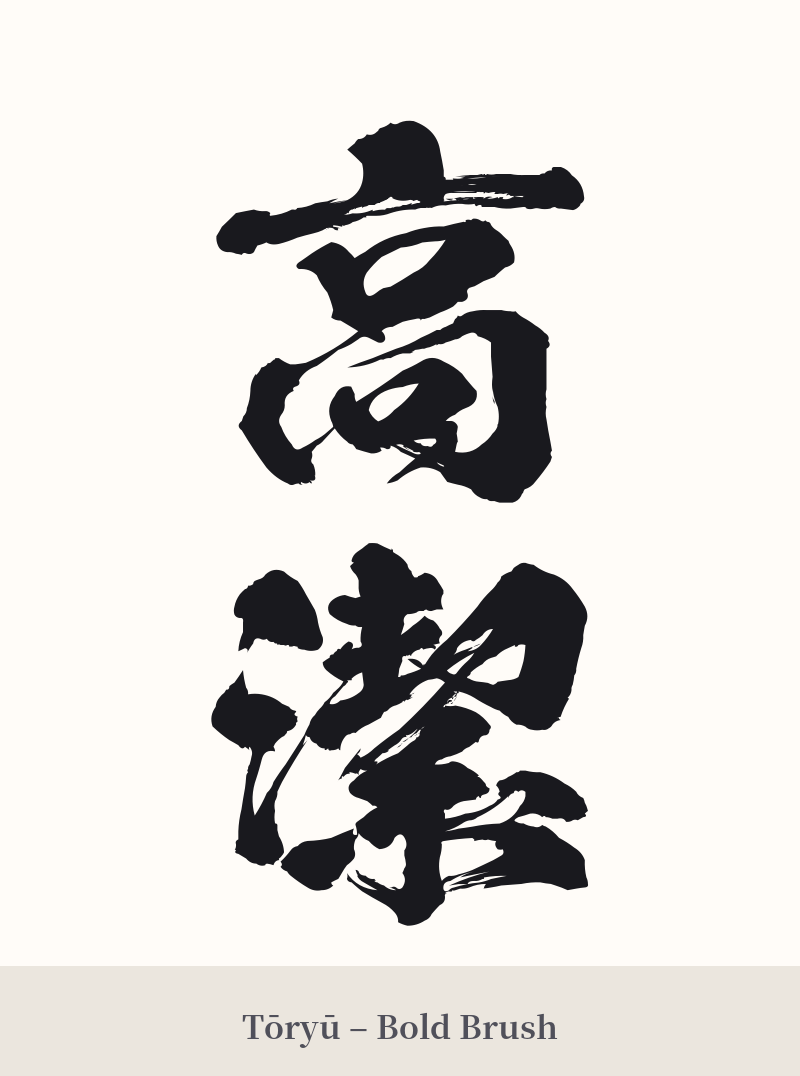
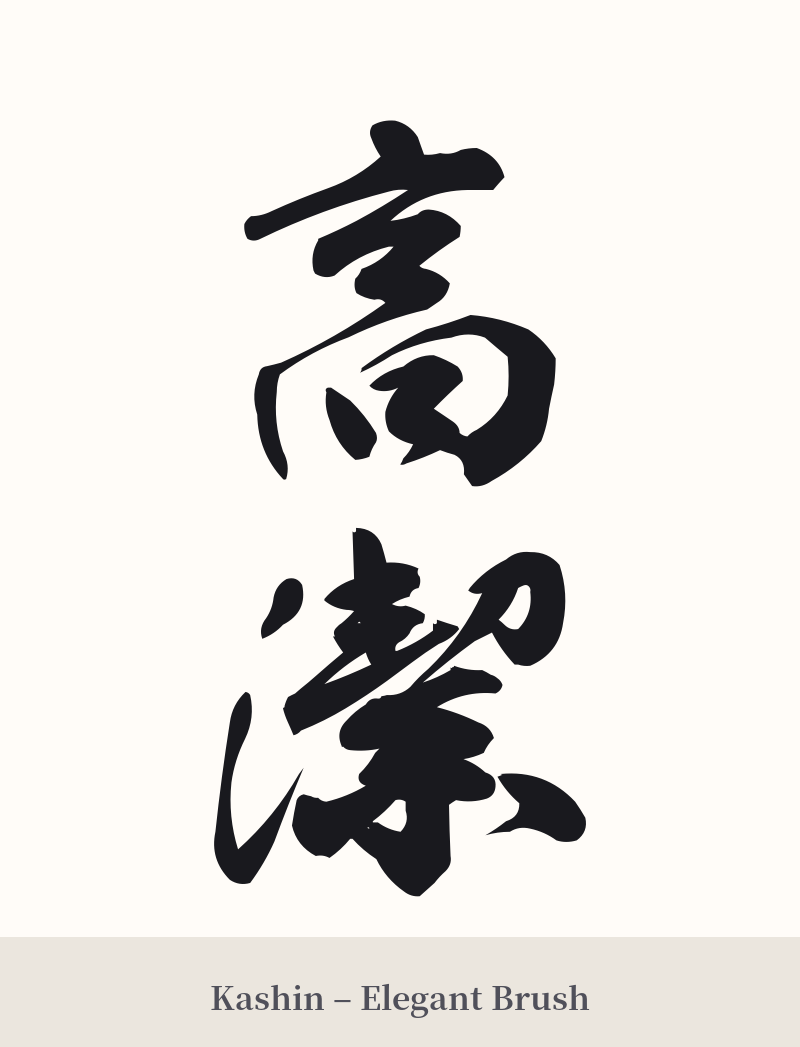
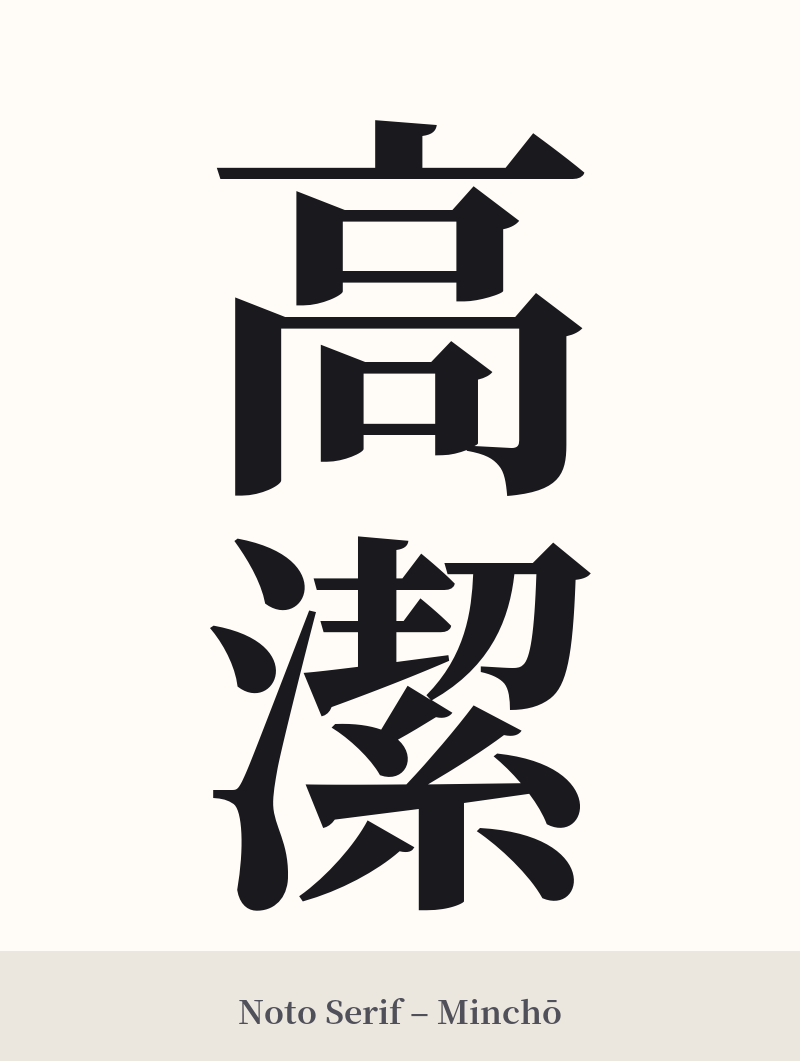
The same kanji can look dramatically different depending on the calligraphy style. Choose a font that matches the mood you want for your tattoo or design.
🎨 Tattoo Suitability
📐 Tattoo Design Guide
For a tattoo of 高潔, the design should reflect its dignified and principled meaning. Here are some recommendations:
– Placement: Vertical alignment is traditional and highly recommended. The spine, forearm, or calf are excellent choices, as they allow the characters to flow naturally downwards.
– Font Style: A classic, clear script is best. Kaishotai (block script) emphasizes the structure and strength of each character, reinforcing the word's meaning of integrity. For a slightly more artistic feel, Gyoshotai (semi-cursive script) can add a touch of elegance without sacrificing legibility.
– Visual Tips: Avoid overly stylized or thin fonts, as they can make the complex strokes of 潔 (ketsu) difficult to read and prone to blurring. Ensure your artist is experienced with kanji and leaves adequate space within and between the characters to maintain clarity as the tattoo ages.
Comments