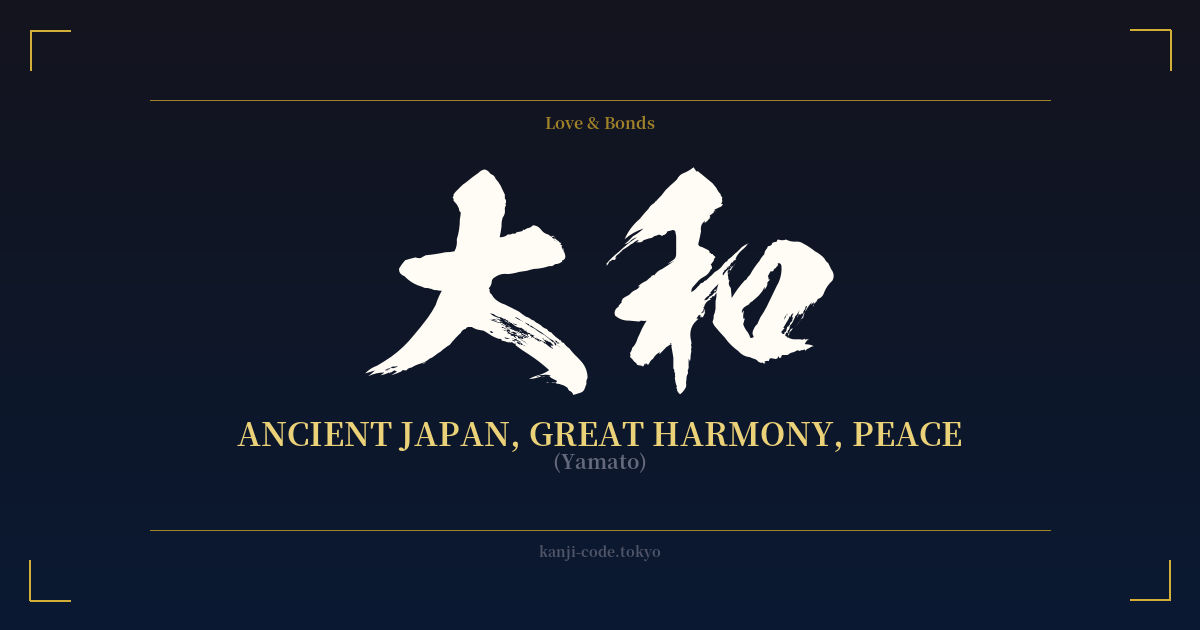
✍️ 大和 (Yamato) — Cultural Context
The word 大和 (Yamato) is one of the most evocative and historically layered terms for Japan, carrying millennia of cultural weight. Its origins trace back to the Yamato period (c. 250–710 AD), named after the ruling clan in the Yamato Province, the heartland from which the first unified Japanese state emerged. In its earliest usage, 'Yamato' was simply the name of this region and its people.
Over centuries, as the Yamato court's influence spread, the name evolved to represent the entire archipelago and the ethnic Japanese people. It became an endonym—a name for Japan used by the Japanese themselves—imbued with a sense of antiquity, authenticity, and national origin. It appears frequently in the earliest Japanese texts like the Kojiki and Nihon Shoki, cementing its place in the nation's foundational mythology.
The characters themselves, 大 (Great) and 和 (Harmony), lend the word a beautiful, poetic interpretation: 'Great Harmony'. This aligns perfectly with the central cultural value of 和 (Wa), which emphasizes the importance of group cohesion, peace, and social balance. In this light, Yamato is not just a place, but an ideal—a vision of Japan as a nation bound by a spirit of profound harmony.
However, this beautiful meaning is shadowed by a more modern, complex history. During the late 19th and early 20th centuries, the term was heavily promoted as part of a rising nationalist ideology. The concept of 大和魂 (Yamato-damashii), or the 'Japanese Spirit', was championed to instill a sense of unique cultural superiority, martial valor, and unwavering loyalty to the Emperor. This ideology was a driving force behind Japanese imperialism and its actions during World War II.
The name of the legendary battleship Yamato, the largest and most powerful warship of its time, is a potent symbol of this era. Its dramatic final mission became a powerful and tragic metaphor for the nation itself. Because of this, the word 'Yamato' can evoke strong feelings of pride for some, but also carries the heavy burden of militarism and nationalism for others, both within and outside Japan.
Today, 'Yamato' is used in a variety of contexts, from historical discussions to company names. It remains a powerful word that encapsulates the dualities of Japan: the serene, poetic ideal of 'Great Harmony' and the complex, often painful realities of its national history.
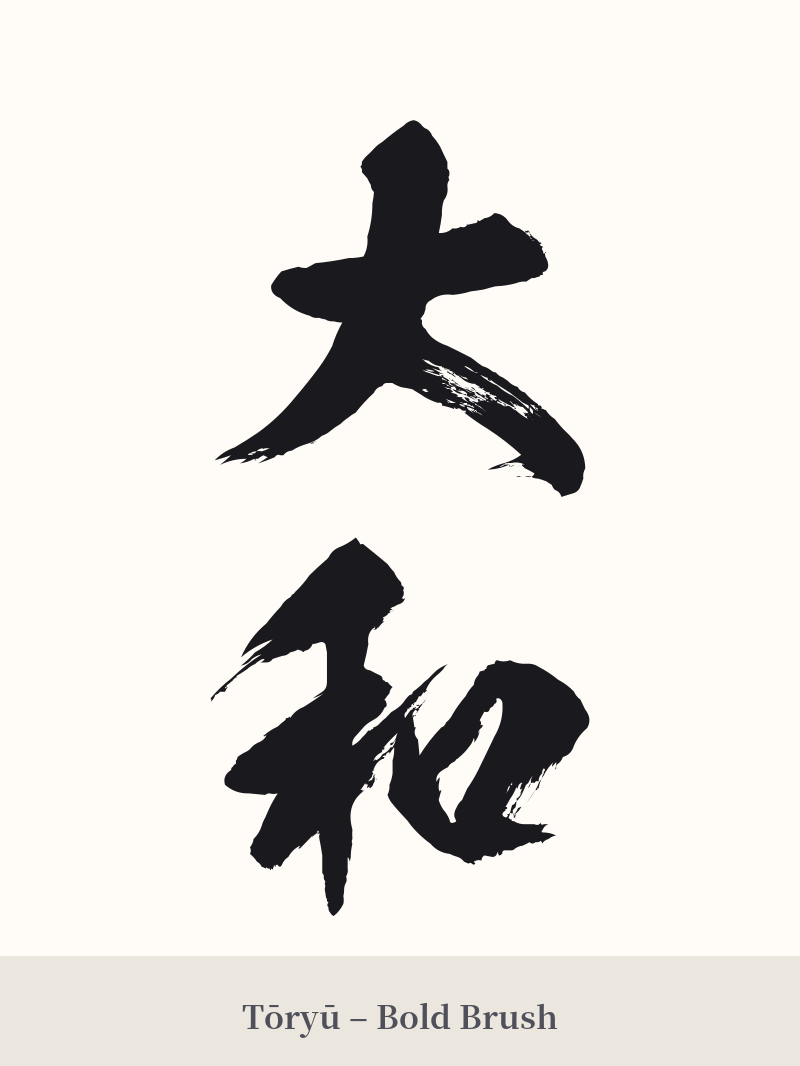
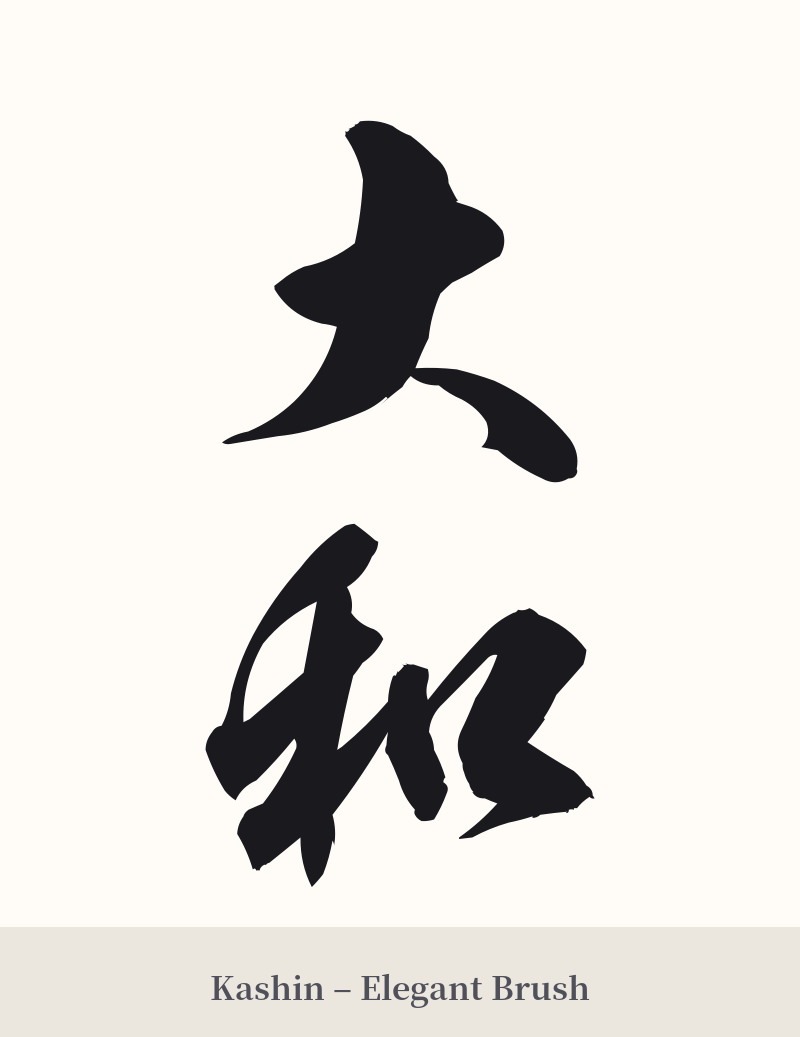
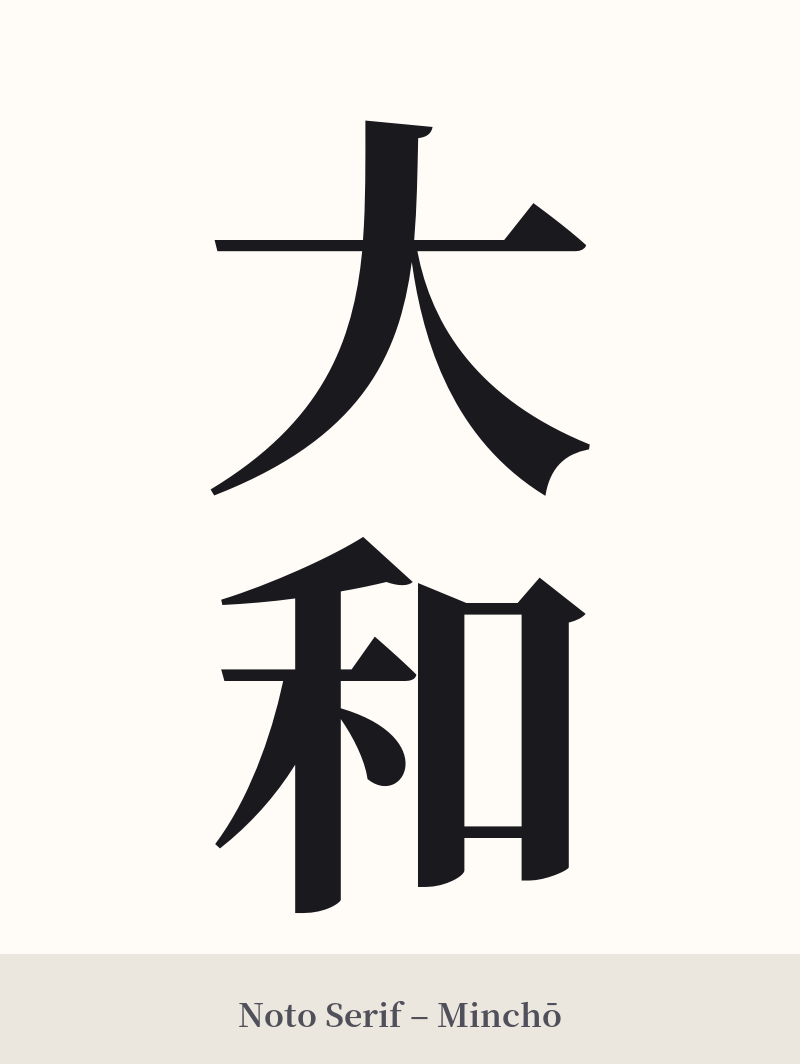
🖌️ Font Styles for 大和
The same kanji can look dramatically different depending on the calligraphy style. Choose a font that matches the mood you want for your tattoo or design.
🎨 Tattoo Suitability
📐 Tattoo Design Guide
A 大和 tattoo demands a design that respects its historical weight and aesthetic tradition. It is not a word for casual or whimsical styles.
– Placement: A vertical orientation is most traditional and visually appealing. Consider the forearm, the inner bicep, or running down the calf or spine. These placements allow the characters to flow naturally.
– Font Style: Traditional calligraphy styles are highly recommended. A strong, clear kaisho (block script) emphasizes its dignity, while a flowing gyosho (semi-cursive script) can bring out its poetic 'Great Harmony' aspect. Avoid modern, geometric, or overly stylized fonts, as they can clash with the word's profound meaning.
– Visual Tips: To soften the nationalistic undertones and emphasize the 'harmony' aspect, consider incorporating complementary elements. A subtle backdrop of cherry blossoms (sakura), a gentle wave pattern, or a simple ensō (Zen circle) can re-frame the design towards peace and beauty. Keep any additions minimal to let the powerful kanji remain the focal point.
Comments