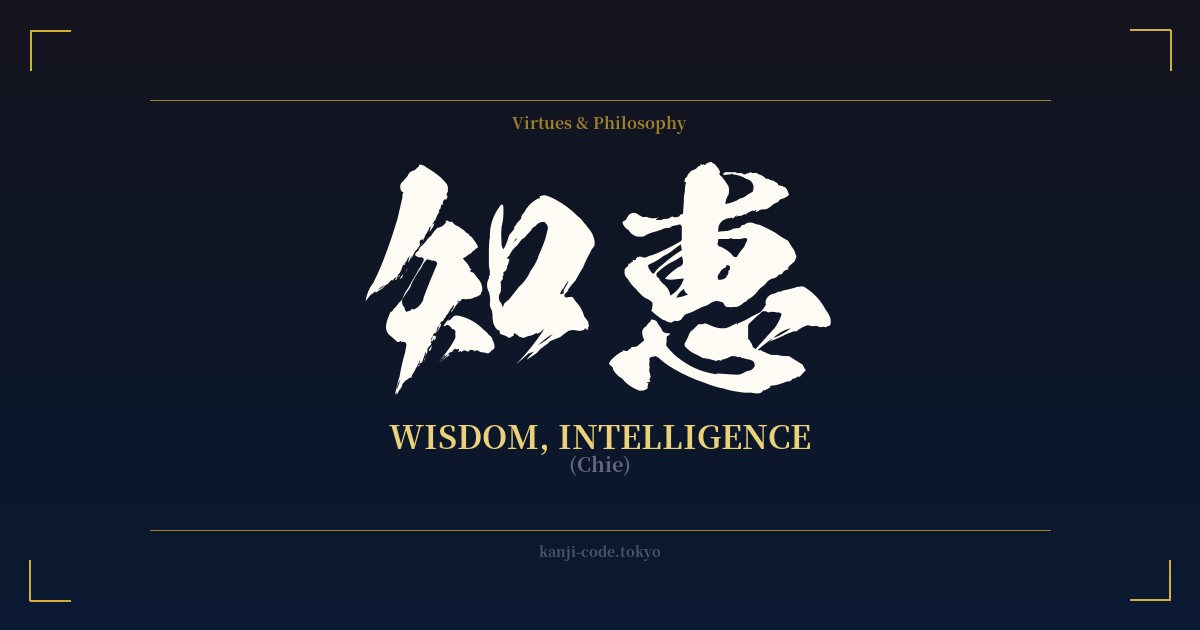
✍️ 知恵 (Chie) — Cultural Context
知恵 (Chie) is a cornerstone concept in Japanese thought, representing a form of intelligence that transcends mere data and facts. While often translated as 'wisdom' or 'intelligence', its true essence lies in the application of knowledge with insight, experience, and sound judgment. It is the kind of wisdom that cannot be learned from a book alone; it must be lived and earned.
To understand 知恵, it’s crucial to contrast it with 知識 (chishiki), which means 'knowledge'. Chishiki is the information you possess—facts, figures, and theories. Chie, on the other hand, is the ability to use that knowledge effectively and ethically in the real world. A famous Japanese proverb, 三人寄れば文殊の知恵 (sannin yoreba Monju no chie), beautifully illustrates this. It translates to "three people gathered have the wisdom of Manjushri," suggesting that collaborative problem-solving can lead to profound insights, a perfect example of applied wisdom.
Manjushri (文殊菩薩, Monju Bosatsu) is the bodhisattva of wisdom in Japanese Buddhism, often depicted holding a sword that cuts through ignorance and a scroll representing the Prajñāpāramitā sutras—the 'Perfection of Wisdom' teachings. This connection imbues 知恵 with a spiritual dimension, linking it to the Buddhist goal of enlightenment (悟り, Satori). It is the wisdom that perceives the true nature of reality, free from delusion and ego. This spiritual weight makes 知恵 a concept of great depth and reverence.
In a secular context, 知恵 is highly valued in all aspects of Japanese society. It's the strategic thinking in martial arts, the clever life hacks known as 'Grandma's wisdom' (おばあちゃんの知恵袋, obāchan no chiebukuro), and the prudent decision-making of a respected leader. To possess chie is to be not just smart, but also discerning, resourceful, and thoughtful. It implies a maturity and a holistic understanding of the world, making it one of the most respected virtues a person can cultivate.
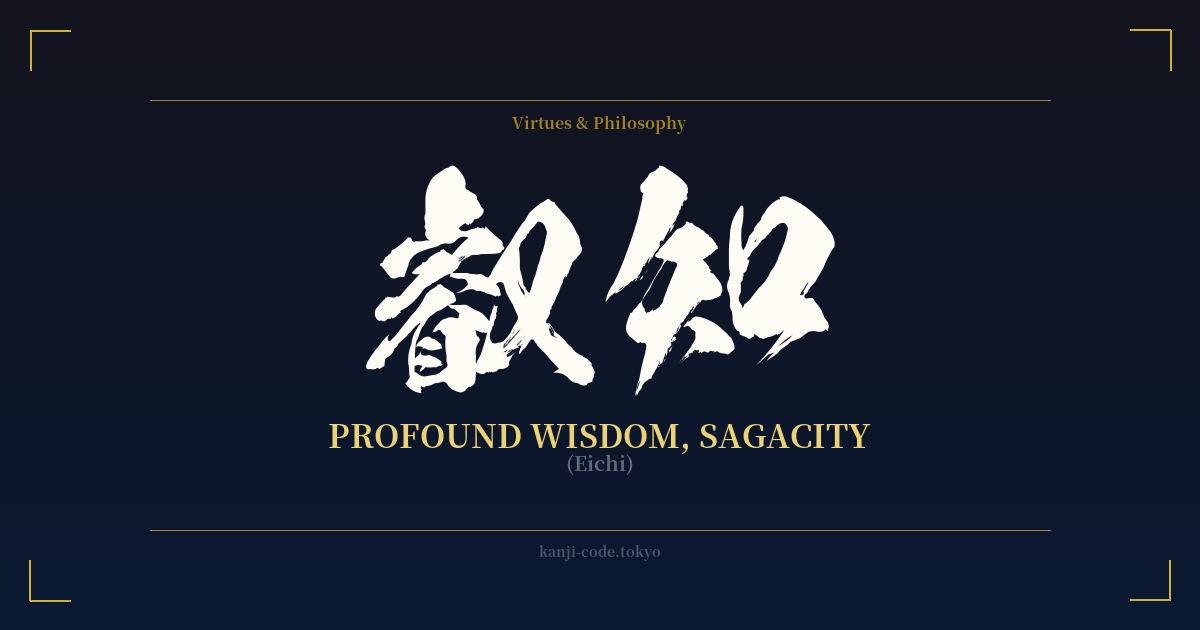
🖌️ Font Styles for 知恵
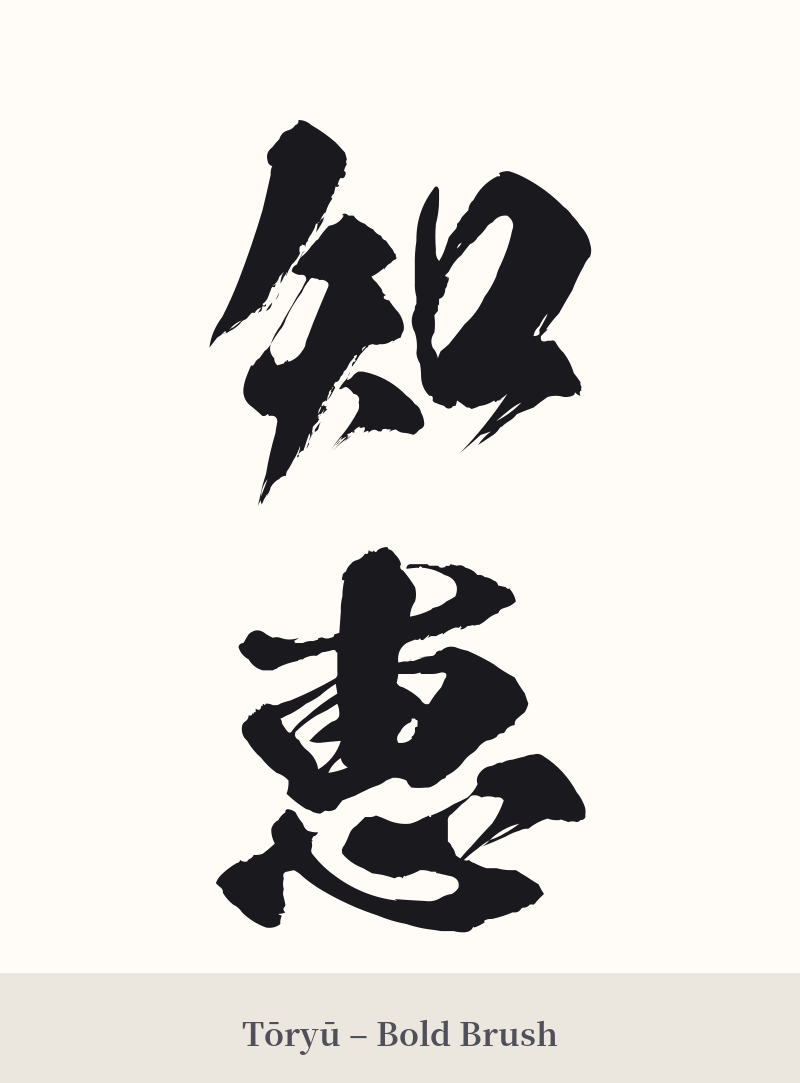
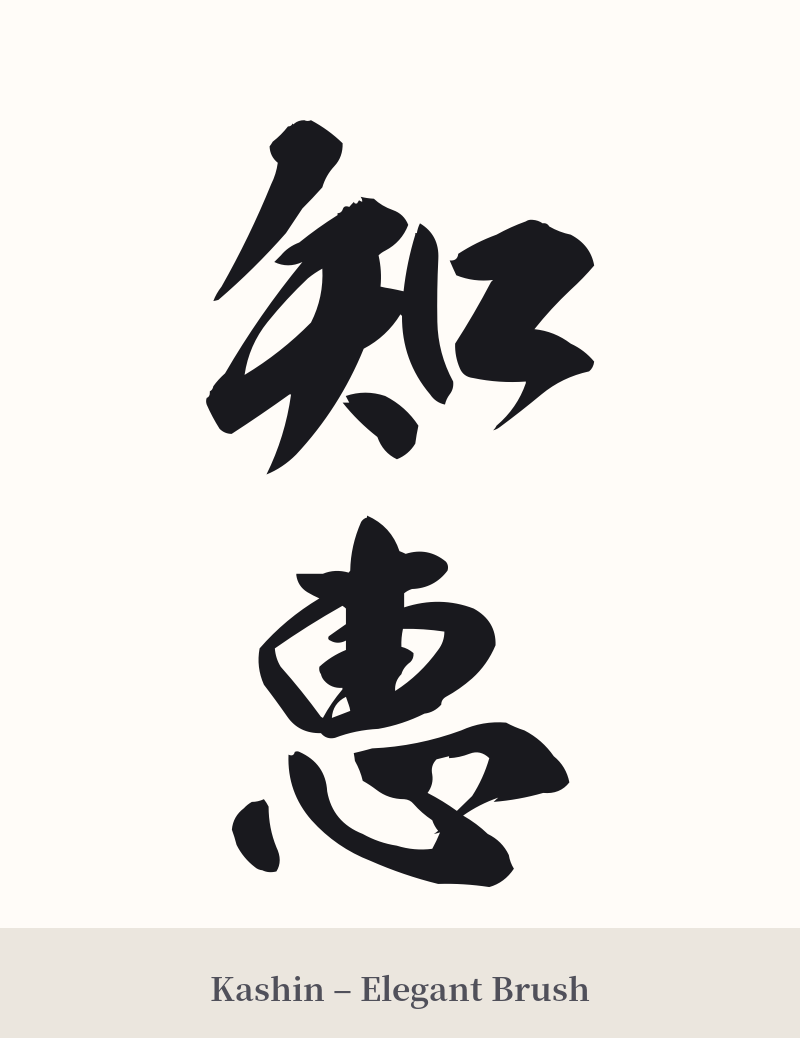
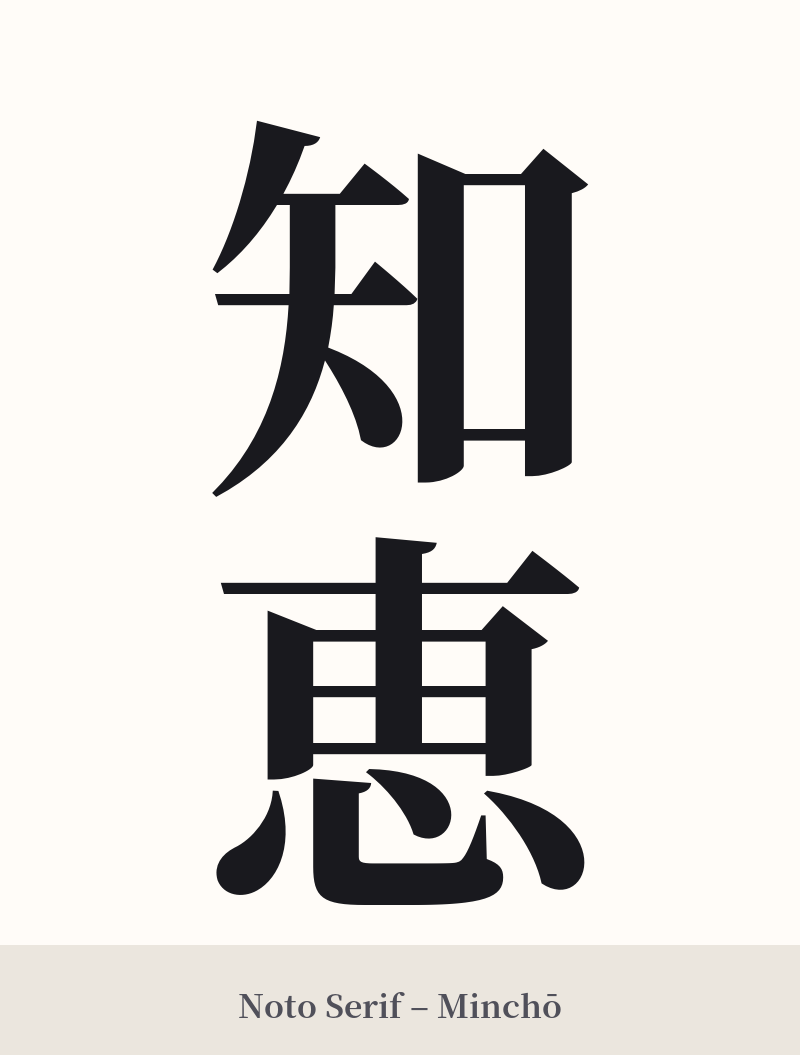
The same kanji can look dramatically different depending on the calligraphy style. Choose a font that matches the mood you want for your tattoo or design.
🎨 Tattoo Suitability
📐 Tattoo Design Guide
The balanced, two-character structure of 知恵 (Chie) offers great versatility for a tattoo design.
– Placement: For a personal reminder of this virtue, consider the inner forearm or wrist. For a more prominent statement, a vertical alignment along the spine or the side of the ribs creates an elegant and powerful look. The back of the neck is a subtle yet meaningful location.
– Font Style: The choice of script can dramatically alter the feel. A standard block script (Kaisho) emphasizes clarity, strength, and timelessness. A semi-cursive style (Gyosho) introduces a sense of flow, creativity, and personal journey in acquiring wisdom.
– Visual Elements: To enhance the meaning, consider pairing 知恵 with complementary imagery. A lotus flower represents purity and enlightenment, rising through muddy waters to bloom—a metaphor for gaining wisdom. An owl, a universal symbol of wisdom, or a single Enso circle (symbolizing enlightenment and the void) can also frame the kanji beautifully.
Comments