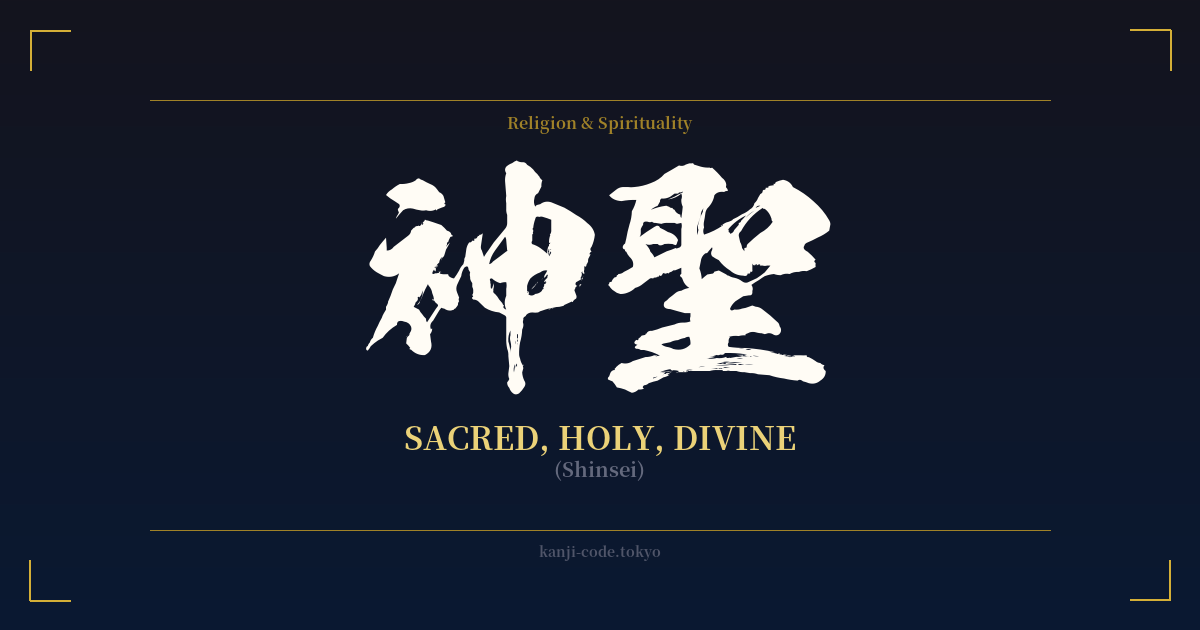
✍️ 神聖 (Shinsei) — Cultural Context
神聖 (Shinsei) is a Japanese word that encapsulates the concepts of sacredness, holiness, and divinity. It describes a state of being that is set apart from the profane, everyday world—something pure, inviolable, and worthy of the deepest reverence. While it has strong religious connotations, its meaning extends into the very fabric of Japanese culture and ethics.
In the context of Shinto, Japan's indigenous religion, 神聖 is intrinsically linked to the concept of 'kami' (神), the gods or divine spirits that inhabit all things. A place where a kami resides, such as a grand shrine like Ise Jingu, a majestic mountain, an ancient tree (shinboku), or even a unique rock formation (iwakura), is considered a 神聖な場所 (shinsei na basho) or sacred place. These areas are often marked by shimenawa, sacred ropes, to signify their purity and separation from the ordinary world.
The idea of purity (清め, kiyome) is central to the feeling of 神聖. Before entering a shrine, visitors perform a ritual cleansing of their hands and mouth at a 'temizuya' to wash away physical and spiritual impurity (kegare). This act prepares them to enter a sacred space, reinforcing the boundary between the sacred and the profane.
Buddhism, which arrived in Japan in the 6th century, also heavily utilizes the concept of 神聖. Temples, sutras (sacred texts), and revered figures like the Buddha or enlightened bodhisattvas are all considered sacred. The character 聖 (sei) itself means 'holy' or 'sage,' referring to a person of immense spiritual attainment. Thus, a Buddhist temple is just as much a 'seiiki' (sanctuary) as a Shinto shrine.
Beyond formal religion, 神聖 is used to describe things that are held in the highest, untouchable regard. One might speak of a 'shinsei na yakusoku' (sacred promise), implying a vow that cannot be broken under any circumstances. The term 'shinsei fukashin' (神聖不可侵) means 'sacred and inviolable,' a phrase often used in legal and philosophical contexts to describe fundamental human rights or the sovereignty of a nation. It elevates an idea or principle to a level that demands absolute respect and protection.
This makes 神聖 a powerful word that transcends simple religious definition. It speaks to a universal human need to recognize and honor things that are greater than oneself, whether it's a deity, nature, a profound commitment, or an ethical principle. It is a word of weight, dignity, and serene power.
🖌️ Font Styles for 神聖
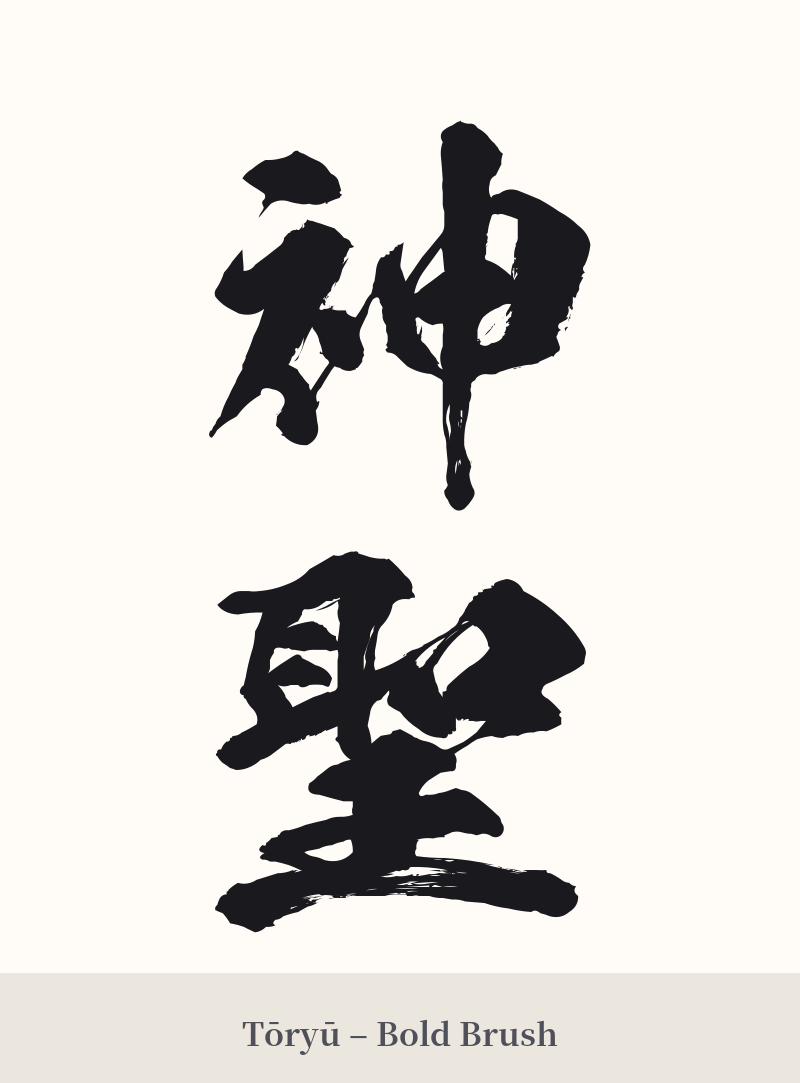
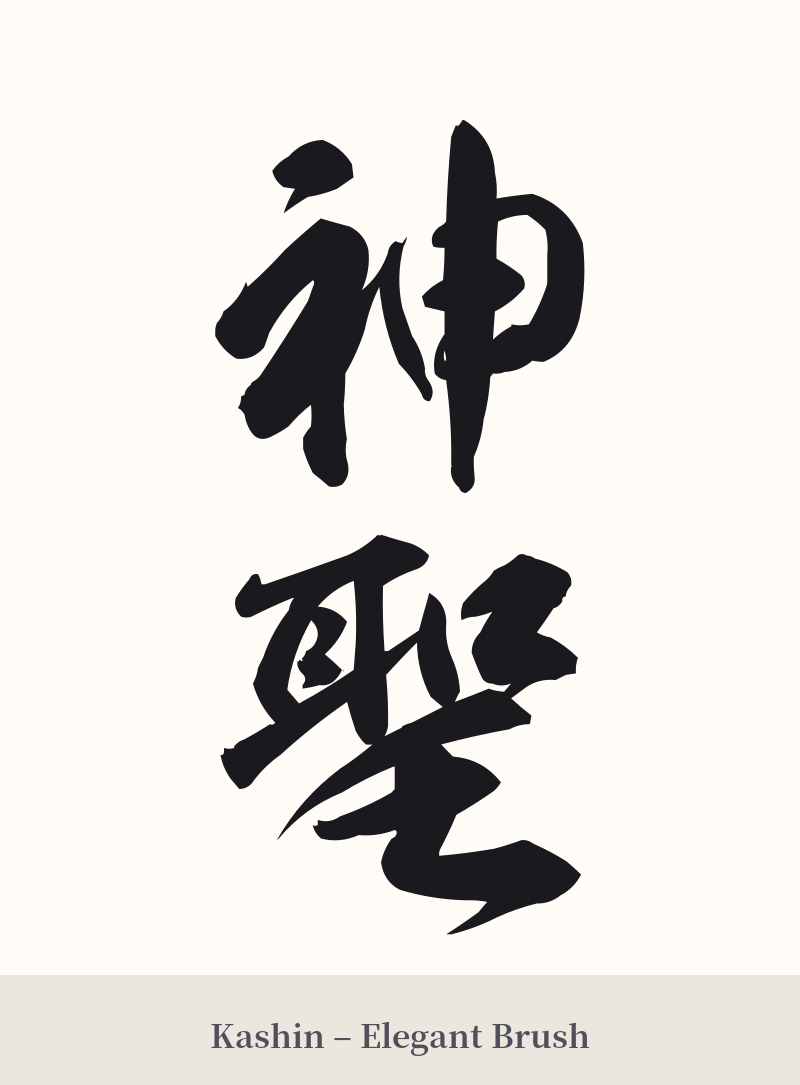
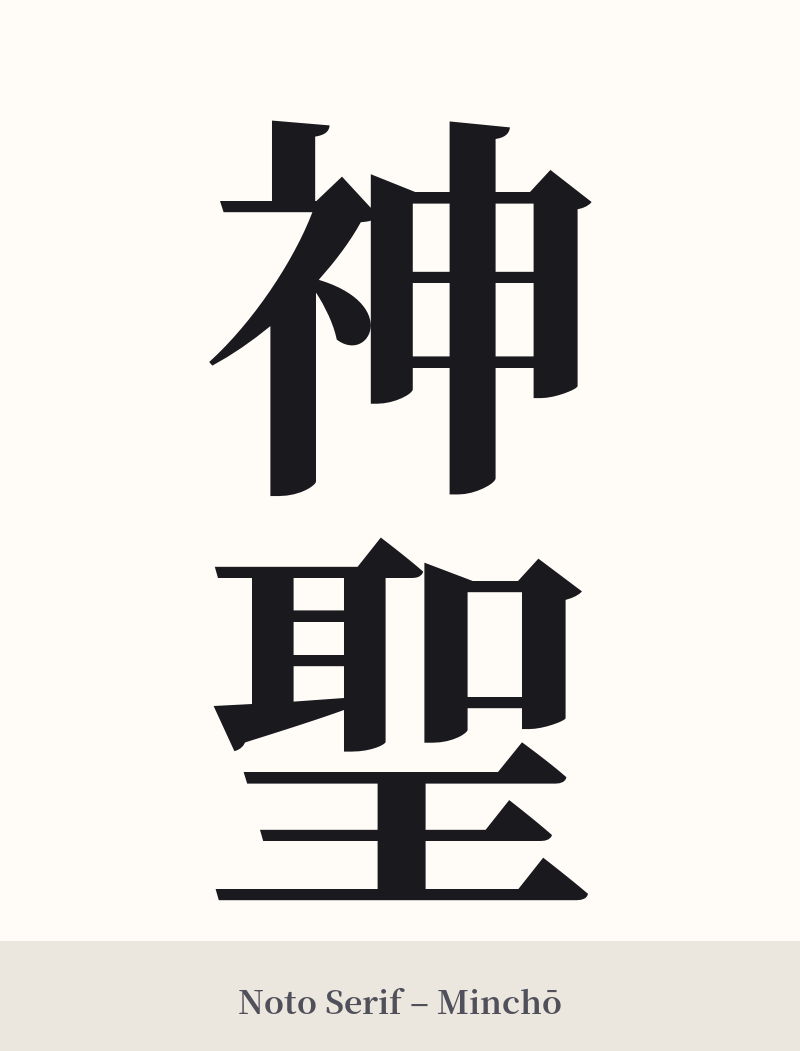
The same kanji can look dramatically different depending on the calligraphy style. Choose a font that matches the mood you want for your tattoo or design.
🎨 Tattoo Suitability
📐 Tattoo Design Guide
A design for 神聖 (Shinsei) should reflect its dignified and reverent meaning. The two characters have a natural balance, making them well-suited for a clean, impactful presentation.
– Placement: Vertical alignment is classic and works exceptionally well on the forearm, spine, or along the calf. For a horizontal design, the back of the neck or across the chest can provide a strong canvas.
– Font Style: A traditional 'Kaisho' (block script) font emphasizes clarity and authority, fitting the word's formal tone. For a more artistic and flowing look, 'Gyosho' (semi-cursive script) can add a sense of grace and spirituality. Avoid overly ornate or aggressive fonts that might clash with the serene meaning.
– Visual Tips: Consider incorporating subtle elements that enhance the theme of sacredness. A background of soft mist or clouds can evoke a divine atmosphere. Pairing the kanji with a single lotus flower can symbolize purity and enlightenment, while a minimalist torii gate outline can connect it to Shinto sacred spaces. The key is to let the kanji remain the focal point, not to overwhelm it with other imagery.
Comments