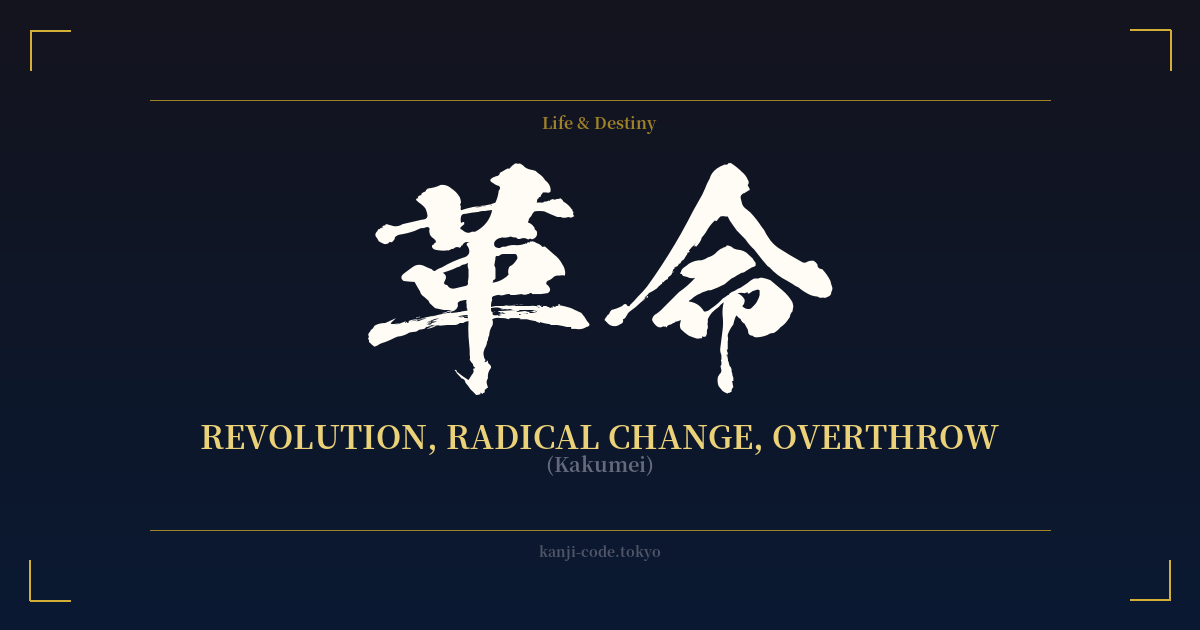
✍️ 革命 (Kakumei) — Cultural Context
革命 (Kakumei) is a word that echoes with the force of history, signifying not just change, but a fundamental and often violent overthrow of an existing order. While its modern usage aligns with the Western concept of 'revolution,' its origins are rooted in ancient Chinese political philosophy, giving it a depth that transcends simple translation.
The word is a direct combination of its two kanji: 革 (kaku), meaning 'to reform' or 'leather,' and 命 (mei), meaning 'life' or 'mandate.' Together, they literally mean 'to change the mandate.' This refers to the ancient Chinese concept of the 'Mandate of Heaven' (天命, Tenmei). This doctrine stated that a ruler's right to govern was bestowed by a divine power, and this right was contingent on their ability to rule justly and effectively.
If a dynasty became corrupt, tyrannical, or incompetent, it was believed they had lost the Mandate of Heaven. Natural disasters, famines, and widespread suffering were seen as signs of divine disapproval. In this context, 革命 (Kakumei) was the process by which the people, led by a new claimant, could justifiably overthrow the failed regime and establish a new one that held the heavens' favor. It was a cosmic and moral correction, not merely a political coup.
When this term was adopted into the Japanese language, it carried this profound weight. While Japan had its own imperial lineage, the concept resonated during periods of major social upheaval. Most notably, it was a key term in the intellectual ferment leading up to the Meiji Restoration in 1868. Although the event is officially called the Meiji 'Restoration' (明治維新, Meiji Ishin) to emphasize a return to imperial power, the overthrow of the centuries-old Tokugawa Shogunate was, in essence, a revolution. The term Kakumei captured the radical break from the feudal past and the complete restructuring of Japanese society that followed.
In modern Japan, Kakumei is used to describe major historical events like the French Revolution (フランス革命) or the Industrial Revolution (産業革命, Sangyō Kakumei). It can also be used metaphorically to describe groundbreaking innovations in technology or culture. On a personal level, one might speak of a 'revolution in their life' (人生の革命), but this is a highly dramatic and intense expression, reserved only for the most profound and life-altering transformations.
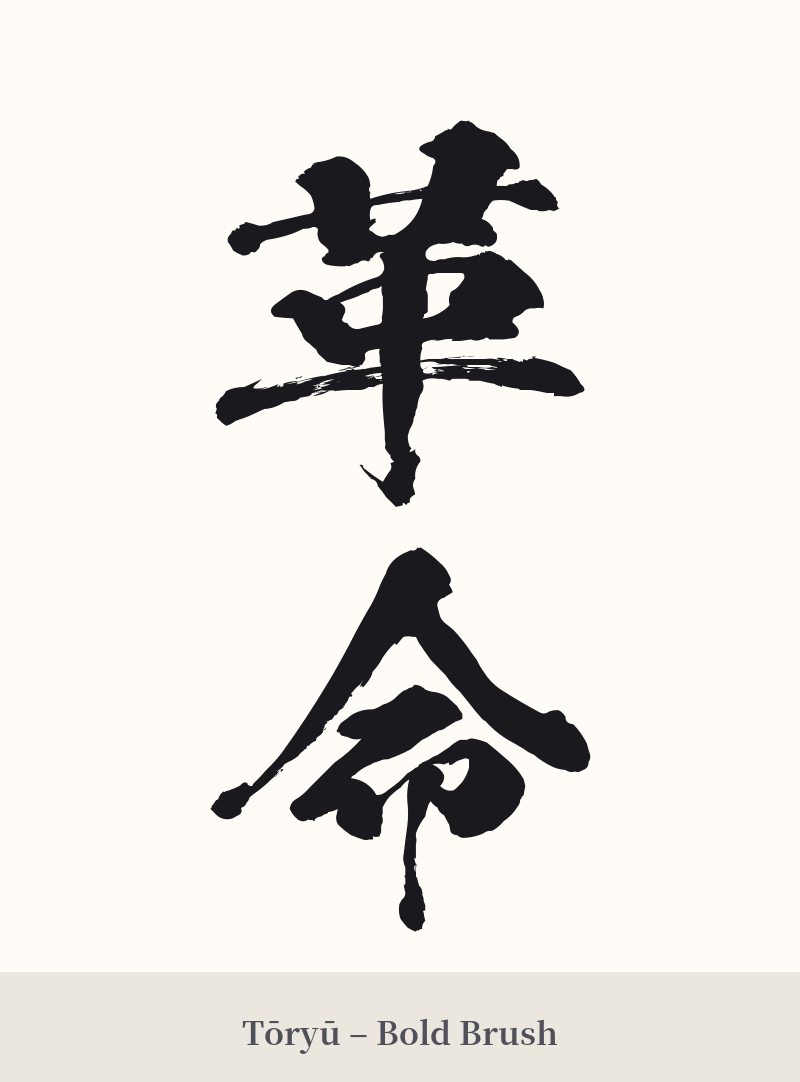
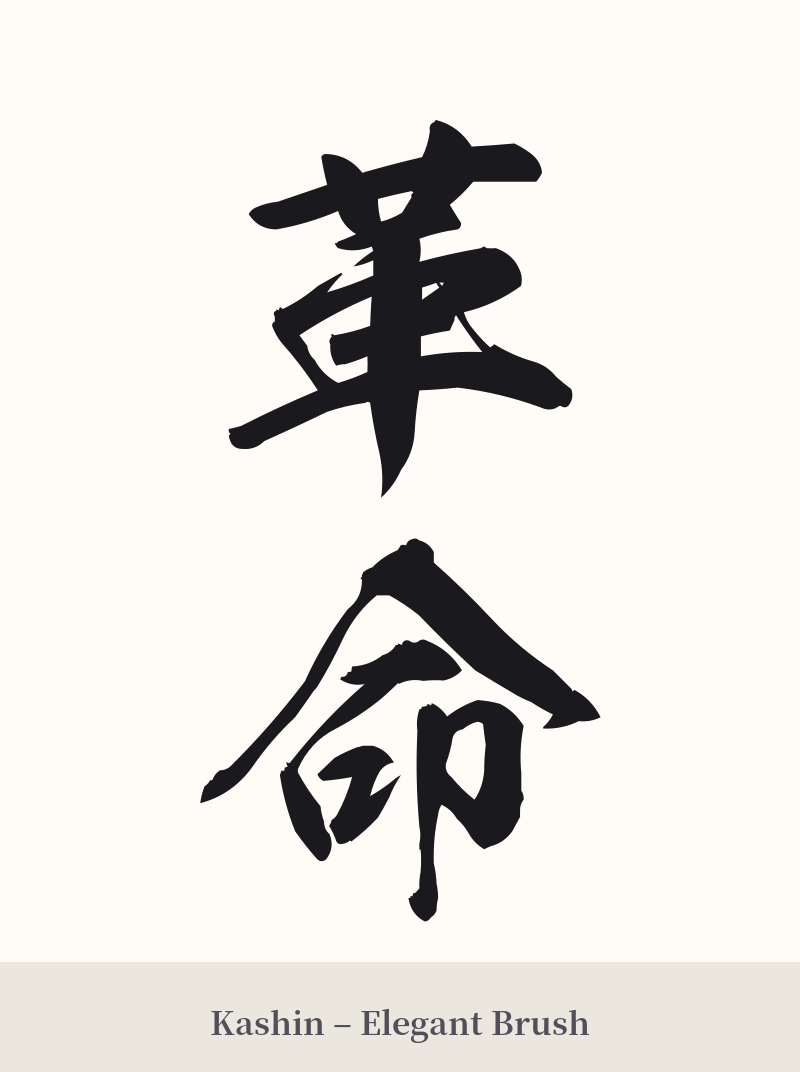
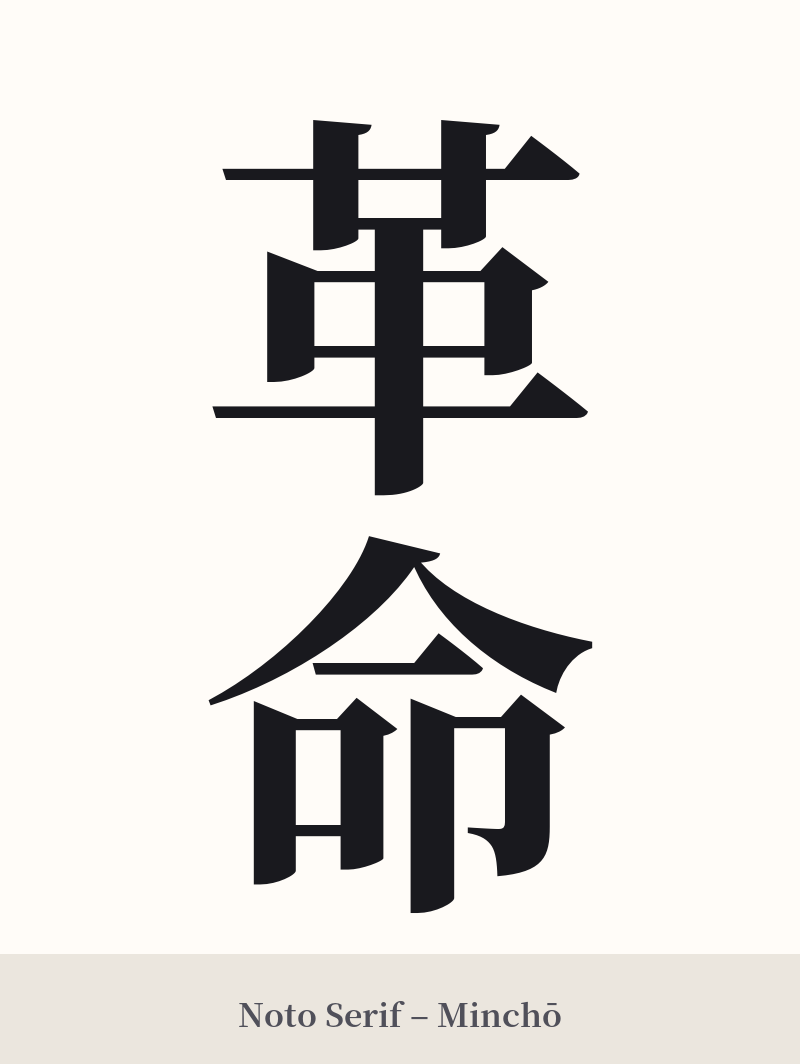
🖌️ Font Styles for 革命
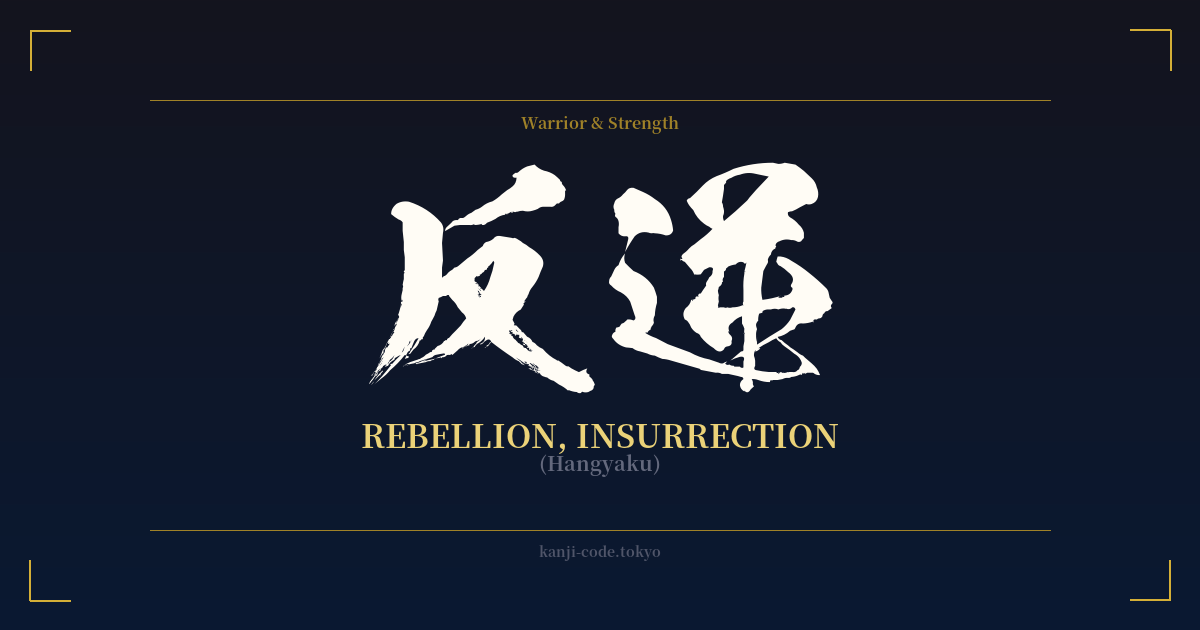
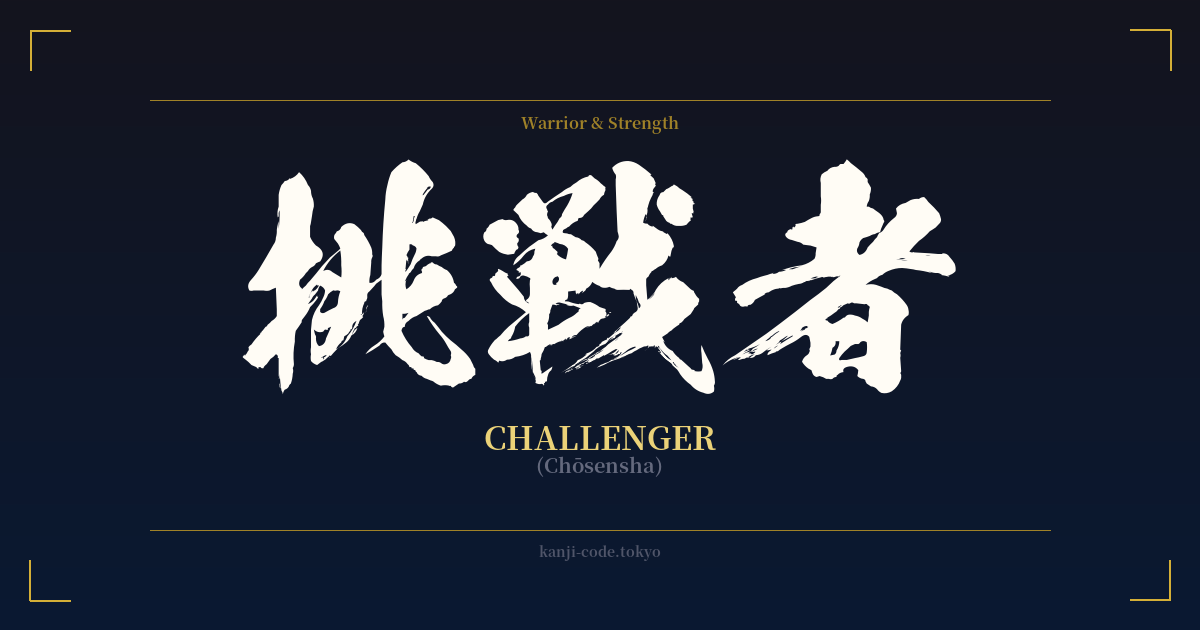
The same kanji can look dramatically different depending on the calligraphy style. Choose a font that matches the mood you want for your tattoo or design.
🎨 Tattoo Suitability
📐 Tattoo Design Guide
The powerful statement made by 革命 (Kakumei) deserves a design that matches its intensity. Its two-character structure offers great versatility in placement and style.
– Placement: A vertical alignment is classic and powerful, making it ideal for the spine, forearm, or along the calf. Horizontally, it works well across the chest, upper back, or below the collarbone. Because of its strong meaning, it suits a placement that is visible and intentional.
– Font Style: The choice of font can dramatically alter the feeling of the design. A bold, angular font like Kaisho (block script) or a modern Gothic style can emphasize the unyielding, structural nature of radical change. Conversely, a dynamic, flowing script like Gyosho (semi-cursive) or Sosho (cursive) can capture the chaotic energy and fluid motion of a revolution in progress.
– Visual Tips: Consider a minimalist approach where the characters themselves are the focus. However, you could also incorporate symbolic imagery. A broken chain, a rising phoenix, or even the enso circle being shattered and reformed could visually amplify the themes of breaking free and creating something new from the old.
Comments