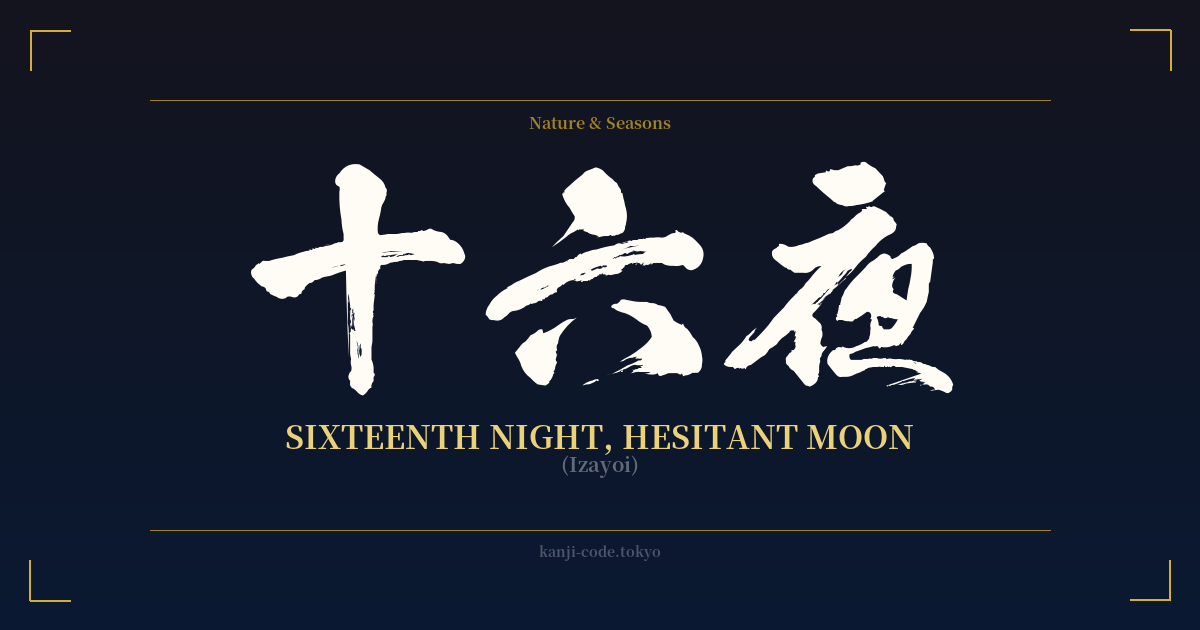
✍️ 十六夜 (Izayoi) — Cultural Context
十六夜 (Izayoi) is a word that beautifully encapsulates the Japanese aesthetic of subtlety and the appreciation of imperfection. Literally, the kanji break down to 十 (ten), 六 (six), and 夜 (night), meaning the “sixteenth night.” This refers to the night immediately following the full moon (十五夜, Jūgoya), which falls on the 15th day of the lunar calendar.
However, the true essence of Izayoi lies in its poetic reading and the imagery it evokes. The moon on the sixteenth night rises approximately 50 minutes later than the full moon did the previous night. This slight delay gave rise to the interpretation that the moon is “hesitant” or “reluctant” to appear. The verb 'izayou' (いざよう) means to hesitate or waver, and so the moon of this night was personified as the “hesitant moon.”
This concept is deeply rooted in the culture of the Heian period (794-1185), an era renowned for its refined courtly arts and literature. The aristocracy placed great importance on moon-viewing (月見, tsukimi), composing poetry inspired by its different phases. While the perfect, brilliant full moon was admired, so too was the slightly waning Izayoi moon. Its imperfection and delayed arrival were seen as having a unique, melancholic beauty, aligning with the aesthetic principle of 'mono no aware'—a gentle sadness or pathos for the transient nature of things.
The beauty of Izayoi is not in its flawless peak but in the moment just after. It represents a love for the subtle, the incomplete, and the ephemeral. It’s a reminder that beauty exists not just in perfection but in the quiet moments of anticipation, longing, and even slight melancholy. This appreciation for the imperfect is a cornerstone of Japanese aesthetics, also seen in concepts like wabi-sabi.
Today, the word Izayoi continues to carry this romantic and literary weight. It appears in poems, song titles, novels, and as a character name in fiction, always evoking a sense of elegant, wistful beauty tied to the night sky. It is more than just a date on a lunar calendar; it is a cultural symbol of refined sensibility.
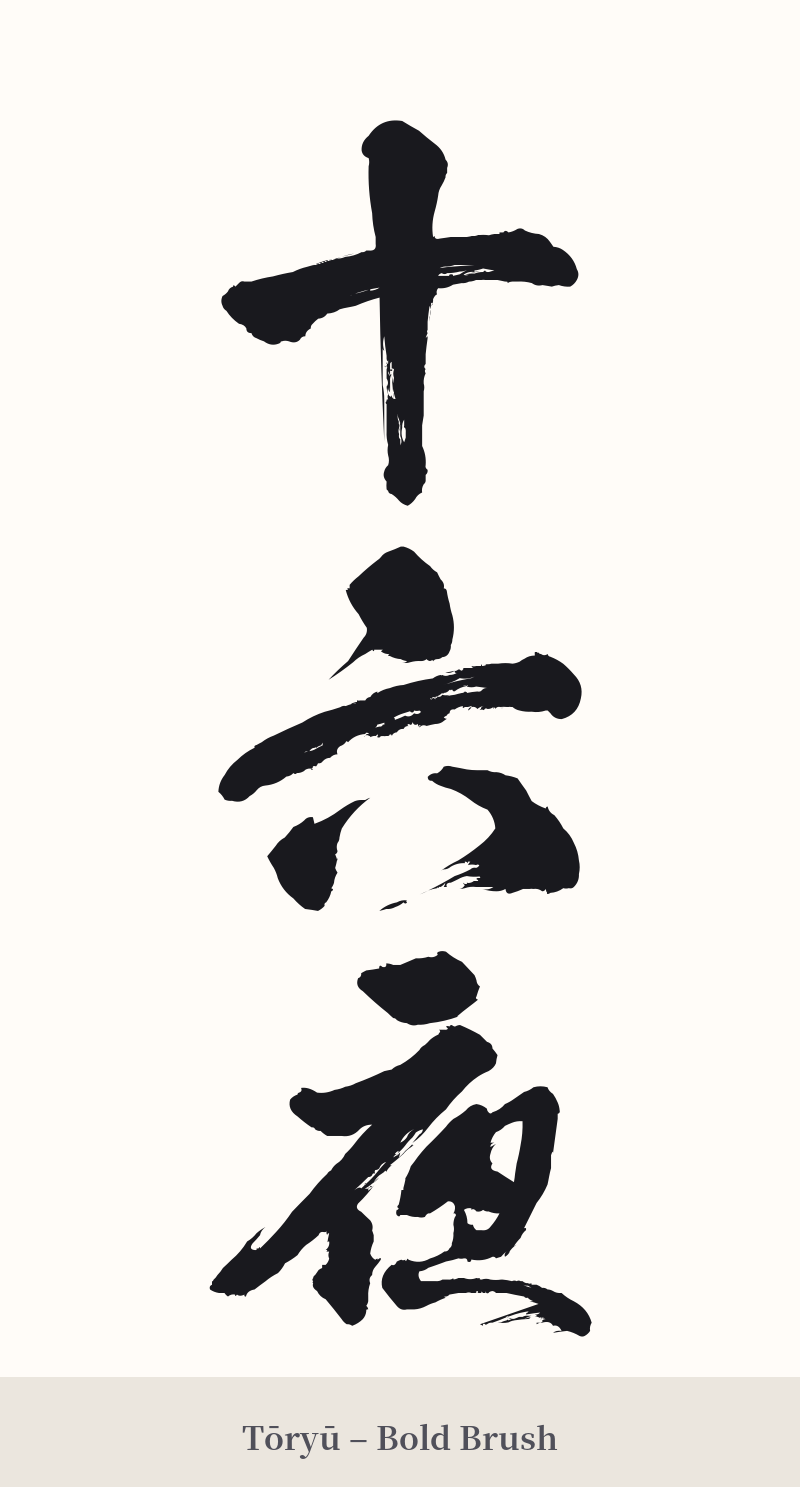
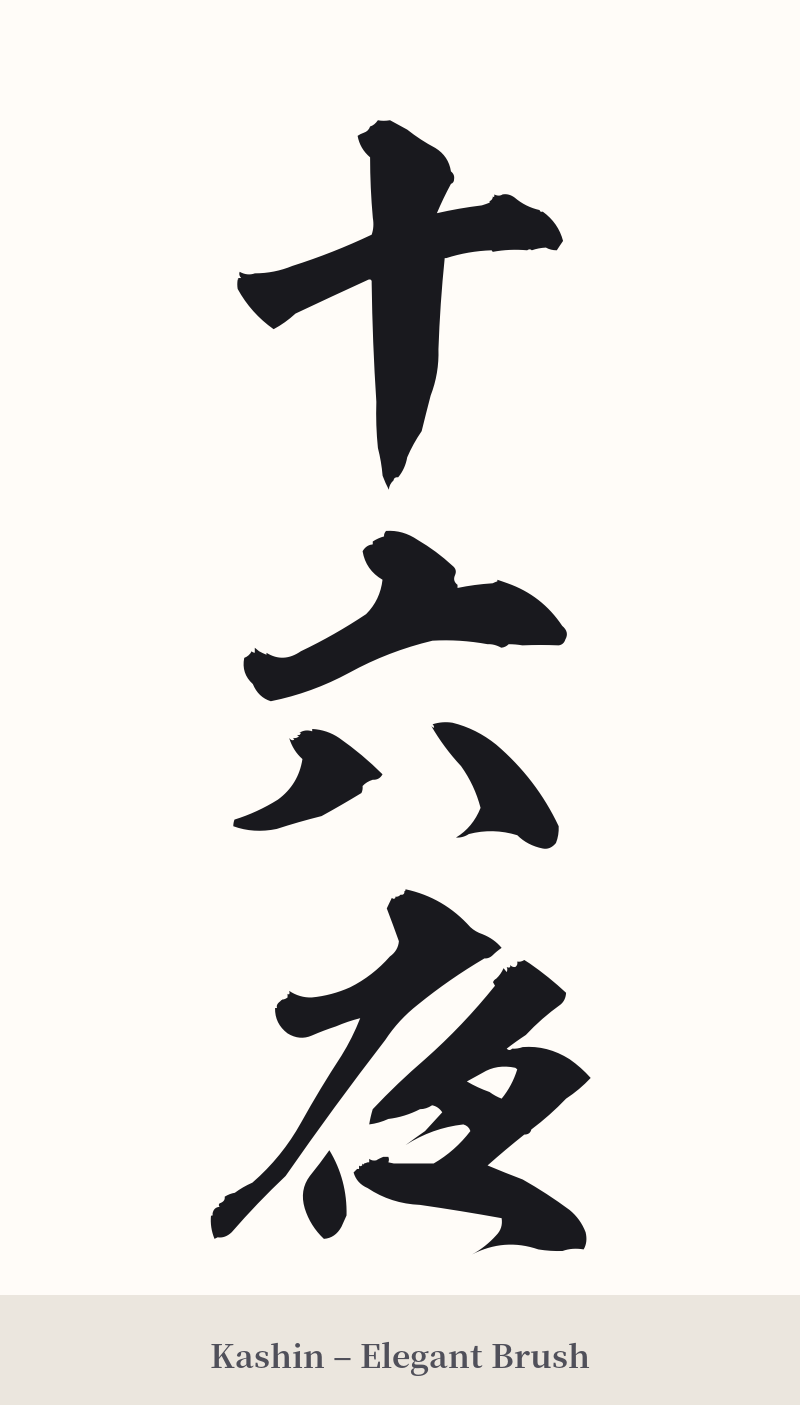
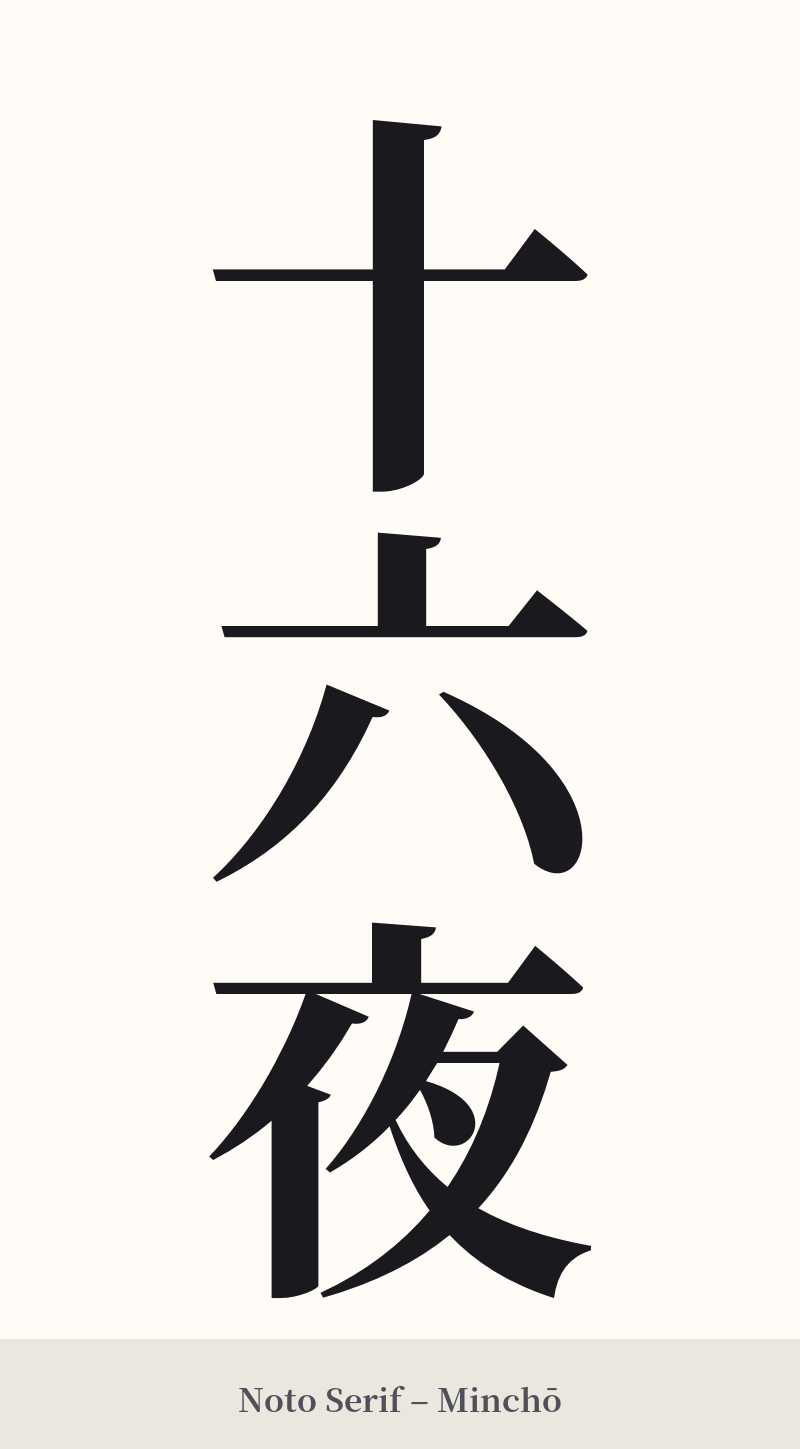
🖌️ Font Styles for 十六夜
The same kanji can look dramatically different depending on the calligraphy style. Choose a font that matches the mood you want for your tattoo or design.
🎨 Tattoo Suitability
📐 Tattoo Design Guide
The poetic nature of 十六夜 lends itself to elegant and thoughtful tattoo designs. Its three-character structure offers a pleasing vertical flow.
– Placement: A vertical arrangement is highly recommended. It looks excellent running down the forearm, along the calf, on the ribs, or tracing the spine.
– Font Style: A semi-cursive script like Gyōsho (行書) would beautifully capture the flowing, hesitant feeling of the word. For a more classic and literary feel, a clean Mincho (明朝) serif style is a great choice. Avoid overly aggressive or blocky fonts that clash with its delicate meaning.
– Visual Tips: Consider incorporating subtle imagery. A few wisps of clouds partially obscuring the characters or a spray of Japanese pampas grass (susuki), a traditional companion for moon-viewing, can enhance the theme. It's best to avoid depicting a perfectly full moon, as that would contradict the meaning of Izayoi.
Comments